Trust Is Built in Details Most Businesses Ignore.
The Micro-Moments of ORM: Why Trust Is Built in Details Most Businesses Ignore
Trust Is Built in Details
Most Businesses Ignore.
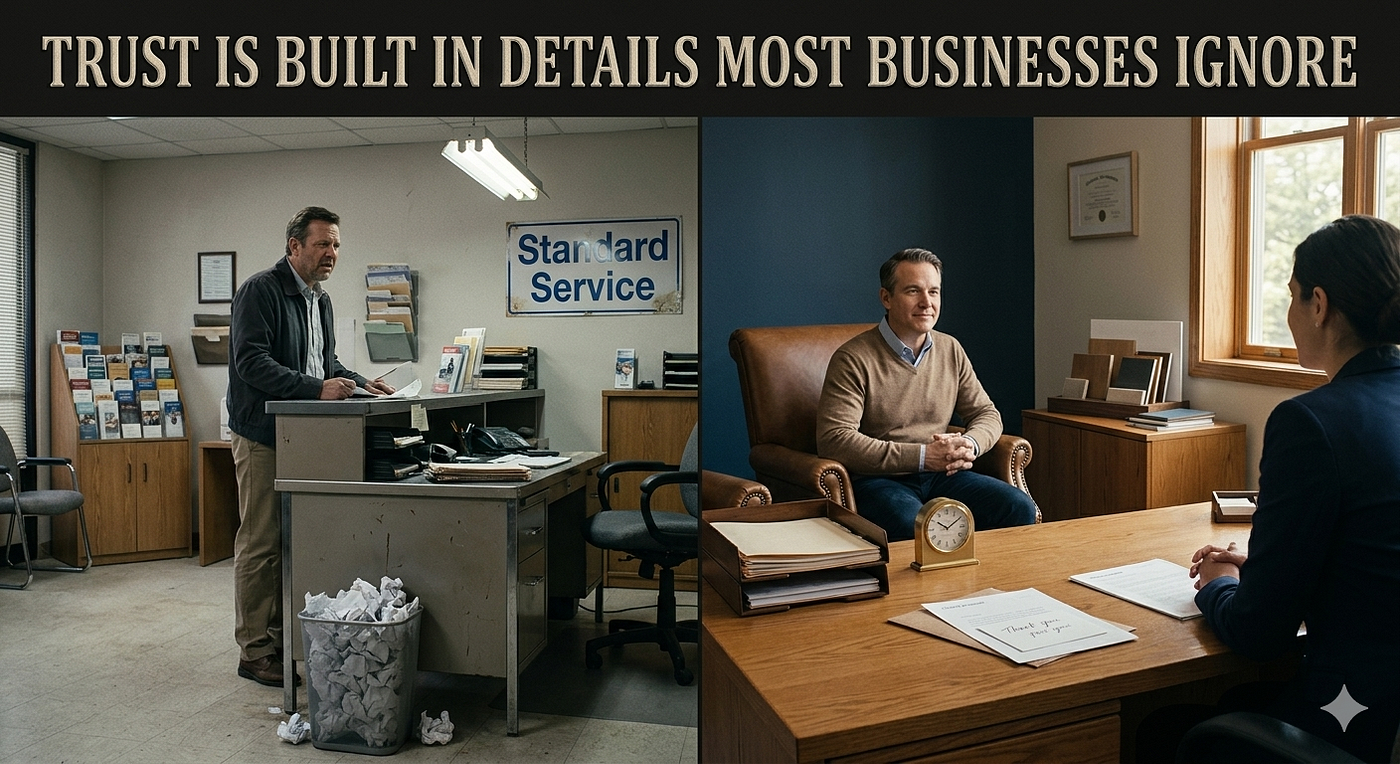
The Micro-Moments of ORM: Why Trust Is Built in Details Most Businesses Ignore
In the digital economy, Online Reputation Management (ORM) is often treated as a reactive strategy. Companies invest heavily in ORM tools, crisis PR, and review-generation campaigns only after a wave of negative feedback hits their brand.
However, true brand equity isn’t built by burying bad reviews under a mountain of automated five-star ratings. It is forged proactively in the “negative space” of your digital user experience.
Authentic online customer trust is won or lost in microscopic operational details that traditional marketing often ignores. When a business obsessively polishes the aspects of its digital touchpoints that have no immediate, linear ROI, it sends a powerful trust signal to the consumer.
Here is how optimizing five overlooked digital details can transform your proactive ORM strategy and build bulletproof brand loyalty.
1. De-Risking the “Escape Hatch” (Frictionless Offboarding)
Most growth marketers obsess over the conversion funnel — the seamless, hyper-optimized journey from discovery to checkout. Far fewer obsess over what happens when a customer wants to leave.
Nothing triggers a damaging, viral 1-star review faster than a company using dark patterns to lock users into a subscription. Complex cancellation flows, hidden phone numbers, or forced exit-surveys do not protect revenue; they permanently destroy your digital reputation.
The ORM Fix:
- Make the “cancel subscription” or “request refund” button as visible as the signup button.
- Offer a completely automated, friction-free offboarding process.
Reputation ROI: By removing the anxiety of being trapped, you lower the customer’s defensive barriers. Proactive transparency signals absolute confidence in your product, turning potentially bitter departures into neutral, respectful exits.
2. Transforming Digital Error Messages into Trust Signals
Consider the standard digital error message: “An error occurred. Please try again later.”
To a consumer experiencing a transactional failure (e.g., a failed payment gateway or a glitching checkout page), this generic text feels like a digital shrug. It offers zero context, zero empathy, and no clear path forward. This immediate spike in consumer anxiety is the exact moment users migrate to social media or third-party review platforms to publicly complain.
The ORM Fix:
- Rewrite technical error messages using human, empathetic language.
- Clearly explain what went wrong, apologize for the friction, and provide a single-click resolution path (like a direct link to live chat assistance).
Optimizing these micro-copy moments proves to your audience that your brand values their emotional experience even when the interaction isn’t immediately profitable.
3. The Power of “Post-Economic” Communication
The vast majority of automated brand communication is purely transactional. Customers are constantly bombarded with upsells, cross-sells, review requests, and referral prompts. Because consumers are conditioned to expect an ulterior motive, these touchpoints rarely build deep-seated trust.
To differentiate your brand and elevate your online reputation, look for opportunities to deliver zero-economic-value communication.
[Example of Trust-Building vs. Reputation-Damaging Outreach]
Traditional: "Your subscription renews tomorrow. Do nothing to keep your access."
Proactive ORM: "We noticed you haven't logged in for 3 months. Click here to pause your billing so you aren't charged for a service you aren't using."
Proactively protecting a user’s wallet at your own short-term expense builds a massive reservoir of goodwill. When a genuine operational crisis inevitably occurs, this accumulated sentiment acts as a digital shield, ensuring your community defends your brand rather than tearing it down.
4. Preempting Negative Reviews with Radical Transparency
The root cause of almost every negative online review is a misalignment of expectations.
In an effort to maximize conversion rates, many businesses over-promise in their marketing copy and hide product limitations deep within their terms of service. While this strategy might boost short-term sales, it inevitably creates an ORM nightmare when customers realize the product doesn’t fit their specific use case.
Proactive Expectation Management:
- Be explicitly clear about who your product is not for right on your pricing page.
- If your software lacks a certain feature, state it openly and point prospects toward an alternative.
By owning your limitations transparently, you eliminate the deceptive element that drives consumers to post angry reviews. When you are honest about what your business cannot do, your claims about what it can do gain absolute credibility.
5. Eliminating Digital “Broken Windows”
In urban sociology, the “broken windows theory” suggests that visible signs of neglect create an environment that encourages further disorder. The same principle applies to your digital ecosystem.
Customers may not be UX designers or systems engineers, but they are highly sensitive to broken patterns. Internal digital inconsistency signals an unmanaged business.
Critical Trust Elements to Audit Regularly:
- Transactional Layouts: Ensure invoices, automated receipts, and system emails match your primary website branding precisely.
- Content Hygiene: Remove broken hyperlinks in your “Help Center” or FAQ sections.
- Footer Consistency: Update outdated copyright dates, privacy policies, and security badges.
If a company demonstrates a lack of discipline in these easily fixable public details, a consumer will rationally assume the business is equally careless with data security, customer support, and product quality.
The Long-Term ROI of Micro-Detail ORM
Proactive Online Reputation Management is an exercise in operational empathy. It requires business leaders to step out of quarterly spreadsheets and look closely at the moments where a user feels confused, frustrated, or vulnerable.
By systematically polishing these often-ignored digital details, you build an unshakeable foundation of customer trust that no rogue negative review can destroy.
Find Out Which Details Are Working Against You
Get a confidential Online Reputation Audit from Trust Shield Digital. Discover exactly which touchpoints are costing you customer trust — and what it would take to fix them.
Confidential · No commitment · Delivered within 48 hours
메타데이터
- post_id
- b073d2da7baa
- slug
- trust-is-built-in-details-most-businesses-ignore-b073d2da7baa
- url
- https://medium.com/@trustsheildd/trust-is-built-in-details-most-businesses-ignore-b073d2da7baa
- canonical_url
- https://medium.com/@trustsheildd/trust-is-built-in-details-most-businesses-ignore-b073d2da7baa
- author_url
- https://medium.com/@trustsheildd
- status
- ok
- fetched_at
- 2026-06-09 15:37:30