How to Calculate the LN2 Storage Capacity Your IVF Lab Actually Needs
Underestimating storage capacity is one of the most expensive mistakes an IVF laboratory can make. If you size a vessel for today’s…
How to Calculate the LN2 Storage Capacity Your IVF Lab Actually Needs
Underestimating storage capacity is one of the most expensive mistakes an IVF laboratory can make. If you size a vessel for today’s inventory and ignore growth, you will be making an unplanned capital purchase within three years. This guide walks through the calculation properly.
What variables do you need before you can calculate anything?
Four numbers drive the calculation. Your current inventory — count every straw in the system, including long-term storage patients with no active treatment plan. Your net annual growth rate — how many new storage patients are entering the system minus those leaving. Average storage duration — with the Health and Care Act 2022 extending UK storage limits to 55 years in some circumstances (consent renewed every 10 years), samples are staying in storage longer than they did a decade ago. And the physical straw capacity of the vessel configuration you are considering.
How do you work out the actual straw capacity of a vessel?
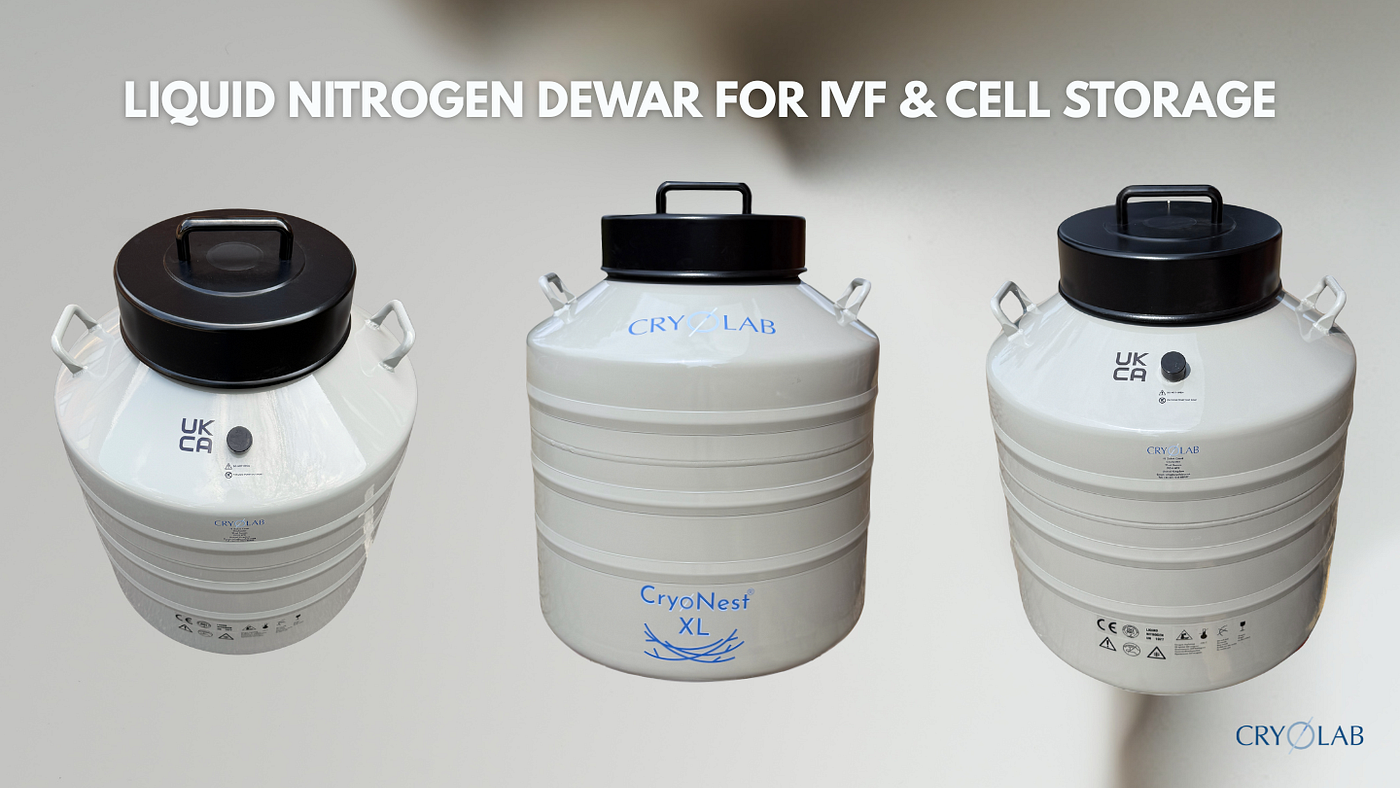
Liquid nitrogen capacity in litres is not the same as sample capacity. What counts clinically is how many canisters the vessel accommodates, how many goblets fit per canister, how many visotubes per goblet, and how many straws per visotube. Multiply those four numbers together. A vessel holding six canisters, each with five goblets, five visotubes per goblet and five straws per visotube, gives 750 straws total. Whether that represents 750 individual batches or fewer multi-straw batches depends on your clinical protocol.
“ A vessel holding six large canisters with typical goblet and visotube configuration can accommodate between 1,200 and 1,500 straws, depending on exact setup. Most private fertility clinics need three to four vessels of this size to cover a five-year projection with headroom. “
What does the five-year projection look like in practice?
Take a clinic with 800 embryo batches currently stored at three straws per patient — that is 2,400 straws. They treat 200 new patients per year, 60 percent freeze, giving approximately 120 new storage patients annually. With an average storage duration of five years, net annual increase is around 100 patients or 300 straws per year. Over five years, that adds 1,500 straws, bringing total storage to 3,900 straws. Adding a 20 percent buffer for inactive patient delays and unexpected growth gives a target capacity of approximately 4,700 straws.
Should backup storage be included in your capacity calculation?
No. Backup storage is a safety reserve and must be specified separately. In a regulated UK IVF setting, your risk management plan must include a charged backup vessel ready to receive samples from a primary vessel failure. Size your primary vessels on projected inventory. Size your backup on your most critical storage positions, not the full inventory.
What about liquid nitrogen consumption?
Storage capacity planning and LN2 supply planning belong together. The number of vessels running, access frequency, and ambient storage conditions all affect consumption. Ensure your supply arrangement — whether bulk tank, regular cylinder deliveries, or both — can sustain the full vessel complement plus cover vitrification procedures and dry shipper charging, with a buffer for supply delays.
Cryolab’s team can model the right vessel specification for your laboratory based on your actual inventory data and consumable setup. Contact Cryolab to discuss your storage requirements.
메타데이터
- post_id
- b07505784dfa
- slug
- how-to-calculate-the-ln2-storage-capacity-your-ivf-lab-actually-needs-b07505784dfa
- url
- https://medium.com/@ivfknowledge/how-to-calculate-the-ln2-storage-capacity-your-ivf-lab-actually-needs-b07505784dfa
- canonical_url
- https://medium.com/@ivfknowledge/how-to-calculate-the-ln2-storage-capacity-your-ivf-lab-actually-needs-b07505784dfa
- author_url
- https://medium.com/@ivfknowledge
- status
- ok
- fetched_at
- 2026-07-15 01:07:58