The Hidden Cost of Paper at the Dock
I’ve seen more shipping offices than I can count over the past two decades, and in almost every one, the scene is the same: stacks of paper…
The Hidden Cost of Paper at the Dock
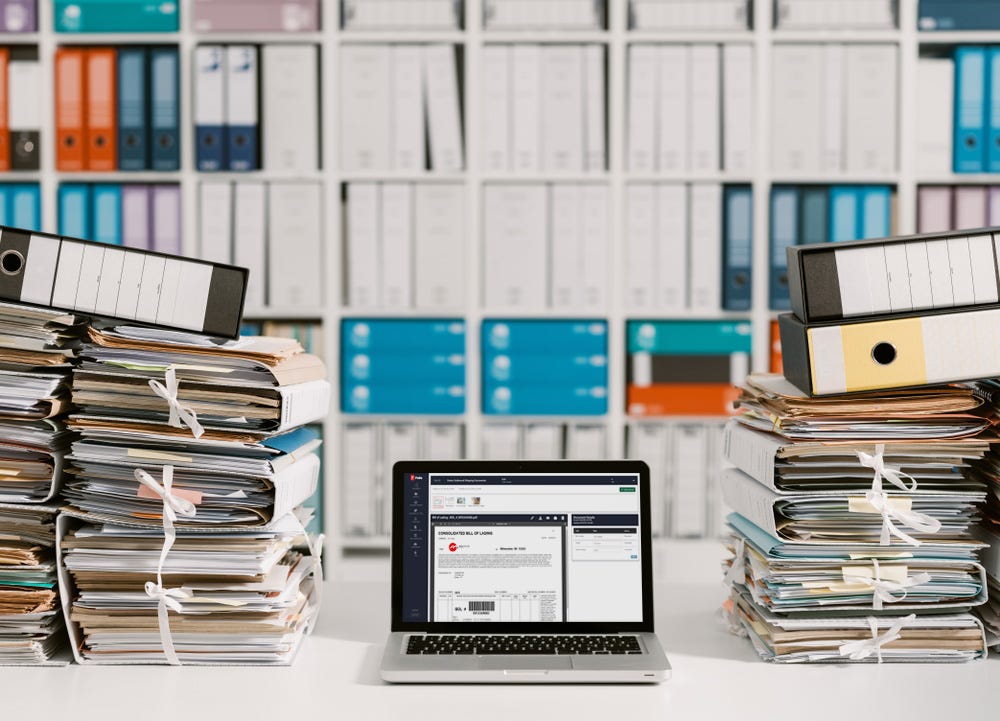
I’ve seen more shipping offices than I can count over the past two decades, and in almost every one, the scene is the same: stacks of paper bills of lading on desks, a printer that runs out of toner at the worst possible time, a filing cabinet that nobody wants to dig through, and a team that spends hours every day on work that should have been automated years ago.
The paper bill of lading is one of the last manual processes in an otherwise digital supply chain. And the cost of keeping it around is bigger than most people realize, because it doesn’t show up on a single line item. It’s spread across your operation in ways that are easy to overlook.
The costs you see
The obvious ones are easy to spot once you start looking. Printing costs. Scanner maintenance. The physical space dedicated to storing documents that are legally required but rarely accessed. These are small individually, but they add up across every dock door, every shift, every facility.
Then there’s the labor. Someone has to print the BOL. Someone has to walk it to the driver. The driver signs it. Someone walks it back. Someone scans it. Someone files it. For a facility running 100 loads a day, that’s hundreds of manual touchpoints that could be eliminated entirely.
The costs you don’t see
The hidden costs are where it gets expensive.
Detention fees are the big one. Every minute a driver spends waiting for paperwork is a minute they’re not on the road. And when that wait pushes past the appointment time, you’re paying for it. I’ve seen facilities where detention charges alone would have paid for a digital system several times over. The load is ready. The dock is clear. But the driver is waiting because someone is still printing and assembling a multi-page BOL.
Billing disputes are another hidden cost. When a BOL is handwritten or partially illegible, discrepancies between what was shipped and what was documented become common. Each dispute takes time to research, resolve, and correct. Multiply that across hundreds of shipments and you’ve got a full-time job that exists only because the source document was written on paper.
Then there’s the carrier relationship cost. Drivers talk. If your facility is known for slow paperwork and long wait times, carriers notice. They may deprioritize your loads, charge higher rates, or avoid your site altogether during peak seasons. You’ll never see “lost carrier goodwill” on a cost report, but it shows up in your transportation spend.
Why paper persists
If paper is this expensive, why do so many facilities still use it? Because it works. Not well, but reliably enough that nobody is forced to change. The pain is distributed across departments. Shipping doesn’t see the detention fees. Finance doesn’t see the driver wait times. Operations doesn’t see the billing disputes. No single person owns the full cost of paper, so no single person champions the change.
There’s also a misconception that going digital is complicated. That it requires drivers to download an app, or that it won’t work for LTL loads with multiple BOLs, or that electronic signatures aren’t legally valid. None of that is true anymore. At Matilda Technologies, we built M.Folio’s eBOL specifically to handle the complexity of real dock operations. Drivers sign on a kiosk or their phone with no app required. A single signature can cover every BOL on a multi-stop LTL load. And every electronic bill of lading carries the same legal weight as a paper one.
What changes when you go digital
The shipping office gets its time back. The printing, signing, scanning, and filing cycle disappears. Documents are created, signed, and stored electronically in a single workflow. When someone needs to find a BOL from three months ago, it’s a search query, not a trip to the filing cabinet.
Drivers move faster. No more waiting for someone to print and assemble paperwork. The BOL is ready when the load is ready. I’ve seen facilities cut their average dock time by double-digit percentages just by removing paper from the equation.
Billing disputes drop. When every field is captured digitally and every signature is timestamped, there’s no ambiguity about what was shipped, when, and by whom. The document is the source of truth, not someone’s handwriting.
And the data starts working for you. Every digital BOL is a data point. Across hundreds or thousands of shipments, that data reveals patterns in dock performance, carrier behavior, and operational bottlenecks that paper could never surface.
The window is closing
The facilities that have moved to electronic bills of lading are already seeing the benefits. Lower costs, faster operations, happier carriers. The gap between them and the facilities still running on paper gets wider every month.
Paper at the dock isn’t just an inconvenience. It’s an expensive habit disguised as a process. And the longer you wait to break it, the more it costs you.
메타데이터
- post_id
- b0773c458da0
- slug
- the-hidden-cost-of-paper-at-the-dock-b0773c458da0
- url
- https://medium.com/@roman.reynebeau/the-hidden-cost-of-paper-at-the-dock-b0773c458da0
- canonical_url
- https://medium.com/@roman.reynebeau/the-hidden-cost-of-paper-at-the-dock-b0773c458da0
- author_url
- https://medium.com/@roman.reynebeau
- status
- ok
- fetched_at
- 2026-07-21 11:34:48



