DeepSeek Engram × OLMo-core: Distributed Implementation
A documentation for my experimental integration of DeepSeek’s Conditional Memory via Scalable Lookup (Engram) architecture into AI2’s…
DeepSeek Engram × OLMo-core: Distributed Implementation
A documentation for my experimental integration of DeepSeek’s Conditional Memory via Scalable Lookup (Engram) architecture into AI2’s OLMo-core distributed training framework.
Status: Proof of Concept (Compiles & Trains)
Compute: 4x NVIDIA A40 (RunPod)
Framework: PyTorch 2.6.0 / OLMo-core
🧠 The Architecture
This project replaces standard Feed-Forward Networks (FFNs) or traditional Mixture-of-Experts (MoE) with an Engram memory layer.
By mapping the concepts from the DeepSeek paper to OLMo’s codebase, this architecture leverages:
- Token Routing: Dynamically routing tokens to specific Engram blocks rather than activating the entire memory matrix.
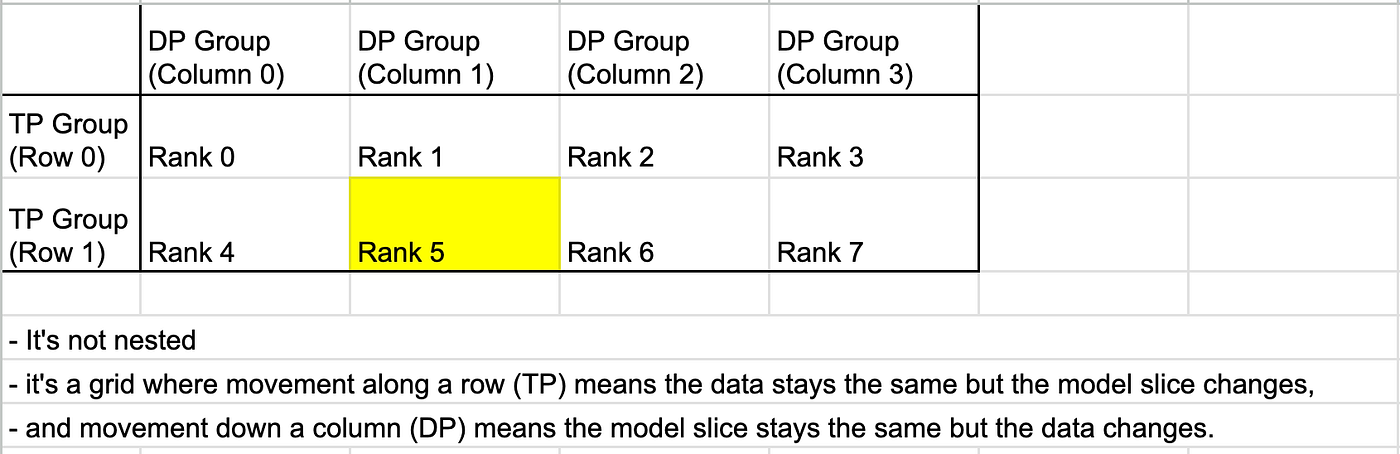
- 1D / 2D Block Parallelism: Designed to scale across multiple GPUs, minimizing communication overhead during the lookup phase.
- Compatibility: Native integration with OLMo-core’s
HSDP(Fully Sharded Data Parallel) andtorchrundistributed topologies.
🛠️ The RunPod MLOps Survival Guide
AI2’s OLMo-core is a beautiful, highly optimized framework, but it is deeply coupled with their internal supercomputer (Beaker / Gantry). Running this on independent cloud compute (like RunPod) requires surgically bypassing corporate cluster management and avoiding massive I/O bottlenecks.
1. The 90-Second “Burn & Rebuild” Pipeline
Do not use RunPod Persistent Network Volumes to install the environment. The I/O latency when compiling C++ / CUDA kernels like flash-attn will stall the pod for hours.
Instead, allocate a large NVMe Container Disk (e.g., 100GB) and build the environment ephemerally using the provided set_env.sh script.
# Clone the repo and run the setup
git clone b feature/engram-poc https://github.com/JenWei0312/OLMo-core.git
cd OLMo-core
source set_env.sh
2. Bypassing AI2 Beaker/Gantry
To train outside of AI2’s cluster, we must strip out their proprietary monitoring telemetry. The set_env.sh script automatically applies a sed sledgehammer to bypass the GantryCallback decorator:
sed -i 's/.*@GantryCallback.register.*/# Bypassed Beaker/g' src/olmo_core/launch/beaker.py3. The Dataset Trap
AI2’s default dataloaders point to 200GB+ training chunks. If you are running a single-node smoke test, the script will silently hang while downloading. We generate raw binary dummy data locally (.tofile(), bypassing numpy ASCII headers which crash the C++ dataloader) to verify gradient flow before paying for S3 egress.
📊 Proof of Life
Distributed training successfully validated on a 4x A40 cluster using a 3.5B parameter (OLMo 3B + Engram) configuration.
- Throughput: ~36 Tokens / Second / Device (Steady state)
- Memory: 28.6 GiB Reserved / 24.0 GiB Active (Highly efficient utilization)
- Gradients: Stable.
train/CE lossdropped from12.21→12.05over 196 steps with zero NaN spikes or deadlocks.
🚀 Next Steps (The Ablation Study)
With the infrastructure pipeline solidified and gradient stability proven on dummy data, the next phase is a full ablation study across a 2x2 architecture grid using real Dolma datasets. (Compute sponsorship pending).
🔗 Link to Repo
https://github.com/JenWei0312/OLMo-core/tree/feature/engram-poc
메타데이터
- post_id
- b0976d8f142e
- slug
- deepseek-engram-olmo-core-distributed-implementation-b0976d8f142e
- url
- https://medium.com/@jenwei0312/deepseek-engram-olmo-core-distributed-implementation-b0976d8f142e
- canonical_url
- https://medium.com/@jenwei0312/deepseek-engram-olmo-core-distributed-implementation-b0976d8f142e
- author_url
- https://medium.com/@jenwei0312
- status
- ok
- fetched_at
- 2026-06-20 20:29:01