These Open-Source GitHub Projects Are Changing How Developers Build Software in 2026
Check out you might miss one
These Open-Source GitHub Projects Are Changing How Developers Build Software in 2026
Check out you might miss one
Photo by Luke Southern on Unsplash
A few years ago, most developers opened GitHub to search for snippets, clone a boilerplate project, or star a repository they would never touch again.
That behavior has changed.
Now developers are building entire products on top of open-source ecosystems. AI agents, local LLMs, automation systems, vector databases, browser agents, developer copilots, workflow engines, and self-hosted platforms are growing faster than many commercial SaaS products.
You can actually feel the shift.
A random GitHub repository today can become tomorrow’s startup infrastructure.
And honestly, some of the best engineering work happening right now is not inside big tech companies. It is happening in public repositories, maintained by developers who care deeply about tools, speed, and freedom.
GitHub itself reported massive growth in the developer ecosystem, with millions of new developers joining in 2025 alone. India added over 5 million developers. (The GitHub Blog)
This article is not another generic “top GitHub repos” list.
These are the projects developers are actually talking about right now across GitHub, Reddit, YouTube, X, and engineering communities.
Some are exploding in stars. Some are becoming serious business infrastructure. Some are quietly replacing expensive SaaS tools.
And a few of them feel like the beginning of a new developer era.
The Big Pattern Happening Right Now
Most trending open-source projects fall into five categories:
- AI agents
- Local AI
- Workflow automation
- Developer productivity
- Self-hosted infrastructure
That tells us something important.
Developers are moving away from locked ecosystems.
People want:
- local control
- cheaper infrastructure
- AI workflows they can customize
- tools they actually own
- systems that work without depending on one vendor
That is why open source feels different in 2026.
It is no longer just a hobby movement. It is becoming the default way developers experiment and ship products.
1. Ollama
If you work with AI and you still rely completely on cloud APIs, you are missing what many developers are doing right now.
Ollama made local AI practical.
Not theoretical. Not “research-lab practical.” Actually usable.
You install it, pull a model, and start running LLMs on your own machine.
That changed everything for:
- private AI apps
- offline copilots
- local RAG systems
- AI agents
- second-brain tools
- experimentation without API costs
I started noticing more developers moving toward local AI after token costs became unpredictable in production systems.
One API-heavy feature can suddenly become expensive at scale.
Ollama gave developers control back.
The best part is the simplicity.
ollama run llama3That single line made thousands of developers realize local AI was finally usable.
2. n8n
Zapier feels limiting once you use n8n.
This project exploded because developers wanted automation with real flexibility.
Not drag-and-drop toys.
n8n gives:
- self-hosting
- custom logic
- AI integrations
- API orchestration
- workflow branching
- database operations
- JavaScript execution inside flows
People are building:
- AI email agents
- autonomous support systems
- CRM automations
- internal tools
- content pipelines
- Slack bots
- finance workflows
The interesting part is that n8n is slowly becoming an orchestration layer for AI agents.
Not just automation.
That is a very different future.
3. Open WebUI
A lot of developers want ChatGPT-style interfaces without depending on external platforms.
That is why Open WebUI grew so fast.
It gives you a clean interface for running local models with:
- Ollama
- OpenAI-compatible APIs
- multiple model providers
- document chat
- user management
- memory systems
A lot of YouTube creators started building “private ChatGPT” systems around this stack.
And honestly, the experience is getting surprisingly polished.
For developers building internal AI tools, this project saves weeks of frontend work.
4. LangChain
Some developers love LangChain. Some developers complain about it constantly.
Yet almost everyone building serious AI applications has interacted with it.
That alone says something.
LangChain became important because AI applications stopped being “single prompt in, response out.”
Modern AI apps now need:
- memory
- tool calling
- vector retrieval
- orchestration
- agents
- multi-step reasoning
- document pipelines
LangChain sits in the middle of that movement.
Even developers who replace it later often prototype with it first.
That is influence.
5. Supabase
There is a reason developers keep calling Supabase the “open-source Firebase alternative.”
It solved a painful developer problem.
People wanted:
- authentication
- storage
- realtime database
- Postgres
- APIs
- edge functions
But they did not want to spend weeks wiring infrastructure together.
Supabase feels developer-first.
That matters more than companies realize.
The documentation is clean. The setup feels modern. The ecosystem moves fast.
And many indie developers are shipping production SaaS products on top of it.
6. Dify
Dify is growing fast in the AI application space.
It gives developers a faster way to build AI applications without starting from scratch.
You get:
- prompt management
- workflows
- RAG pipelines
- agent orchestration
- monitoring
- API deployment
The important thing is speed.
A small team can prototype AI products extremely quickly now.
That changes startup economics.
A single developer with the right open-source stack can now build products that required entire engineering teams a few years ago.
7. Qdrant
Every AI developer eventually runs into embeddings and vector search.
That is where Qdrant appears.
It became one of the most respected vector databases for:
- semantic search
- recommendation systems
- AI memory
- RAG pipelines
- document retrieval
A lot of AI apps quietly depend on vector databases now.
Most users never see that layer.
But developers absolutely do.
8. OpenClaw
This project went viral extremely fast. (ByteByteGo)
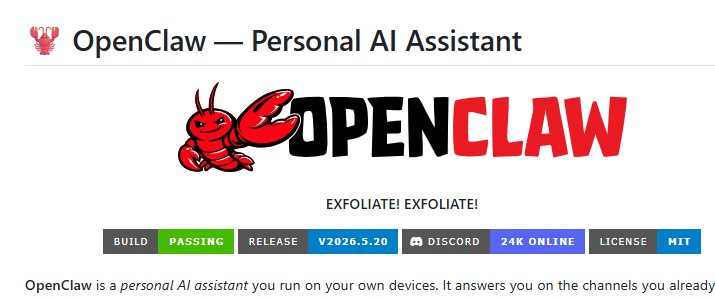
Developers became obsessed with personal AI agents that they could control themselves.
Not cloud subscriptions. Not black-box assistants.
Actual programmable AI systems.
OpenClaw became one of the symbols of that movement.
And honestly, this category is just getting started.
Developers Are Also Becoming More Careful
One important thing changed recently.
Developers are paying more attention to open-source security.
Recent supply-chain attacks involving poisoned npm packages and malicious VS Code extensions shook the ecosystem hard. (WIRED)
That means developers now care more about:
- trusted maintainers
- dependency audits
- package provenance
- local control
- self-hosting
Open source is growing fast. But security discipline needs to grow with it.
The Real Reason These Projects Matter
The biggest shift is not technical.
It is psychological.
Developers no longer wait for large companies to release tools.
They build alternatives themselves.
And many of those alternatives become better.
That mindset is everywhere now:
- self-hosted AI
- local agents
- open workflows
- programmable automation
- transparent infrastructure
You can feel developers reclaiming ownership over their stack.
That is why GitHub feels so alive right now.
My Advice for Developers Right Now
Do not just consume AI tools.
Study the repositories behind them.
Read:
- architecture decisions
- pull requests
- issues
- discussions
- roadmap debates
That is where real learning happens.
A few years ago, reading open-source code felt intimidating to many developers.
Today it feels necessary.
The developers growing fastest right now are not only watching tutorials.
They are studying living systems in public.
And GitHub became the best classroom on the internet for that.
Repositories Worth Exploring This Week
메타데이터
- post_id
- b0af1b5c2430
- slug
- these-open-source-github-projects-are-changing-how-developers-build-software-in-2026-b0af1b5c2430
- url
- https://medium.com/lets-code-future/these-open-source-github-projects-are-changing-how-developers-build-software-in-2026-b0af1b5c2430
- canonical_url
- https://medium.com/lets-code-future/these-open-source-github-projects-are-changing-how-developers-build-software-in-2026-b0af1b5c2430
- author_url
- https://medium.com/@CodeWithYog
- status
- ok
- fetched_at
- 2026-06-13 09:11:36