How I Built a Faceless TikTok Content Machine Using Claude & AI UGC
I Ran a Faceless TikTok Content Studio for 8 Months Using Claude. Here’s the Exact System. No camera. No actors. No creator deals. Just a…
How I Built a Faceless TikTok Content Machine Using Claude & AI UGC
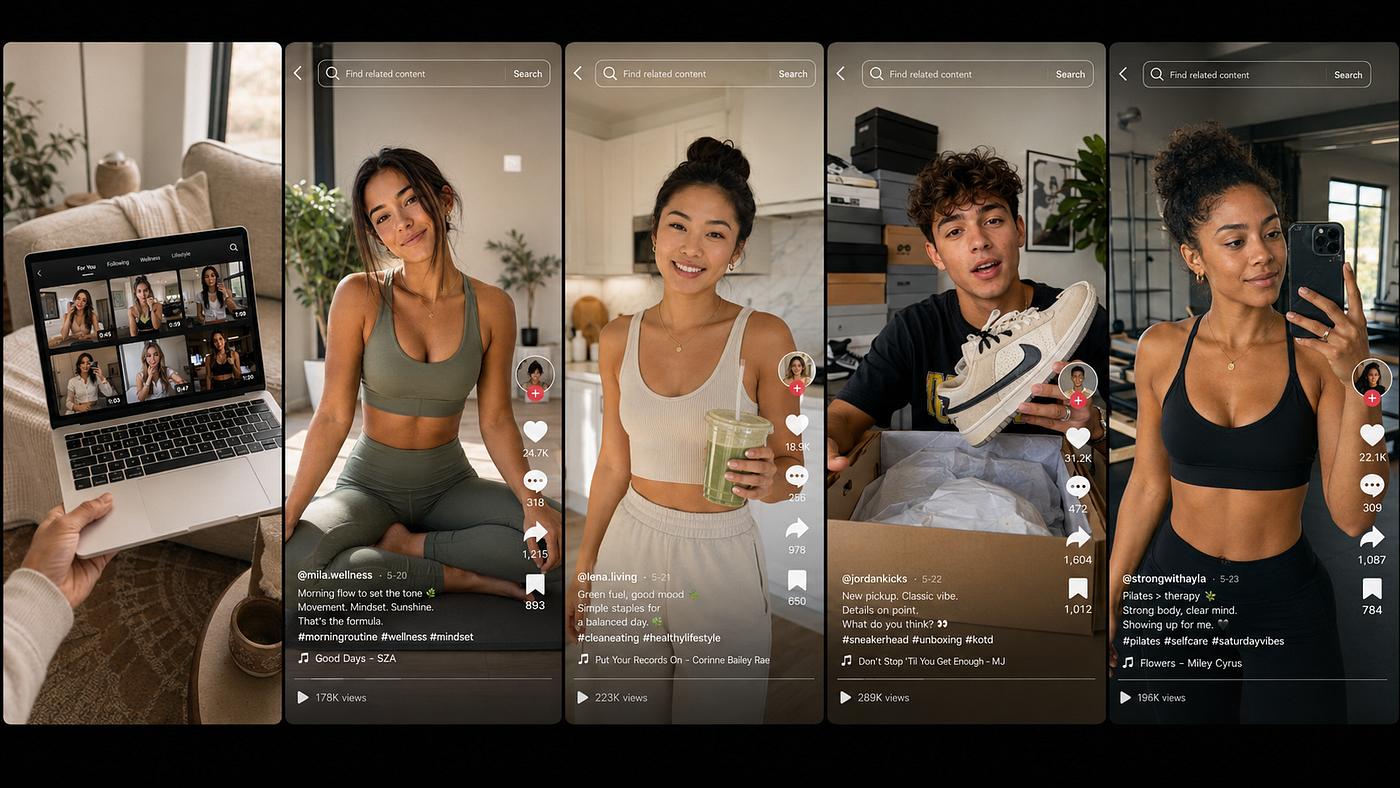
I Ran a Faceless TikTok Content Studio for 8 Months Using Claude. Here’s the Exact System. No camera. No actors. No creator deals. Just a laptop, a $20 subscription, and a process that now generates $2,000+ a week in brand video orders.
Eight months ago I was sitting at my kitchen table, laptop open, watching a UGC creator on TikTok get paid $400 for a 30-second skincare video.
She was charming. She had good lighting. She had a following.
I had none of those things.
What I had was a Claude subscription, a few hours a night, and a stubborn belief that the writing in those videos was worth more than the face delivering it.
I was right — but it took me two expensive weeks of flat numbers, 300-view videos, and nearly quitting to figure out exactly why.
This is the full system I built after that. Five steps. Claude handles three of them. And last month I delivered 40 AI UGC videos for brands without showing my face once.
First, let’s talk about what AI UGC actually is
If you haven’t seen it yet, here’s the simplest explanation:
AI UGC (User Generated Content) is a brand video — a product review, a testimonial, a tutorial — delivered by a photorealistic AI avatar with a synthesized voice, scripted to sound like a real person recommending something they love.
It looks like this: a person on screen, talking to the camera, holding or referencing a product, saying something like “I’ve tried everything for my skin. Nothing worked until this.”
Except that person is not a person. It’s a rendered avatar. The voice is AI. The script was written in 60 seconds.
And here’s the uncomfortable truth brands are slowly waking up to: the engagement is the same. The conversions are the same. The comments asking “where do I buy this?” are the same.
TikTok doesn’t care if the face is real. It cares if people keep watching.
The money (and how to actually get it)
Everyone asks how much TikTok pays per view. That’s the wrong question.
UGC brand deals are where the actual income lives.
Brands pay $150–$500 per video for creator content — sometimes more for longer formats or niche industries. They’re not paying for your face or your follower count. They’re paying for a video asset they can run as a paid ad, post on their own channels, or use in their marketing materials.
AI UGC is the same product, minus the human overhead.
The math is not complicated:
- 10 videos a week × $200 = $2,000/week
- Add a monthly retainer for a brand that wants consistent content: +$1,500–$3,000/month
- Add package pricing (5 videos, 10 videos, rush delivery): the numbers scale fast
Where do you find clients?
This is the part most articles skip. Here’s where brands actively look for UGC creators right now:
- Billo and Insense — platforms built specifically to connect brands with UGC creators. Apply as a creator, brands invite you to campaigns.
- Direct outreach on LinkedIn — search “Social Media Manager” or “Performance Marketing” at DTC brands. One cold DM with a sample video attached closes deals faster than any platform.
- TikTok Creative Center — brands running TikTok ads are the warmest leads. If they’re spending on ads, they need content. Find them, show them a demo.
- Fiverr and Contra — lower rates, but volume is high and it builds a portfolio fast.
Start with one platform. Get your first two clients. Use those as case studies to raise your rate.
Step 1: Pick the angle before you touch any tool
My first two weeks were wasted making random videos because I thought the avatar would carry it.
It won’t. A realistic-looking avatar delivering boring content is still boring content.
Now I make Claude pick the content angle first — before I write a single word of script:
Act as a TikTok content strategist for AI UGC videos.I want to create short-form content for this product/niche: [your niche]Give me:
- 5 proven UGC angles (problem/solution, transformation, hot take, myth bust, "I wish I knew")
- A hook line for each angle
- Which angle performs best with cold audiences
- 10 video title and caption ideas optimized for TikTok search
- Final recommendation: which angle to lead with and whyFor a skincare brand, Claude handed me a full content strategy in under 60 seconds. The “myth bust” angle — “Retinol isn’t the answer your skin needs” — outperformed everything else I’d tried in the previous month.
That’s a $200 consultant call. For free. Before you’ve filmed a single frame.
Step 2: The script. This is the actual business.
I want to be direct about something: everything else in this system is replaceable. The script is not.
TikTok measures one thing above everything else: do people keep watching?
A video that holds 70% of its viewers gets pushed to new audiences. A video that holds 20% gets buried. The difference between those two numbers is almost never the avatar, the lighting, or the music.
It’s the writing.
This is the exact prompt I paste for every single video:
You are a UGC scriptwriter for TikTok.Write a 30–45 second script for: "[product or topic]"Structure:
Hook (0:00–0:03): one shocking line, a bold claim, or a relatable pain point.
No intro. No name. Straight in.Problem (0:03–0:10): make them feel it. Use "you" constantly.Solution reveal (0:10–0:25): introduce the product naturally,
like a friend recommending it. Not an ad. A recommendation.Proof or result (0:25–0:35): one specific number, transformation,
or outcome. Make it concrete.CTA (0:35–0:45): one action only. Simple. No options.Rules: Write for speaking out loud. Short sentences. Active voice.
No filler words. Sound like a real person, not a commercial.Here’s what a finished output looks like for a sleep supplement:
“I haven’t slept properly in three years. Not exaggerating — three years of waking up at 3am, staring at the ceiling, running through tomorrow’s list. My doctor told me it wasn’t a sleep problem, it was a cortisol problem. And that changed everything. [Brand name] is the only thing that actually worked with my nervous system instead of just knocking me out. I’ve been waking up rested — actually rested — for six weeks straight. If you’ve tried everything and nothing’s stuck, link is in bio.”
That’s 42 seconds spoken aloud. Strong hook, no fluff, direct CTA, sounds human. Once I locked in this structure, the same content format that was doing 300 views started hitting 40,000. Nothing else changed.
Step 3: Generate the video with an AI avatar tool
This is where the script becomes a video.
Tools like MakeUGC, HeyGen, and Creatify let you paste a script, select an avatar, choose a voice, and render a finished video in minutes.
The output is a person on screen — realistic face, natural gestures, clean voice — delivering your script directly to camera.
No casting. No shoot day. No “can we do one more take.” No creator who ghosts you after three follow-up emails.
One script in. One video out.
You can produce product reviews, testimonials, unboxings, tutorials, reaction content, myth busts — every format TikTok rewards, without a single human on set.
One underrated advantage: AI avatars are consistent. The same face, the same energy, the same brand feel across every single video. Human UGC creators almost never deliver that. Brands notice it, even if they don’t say it out loud.
Step 4: Let Claude write the caption and metadata
I had a video that deserved 200,000 views sitting at 4,000. Great avatar. Clean script. Strong product.
The caption was three generic hashtags and a link.
Caption and metadata aren’t an afterthought — they’re part of the algorithm signal. Now Claude handles the entire metadata layer in one shot:
Act as a TikTok SEO and caption specialist.Video topic: [topic]. Niche: [niche].Output:
- 3 caption options under 150 characters (curiosity, emotional, direct)
- 5 hashtag sets mixing niche, broad, and trending tags
- 3 hook text overlays for the first 3 seconds of the video
- Best posting time for this niche
- One pinned comment to drive engagementOptimize for watch time and click-through rate.If you hire this out, it’s $25–$50 per video. I run it in 20 seconds.
Step 5: Post 20 videos before you judge anything
I almost quit after video 7.
Nothing was moving. Zero traction. The kind of silence that makes you question whether the whole idea was stupid.
Here’s what I didn’t know yet: the TikTok algorithm needs volume before it learns who to show your content to. Twenty videos minimum before you draw any real conclusions about what’s working and what isn’t.
Most people post eight, see flat numbers, and walk away — one week before things start compounding.
Same niche. Same format. Consistent posting. No exceptions for the first month.
The accounts that win are not the most talented. They are the most consistent. Every time.
What you can actually produce with this system
Every one of these formats works with an AI avatar. Every one is being ordered by brands right now:
- Product reviews for e-commerce and DTC brands
- Supplement and wellness testimonials
- App and SaaS explainer videos
- Personal finance and investing tips
- Skincare and beauty tutorials
- Fashion hauls and styling content
- “I tried it for 30 days” transformation videos
- “Things I wish I knew before” educational content
Most of these niches are still being filled by human creators charging $300–500 a video and delivering in two weeks.
You can deliver the same thing in two hours.
What it actually costs
Tool Cost Claude (Pro) $20/month
Higgsfield or HeyGen $59–$49/month
CapCut (editing) Free
Total Under $79/month
Compare that to what this system replaces:
- A UGC creator: $300–500/video
- A voice actor: $100–300/video
- A video editor: $50–150/video
- A scriptwriter: $75–200/video
You’re running a full content studio for the price of a dinner out.
The honest part: what this doesn’t solve
No system is frictionless. Here’s what you’ll actually run into:
Getting the first client is the hardest part. Without a portfolio, you’re selling a concept. Build 3–5 spec videos in popular niches (skincare, supplements, fitness) before you start pitching. Give them away if you have to — the social proof is worth more than the $200.
Some platforms and brands are catching up. A small number of brands now ask specifically for “real human” UGC. That’s a minority right now, but it’s worth knowing. Vet your clients before pitching AI-generated content.
Avatar quality varies. The gap between a $29/month tool and a $99/month tool is visible. If you’re pitching premium brands, invest in a better tier. Your avatar is your first impression.
You will hit a creative wall around video 15. The angles Claude gives you will start to feel repetitive. When that happens, go back to Step 1 with a new angle brief. Feed it competitor videos. Ask for formats you haven’t tried. The system works — but it needs to be driven.
The real shift
For years, UGC was gated behind finding the right creator, negotiating rates, waiting on revisions, and hoping they actually delivered.
That gate is gone.
The camera was never the hard part. The writing was always the hard part. AI UGC just removed the camera and left you with the only thing that ever actually mattered.
Stop competing on being findable. Start competing on being un-skippable.
That’s a writing problem. Claude already solved it. The only question is whether you’re going to use it.
If this was useful, follow for more on AI content systems, faceless brand monetization, and the tools actually worth paying for.
Have questions about a specific step? Drop them in the comments — I read everything.
Thank You :)
메타데이터
- post_id
- b0bdb91cbd07
- slug
- how-i-built-a-faceless-tiktok-content-machine-using-claude-ai-ugc-b0bdb91cbd07
- url
- https://medium.com/@devenkoai/how-i-built-a-faceless-tiktok-content-machine-using-claude-ai-ugc-b0bdb91cbd07
- canonical_url
- https://medium.com/@devenkoai/how-i-built-a-faceless-tiktok-content-machine-using-claude-ai-ugc-b0bdb91cbd07
- author_url
- https://medium.com/@devenkoai
- status
- ok
- fetched_at
- 2026-07-19 07:45:11