How Long Is 1 Cycle of CPR? Timing, Counts, and What the Research Shows
Every second counts during cardiac arrest. When a person’s heart stops, brain damage starts within four to six minutes. Knowing how long…
How Long Is 1 Cycle of CPR? Timing, Counts, and What the Research Shows
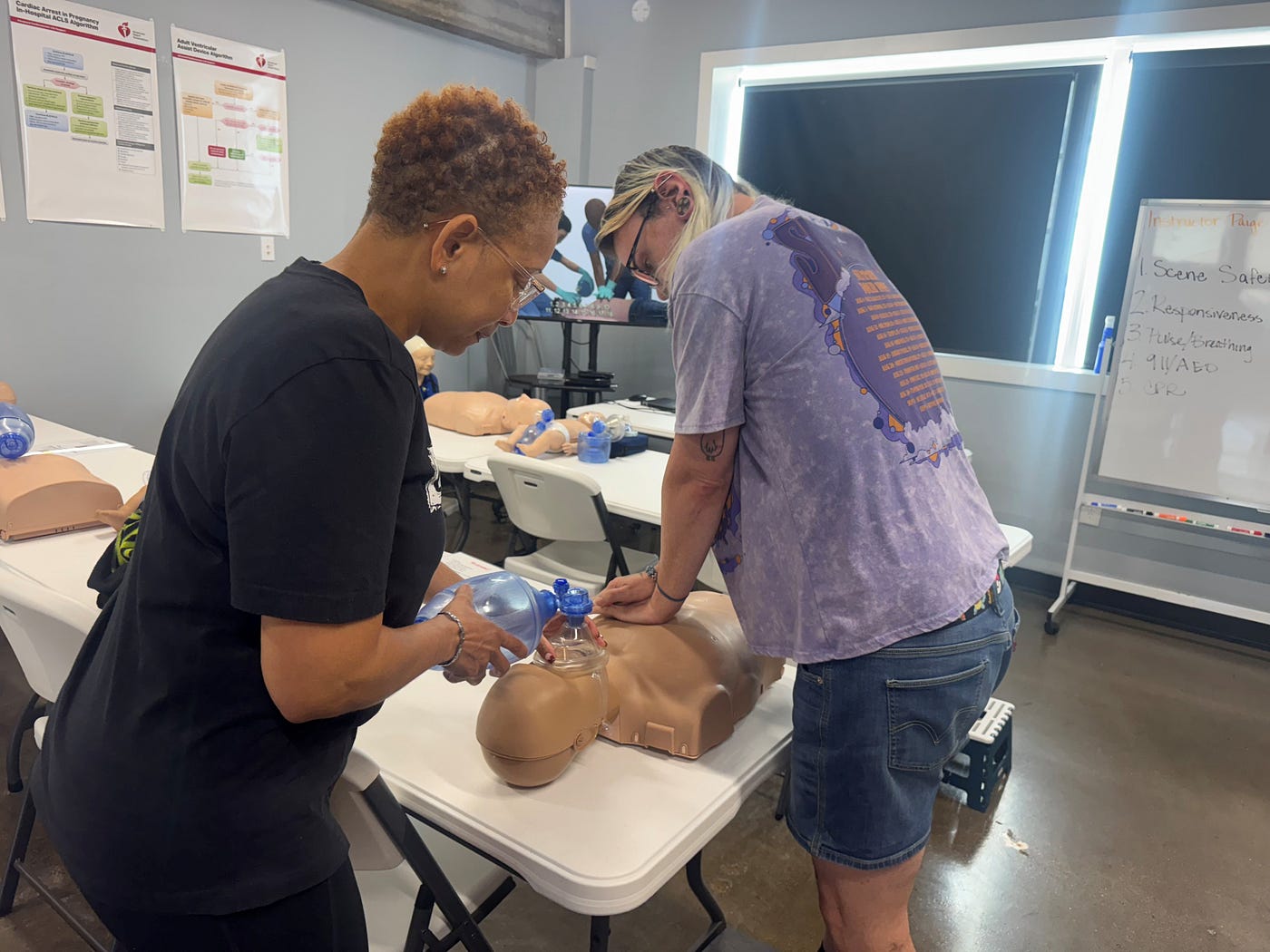
Every second counts during cardiac arrest. When a person’s heart stops, brain damage starts within four to six minutes. Knowing how long one cycle of CPR takes — and performing it correctly — can mean the difference between life and death. Whether you are a bystander, a caregiver, or a healthcare provider pursuing BLS certification in Tampa, understanding CPR timing is a foundation you cannot skip.
How Long Is 1 Cycle of CPR?
One cycle of CPR consists of 30 chest compressions followed by 2 rescue breaths. This sequence takes approximately 23 to 24 seconds to complete correctly. That timing is based on the American Heart Association (AHA) standard compression rate of 100 to 120 compressions per minute, combined with the brief pause required for two breaths.
Here is a quick breakdown of what happens inside a single CPR cycle:
- 30 chest compressions at 100–120 per minute (takes about 15–18 seconds)
- 2 rescue breaths, each lasting about 1 second (takes about 4–6 seconds)
- Total cycle time: roughly 23–24 seconds
The AHA 2020 and 2025 guidelines reinforce these parameters. They recommend compressions at a depth of at least 2 inches in adults, with full chest recoil between each compression. Chest recoil matters because it allows the heart to refill with blood before the next push.
For hands-only CPR (compression-only), no breaths are given. In this case, one “cycle” is simply 30 compressions completed without interruption, which takes roughly 15 to 18 seconds.
How Many Cycles of CPR Is 2 Minutes?
Two minutes of CPR equals approximately 5 cycles. This is the standard interval the AHA uses in its resuscitation algorithms. After every 5 cycles — about 2 minutes — rescuers should pause to check for a pulse and assess the patient’s rhythm. Emergency responders typically switch chest compressors at this interval to prevent fatigue and maintain compression quality.
Why 2 minutes? Research shows that high-quality compressions degrade quickly when a single rescuer tires. Fatigue causes compression depth to decrease, which reduces the blood flow reaching the brain and vital organs. The 2-minute rotation interval helps keep compressions effective throughout the resuscitation effort.
A 2024 study published by the American Heart Association, drawing on the CARES registry of 198,869 witnessed cardiac arrests, found that bystanders who started CPR within 2 minutes gave victims an 81% greater chance of surviving to hospital discharge and a 95% higher likelihood of surviving without significant brain damage. Even CPR started up to 10 minutes after collapse still improved survival by 19% compared to no CPR at all.
This data puts timing in sharp perspective. Five cycles completed well — at the right rate, the right depth, and with minimal interruptions — deliver life-sustaining circulation during the critical window before advanced care arrives.
How Many CPR Cycles in 1 Minute?
In one minute of CPR with rescue breaths, a trained rescuer completes approximately 2 to 3 cycles. Each cycle of 30 compressions and 2 breaths takes 23 to 24 seconds, so three full cycles span roughly 70 seconds. In practice, most rescuers average about 2.5 cycles per minute when factoring in minor interruptions.
For hands-only CPR, the math shifts. Without rescue breaths, compressions continue without interruption at 100 to 120 per minute. That means approximately 100 to 120 compressions happen inside a single minute — a significantly higher compression fraction than traditional CPR.
Chest compression fraction — the percentage of resuscitation time spent actually compressing the chest — is one of the key quality metrics the AHA tracks. The 2025 AHA guidelines recommend keeping the no-flow time (pauses in compressions) as short as possible. Minimizing interruptions preserves the coronary and cerebral perfusion pressure that compressions build up over time.
CPR Timing by Patient Type: Adults, Children, and Infants
The 30:2 ratio — 30 compressions to 2 breaths — applies to adults and to children when a single rescuer is present. When two or more trained rescuers work together on a child or infant, the AHA recommends a 15:2 ratio. This higher ventilation rate reflects the fact that pediatric cardiac arrests more often result from respiratory failure rather than primary cardiac events.
For pediatric patients, the AHA 2020 guidelines note that approximately 2 minutes of CPR — 5 cycles for a single rescuer or 10 cycles for two rescuers — should precede AED use in an unwitnessed arrest. The science behind this recommendation is that a period of effective CPR re-oxygenates the blood before a shock is delivered, which improves the chance of a successful defibrillation.
Why Correct CPR Timing Saves Lives
Numbers from the CARES 2024 Annual Report make a compelling case. In 2024, CARES reported 137,119 out-of-hospital cardiac arrest events in the United States. Bystander CPR was initiated in 41.7% of all cases — and in 50.1% of witnessed cases. Patients who received bystander CPR had a survival-to-hospital-discharge rate of 13.0%, compared to just 7.6% for those who received none.
Those numbers reveal a clear pattern. More bystanders who know how to perform CPR correctly — and who understand cycle timing — translates directly into more survivors. Immediate bystander CPR can double or triple survival odds, according to CARES registry data from 2021 to 2023.
Timing errors are among the most common CPR mistakes. Compressions that are too slow (under 100 per minute) fail to generate adequate blood pressure. Compressions that are too fast (over 120 per minute) sacrifice depth and full recoil. Pauses that last longer than 10 seconds cause a rapid drop in coronary perfusion pressure — pressure that takes several compressions to rebuild. Every detail of correct cycle timing works together to sustain circulation until advanced care takes over.
CPR Timing Summary: Quick Reference
Use this reference to keep the key numbers straight:
- 1 CPR cycle (30 compressions + 2 breaths) = ~23–24 seconds
- 2 minutes of CPR = ~5 cycles
- 1 minute of CPR = ~2–3 cycles (with breaths)
- Compression rate = 100–120 per minute (AHA guideline)
- Compression depth = at least 2 inches in adults
- Compression-to-breath ratio = 30:2 (adults and single-rescuer pediatric)
- Pause between cycle check intervals = no more than 10 seconds
Get Certified and Be Ready When It Matters
Reading about CPR timing is a starting point. Performing it correctly under pressure takes hands-on practice with real feedback. CPR Tampa is an American Heart Association training site that offers initial certifications and renewals in BLS for Healthcare Providers, ACLS, PALS, and CPR and First Aid. All classes are stress-free and hands-on — designed to build real confidence, not just pass a test.
If you are looking for a CPR class near Tampa or need BLS certification in Tampa, CPR Tampa offers flexible scheduling to fit your needs. Whether you are a healthcare professional, a teacher, a parent, or simply someone who wants to be ready in an emergency, certified training turns knowledge into action.
Register today at CPR Tampa and learn the skills that save lives — cycle by cycle.
메타데이터
- post_id
- b0d6fc02b527
- slug
- how-long-is-1-cycle-of-cpr-timing-counts-and-what-the-research-shows-b0d6fc02b527
- url
- https://medium.com/@johnhugh646/how-long-is-1-cycle-of-cpr-timing-counts-and-what-the-research-shows-b0d6fc02b527
- canonical_url
- https://medium.com/@johnhugh646/how-long-is-1-cycle-of-cpr-timing-counts-and-what-the-research-shows-b0d6fc02b527
- author_url
- https://medium.com/@johnhugh646
- status
- ok
- fetched_at
- 2026-06-25 16:53:31