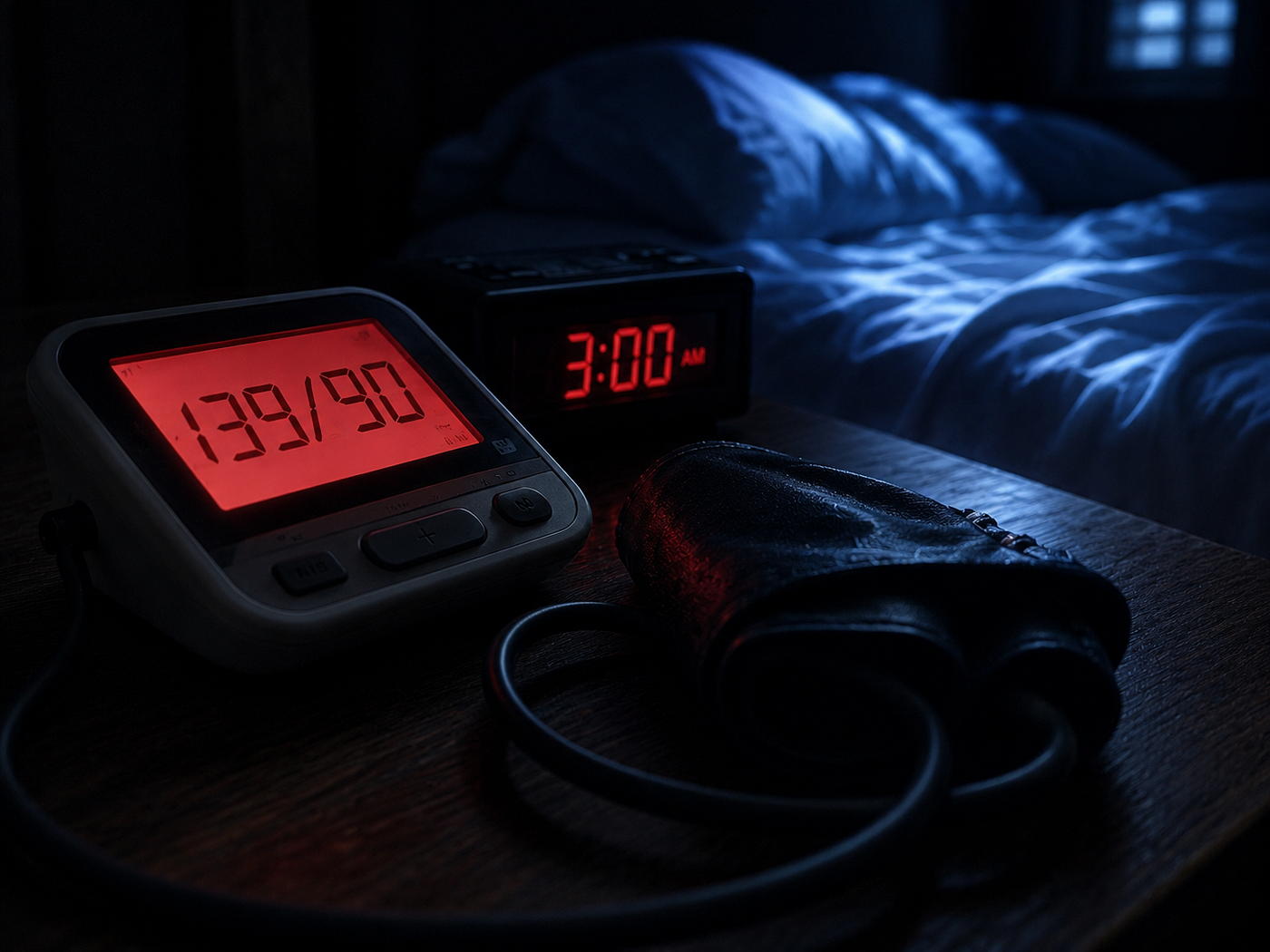
Your Home Blood Pressure Reading Is Probably Wrong. Here’s Why.
Most people with a monitor at home are making at least three technique mistakes — and those mistakes can shift readings by 10 to 20 points.
Your Home Blood Pressure Reading Is Probably Wrong. Here’s Why.
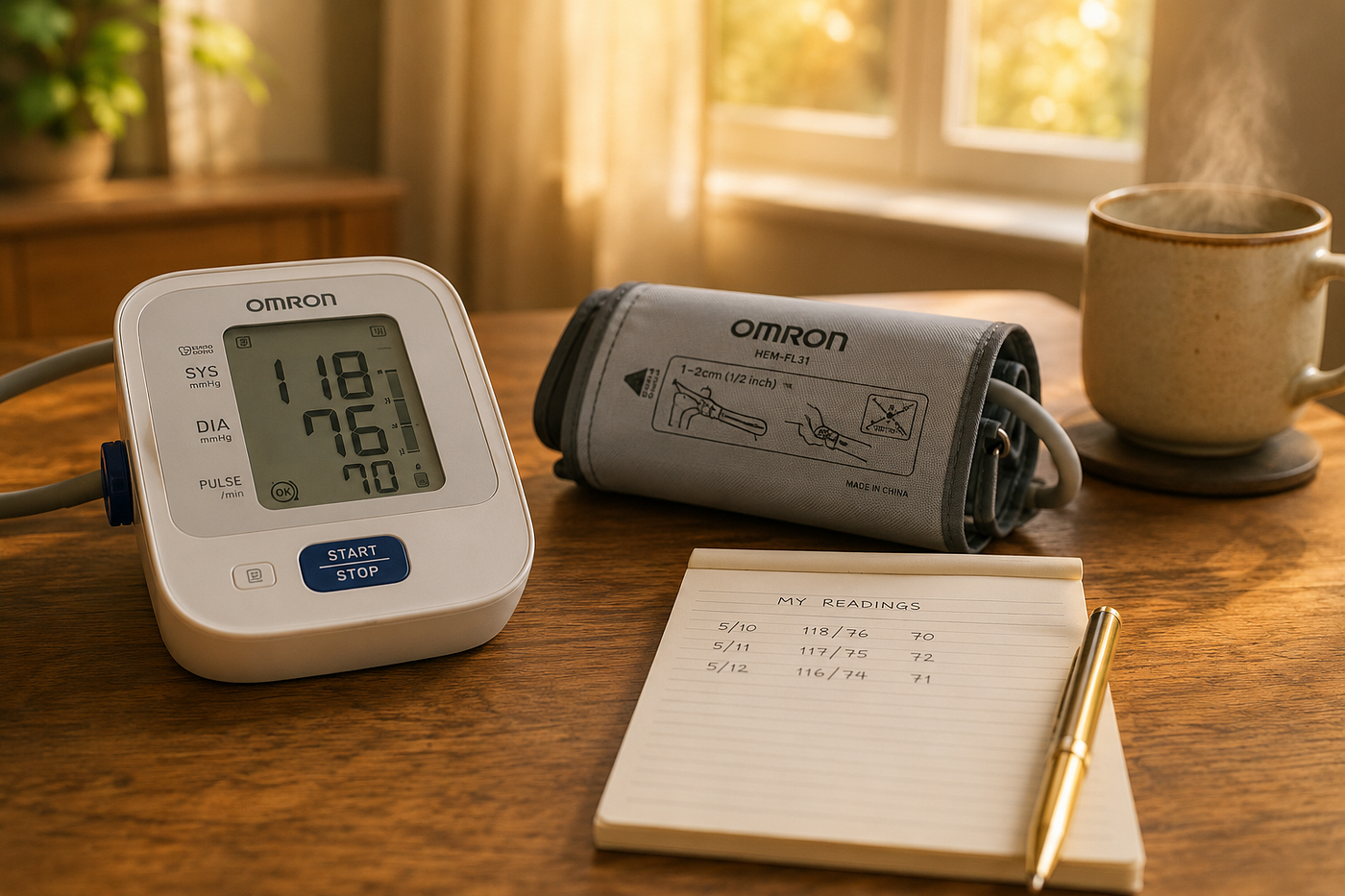
Most people with a monitor at home are making at least three technique mistakes — and those mistakes can shift readings by 10 to 20 points.
By Dr. Tasha | Board-Certified Internal Medicine Physician, 23+ Years of Clinical Practice
If you’ve been checking your blood pressure at home, there’s a good chance the number you’re reading isn’t your actual blood pressure.
Sarah came in on a Tuesday morning running late. She’d gotten a call from her son’s school on the way — nothing serious, but enough to spike her anxiety. She’d cut off someone in a parking lot, felt her heart rate climb, and walked into my office still carrying all of it.
Her blood pressure reading that morning: 146/92.
She was terrified. She’d been working hard for months. Walking every day. Cutting sodium. Watching what she ate. And now this number was sitting in her chart like everything she’d done hadn’t mattered.
I asked her to sit down. I asked her to tell me about her morning.
“Sarah,” I said, “that number tells me what your blood pressure does when you’ve just had a stressful commute and walked straight from the parking lot into a medical office. It doesn’t tell me what your blood pressure does throughout the day.”
I sent her home with a monitor and a very specific set of instructions.
Two weeks later she came back. Her home average: 128/76.
Same woman. Same blood pressure. Completely different data.
Why your doctor’s office reading isn’t the full picture
Blood pressure isn’t static. It changes constantly — in response to stress, activity, time of day, what you ate, how well you slept, whether your bladder is full, whether you talked during the reading. Talking during a blood pressure measurement, by the way, adds 10 or more points on its own.
A single office reading captures one anxious moment in a constantly moving system. And that moment — rushed commute, unfamiliar room, cuff on your arm, waiting for a number — is almost always your most elevated one.
White coat hypertension is so common it has its own clinical name. It affects up to 30% of people diagnosed with hypertension. Their blood pressure spikes in clinical settings but runs normal everywhere else. The opposite also exists: masked hypertension, where readings appear normal at the office but are elevated everywhere else. This one is dangerous because it gets missed.
Neither condition can be identified from a single office reading.
This is why the 2017 ACC/AHA guidelines strongly recommend home monitoring for anyone with elevated readings. Two weeks of twice-daily home readings — two readings per session, one to two minutes apart — gives your physician 56 data points. A quarterly office visit gives them one.
But only if those 56 readings are accurate.
The appointment that changed how I teach home monitoring
Timothy had been checking his blood pressure at home for eight months. He came in with a log — pages of it — confident he had solid data. His readings averaged around 138/84. He was frustrated they weren’t lower despite months of lifestyle changes.
I asked him to show me his technique.
He sat down in the chair across from me, crossed his legs, pulled out his phone to pull up his log — still wearing the cuff — and started talking me through his routine.
I watched three mistakes happen in about 45 seconds.
“Timothy,” I said. “Let me show you what’s been happening.”
He uncrossed his legs. He put the phone down. He sat quietly for five minutes. He took the reading.
128/78.
Ten points lower. From technique alone. In one sitting.
The 7 Mistakes — Quick Reference
These are what I found in Timothy’s routine — and what I see constantly from patients who have been monitoring for years.
Mistake 1: Skipping the five-minute rest. Moving from activity straight to checking gives you a reading that reflects recent movement, not your baseline. Set a timer. Sit. Wait. This single step can lower your reading by 5 to 10 points.
Mistake 2: Crossing your legs. This raises blood pressure. Feet flat on the floor, every time. It sounds small. It isn’t.
Mistake 3: Checking with a full bladder. A full bladder raises blood pressure by up to 10 to 15 points. Use the bathroom first — every time, before every reading.
Mistake 4: Measuring over clothing. Even a thin long-sleeve shirt adds 5 to 10 points. Always measure on bare skin.
Mistake 5: Arm not at heart level. Arm below heart level gives falsely high readings. Support your arm on a table at the height of your heart — not in your lap.
Mistake 6: Talking or using your phone during the reading. Conversation adds 10 or more points. Press start, then go completely still and silent until the cuff finishes.
Mistake 7: Using the wrong cuff size. Too small gives falsely high readings. Too large gives falsely low. Measure your upper arm circumference midway between shoulder and elbow. Standard adult cuffs fit 27–34 cm. If you’re outside that range, you need a different size — and most people never check.
One more thing worth knowing
Not all monitors are created equal.
Wrist monitors are significantly less accurate than upper-arm monitors — highly sensitive to position, highly variable. Finger monitors and phone apps are wellness gadgets, not clinical tools.
What you need is a validated upper-arm automatic monitor. The American Medical Association maintains a free list at validatebp.org — check any monitor before purchasing. Quality monitors run $50 to $100. This is not a place to cut costs. Treatment decisions will be based on these numbers.
What Sarah’s corrected readings actually showed
Two weeks after I sent Sarah home with proper technique instructions, she came back with her log.
Her corrected home average: 128/76.
Her office reading that frantic Tuesday morning had been 146/92. The same woman. The same cardiovascular system. An 18-point difference — almost entirely explained by technique, context, and the difference between a stressed commute and a calm kitchen chair.
We adjusted her care based on what her blood pressure actually does throughout the day. That’s what real data looks like.
Nobody teaches you technique when you buy the monitor. The box says to put the cuff on your arm and press the button. That’s about it. Getting those readings wrong for months — or years — isn’t a failure. It’s a gap in the information you were given. Now you have it.
Your action step this week
Pick one mistake from the list above that you recognize in your current routine. Just one.
If it’s the rest step — set a five-minute timer before every reading starting tomorrow. If it’s the clothing — start measuring on bare skin. If you’re not sure your monitor is validated — look it up at validatebp.org tonight.
One correction. Applied consistently. That’s where accurate data begins.
Don’t guess at your risk. Find out where you actually stand in 60 seconds — free, physician-designed: 🩺 tinyurl.com/drtashahealthknowyourrisk
For the complete step-by-step guide including cuff sizing charts, equipment recommendations, and exactly what to bring to your physician — read the full article: How to Take Blood Pressure at Home the Right Way at drtashahealth.com
Free resource: Download the DASH Recipe Guide → mailchi.mp/d310881df899/dash-recipe-book-lead-magnet
Save this article — and share it with someone who’s been checking their numbers at home.
If this helped you, tap the clap button. It helps more people find this.
Follow me here for calm, evidence-based guidance — written for people managing their health while managing everything else.
About the author Dr. Tasha is a board-certified internal medicine physician with 23+ years of clinical practice. She helps the sandwich generation take back their heart health with evidence-based guidance that fits real life. Author of Blood Pressure Peace — which became a #1 Hot New Release in High Blood Pressure & Heart Health on Amazon. Free DASH Recipe Guide → mailchi.mp/d310881df899/dash-recipe-book-lead-magnet drtashahealth.com
메타데이터
- post_id
- b0ef855309fe
- slug
- your-home-blood-pressure-reading-is-probably-wrong-heres-why-b0ef855309fe
- url
- https://medium.com/@nmeadowsmd/your-home-blood-pressure-reading-is-probably-wrong-heres-why-b0ef855309fe
- canonical_url
- https://medium.com/@nmeadowsmd/your-home-blood-pressure-reading-is-probably-wrong-heres-why-b0ef855309fe
- author_url
- https://medium.com/@nmeadowsmd
- status
- ok
- fetched_at
- 2026-06-09 15:37:30