The Chargeback Cliff: Why 2026 Could Be the Year Friendly Fraud Breaks Game Studios
Key Takeaways
The Chargeback Cliff: Why 2026 Could Be the Year Friendly Fraud Breaks Game Studios
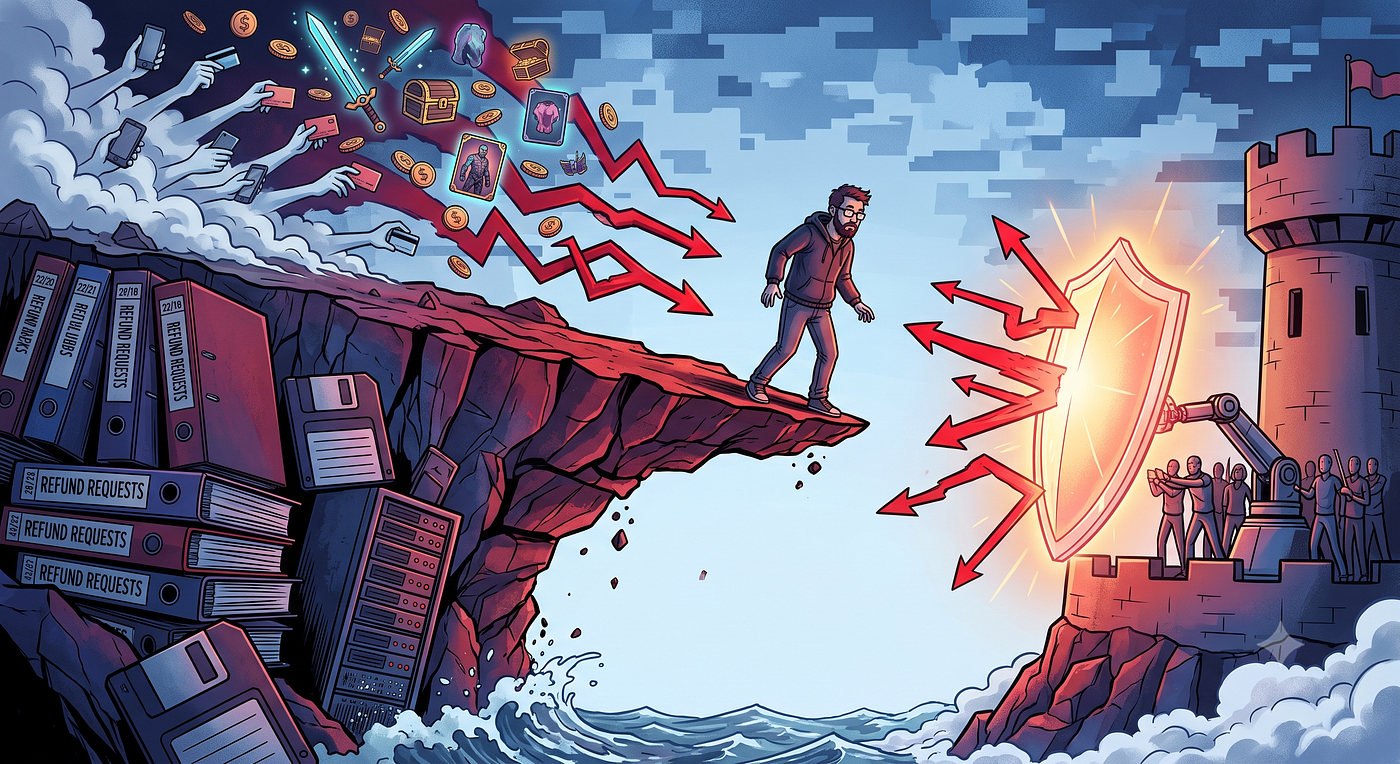
Key Takeaways
- Friendly fraud isn’t theft, it’s a loophole: A real customer makes a real purchase, uses it, then tells their bank the charge was unauthorized — and because digital goods leave no shipping trail, banks usually side with the buyer.
- Visa just made the math brutal: The April 2026 VAMP update dropped the acceptable dispute ratio and attached an $8 fine to every violation, turning what used to be a rounding error into a line item that can erase a month’s margin.
- Where liability sits matters more than how “honest” your players are: Studios billing directly through Stripe or PayPal absorb every dispute personally. Studios routed through a Merchant of Record hand that liability to someone else entirely.
- The cheapest win is the dispute that never happens: Real-time alert networks can flag and resolve a complaint before it ever becomes an official chargeback on your account.
Picture a mid-sized Rust server running a double-XP weekend. Sales spike, Discord lights up, everyone’s happy. Two weeks later, a wave of “I don’t recognize this charge” disputes lands in the owner’s inbox — from players who logged in, used their perks, and screenshotted the loot. Nobody stole a card. Nobody got hacked. The players just discovered that disputing a $15 charge is easier than it should be, and the bank, lacking any physical proof a “delivery” happened, takes their word for it.
This is friendly fraud, and it’s quietly become one of the more dangerous line items in gaming’s payments stack — not because it’s new, but because the rules around it just changed.
Why Digital Goods Are a Magnet for This
Banks are built around physical-world fraud signals: tracking numbers, signatures, delivery confirmations. A rank upgrade or a cosmetic skin has none of that. Combine low-dollar transactions, high purchase volume, and a global player base, and gaming payments already look risky to an issuing bank before a single dispute is filed. That combination is exactly what gives bad-faith chargebacks cover to slip through.
[embed]
The Rule Change That Raised the Stakes
On April 1, 2026, Visa’s updated VAMP guidelines tightened the acceptable dispute ratio and introduced a flat $8 penalty for every violation past the threshold. That sounds small until you run the numbers on a studio doing real volume — a single bad promotional weekend, followed by the inevitable two-week lag before disputes land, can be enough to cross the line and trigger fines that stack fast.

Three Ways Studios Are Actually Responding
1. Trying to out-document it. Some studios keep meticulous internal logs — login timestamps, item delivery records — hoping that’s enough. It rarely is. Banks don’t weigh a studio’s spreadsheet the same way they weigh standardized evidence frameworks.
2. Automating evidence collection. Visa’s Compelling Evidence 3.0 (CE 3.0) framework lets merchants bundle structured proof — device signals, session data, billing descriptors — that banks are far more likely to accept. This is less about “fighting harder” and more about fighting in a format the system actually recognizes.
3. Moving the liability entirely. This is where Merchant of Record (MoR) platforms come in. Under an MoR setup, the platform — not the studio — is the legal seller of record, so the chargeback paperwork, the cardholder statement, and the financial risk all sit with them instead. It’s less “fraud prevention” and more “fraud insulation.” Tebex is one example of a gaming-focused MoR that’s leaned into this, pairing CE 3.0 evidence automation with real-time alert integrations through networks like Ethoca and Verifi — catching a flagged dispute before it ever becomes an official chargeback, which is the cheapest possible outcome for everyone involved.
There’s also a quieter, less talked-about layer: payment routing. A player paying in Brazilian Real through a local method looks completely normal to a Brazilian bank — but route that same transaction through a generic US merchant profile and it can trip fraud filters that have nothing to do with actual fraud. Studios that localize their payment routing tend to see fewer false declines and, indirectly, fewer of the “I didn’t recognize this charge” disputes that come from confused billing descriptors.
What This Actually Means for a Studio Right Now
If you’re running your own Stripe or PayPal integration, the April 2026 changes deserve an honest look at your dispute ratio before a bad weekend forces the conversation. If you’re already on a platform that absorbs MoR liability, it’s worth confirming whether they’re actually using CE 3.0 automation and early-warning alerts, or just processing payments and leaving the dispute fight to you.
FAQ
Is friendly fraud the same as stolen-card fraud?
No. Stolen-card fraud involves someone else’s payment method. Friendly fraud is the account holder themselves disputing a purchase they actually made and used.
Why do banks usually side with the player?
Because digital goods don’t generate the kind of physical proof-of-delivery banks are used to evaluating, the burden of proof defaults heavily toward the buyer unless the merchant supplies standardized evidence.
What’s the realistic risk of crossing Visa’s new dispute threshold?
Beyond the per-violation fee, repeatedly crossing it can affect a merchant account’s standing with the processor, which in worse cases can mean holds or restrictions on funds.
Does this affect studios on Google Play too?
Yes — Google Play’s 2026 policy shifts point the same direction: less tolerance for messy dispute patterns and more of that operational burden landing on developers rather than the platform.
Friendly fraud isn’t going away. But the studios treating it as an operational problem — automating evidence, routing payments intelligently, and being deliberate about who legally owns the liability — are the ones who’ll barely notice the next promo-weekend dispute wave instead of dreading it.
메타데이터
- post_id
- b106e8efb2bd
- slug
- the-chargeback-cliff-why-2026-could-be-the-year-friendly-fraud-breaks-game-studios-b106e8efb2bd
- url
- https://medium.com/@levelupreports/the-chargeback-cliff-why-2026-could-be-the-year-friendly-fraud-breaks-game-studios-b106e8efb2bd
- canonical_url
- https://medium.com/@levelupreports/the-chargeback-cliff-why-2026-could-be-the-year-friendly-fraud-breaks-game-studios-b106e8efb2bd
- author_url
- https://medium.com/@levelupreports
- status
- ok
- fetched_at
- 2026-07-07 05:22:03