New Philippine Eagle nest found in Mindanao Island
Conservationists celebrate the discovery of a new Philippine Eagle nesting site in the lowland forests of eastern Mindanao Island…
New Philippine Eagle nest found in Mindanao Island
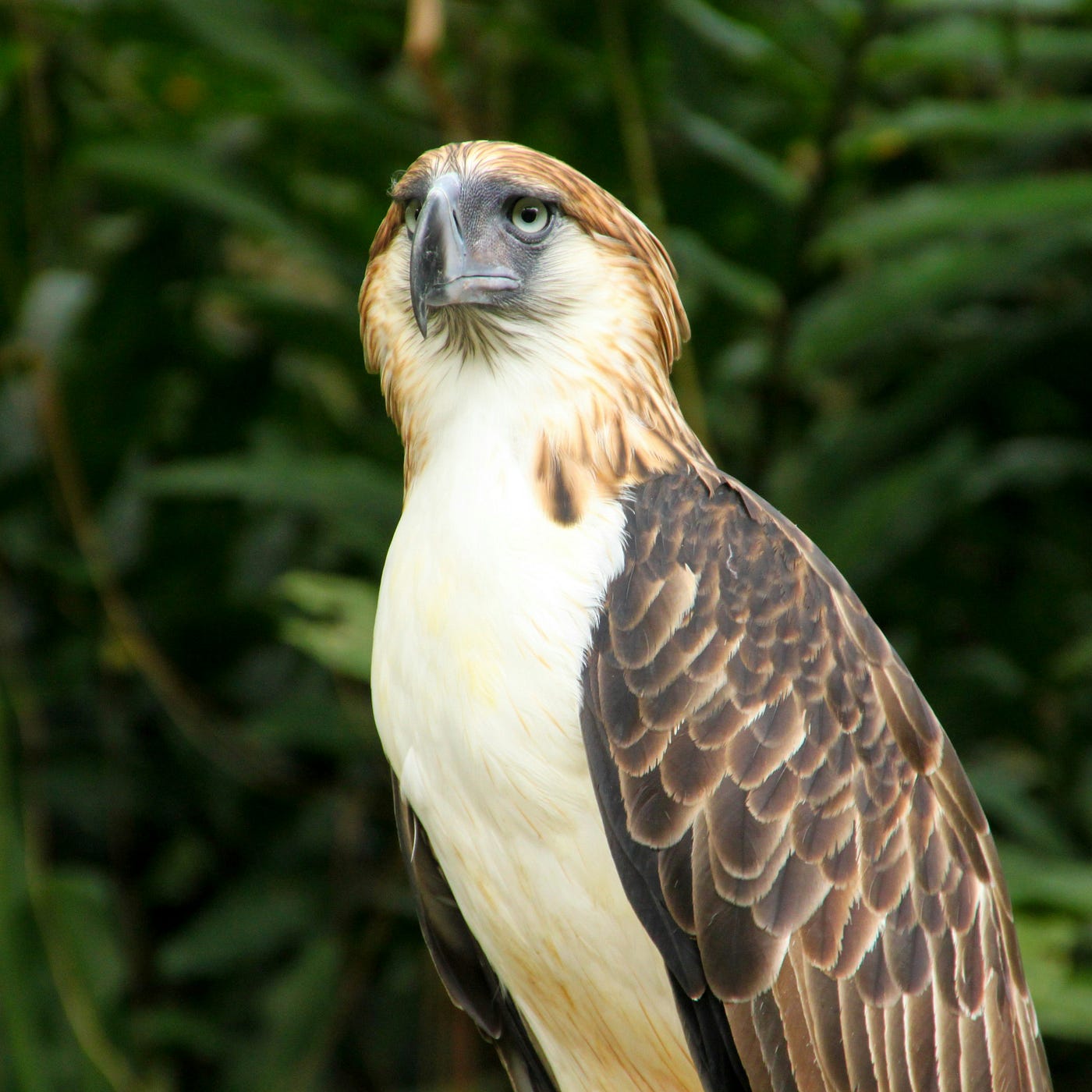
Philippine Eagle (Pithecophaga jefferyi) (Photo by Charles Salutan on Unsplash)
Conservationists celebrate the discovery of a new Philippine Eagle nesting site in the lowland forests of eastern Mindanao Island, Philippines, boosting hopes for expanded conservation amid threats from logging and land clearing.
The Philippine Eagle Foundation (PEF) confirmed an active breeding pair of the critically endangered Philippine Eagle (Pithecophaga jefferyi) in remaining dipterocarp forests in Gigaquit, Surigao del Norte, a rare find that advances nationwide efforts to map and preserve ancient nests.
A breeding pair was confirmed during a biodiversity survey from August to September 2025 in dipterocarp forests at 300–800 meters elevation, according to the Gigaquit municipal government. The site, possibly linked to the 2020 rescue of juvenile eagle “Balikatan” nearby, prompts calls for its designation as a critical habitat.
Jayson Ibañez, PEF director for Research and Conservation, said the find spurs efforts to locate all ancient nesting sites nationwide, with help from local governments, indigenous peoples, and communities.
“We believe that it’s just right, morally right that the Philippine Eagles are safely breeding in their own homes, that’s the goal,” Ibañez said.
Ibañez emphasized that these ancient sites must be protected for safe egg-laying and repopulation, noting the “Balikatan” rescue in Sitio Bayobo, Barangay Mahanub, provided clues to nearby parents.
Habitat and range

Philippine eagle distribution map (Source: IUCN)
Endemic to Luzon, Samar, Leyte, and Mindanao — which hosts most of the estimated 82–233 breeding pairs — the eagle occupies primary dipterocarp forests from lowlands up to 1,800 meters, along with forest edges, second-growth, and gallery forests.
According to IUCN Red List, it forages in secondary growth while relying on large territories averaging 68–133 km² per pair for breeding success.
Conservation threats
Classified as critically endangered by the IUCN Red List, with fewer than 400 pairs remaining, it faces primary threats such as deforestation from legal and illegal logging, agricultural expansion, including palm oil plantations, mining, and settlements that fragment habitats, destroy nests, shrink hunting grounds, and deplete prey through degradation and pesticides.
Secondary risks include poaching despite bans, snares, typhoons from climate change, and inbreeding in isolated populations.
PEF lauded Gigaquit’s forest patrols, deputized guards, and awareness drives, making it a Caraga conservation frontrunner. Calls grow to designate the area as critical habitat to protect the Baoy watershed.
메타데이터
- post_id
- b135f73ddb58
- slug
- new-philippine-eagle-nest-found-in-mindanao-island-b135f73ddb58
- url
- https://medium.com/@ramilmdelrosario/new-philippine-eagle-nest-found-in-mindanao-island-b135f73ddb58
- canonical_url
- https://medium.com/@ramilmdelrosario/new-philippine-eagle-nest-found-in-mindanao-island-b135f73ddb58
- author_url
- https://medium.com/@ramilmdelrosario
- status
- ok
- fetched_at
- 2026-07-18 06:54:35