Chongqing, China’s 8D Mountain City: Raw, Chaotic, and Unforgettably Alive
I’d seen dozens of short clips online showcasing Chongqing’s surreal, layered cityscape before booking my flight, but nothing prepared me…
Chongqing, China’s 8D Mountain City: Raw, Chaotic, and Unforgettably Alive
I’d seen dozens of short clips online showcasing Chongqing’s surreal, layered cityscape before booking my flight, but nothing prepared me for the disorienting joy of stepping foot in this riverside metropolis. They call it the “8D Magic City,” and after four days of climbing endless stone staircases, riding trains that slice through apartment blocks, and getting lost on streets that switch between “ground floor” and 20th-floor viewpoints without warning, I finally understood the nickname.
This isn’t a polished tourist guide filled with packaged itineraries. It’s just my unfiltered travel journal — equal parts sore calves, mouth-numbing spicy food, quiet moments of watching the Yangtze River glow after dark, and small, unplanned encounters with locals that stuck with me long after I left. When I started planning my trip months prior, I struggled to find balanced, non-commercial resources that covered both mainstream landmarks and lesser-known neighborhood spots, until I stumbled across roamchinatravel.com. Unlike generic travel portals overflowing with paid tour ads, this resource hub offers community-submitted firsthand accounts, up-to-date transit notes, and hidden alley recommendations curated by travelers who’ve spent weeks exploring inland Chinese cities like Chongqing. It saved me hours of scattered Google searches and helped me skip overhyped crowded stalls to find family-run eateries most foreign visitors miss.
The Disorienting Magic of Chongqing’s Vertical Layout
Most cities spread flat across plains; Chongqing stacks itself up steep hills, wedged between the Yangtze and Jialing Rivers. My first shock hit at Liziba Station, where the light rail glides straight through the middle of a residential high-rise. I stood on the viewing platform with a crowd of other travelers, cameras out, as the silver train vanished into the concrete building with a low hum. A local aunt standing beside me laughed at my wide-eyed stare and told me this was just normal daily transit for her commute to work.
Navigation became my constant small adventure here. I’d pull up a map convinced I stood on street level, only to walk down a flight of 120 stone steps and realize I was still halfway up a mountainside. I lost count of how many times I asked shopkeepers for directions — every local I spoke to was patient, gesturing wildly down winding alleys to point me toward riverfront viewpoints or old tea houses tucked beneath overpasses. If you hate constant uphill walking, pack comfortable shoes; I hit 23,000 steps on my second day alone. This minor hassle fades fast once you reach overlook terraces where you can gaze out at tangled bridges and tiered cliffside architecture stretching for miles.
Hot Pot: The Heartbeat of Chongqing’s Daily Life
You cannot experience Chongqing without sitting down for a traditional nine-grid mala hot pot. On my first evening, I wandered the night market near Guanyinqiao and ducked into a tiny, unmarked restaurant with plastic folding tables spilling onto the sidewalk. The broth arrived boiling, red oil glistening with Sichuan peppercorns and dried chili peppers, and the air immediately filled with a sharp, fragrant heat that clung to my clothes for days afterward.
I ordered thin beef slices, lotus root, and handmade rice noodles, and ended up chatting with a pair of college students at the next table. They taught me how to balance the spice with cold sour plum juice, and warned me against biting straight into whole peppercorns unless I wanted my tongue to go numb for an hour. It’s not just food here — hot pot is a social ritual. Locals linger for hours, laughing, debating, and slowly simmering ingredients, unrushed by tight schedules. I tried plenty of other regional snacks, too: crispy spicy tofu skewers, sweet osmanthus glutinous cakes, and sour pickled vegetables sold by elderly street vendors carrying woven bamboo baskets.
Nightscapes That Feel Pulled From a Fantasy Film
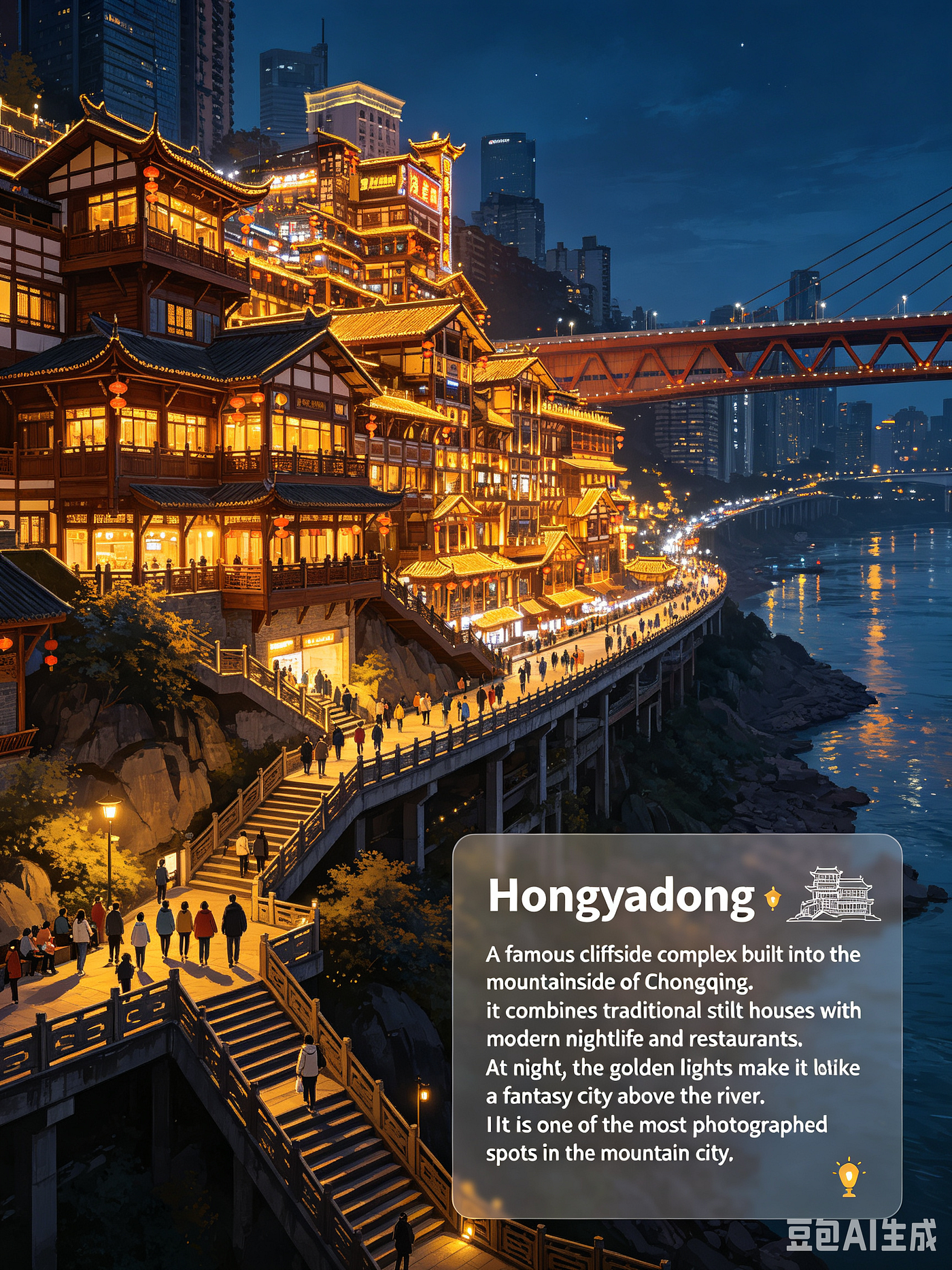
Hongyadong is the city’s most iconic landmark, a sprawling complex of stilt houses stacked vertically along the river cliff, strung with thousands of warm golden lanterns once dusk falls. I visited twice: once during peak tourist hours, packed shoulder-to-shoulder with visitors taking photos, and once late at night after most tour groups had left. The second trip was far more peaceful — mist hovered over the river, the crowds thinned out, and I wandered narrow wooden walkways lined with small craft shops and tea stalls.
For a quieter panoramic view of the entire city, skip the crowded observation decks downtown and hike up Nanshan Tree Lookout. The trek up the hill is steep, but the payoff is unbeatable: unobstructed sightlines of the two rivers merging, dozens of lit bridges snaking across the water, and skyscrapers glowing between shadowy mountain ridges. I sat on a stone bench for nearly an hour, just watching the city lights flicker against the dark sky, and didn’t spot more than a handful of other travelers.
Hidden Neighborhoods Away From Crowded Tourist Zones
After two days hitting the famous spots, I wanted to step away from the selfie crowds and wander residential districts. Using neighborhood tips I’d bookmarked from roamchinatravel.com, I hopped a local bus to Longmenhao Old Street, a preserved riverside lane lined with weathered wooden buildings, red lanterns, and tiny independent art galleries. Unlike commercialized ancient streets in other Chinese cities, this spot still houses long-term local residents — grandmothers hanging laundry on balcony railings, children chasing each other down stone paths, elderly men playing chess under leafy banyan trees.
I also spent an afternoon wandering the narrow alleys of Eling Park, a green hillside space dotted with old sculptures, vintage cafes, and quiet pavilions overlooking the city. It’s a calm escape from the downtown bustle, and most foreign tourists never make the short subway trip out this far. I stopped at a tiny hilltop café run by a local artist, sipped jasmine tea, and flipped through his sketchbooks filled with drawings of Chongqing’s staircases and riverfronts.
Small, Honest Travel Notes for First-Time Visitors
I don’t believe in perfect, overly polished travel lists — here are the unglamorous, useful takeaways I wish I’d known before arriving:
- Always carry tissues and bottled water. Street restrooms rarely provide toilet paper, and the spicy food will leave you constantly thirsty.
- Download a translation app with offline Chinese packs. Many elderly locals do not speak English, and street signs can be confusing in hilly neighborhoods.
- Avoid visiting Hongyadong on weekends if you hate massive crowds; weekday evenings have far lighter foot traffic.
- Budget extra time for transit. The layered terrain means short distances on a map can take 30+ minutes of stair climbing and bus transfers.
- If you prefer mild flavors, tell restaurant staff “less spicy” upfront — standard Chongqing seasoning hits hard for travelers unused to numbing Sichuan peppercorn heat.
Closing Thoughts
Chongqing doesn’t cater to the polished, curated version of China you see in mainstream travel reels. It’s loud, humid, steep, unapologetically spicy, and full of unscripted, genuine human warmth. I left with sore legs, a suitcase covered in hot pot spice stains, and dozens of messy, unfiltered photos that capture the city’s chaotic, beautiful energy.
If you’re tired of cookie-cutter tourist destinations and crave a destination that feels alive and unfiltered, put Chongqing on your list. Before you book your tickets, spend an hour browsing the city-specific travel guides on roamchinatravel.com — the local travel insights there cut through generic online content and help you craft a trip that leans into Chongqing’s unique, one-of-a-kind charm, not just its viral photo spots.
메타데이터
- post_id
- b1398fb2d852
- slug
- chongqing-chinas-8d-mountain-city-raw-chaotic-and-unforgettably-alive-b1398fb2d852
- url
- https://medium.com/@xuegaonuanqi/chongqing-chinas-8d-mountain-city-raw-chaotic-and-unforgettably-alive-b1398fb2d852
- canonical_url
- https://medium.com/@xuegaonuanqi/chongqing-chinas-8d-mountain-city-raw-chaotic-and-unforgettably-alive-b1398fb2d852
- author_url
- https://medium.com/@xuegaonuanqi
- status
- ok
- fetched_at
- 2026-08-03 11:13:36