Falling Down the Food Dehydrator Rabbit Hole, One Apple Slice at a Time
Imagine it’s 2020 again and you have all the time in the world, but you’ve forgotten who you are and what you like. So you try drawing, and…
Falling Down the Food Dehydrator Rabbit Hole, One Apple Slice at a Time
Imagine it’s 2020 again and you have all the time in the world, but you’ve forgotten who you are and what you like. So you try drawing, and knitting and cooking until finally you look outside at the garden and something clicks.
So you plant little herbs and make a wish on trees and bushes on bushes of strawberries.
It’s only now, over 6 years later, that the little hobby turns fruitful, you’ve managed to keep the pests away, and you’re finally producing more than your little family can eat in a week.
And now you need a way to store it. You tried freezing it — loses it’s oomph, you tried brining it — went bad in a month.
So you go down the food dehydrator worm hole and you never make your way out.
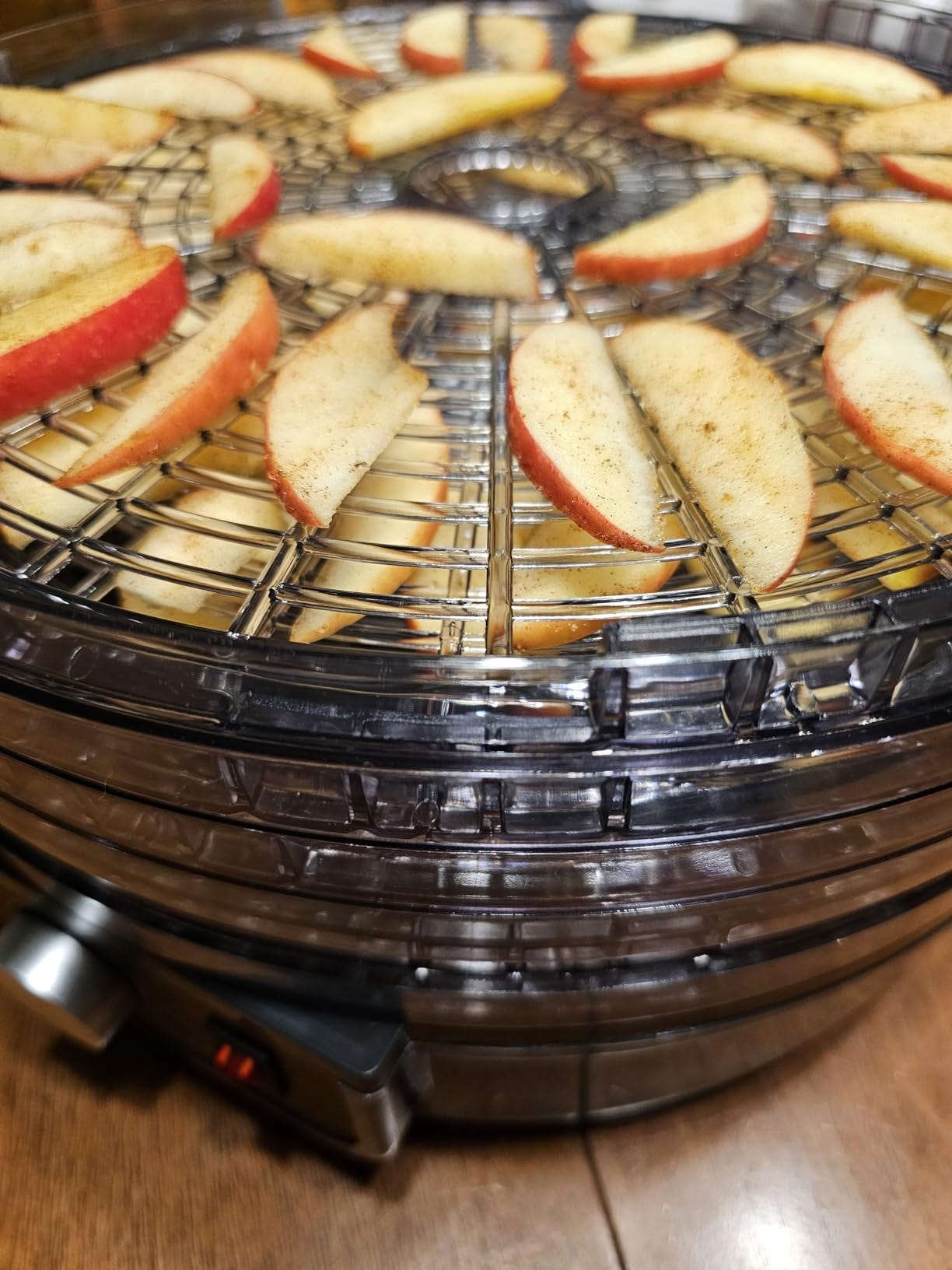
What a Food Dehydrator Actually Does
What I needed first was a proper introduction to what food dehydration is and how it works. Didn’t find one that broke it down super simply when I was researching, so I’ll do that for you.
A dehydrator works on a very simple concept:
Low heat + circulating air = food preservation.
Instead of cooking food, it slowly removes moisture. That moisture is what bacteria and mold need to grow, so when you remove it, the food doesn’t go bad. Simple.
But can’t you do this on your own in an oven?
No!
Look, I’m the first to be frugal and DIY anything and everything I can, you gotta have that skillset in a single income household in this era.
But I couldn’t quite get the temperature to maintain itself, even if you’re on low heat, the heat accumulates in the oven and the food ends up cooking sooner rather than later, even if you’re taking the batch out and cooling it every hour.
Actual dehydrators use a controlled temperature and fan system to dry foods evenly, especially keeping it between 95°F and 165°F.
Which One Do I Go For?
The market is endless, the decisions are countless and it’s all at your fingertips.
All you have to do is find something cheap, and find something with tiers. That’s it. That’s the only reason why you land on the Nutrichef one.
- If you have a hobby garden, you don’t need to get the dehydrator out more than a couple of times a season
- You need the tiers to make the process go faster, dehydrating takes a famously long time. So 4 birds with one stone, shove your strawberries, peppers, mangoes in there all at once in different trays.
The technology and mechanism stays the same across the board, good temperature control is no longer a patent protected technology, so unless you want more capacity, you don’t need to be spending a lot of money.
What Can I Dehydrate?
EVERYTHING! I’m gonna follow this up with a section on recipes, tried and tested, and what you can do with the preserves.
Dehydrated Apple Chips
Ingredients
- 2–3 apples
- Optional: cinnamon or lemon juice
Steps
- Wash and thinly slice apples (about ⅛–¼ inch thick).
- Remove seeds but keep the peel for extra fiber.
- Optional: lightly toss slices in lemon juice to prevent browning.
- Arrange slices on dehydrator trays without overlapping.
- Dry at 135°F (57°C) for 6–8 hours.
These are great healthy snacks or garnishes for oatmeal, you can keep them in an airtight jar so they don’t go floppy.
Dehydrated Strawberries
Ingredients
- Fresh strawberries
Steps
- Wash and remove the stems.
- Slice strawberries into thin pieces (about ¼ inch).
- Place them flat on dehydrator trays.
- Dry at 135°F (57°C) for 6–8 hours.
Sweet, chewy strawberry slices, you put these into yogurt or cereal or make your own trail mix.
Dehydrated Jalapeños
Ingredients
- Fresh jalapeños
Steps
- Slice peppers into thin rings (use gloves if you’re sensitive to capsaicin).
- Spread slices across the dehydrator trays.
- Dehydrate at 125–135°F for 8–10 hours.
Now you have your crispy jalapenos right? You can crush them all up in a food processor and voila, chilli powder at home. Love putting these into little jars and distributing them among neighbours, one jalapeno plant goes such a long way.
Being Neighbourly
What you don’t expect from getting a food dehydrator is your creativity coming out.
Now you have all of these wonderful preserves, what do you do with them? You become more neighbourly, of course.
The apple chips go into a jar of nuts and raisins and strawberries as some trail mix you give out at garden parties.
The crushed jalapeno powder becomes a great garnish for potlucks, you find yourself giving away little pouches.
You even try your hand at beef jerky and seal it into packets as snacks for the kids playing in your garden all day.
메타데이터
- post_id
- b14151580c2f
- slug
- falling-down-the-food-dehydrator-rabbit-hole-one-apple-slice-at-a-time-b14151580c2f
- url
- https://medium.com/@zh47/falling-down-the-food-dehydrator-rabbit-hole-one-apple-slice-at-a-time-b14151580c2f
- canonical_url
- https://medium.com/@zh47/falling-down-the-food-dehydrator-rabbit-hole-one-apple-slice-at-a-time-b14151580c2f
- author_url
- https://medium.com/@zh47
- status
- ok
- fetched_at
- 2026-07-15 02:14:29