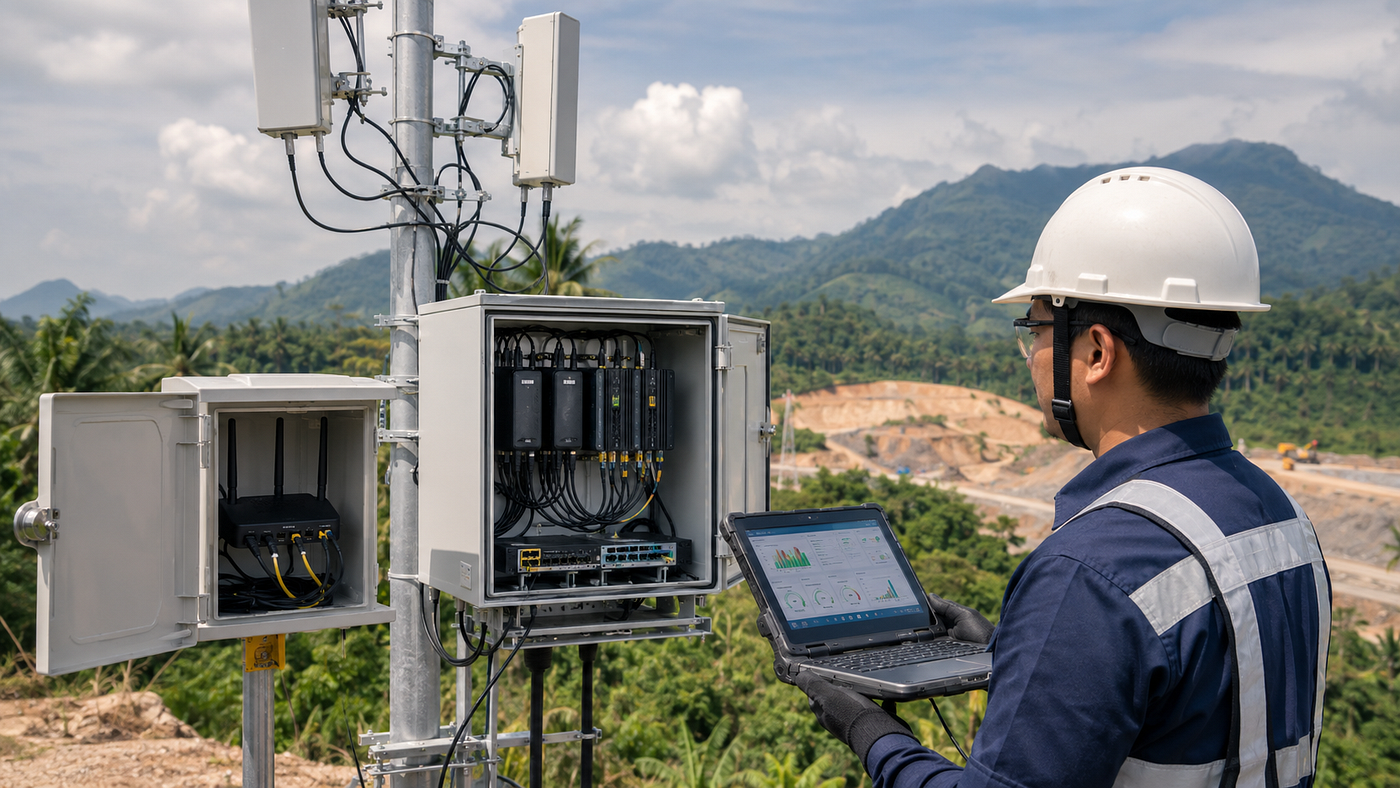
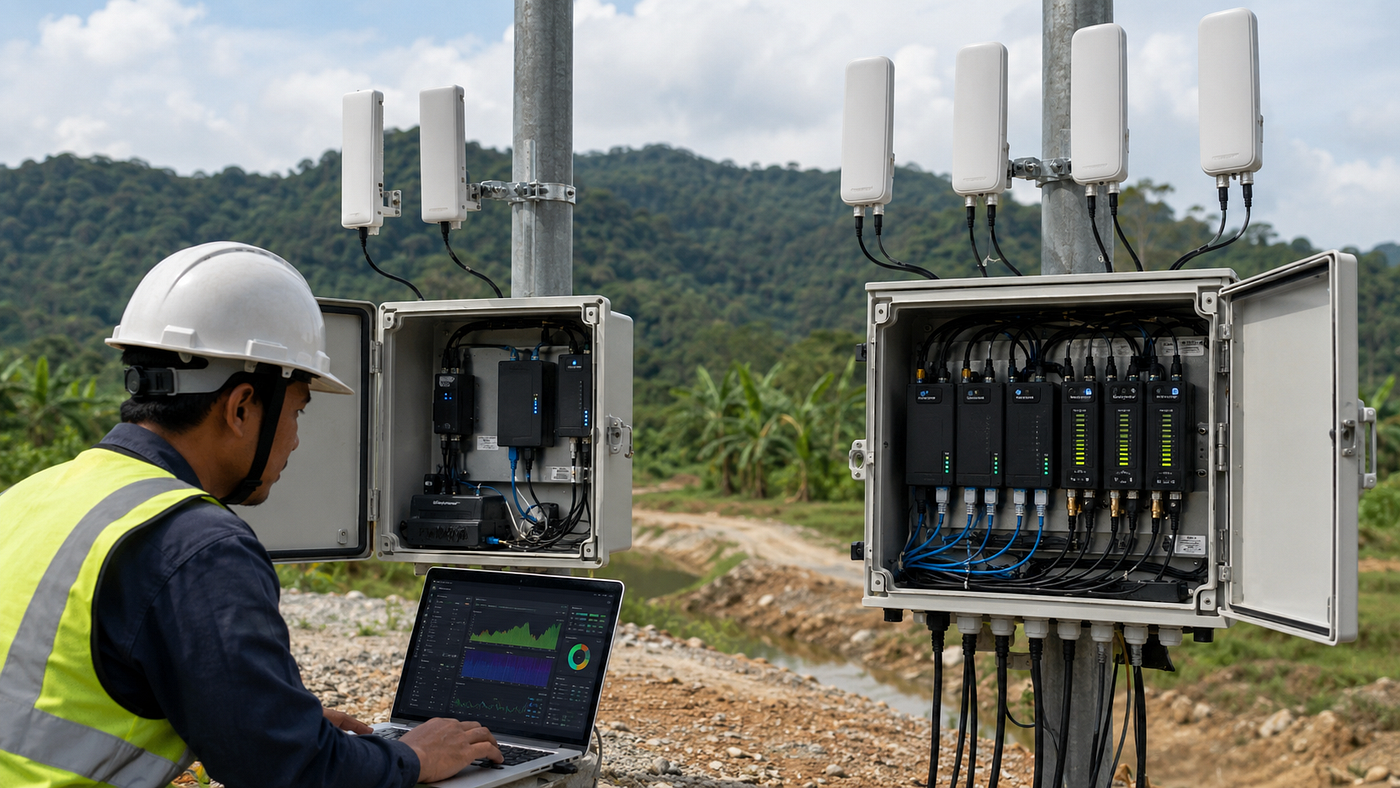
Why Remote Sites Need More Than Normal Mobile Internet
A practical look at remote connectivity, telco coverage, failover, and multi-SIM ISP bonding for field operations.
Why Remote Sites Need More Than Normal Mobile Internet
A practical look at remote connectivity, telco coverage, failover, and multi-SIM ISP bonding for field operations.
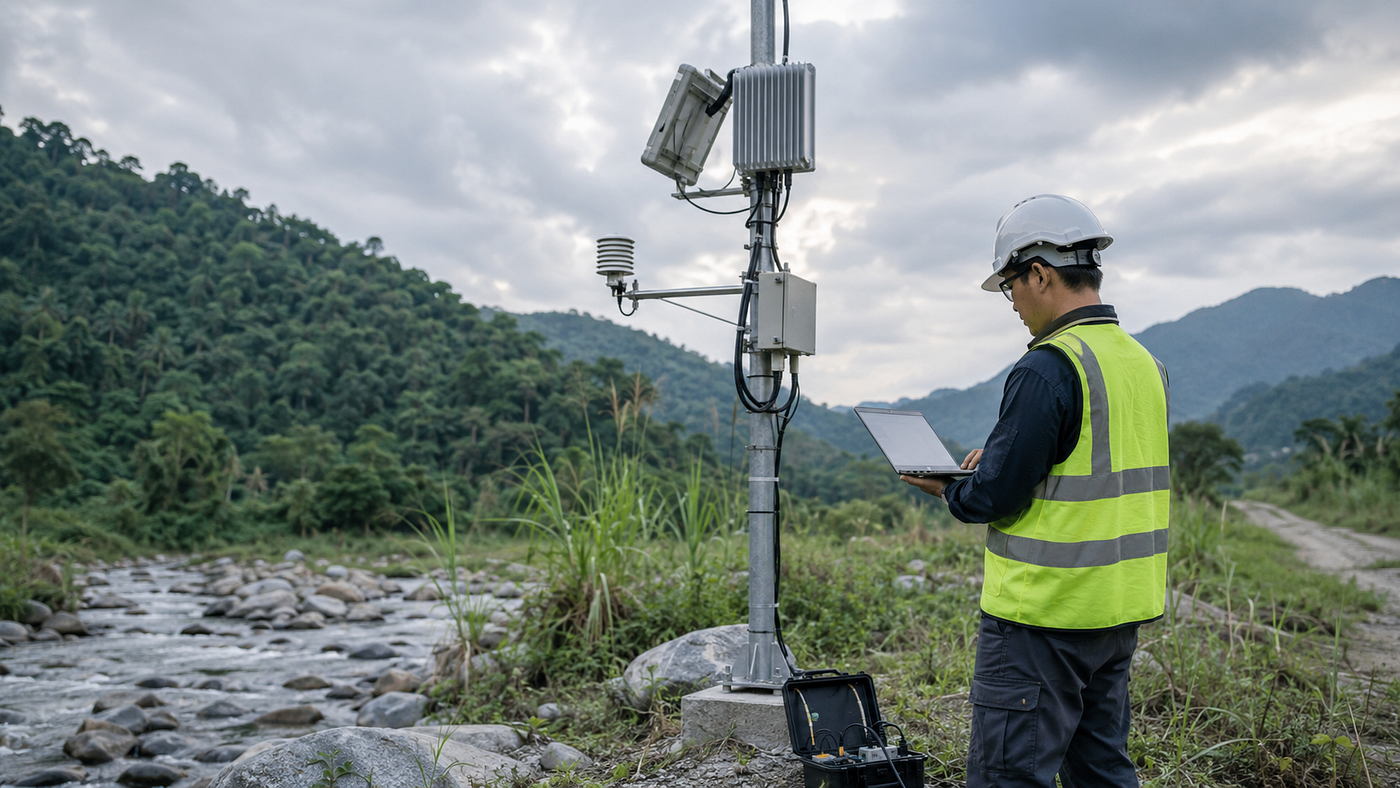
Remote sites are becoming more connected than ever.
Weather stations, environmental monitoring points, infrastructure projects, live cameras, drone operations, temporary field offices, and data collection systems all need internet access. But in many real-world locations, normal mobile internet is not enough.
The issue is not just whether a SIM card has coverage.
The real issue is whether the connection is stable enough to support the work that needs to happen at the site.
A remote site may need to send data to the cloud. It may need to support a monitoring dashboard. It may need to carry a live video feed. It may need to keep VPN, VoIP, or operational apps connected. It may need to stay online even when one telco provider becomes weak or unstable.
That is where the conversation needs to move beyond normal mobile broadband.
The problem with single-SIM dependency
Many remote sites start with a simple setup: one router, one SIM card, one telco.
This may work in a good coverage area. But at remote, rural, temporary, or hard-to-reach locations, the connection can become inconsistent.
A site may experience:
- weak signal strength
- unstable upload speed
- packet loss
- changing network quality during rain or congestion
- downtime when one provider has an issue
- slow performance when video, cloud apps, or data upload run together
For simple browsing, this may be acceptable.
For operational use, it can become a real problem.
When the internet connection drops, the team may lose access to the site. Data may stop uploading. The camera feed may freeze. Remote visibility becomes unreliable.
Failover helps, but it is not the full answer
A common solution is failover.
In a failover setup, the router uses one main connection. If that connection fails, it switches to another SIM or provider.
This is useful. It gives backup.
But failover is not the same as bonding.
With failover, only one connection is usually active for the main traffic at a time. The other connection waits as backup.
That means the site may still be limited by the speed and stability of one provider at any given moment.
For remote operations that need better bandwidth availability and smoother continuity, failover alone may not be enough.
What multi-SIM ISP bonding does differently
Multi-SIM ISP bonding combines multiple internet connections into one bonded broadband connection.
Instead of using only one SIM at a time, bonding allows several connections from different providers to work together.
For example:
CelcomDigi + Maxis + Yes
Instead of treating them as separate backup lines, a bonding system can combine them into one stronger connectivity layer.
This can help improve:
- bandwidth availability
- provider redundancy
- connection stability
- session continuity
- remote access reliability
- support for higher-demand applications
This is especially useful when a site depends on cloud apps, VPN, VoIP, video feed, dashboard access, or data upload from the field.
Why this matters for remote monitoring and data collection
Remote monitoring is only as strong as the connectivity behind it.
A camera system cannot provide real-time visibility if the network cannot carry the video feed.
A data collection system cannot support decision-making if field data cannot reach the platform reliably.
A drone live feed loses value if the connection delay is too high or unstable.
A dashboard becomes less useful if the site keeps disconnecting.
This is why remote connectivity should be treated as part of the infrastructure, not just an accessory.
For many remote projects, the internet connection is the foundation that supports everything else.
Where bonded connectivity can be useful
A multi-SIM ISP bonding approach can be useful for many field scenarios, including:
- weather and environmental monitoring sites
- remote data collection projects
- live camera streaming
- drone operation support
- temporary field offices
- infrastructure and construction sites
- flood-prone or hard-to-access locations
- mobile command points
- remote operational monitoring
In these environments, the goal is not simply to “get internet”.
The goal is to create a more reliable connectivity layer that supports the actual operation.
Introducing Konvertek by Ingenieum
Konvertek is Ingenieum Solutions’ multi-SIM ISP bonding system for remote connectivity.
It is designed for sites where normal single-SIM mobile internet is not enough.
Konvertek is not just a failover router. It is positioned to combine multiple telco connections into one bonded broadband connection, helping remote sites improve connectivity stability, bandwidth availability, and provider redundancy.
For organizations working with remote sites, data collection, live monitoring, cameras, drones, and field operations, this type of connectivity can make the difference between having a system that works only sometimes and having a system that can support real operational use.
Learn more about Ingenieum’s multi-SIM ISP bonding system here: https://ingenieum.com.my/konvertek-multi-sim-isp-bonding/
Remote connectivity is now part of operational readiness
Remote sites are no longer isolated points on a map.
They are connected assets.
They collect data. They stream video. They support field teams. They feed dashboards. They help decision-makers understand what is happening on the ground.
But none of that works well without reliable connectivity.
For organizations planning remote monitoring, data collection, or live site visibility, the connectivity layer should be designed early.
Not after everything else fails.
A practical remote site strategy starts with one question:
Can the site stay connected well enough for the work it needs to support?
If the answer is uncertain, normal mobile internet may not be enough.
메타데이터
- post_id
- b14becc08cda
- slug
- why-remote-sites-need-more-than-normal-mobile-internet-b14becc08cda
- url
- https://medium.com/@ingenieum777/why-remote-sites-need-more-than-normal-mobile-internet-b14becc08cda
- canonical_url
- https://medium.com/@ingenieum777/why-remote-sites-need-more-than-normal-mobile-internet-b14becc08cda
- author_url
- https://medium.com/@ingenieum777
- status
- ok
- fetched_at
- 2026-07-21 04:11:29