Your Farm Data Should Belong to You: Here’s Why Most AgTech Companies Disagree
The same precision agriculture tools promising to revolutionize farming are quietly centralizing your most sensitive operational data in…
Your Farm Data Should Belong to You: Here’s Why Most AgTech Companies Disagree
The same precision agriculture tools promising to revolutionize farming are quietly centralizing your most sensitive operational data in corporate-controlled servers. Privacy policies are not enough when livelihoods are at stake: farmers need technical guarantees, not legal promises, that their data cannot be exploited.
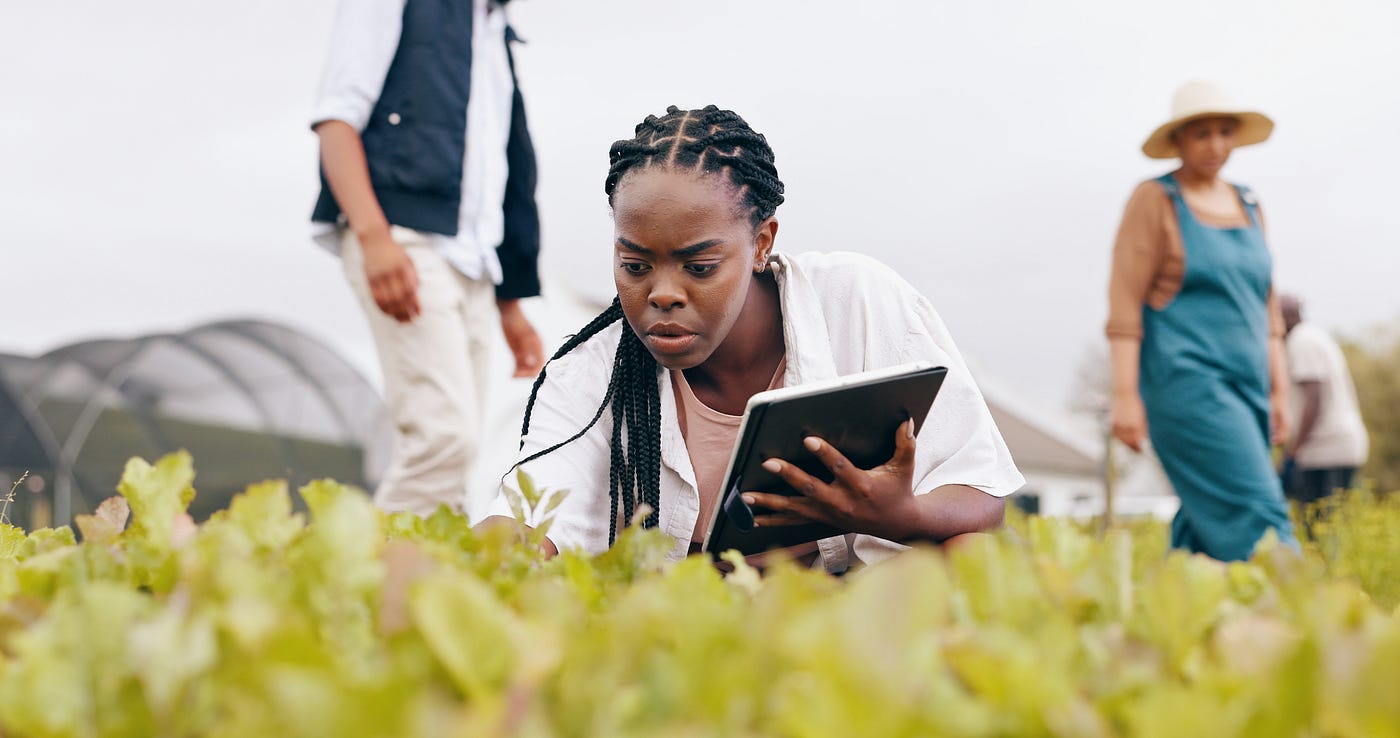
Imagine handing over the keys to your farmhouse, your seed receipts, your yield history, and your daily work diary to a corporation halfway across the world.
Now imagine they promise, cross their heart, to only peek when absolutely necessary. They wrote it in a privacy policy. In tiny font. On page 47.
This is what millions of farmers are being asked to do daily.
Precision agriculture has unlocked extraordinary possibilities. Satellites map your fields. Sensors track your soil. Algorithms predict your harvest. But behind the curtain of agricultural innovation lies a less discussed reality: most of your farm data is being funnelled into centralised cloud servers controlled by a handful of corporations.
And here is where the story gets uncomfortable.
The Trust Problem
Farmers have long memories. They remember what happens when power in agricultural markets concentrates in too few hands. They have lived through asymmetric relationships with input suppliers, commodity buyers, and insurance providers: relationships where one side holds all the cards. Handing over granular data about crop yields, disease patterns, and resource use is not a neutral act. It is an act of trust placed in systems designed by people who have never stepped in a field at dawn.
Bronson and Knezevic raised critical questions about this exact dynamic back in 2016: Who owns agricultural big data? Who benefits? And most importantly, who is disadvantaged when that data is turned against them?
The answers remain deeply unsatisfying.
“Trust Us” Is Not an Architecture
A privacy policy is a piece of paper. Or more accurately, a webpage. It can be changed with a notification email. Breached by a rogue employee. Rendered meaningless by an acquisition or a new revenue strategy.
In developing countries, the situation is even more precarious. Weak data protection laws offer little recourse. A farmer in rural Kenya or India has no practical path to challenge how their data is used once it vanishes into a distant data centre.
This is not about bad intentions. It is about bad architecture.
When data centralises, when thousands of farms’ worth of sensitive operational intelligence pools in the same corporate servers, the incentives shift. That data becomes valuable to insurance companies, input suppliers, commodity traders, and competitors. Even if the company collecting it today has noble intentions, the architecture itself creates temptation. It creates vulnerability. It creates a single point of failure where your livelihood becomes a line item in someone else’s business model.
What If Trust Was Not Required?
Here is where the conversation needs to change. The question should not be “do you trust this company with your data?” The question should be: “is it technically possible for this company to exploit your data, even if they wanted to?”
This distinction matters enormously. A legal prohibition says “we promise not to.” A technical guarantee says “we physically cannot.” The difference is between a locked door and a door that does not exist.
Edge computing, processing data on or near the farm rather than shipping it to distant servers, fundamentally changes this equation. When sensitive crop data is analysed locally, at the edge of the network, the raw information never needs to leave the farmer’s control. Insights can be generated. Decisions can be informed. And the underlying data, the granular, commercially sensitive details of your operation, stays where it belongs: with you.
This is not merely a privacy preference. It is an architectural choice that reflects respect for the farmer as a sovereign decision-maker, not a data source to be harvested.
The Stakes Are Higher Than You Think
Consider what your farm data reveals. Yield maps expose your best and worst-performing land. Disease patterns hint at your crop varieties, your management practices, your vulnerabilities. Resource use data sketches the economics of your operation in fine detail.
In aggregate, this information could influence land valuations, input pricing, insurance premiums, and commodity contracts. It could provide competitive advantages to market players operating at scales that dwarf your own.
A privacy policy does not protect against this. Technical design does.
At the University of Nottingham, School of Computer Science, my research into responsible agricultural technology continues to explore how we can build systems that serve farmers without extracting from them. The goal is not anti-technology; it is pro-farmer. It is about building tools where privacy is not a feature you read about in a policy document, but a property you can verify in the system’s design.
The Bottom Line
Farmers have spent generations learning not to trust blindly. They read the weather without a forecast. They judge soil with their hands. They know that promises are easy, but structures are what endure.
The next generation of agricultural technology needs to earn its place in the field, not through glossy dashboards alone, but through architectures that make data exploitation technically infeasible. Not merely prohibited by policy. Made impossible by design.
Because when your livelihood is on the line, trust is a luxury. Guarantees are what matter.
Agriculture #AgTech #DataPrivacy #PrecisionFarming #FarmDataRights
메타데이터
- post_id
- b17d9a6dc2ea
- slug
- your-farm-data-should-belong-to-you-heres-why-most-agtech-companies-disagree-b17d9a6dc2ea
- url
- https://medium.com/@obedkingjohnson/your-farm-data-should-belong-to-you-heres-why-most-agtech-companies-disagree-b17d9a6dc2ea
- canonical_url
- https://medium.com/@obedkingjohnson/your-farm-data-should-belong-to-you-heres-why-most-agtech-companies-disagree-b17d9a6dc2ea
- author_url
- https://medium.com/@obedkingjohnson
- status
- ok
- fetched_at
- 2026-07-09 09:01:30




