The 9 Objections Your Telemarketer Should Be Crushing — And Exactly How a Skilled SDR Handles Each…
A director’s guide to evaluating, training, and outsourcing cold calling talent that doesn’t fold the moment a prospect pushes back.
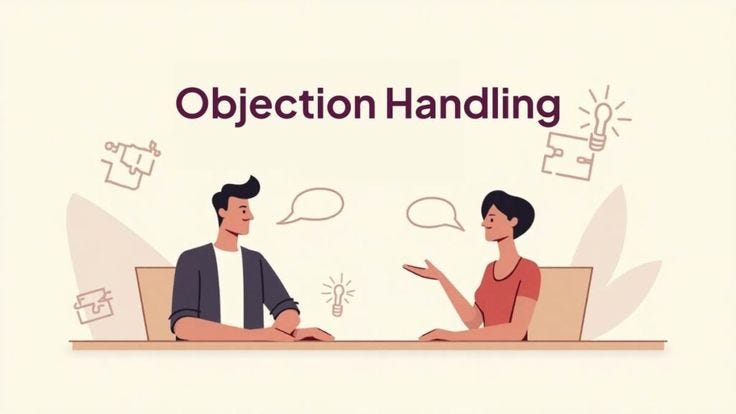
The 9 Objections Your Telemarketer Should Be Crushing — And Exactly How a Skilled SDR Handles Each One
A director’s guide to evaluating, training, and outsourcing cold calling talent that doesn’t fold the moment a prospect pushes back.
If you manage a sales team or run an outsourced outbound operation, you already know the number one reason cold calling campaigns underperform.
It’s not the list. It’s not the script. It’s not the time of day or the industry or the economy.
It’s the moment a prospect says “not interested” — and your caller says “okay, sorry to bother you” and hangs up.
That moment, repeated hundreds of times a day across your team, is where pipeline goes to die.
I’m a B2B Cold Calling Specialist and SDR who’s worked across Merchant Cash Advance, DOT/FMCSA compliance, transportation, solar, janitorial, and water services campaigns. My MCA close rate sits at 50–70%. At peak, I was onboarding 5–17 new clients per week across simultaneous campaigns.
None of that happens without a repeatable, instinctive objection handling framework.
This article is for Directors of Sales, outsourcing managers, and team leads who are either hiring cold callers for the first time or looking to upgrade the quality of their existing outbound function. I’m going to walk you through the 9 most common objections in B2B cold calling — and show you exactly how a trained SDR handles each one.
Use this as a hiring rubric. Ask these scenarios in your next interview. The answers will tell you everything about whether a candidate is a real cold caller or someone who gives up at the first sign of resistance.
Why Objection Handling Is the Only Metric That Actually Predicts Performance
Most hiring managers screen cold callers on the wrong things.
They look at call volume (easy to fake), years of experience (irrelevant without results), or how confident someone sounds on a discovery call (different skill entirely from live cold calling).
The only reliable predictor of cold calling performance is how a caller behaves when a prospect pushes back.
Here’s why: the average B2B cold call encounters a resistance signal within the first 20 seconds. Whether that signal is a flat “not interested,” a gatekeeper brush-off, a genuine question about pricing, or a stall about timing — how the caller responds in that moment determines whether the call has a chance of producing anything.
A caller who folds at the first objection is burning your list. They’re not generating pipeline — they’re generating activity metrics that look like work but produce nothing.
A caller who has internalized a real objection handling framework treats each pushback as information — data about where the prospect is, what they’ve tried before, and what they’re actually concerned about. That information, handled well, is the path to a booked meeting.
Here are the 9 you need to know.
Objection 1: “I’m Not Interested.”
What most callers do: Apologize and hang up.
What a trained SDR does: Recognizes this as a reflexive response, not a considered decision, and uses it as an opening.
“That’s completely fair — I get that a lot in the first few seconds. Most people I speak to say the same thing before they hear what we’ve actually been able to do for [similar business type]. Can I take 45 seconds? If it’s not relevant, tell me to stop.”
The key mechanics here: you’ve acknowledged their response without accepting it as final, you’ve referenced social proof (similar businesses), and you’ve given them control by offering a clear exit. Most prospects will say yes to 45 seconds — because 45 seconds feels low-commitment.
What to listen for in an interview: Does the candidate have a natural, conversational recovery — or do they recite a memorized line that sounds scripted? A real cold caller sounds like a human being, not a bot running an if-then loop.
Objection 2: “We Already Have Someone for That.”
What most callers do: Say “Oh, great — who are you using?” and immediately lose control of the conversation.
What a trained SDR does: Validates the existing relationship while opening a gap question.
“That’s good to hear — it means you already see the value in this. I’m not here to replace anyone. I’m curious though — is everything fully covered, or is there a specific area that’s still a bit of a gap? Because that’s usually where we end up helping most.”
This reframe does two things simultaneously: it removes the threat of competition (no one wants to fire their current vendor mid-call) and it plants a seed of curiosity about unmet needs. The gap question is everything — it turns the objection into a diagnostic conversation.
Hiring application: This objection separates callers who have real consultative instincts from those who only know how to sell when there’s no resistance. In your next hire interview, say this line and watch how they respond in real time.
Objection 3: “Send Me an Email.”
What most callers do: Say “Sure!” and send a generic email that never gets read.
What a trained SDR does: Uses the email request to earn two qualifying questions before agreeing.
“Absolutely, happy to send something over. And so I’m not just adding to your inbox, two quick questions: What’s most relevant to you right now — [option A] or [option B]? And is email the best way to follow up, or is there a better channel for you?”
The email request is rarely a genuine ask — it’s usually a polite deflection. By asking two questions before agreeing, you’ve re-engaged them in a conversation. If they answer, you’ve got a warm follow-up. If they insist on email only, you’ve still got useful intel about their communication preferences and pain points.
Objection 4: “We Don’t Have the Budget Right Now.”
What most callers do: Offer a discount or say they’ll call back next quarter.
What a trained SDR does: Diagnoses whether it’s a real budget issue or a priority issue — because these require completely different responses.
“I hear you — budget’s a real thing. Help me understand though: is it that the funds genuinely aren’t there, or is it more that this isn’t on the priority list for right now? Because those are two pretty different situations and I’d rather know which one I’m actually dealing with.”
Most “budget objections” are actually priority objections. If it were the right solution at the right time, budget would appear. A skilled caller knows this and gently makes the prospect acknowledge it — which opens a conversation about what would make it a priority.
Objection 5: “I Need to Talk to My Boss / Partner / Board.”
What most callers do: Say “Sure, of course” and wait for a callback that never comes.
What a trained SDR does: Helps the prospect make that internal conversation easier — which simultaneously keeps the deal moving and positions you as a resource, not a pusher.
“Completely makes sense. I want to make that conversation as easy as possible for you. What’s the one thing your partner would need to be convinced of first? I can make sure you’ve got exactly what you need to walk in there with confidence.”
This approach achieves three things: it keeps you in the conversation, it gives you intelligence about the internal decision-making process, and it positions the SDR as a partner in the sale rather than a vendor pitching at the prospect.
For outsourcing directors: This objection is where junior callers stall and senior SDRs advance. When you’re evaluating outbound talent for your team, this scenario is your best filter.
Objection 6: “We Tried Something Like This Before and It Didn’t Work.”
What most callers do: Try to differentiate their product immediately. “Oh, we’re different because — “
What a trained SDR does: Gets curious before getting defensive.
“I appreciate you being upfront about that. Can I ask — what specifically didn’t work? Was it the product itself, the implementation, or something about the process? Because if I’m being honest, that experience tells me a lot more about where you need something different than anything else you could say.”
A past failure is actually one of the most useful things a prospect can share — it tells you exactly what not to do and where you need to differentiate. A caller who skips past it to pitch features has missed the most important piece of information on the call.
Objection 7: “I’m Too Busy Right Now. Call Me Back Later.”
What most callers do: Say “When should I call?” and get a vague answer that leads nowhere.
What a trained SDR does: Locks in a specific commitment before getting off the phone.
“Totally understand — I’ll be quick. Before I let you go, can we put something in the calendar right now? Even just 10 minutes next Tuesday at 2pm. That way you’re not getting another cold call out of nowhere and I’m not chasing you.”
The difference between a callback that happens and one that doesn’t is specificity. “Call me back sometime” means never. “Tuesday at 2pm” is a real appointment. A skilled SDR never leaves a conversation without a defined next step — even if it’s just a confirmed callback time.
Objection 8: “How Did You Get My Number?”
What most callers do: Get flustered, defensive, or over-explain.
What a trained SDR does: Answers honestly, briefly, and redirects immediately.
“We reach out to [industry] businesses in this area and your company came up as someone who might find what we do relevant. Totally understand if now isn’t a good time — I just wanted to make sure I was speaking to the right person. Are you the one who handles [decision area]?”
Honesty here builds more trust than a clever deflection. The redirect to a qualifying question moves the call forward without dwelling on a question that wasn’t actually the prospect’s real concern.
Objection 9: “We’re Happy With What We Have.”
What most callers do: Accept this as a final answer.
What a trained SDR does: Probes for the gap that exists in every business, because no operation is fully optimized.
“That’s genuinely great to hear. I’m not here to tell you anything’s broken. I’m just curious — if there were one thing about your current setup that you’d change if you could, what would it be? Even if it seems minor.”
Nobody’s current setup is perfect. This question acknowledges their satisfaction while inviting them to name their own improvement — which is far more powerful than any feature pitch. When they answer (and they almost always answer), you have your in.
What This Framework Means for Outsourcing Directors
If you’re building or expanding an outbound team and considering a freelance SDR, here’s how to use what you’ve just read:
As a hiring rubric: Take any four objections from this list into your next candidate interview. Don’t warn them it’s coming — just say it as if you’re the prospect. A candidate who has real cold calling experience will handle it naturally. A candidate who’s been “doing cold calling” but hasn’t actually internalized a framework will stumble.
As a training baseline: If your existing team can’t handle these nine objections consistently and conversationally — not from a script, from instinct — that’s your pipeline leak. Drill these in pairs, role-play weekly, and record calls so callers can hear themselves in real situations.
As a quality signal when outsourcing: When you outsource cold calling, you’re trusting someone to represent your brand in live conversations with your prospects. The SDR who handles objections well is protecting your brand reputation in every call. The one who doesn’t is damaging it, one awkward hang-up at a time.
What I Bring to Your Outbound Team
I’m Dip Palit — a B2B Cold Calling Specialist and SDR with 3+ years of experience running outbound campaigns across financial services, transportation, compliance, and B2B service industries.
Here’s what working with me looks like for a Director or outsourcing manager:
- Full pipeline ownership — I don’t just call. I build and verify the list, manage contacts in your CRM (HubSpot, Salesforce, or GHL), handle follow-up sequences, and deliver weekly performance reports with real metrics.
- Zero script dependency — I know your offer well enough to go off-script the moment a prospect does, which is every call worth having.
- Proven objection handling — 50–70% close rate in MCA. 5–17 client onboardings per week at campaign peak. $13,000+ in revenue generated for an active client. These numbers happen because objections get handled, not avoided.
- Regulated industry experience — FMCSA & DOT Compliance certified. If your team calls into trucking, transportation, or compliance-heavy industries, I understand the landscape your prospects are operating in.
- Transparent reporting — Weekly call logs, CRM updates, and outcome summaries. You’ll always know what’s happening in your pipeline, not just what’s being dialed.
I work well as a standalone SDR for smaller operations and as an integrated team member for larger outsourced outbound functions. I’m based in Bangladesh, working full-time US hours, with a 0–4 hour response time and fluent English built for American business stakeholders.
How to bring me onto your team:
- Upwork (invite me directly): upwork.com/freelancers/~017494125bf2bd8aa8
- WhatsApp (fastest): wa.link/pbduj5
- Email: dippalitofficial@gmail.com
- LinkedIn: linkedin.com/in/dippalit01
- Portfolio & results: palit.netlify.app
I’m open to a short paid trial — a defined campaign with clear KPIs — before any longer commitment. If the numbers work for you, we keep going. If they don’t, you’ve lost nothing but a trial period.
The pipeline doesn’t build itself. Let’s talk.
Dip Palit is a B2B Cold Calling Specialist and SDR serving US-based clients remotely. Areas of expertise: cold calling, objection handling, appointment setting, B2B lead generation, CRM management (HubSpot, Salesforce, GHL), MCA brokering, DOT/FMCSA compliance outreach. Available on Upwork and direct contract.
cold calling objections, objection handling, B2B sales, telemarketing, SDR, outsource cold calling, hire telemarketer, sales development representative, outbound sales, lead generation, appointment setting, sales team, CRM management, outbound strategy, sales outsourcing
메타데이터
- post_id
- b18d44ce1cec
- slug
- the-9-objections-your-telemarketer-should-be-crushing-and-exactly-how-a-skilled-sdr-handles-each-b18d44ce1cec
- url
- https://medium.com/@dippalitofficial/the-9-objections-your-telemarketer-should-be-crushing-and-exactly-how-a-skilled-sdr-handles-each-b18d44ce1cec
- canonical_url
- https://medium.com/@dippalitofficial/the-9-objections-your-telemarketer-should-be-crushing-and-exactly-how-a-skilled-sdr-handles-each-b18d44ce1cec
- author_url
- https://medium.com/@dippalitofficial
- status
- ok
- fetched_at
- 2026-06-23 06:34:20