Howling at the Moon
The transformative nature of Hamnet
Howling at the Moon
The transformative nature of Hamnet
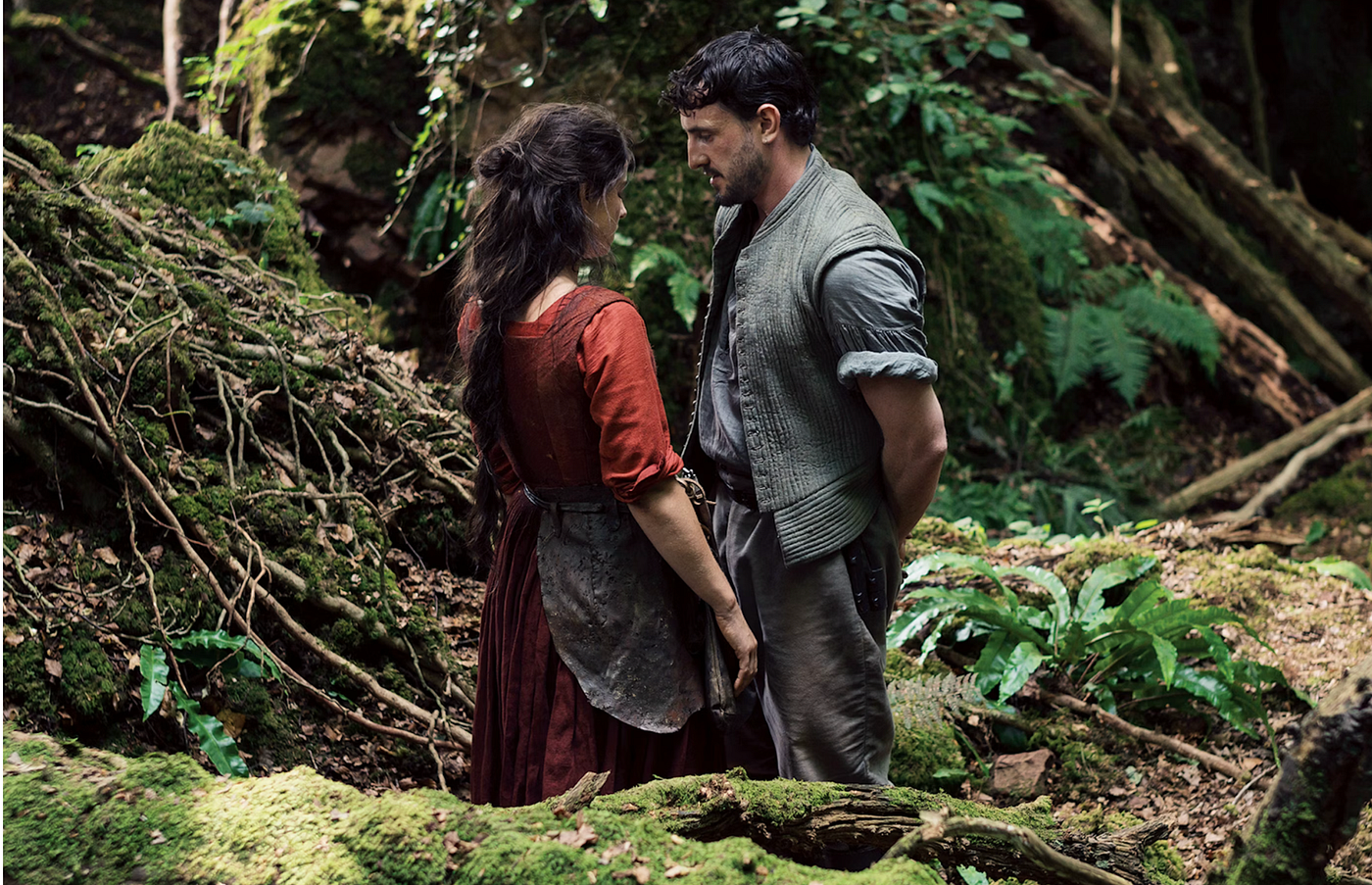
What does watching Hamnet in a dark theater have in common with looking up at the sky to ponder a full moon? Both are acts of immersion. In the theater, I’m enveloped by nature on a big screen — wind, trees, the countryside. Under the moon, I stand in the infinite blackness. Different settings, same feeling. A kind of surrender.
Chloé Zhao has crafted a film that reaches into the soul and confronts humanity. It is special. It makes you stop and be in the moment, if you are open to it.
The first time I saw Hamnet, I braced myself. I already knew the story — knew what was coming. The unspeakable. A mother’s worst nightmare. So I armored up. When it finally happened, I felt… nothing. Or rather, I wouldn’t let myself feel. I heard sniffling around me, the quiet grief of strangers in the dark, but I stayed numb. I told myself not to give in.
What I noticed instead was the land. The wind. The trees. I had gratitude for nature that wasn’t just a setting — it was a character. Sacred. Alive.
My son saw the film on the other side of the continent, in New York. He told me it had wrecked him. I told him I hadn’t let it in.
He said, “But that’s the whole point.”
Not the words, he explained, but the feeling of the words. The energy.
I had missed the plot.
There’s a moment in the film when Shakespeare, played by Paul Mescal, has an actor repeat a line over and over. It isn’t right until the actor feels the energy of the words. Not word perfect, not the right tone — but the life behind them.
After the screening at the Directors Guild, Zhao spoke at a Q&A. She said she didn’t rehearse lines with the actors. Instead, they did breathwork. They focused on energy, on connection — to each other, to the location, to breath. This wasn’t about delivering dialogue. It was about embodiment. Her filmmaking feels more like ritual than performance, the camera capturing something ephemeral and alive. The long takes in natural light let you travel — not just through physical space, but through dimensions of memory and feeling. The film doesn’t just show you these moments — it makes you live in them.
She also said she isn’t a Shakespeare scholar. English isn’t even her first language. So she had to feel her way through his work. To connect through energy. Her words echoed what my son had said: it’s not about the words exactly. It’s about what they carry.
A week later, I attended a breathwork workshop for the first time (a friend took me). I didn’t know then that I was preparing for something. During the session, I felt myself lift above my own body — not in the sense of leaving it, but in fully occupying it. For once, there was no thought, no anxiety, no anticipation. Only sensation. Swirling energy rose and fell around me, releasing something deep in my DNA. In that space, my father came to me — not as a memory, but as presence. Everything would be okay, he seemed to say. Not in words, but in the way breathwork speaks: through energy, through knowing.
Part of the workshop involved a release of yelling while a gong vibrated. It was so intense that I saw color emanating from my body. I didn’t know the breathwork had prepared me until I sat down in that theater again.
The second time I saw Hamnet, I let my guard down. I sat with Agnes (Jessie Buckley). I climbed into the bowels of the tree. I let the feeling move through me. The film became a place I could inhabit, not just observe. In the film, nature heals Agnes. She finds solace in the land, in the trees, in what endures. But for Shakespeare, art is the healer. The play becomes his vessel for grief, his transformation of loss into something that endures. I use art and self-expression to work through things. When my father died, I wrote. But nature as healer? Breathwork? That’s new territory. Hamnet shows me both can be true — that grief needs multiple containers, that art doesn’t replace presence but creates a space where presence can still be felt. And maybe that’s what I’m doing now — learning to inhabit both.
I felt the cathartic release of the play within the film. It wasn’t just a story — it was energy. It was presence. What Gen Z might call a ‘vibe,’ but that’s too superficial. It makes it aesthetic, curated, consumable. This is uncontrolled energy that moves through bodies, not around them. Not something you observe — something that inhabits you.
Now, under the full glow of the Wolf Moon, I feel its call to be illuminated. I’m seeing Hamnet again, not just to witness it, but to absorb it. To breathe with it. I want the energy to pass through me the way wind moves through leaves. To feel it and then let it go.
Tonight is the Wolf Moon. I step outside and looked up at it glowing in the vast black sky. Standing there, I understood the connection I’d been circling. That dark theater, this infinite sky — the same surrender.
Clarissa Pinkola Estés writes in Women Who Run with the Wolves about the wild woman archetype — the part of us that listens with the bones, that knows how to grieve, create, survive. The howl is not pain, but power. The wild woman doesn’t watch the moon in silence. She responds. She calls back. She is surrender.
Art doesn’t erase grief–it gives it a place to go. Hamnet was the bridge that transported me between worlds, to a place where I could find different meanings.
Tomorrow, I will attend another breathwork workshop. The day after, I will sit in a dark theater watching Hamnet for the third time. A ritual I have created for myself to face this new year.
Now, under the Wolf Moon’s fierce glow, I see it clearly: I’m being called to feel deeper. To howl — not with sorrow, but with life.
Like the wolves, maybe we give energy to the moon — not through understanding, but through surrender. Through feeling. Through howling back.
메타데이터
- post_id
- b1aac04dd367
- slug
- howling-at-the-moon-b1aac04dd367
- url
- https://medium.com/@eda.benjakul/howling-at-the-moon-b1aac04dd367
- canonical_url
- https://medium.com/@eda.benjakul/howling-at-the-moon-b1aac04dd367
- author_url
- https://medium.com/@eda.benjakul
- status
- ok
- fetched_at
- 2026-08-10 04:45:40




