ctDNA Trials in Breast Cancer: How TREAT ctDNA, DARE and Apollo Are Changing Early Intervention
And Why CancerBot’s Precision Trial Matching Is Becoming Even More Important Than Ever
ctDNA Trials in Breast Cancer: How TREAT ctDNA, DARE and Apollo Are Changing Early Intervention
And Why CancerBot’s Precision Trial Matching Is Becoming Even More Important Than Ever
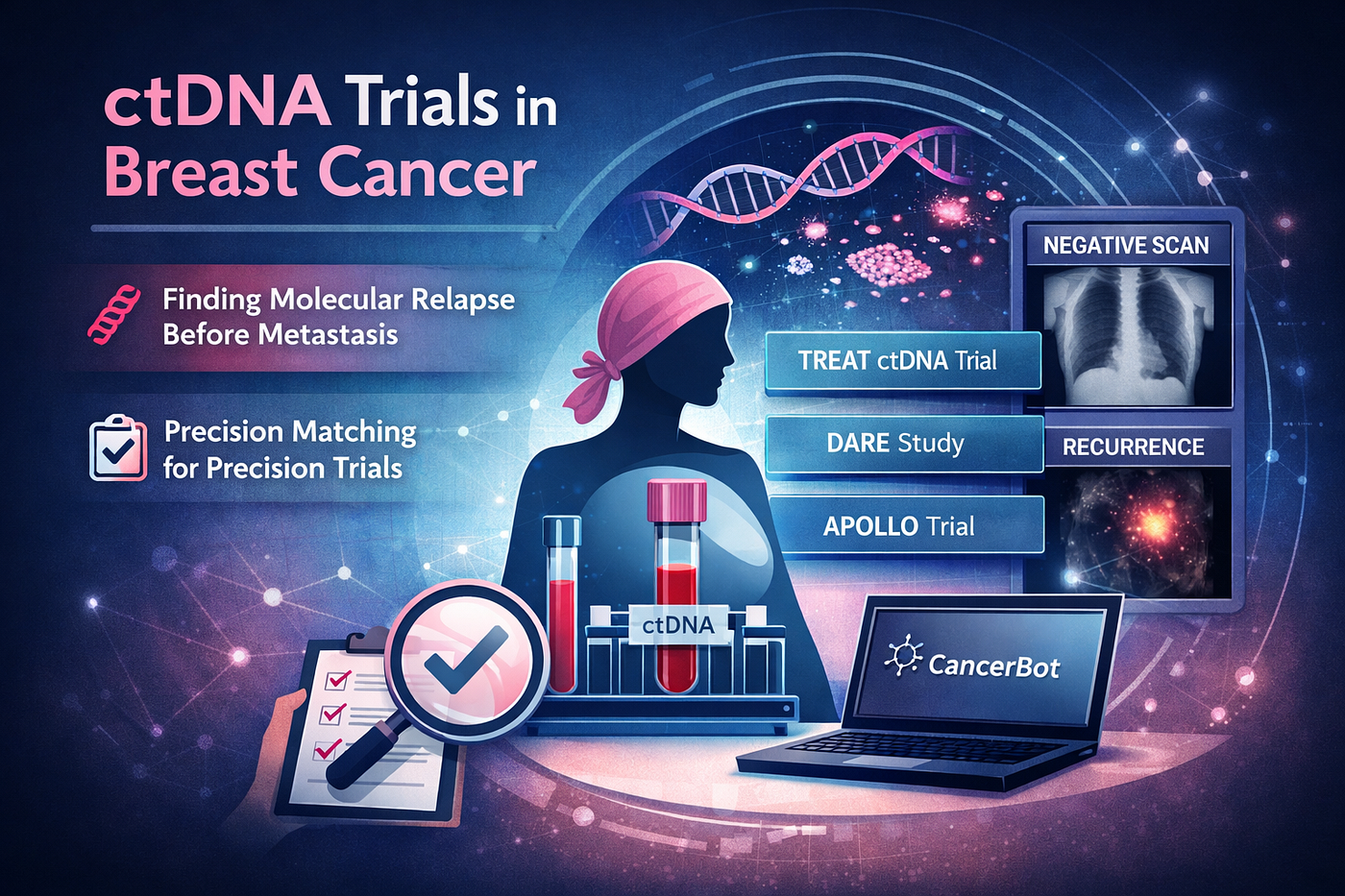
Acting Before the Scan: The New Era of ctDNA-Guided Breast Cancer Trials
In breast cancer, recurrence is often detected when it becomes visible on imaging. But what if we could intervene months earlier — when relapse is detectable only at the molecular level?
That’s the promise of ctDNA (circulating tumor DNA). Tiny fragments of tumor DNA circulating in the blood can signal molecular relapse before metastases appear on scans.
Several groundbreaking breast cancer trials are testing this strategy right now. The opportunity is enormous. But so is the complexity.
What Is a ctDNA-Guided Trial?
These trials don’t wait for radiographic recurrence.
Instead, they:
- Monitor patients after primary therapy
- Detect molecular residual disease (MRD) via ctDNA
- Trigger treatment escalation when ctDNA becomes positive
This is not traditional adjuvant therapy. This is molecularly triggered intervention.
Let’s look at three major examples.
1️⃣ TREAT ctDNA
Population: ER+/HER2− early breast cancer Trigger: ctDNA positivity after completion of primary therapy Intervention: Elacestrant vs standard endocrine therapy
This Phase III trial asks a critical question:
If we switch endocrine therapy at the moment of molecular relapse, can we delay or prevent metastatic disease?
No radiographic recurrence is required. The “event” is ctDNA positivity.
If successful, this trial could redefine how we manage late relapse in ER+/HER2− disease.
2️⃣ DARE
Population: Stage II–III ER+/HER2− high-risk patients Strategy: ctDNA surveillance to guide “second-line adjuvant therapy”
DARE focuses on patients who appear clinically stable but are biologically high risk.
If ctDNA becomes detectable, therapy is escalated.
The trial is built on a simple but powerful idea:
Biology may reveal recurrence before imaging does.
3️⃣ Apollo
Population: Triple-negative breast cancer (TNBC) Setting: After neoadjuvant chemotherapy and surgery Strategy: Randomize ctDNA-positive patients to intensified “boost” therapy
TNBC carries a high relapse risk, particularly after residual disease.
Apollo tests whether intervening at molecular relapse can improve outcomes in this aggressive subtype.
Why ctDNA Trials Are Hard to Match
These trials are among the most eligibility-sensitive in oncology.
Common barriers include:
⏱ Timing Windows
- Must be within X months of surgery
- Must have completed chemotherapy within Y weeks
- Must have recent negative imaging
🧬 Assay Requirements
- Tumor-informed vs tumor-naïve testing
- Specific detection thresholds
- Approved laboratory platforms only
💊 Prior Therapy Restrictions
- Prior CDK4/6 inhibitor exposure
- SERD exposure
- Prior immunotherapy (especially in TNBC)
📊 Disease Definitions
- “No radiographic evidence of disease”
- Specific staging requirements
- Residual disease criteria after neoadjuvant therapy
A patient may look like a match on the surface — but fail on a single timing detail or prior-drug rule.
How CancerBot Helps Patients Find the Truly Matching ctDNA Trial
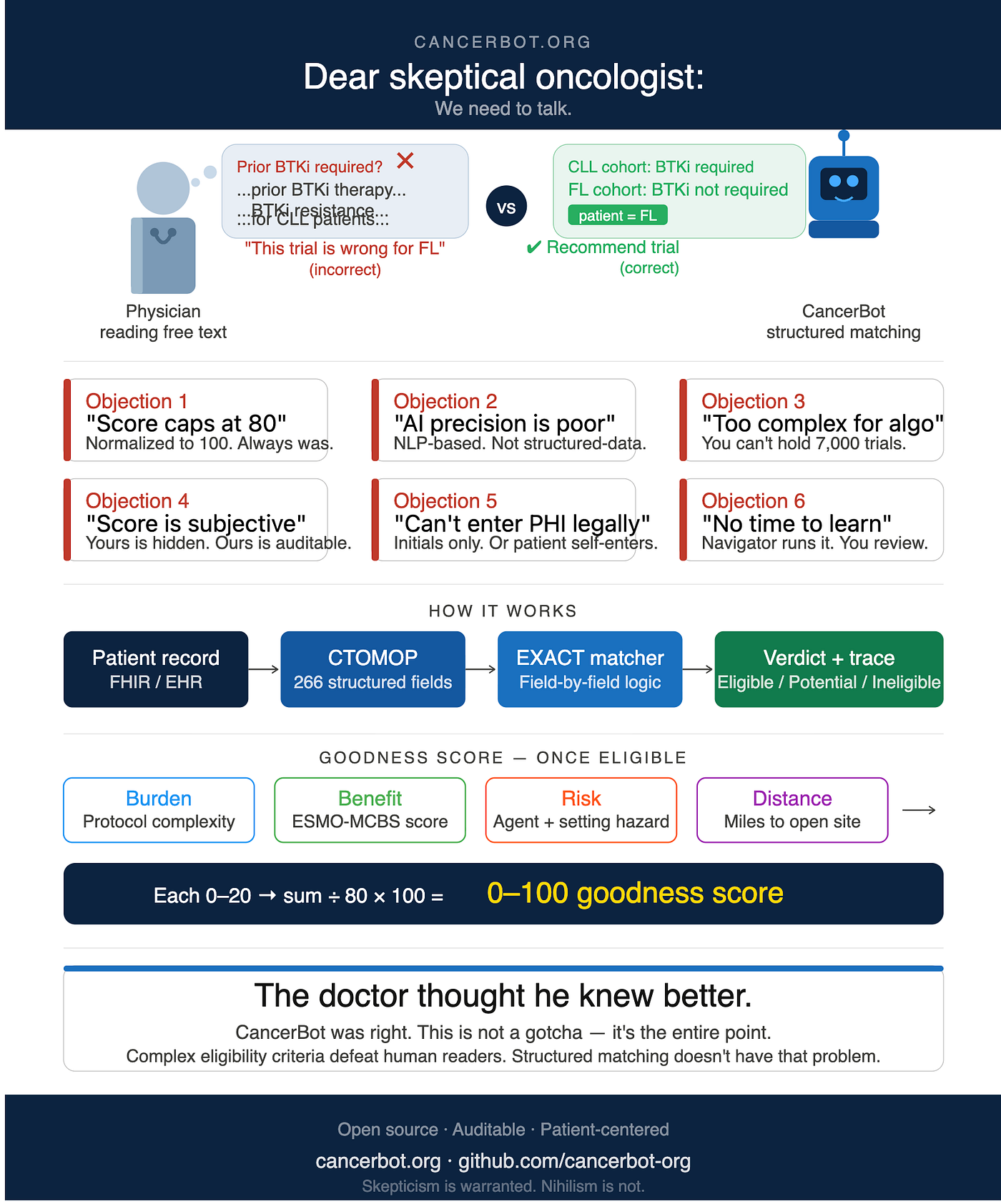
CancerBot doesn’t rely on keyword search.
It converts trial eligibility criteria into structured data and compares them directly to the patient’s profile.
Here’s how that matters:
1️⃣ Precision Extraction of Eligibility Rules
CancerBot identifies:
- ctDNA assay definitions
- Timing cutoffs relative to surgery or chemo
- Required imaging status
- Prior therapy exclusions
- Biomarker requirements (ER, HER2, PD-L1, etc.)
2️⃣ Real Eligibility Matching
Instead of “you might qualify,” CancerBot can show:
- Hard exclusions
- Soft gray areas for investigator discussion
- Missing data needed to confirm eligibility
3️⃣ Faster Site Engagement
For ctDNA trials, speed matters. When ctDNA turns positive, enrollment windows can be narrow.
CancerBot generates:
- Structured eligibility summaries
- Investigator-ready checklists
- Clear explanations of fit
That means fewer false leads and faster action.
Precision Trials Require Precision Matching
ctDNA-guided therapy represents one of the most important shifts in breast cancer research:
From treating visible disease to treating molecular relapse
But the trials are complex.
And complexity demands structured matching — not guesswork.
CancerBot was built for this.
메타데이터
- post_id
- b1dfb76da72c
- slug
- ctdna-trials-in-breast-cancer-how-treat-ctdna-dare-and-apollo-are-changing-early-intervention-b1dfb76da72c
- url
- https://medium.com/@adamsblum/ctdna-trials-in-breast-cancer-how-treat-ctdna-dare-and-apollo-are-changing-early-intervention-b1dfb76da72c
- canonical_url
- https://medium.com/@adamsblum/ctdna-trials-in-breast-cancer-how-treat-ctdna-dare-and-apollo-are-changing-early-intervention-b1dfb76da72c
- author_url
- https://medium.com/@adamsblum
- status
- ok
- fetched_at
- 2026-06-09 15:37:30