Real Torah
In the Talmud (Sotah 34B), there is a passage that puzzled me when I read it as a teenager. Rabbi Yitzchak taught: We have a tradition…
Real Torah
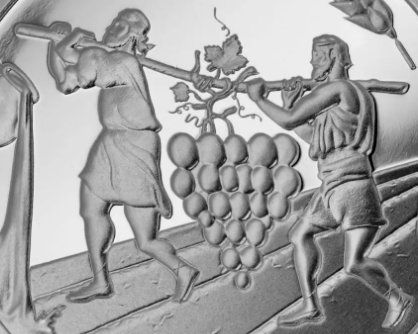
In the Talmud (Sotah 34B), there is a passage that puzzled me when I read it as a teenager.
- Rabbi Yitzchak taught: We have a tradition from our fathers that the Meraglim (the spies or scouts that were sent, in this week’s Parsha, to examine the land of Canaan) were all named in accordance with their deeds, but we were successful [in interpreting] only one [of the names].*
[The spy of] the tribe of Asher: Setur ben Michael. Setur, because he undermined (related to the Hebrew word Satar, which means to destroy or undermine) G-d’s Deeds. Michael, because he made Himself weak. (related to the Hebrew word Makh, which means weak.).
Said Rabbi Yochanan: we too can say: (The spy of the tribe of Naphtali,) Nakhbi Ben Vafsi. Nachbi, because he hid (Hebrew word for hid is Hekhbi) the words of G-d, Vafsi, because he skipped (from the Pisa — skipped) over G-d’s attributes.
What puzzled me about this passage is that, when I was a kid, I used to read a book called The Midrash Says. It’s a collection of Midrashim on the Torah and, in the section of this week’s Parsha, it offers an interpretation for each of the 12 names of the spies. What I wondered is: Why didn’t Rabbi Yitzchak and Rabbi Yochanan just read The Midrash Says? How can it be that I know all the interpretations of the names of the spies and they didn’t?

In fact, it seems fairly easy to do this kind of word play. You can take pretty much any Hebrew name and relate it to something that can be tied to the story and sin of the spies. So even if Rabbi Yitzchak meant that the original tradition had been lost and we only retained one of the twelve original interpretations, how could Rabbi Yochanan say “we too can say” and only supply one more interpretation? What is limiting him from giving all of the explanations offered by the Midrashim?
In a Sicha, the Rebbe asks this question and gives a profound answer.
The Rebbe’s answer is based on the Chasidic interpretation of the story of the spies. At face value, the story is very difficult to understand. How can a group of men who were selected for their spiritual greatness, and who had just experienced 3 years of non-stop miracles from G-d, be so completely overcome by fear of the Canaanites? How can a people who saw G-d annihilate the mighty army of the Egyptians come to believe that “[the Canaanites] are mightier than Him”? How can a people who were living off G-d’s open miracles in an otherwise unsurvivable wasteland say of the land of Israel that “it is a land that consumes its inhabitants”?
Chassidus explains that, in fact, the spies were men who were devoted to the life of the spirit. The last fourteen months had been a series of spiritual experiences unparalleled in human history. They witnessed G-d’s miraculous presence at the splitting of the sea; they experienced face-to-face theophany at Sinai; they built the Mishkan and were able to commune with the Shekhina itself.
All of this happened while their material needs were supplied in miraculous fashion. Food fell from heaven, water flowed from a miraculous, portable well and shelter was provided by the Clouds of Glory.
But they knew that entering the land of Israel would mean a completely different picture. “For six years, you should sow your land and gather its produce…”. Conquering Israel would mean abandoning the comfort and safety of the wilderness and stepping down from a contemplative life of the spirit into a life of material engagement. They did not wish to do this, so they conspired to scare the people of Israel and urged them to reject the land which G-d had promised them.
The spies eschewed the world of action and wished to remain in the worlds of thought and speech. What was their mistake? On one level, the answer is obvious: G-d’s will is that the Jewish nation should engage with the world and turn it into a “Dwelling for the Divine.” But the spies believed that they were doing that in the wilderness as well. They were performing, to a limited extent, the Mitzvot — at least the ones that are relevant in the desert. They had built the Mishkan — a sanctuary for the Divine Presence made of material objects.
What the spies failed to see was that even one’s most spiritual activities are deficient if they are not connected to action. When one reaches the very highest heights of spirituality — of Torah study, of prayer and meditation, etc — those heights are expressed even in the simplest actions. By seeing the “descent into action” as an abandonment of spirituality, they betrayed the fact that their spirituality itself was deficient.
Ten of the spies made this error. These ten men all had this spiritual deficiency. But, of course, each of the men had a slightly different problem, because no two people are exactly alike. So the name of each spy alluded, in a subtle way, to that particular man’s shortcoming.
Rabbi Yitzchak knew that, in the times when the Beit Hamikdash stood in Jerusalem, and going even farther back, when prophecy was prevalent among the Jewish people, the Jewish nation were giants in the realm of the spirit. For our forefathers, taught Rabbi Yitzchak, the details of the names of each of the spies were relevant. They needed to study those details carefully, so that they could avoid those errors as they climbed the same spiritual heights. But, for us, living in a time of diminished spiritual clarity, those details are not as important.
What we need to learn is the one general lesson of the spies. So he derives the lesson from the name “Satur”. The sin of the spies was the “undermining” of the Actions of G-d. By eschewing the world of action and preferring to remain in the world of the spirit, they chose to undermine G-d’s Purpose in creating the physical world.
It’s not that Rabbi Yitzchak didn’t read The Midrash Says. For Rabbi Yitzchak, a Torah teaching that is just a cute play on words is not “real Torah.” Real Torah is when the Torah teaches you and guides you in your life. And for a Jew living in the era of Exile, the fine details of how to navigate the loftiest spiritual heights are no longer relevant.
Rabbi Yochanan adds an additional point. He quite agrees with Rabbi Yitzchak. But, there is another pitfall that people of our, less spiritual, time need to be careful of. A life that is exclusively focused on action, a life that ignores the world of Speech and of Thought, will be incomplete. A Jew’s life of action must be influenced by the time that he spends on Torah study and prayer. So he reminds us to learn the lesson of Nakhbi Ben Vafsi: Never to “conceal the words of G-d” and not to “skip over the attributes” — the Divine Qualities that form the basis of a spiritual connection with G-d. The lesson from this name is “our lesson.” It is a lesson that is relevant specifically in the modern world; the world where spirituality is greatly diminished and we need to be reminded of the importance of devoting some attention to Torah study and prayer.
There is an incredibly important meta-point that emerges from the discussion — the way the Rebbe interprets Rabbi Yitzchak’s “not knowing” the Midrash.
We pray to G-d asking for “our portion in Your Torah”. Perhaps this is the meaning of that prayer. When I learn Torah, any part of Torah, there is a way in which that Torah is relevant to me. That is “my portion” in G-d’s Torah.
Of course, it’s not always accessible. Sometimes, a Midrash just seems like a Midrash — a play on words or a little background that helps sharpen our understanding of some event or idea in the Torah. But the Rebbe directs us to be aware that a lesson is there.
I remember a conversation that I had with a group of students one Pesach. They had attended a Pesach lunch meal at the home of one of our local community members and were talking about the Dvar Torah that was taught at the lunch. “Do you know,” asked one student, “what type of wood was used to roast the Pesach lamb? The Mishna teaches that it was pomegranate wood.” And that was it. I was waiting for the lesson, waiting for the punch line — what does it teach us that they used pomegranate wood? What does that represent? But that was it. And I realized that I was used to the Rebbe’s style of Torah — the expectation that every vignette, every play on words, every bit of Midrashic color, should have a lesson.
This doesn’t mean that we shouldn’t study Torah unless we can derive the lesson from every detail. We need to be ready to study Torah for Torah’s own sake. But knowing that the lessons are there is powerful and important.
This idea — that “Real Torah” is only when it connects to a lesson in our lives — is actually a reflection of the Chasidic interpretation of the spies’ error. Torah, which is in the world of Speech and Thought, needs to be connected with the world of Action. By learning Torah in a way that connects to your life, you are avoiding the mistake of the spies and bringing your thought and speech into the realm of action.
메타데이터
- post_id
- b1f2efbc93a5
- slug
- real-torah-b1f2efbc93a5
- url
- https://medium.com/@yochananrivkin/real-torah-b1f2efbc93a5
- canonical_url
- https://medium.com/@yochananrivkin/real-torah-b1f2efbc93a5
- author_url
- https://medium.com/@yochananrivkin
- status
- ok
- fetched_at
- 2026-06-13 12:55:53




