The most shocking thing I learned during my Zoology degree
(SPOILER — It’s not about animals)
The most shocking thing I learned during my Zoology degree
(SPOILER — It’s not about animals)
Over the past three years at the University of Manchester, I have gained extensive knowledge about the weird and wonderful aspects of the animal kingdom. Parasitic tongue-eating isopods, the enlarged clitoris of the spotted hyena, songbird neurobiology, and yet, none of this is as scary as what I learned in my second-year paleobiology unit.
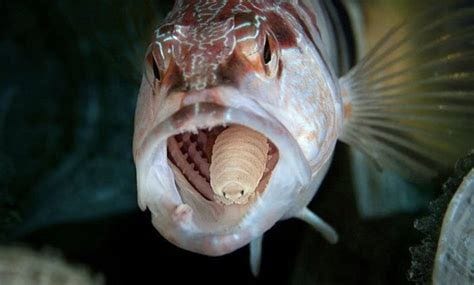
Cymothoa exigua — a species of parasitic marine isopod
We have created Earth’s sixth mass extinction. From which we may never recover. Earth’s climate has never been static, but what distinguishes climate change today from that in the Cenozoic past is its rate. This unique epoch has been named the Anthropocene, classified by man-made agriculture and complex societies.
Earth is warming at a rate 100 times faster than in the past, even after volcanic eruptions from the Siberian traps or the asteroid that wiped out the dinosaurs. This is human-induced, and the current rate of extinction is 5000–25,000 per year, that’s 13–68 species per day. We are between 100 and 1000 times the extinction rate of a typical background extinction rate over geological time (Gillson, 2015).

Cumulative vertebrate species recorded as extinct or extinct in the wild by the IUCN (2012). Dashed black line represents the background rate. This is the ‘highly conservative estimate’. Image from Ceballos, G. et al. (2015)
Mass extinctions are a key driver of macroevolution, but for species with long generation times and slow mutation rates, such as elephants and whales, this could be the end for them, as their rate of evolution cannot keep up with the current rate of change.
If this isn’t a terrifying wake-up call. I don’t know what it is.
However, it is not all doom and gloom. We still have time to make changes, restore habitats and reduce carbon emissions before Earth reaches crucial tipping points. Whether these changes occur is largely down to education, political advocacy and pressure on governments and large companies.
Conservation efforts have been able to bring back numerous species from the brink of extinction, such as tigers, but small populations mean that many plants and animals are now “committed to extinction”, such as white rhinos and polar bears.
Reference list
Ceballos, G. et al. (2015) ‘Accelerated Modern Human–induced Species losses: Entering the Sixth Mass Extinction’, Science Advances, 1(5). Available at: https://doi.org/10.1126/sciadv.1400253.
Gillson, L. (2015) Biodiversity conservation and environmental change. Using palaeoecology to manage dynamic landscapes in the anthropocene. Oxford University Press.
III, W.J.H., Tilson, R.L. and Frank, L.G. (2010) ‘Sexual Monomorphism in Spotted Hyenas, Crocuta crocuta’, Ethology, 71(1), pp. 63–73. Available at: https://doi.org/10.1111/j.1439-0310.1986.tb00570.x.
메타데이터
- post_id
- b2258cf49e8f
- slug
- the-most-shocking-thing-i-learned-during-my-zoology-degree-b2258cf49e8f
- url
- https://medium.com/@liachew222/the-most-shocking-thing-i-learned-during-my-zoology-degree-b2258cf49e8f
- canonical_url
- https://medium.com/@liachew222/the-most-shocking-thing-i-learned-during-my-zoology-degree-b2258cf49e8f
- author_url
- https://medium.com/@liachew222
- status
- ok
- fetched_at
- 2026-08-22 21:19:36