11 Surprising Things Most Women Were Never Taught About Their Menstrual Cycle.
The more I learned about the female body, the more I realized how little we know.
11 Surprising Things Most Women Were Never Taught About Their Menstrual Cycle.
The more I learned about the female body, the more I realized how little we know.
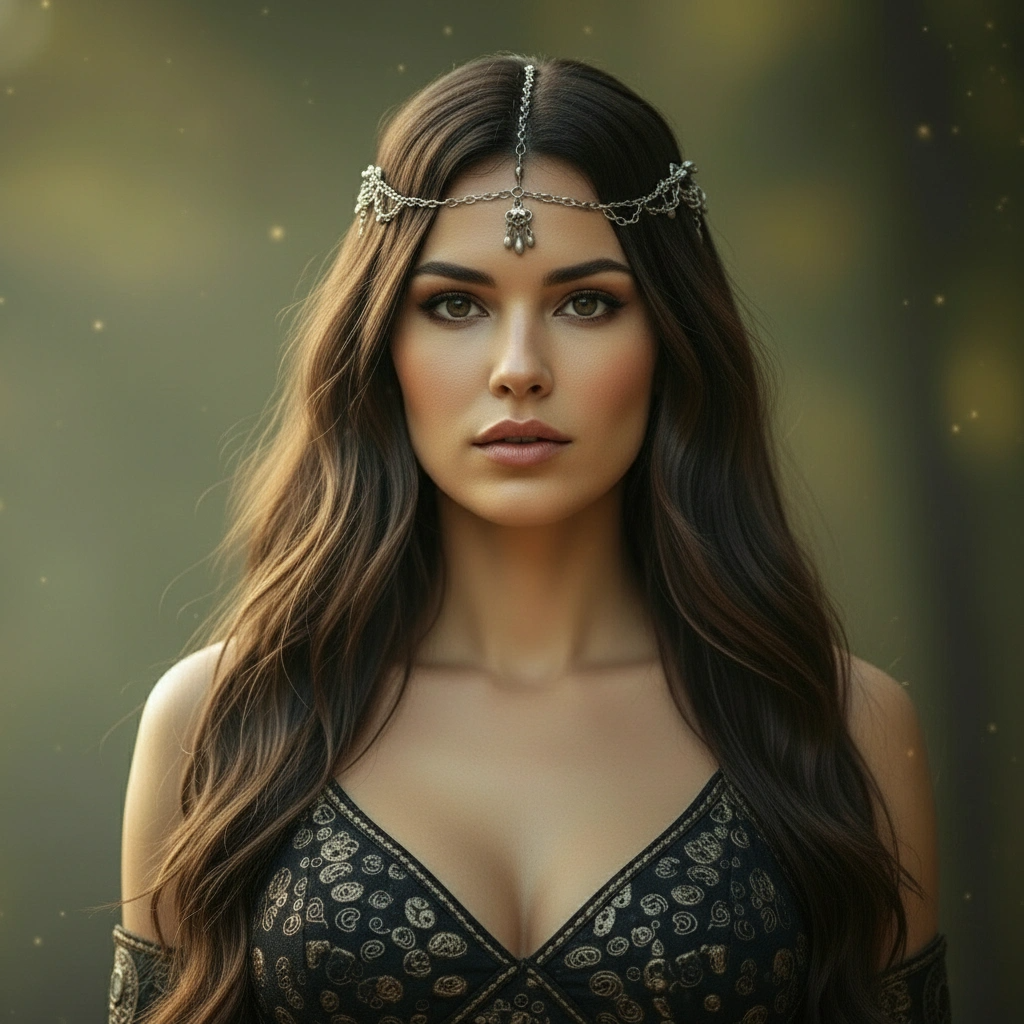
Photo by Candice Picard on Unsplash
For something that has affected women for decades, it's amazing how much misinformation and shame still surround the menstrual cycle.
Most women were taught the basics: you get a period once a month, you can get pregnant, and eventually menopause arrives.
That's about it.
I remember going to my mother when mine arrived. Instead of just telling me what to do, she found a pad, pulled her panties down, and showed me how to wear it.
Instant trauma.
Her vagina looked like a snow cap.
Like that wasn’t bad enough, the next day my father walked me to the bus stop. “Now that you’re becoming a woman, you are able to have babies…
Dear God, please just allow this whole street to swallow me up now.
Even though the menstrual cycle is a part of life for most women, there’s a lot that’s still unknown.
The menstrual cycle does much more than prepare a woman’s body for a pregnancy. It also affects her brain, metabolism, mood, appetite, sleep, libido, and much more.
Below are some of the most interesting facts I found through research:
1. A woman’s period isn't the beginning of the story.
Although Day 1 of her menstrual cycle is the first day of her period, her body has been preparing for that moment for weeks.
An egg has been developing. Hormones have been rising and falling. Her uterus has been building a lining rich with nutrients just in case pregnancy does occur.
Her period is simply her body's way of resetting when pregnancy doesn't happen.
2. Think of a woman’s uterus as a guest room.
This is the easiest way I've found to understand the menstrual cycle. Every month, a woman’s body cleans it, decorates it, and prepares it for the possibility of a guest, which would be a fertilized egg.
If no guest arrives, her body removes everything it prepared. That's her period.
Then it starts getting the room ready all over again.
3. A "normal" cycle isn't always 28 days.
Many women may worry if they don't have a regular 28-day cycle. However, healthy adult menstrual cycles usually range from 21 to 35 days. Normal doesn't always mean the same for everyone.
4. Chocolate cravings aren't just in a woman’s head.
Many women crave chocolate before or during their period. Hormonal changes can affect serotonin, appetite, and mood. Her metabolism also increases slightly during the second half of her cycle, so she may feel hungrier than usual.
Researchers found that culture also plays a role. Chocolate cravings are much more common in countries where chocolate has become associated with PMS.
5. A woman is born with all the eggs she'll ever have.
This one surprised me. A baby girl is born with roughly one to two million immature eggs. By puberty, only about 300,000 to 500,000 remain. During her entire reproductive lifetime, she'll ovulate only about 300 to 500 eggs. The rest are naturally reabsorbed by the body.
6. A woman’s sex drive may increase after her period, and biology has something to do with it.
Many women notice they are more interested in sex after their period ends. It's not just because the bleeding is gone. It’s because estrogen begins rising after menstruation, and many women experience increasing sexual desire as ovulation approaches.
Around ovulation, fertility is at its highest, and for many women, libido is too.
7. A woman’s hormones influence far more than her reproductive organs.
The menstrual cycle doesn't just affect a woman’s uterus. It can influence her mood, sleep, appetite, energy, skin, memory, concentration, and libido.
Basically, the cycle is a process that affects the whole body.
8. PMS doesn't necessarily make women "crazy."
For decades, women have been stereotyped as irrational or overly emotional before their periods. While hormonal changes can make some women more emotionally sensitive or less tolerant of stress, others notice almost no emotional changes at all.
I wonder if it's PMS that’s causing the problems, or if it's shining a spotlight on problems that were already there? Maybe women become less willing to tolerate what they've been overlooking the whole time.
9. Severe period pain isn't something women should just accept.
Many women grow up believing that crippling pain from cramps is just part of being female. They're not.
Cramps that are so painful that it causes someone to miss work, school, or daily activities deserve medical evaluation because conditions such as endometriosis or adenomyosis are common and often take years to diagnose.
10. Your great-great-grandmother probably had far fewer periods than most women will in modern times. This may be the most surprising fact of all.
The average woman today experiences roughly 400 to 450 menstrual cycles during her lifetime. Historically, many women experienced far fewer. Research suggests between 40 and 150.
Women back then spent much more of their reproductive years pregnant or breastfeeding. Both of which naturally suppress ovulation and menstruation. Women also generally began menstruating later and often reached menopause earlier than women do today.
11. We were taught how to hide our periods, not how to understand them.
Women learned how to discreetly carry menstrual products and how to avoid stains and embarrassing moments. Some may avoid talking about periods altogether, but many women never learned what ovulation actually is.
In general, most women weren't taught why hormones affect mood, appetite changes, libido fluctuation, or what symptoms should prompt them to see a doctor.
What did women use during menstruation before modern times?
Before modern times, women utilized a variety of local materials during menstruation.
These include: rags, absorbent sea sponges, moss, rolled grass, and wool. Women also used animal skins and lint rolled around wood. In Japan, they used paper, and in China, they used wood ash packed in reusable cloth pouches.
From the 1800s to the early 1970s, elastic or fabric belts were worn around the waist. They featured metal or plastic clips in the front and back to hold up thick, washable, or disposable cloth pads.
In some agricultural societies, women wore thick skirts, without underwear, and sat directly on absorbent mats, straw, or the ground during heavy flow days.
One thing that seems obvious is that many women were taught to simply manage their periods, not to understand them. The female body isn't mysterious because it's unknowable.
It's mysterious because so many women were never given the opportunity to truly learn how it works.
The more we understand menstrual cycles, the less power myths, shame, and misinformation have.
Maybe it's time we stopped treating the menstrual cycle as something to hide and started treating it as one of the most remarkable biological processes in the human body.
Besides, none of us would be here without it.
Reader, what do you think?
If you enjoyed the read, please consider clapping, following, and maybe even buying me a coffee. Thank you. https://www.buymeacoffee.com/RealLifeTopics
Full conversations and more at reallifetopicsrevealed.com
© 2026 Real Life Topics Revealed. All rights reserved.
메타데이터
- post_id
- b236f822d690
- slug
- 11-surprising-things-most-women-were-never-taught-about-their-menstrual-cycle-b236f822d690
- url
- https://medium.com/modern-women/11-surprising-things-most-women-were-never-taught-about-their-menstrual-cycle-b236f822d690
- canonical_url
- https://medium.com/modern-women/11-surprising-things-most-women-were-never-taught-about-their-menstrual-cycle-b236f822d690
- author_url
- https://medium.com/@divinepie76
- status
- ok
- fetched_at
- 2026-07-15 20:04:32