How Does Ibuprofen Work? Your Guide to Pain Relief
How Does Ibuprofen Work? Your Guide to Pain Relief
How Does Ibuprofen Work? Your Guide to Pain Relief
How Does Ibuprofen Work? Your Guide to Pain Relief
Imagine it’s 2 a.m., and a pounding headache drags you out of bed. You reach for ibuprofen — but have you ever wondered how that little pill stops the pain? Sure, it knocks out pain and inflammation like a champ, but what’s really going on inside your body when you pop one?
In this post, we’re diving deep into the science of ibuprofen — one of the most popular over-the-counter drugs in the world. By the end, you’ll not only understand how it works but also know when to use it, what to watch out for, and why it’s become a go-to for millions. Plus, we’ve got some surprising facts and a handy visual to make it all stick. Let’s get started!
What Is Ibuprofen, Anyway?
Ibuprofen is a nonsteroidal anti-inflammatory drug (NSAID). Translation: It’s a medication that reduces inflammation, pain, and fever without using steroids. It’s the active ingredient in brands like Advil, Motrin, and Nurofen, and it’s been a household staple since it hit the market in the 1970s. But to understand how it works, we need to take a quick trip into the world of pharmacology (don’t worry, we’ll keep it simple).
How Does Ibuprofen Work? The Simple Science
When you’re injured or dealing with conditions like arthritis, your body produces chemicals called prostaglandins. These hormone-like substances are the troublemakers behind inflammation, pain, and fever. Think of them as the body’s alarm system — they’re helpful in small doses but can cause major discomfort when they go overboard.
Here’s where ibuprofen steps in. It blocks the production of prostaglandins by inhibiting two enzymes: COX-1 and COX-2. These enzymes are like factories that churn out prostaglandins. By shutting them down, ibuprofen reduces the amount of prostaglandins in your system, which in turn:
- Relieves pain: Fewer prostaglandins mean fewer pain signals.
- Reduces inflammation: Less swelling and redness in affected areas.
- Lowers fever: Prostaglandins also raise your body temperature, so blocking them helps cool you down.
Sounds straightforward, right? But there’s a bit more to it. COX-1 protects your stomach lining and helps with kidney function, while COX-2 is more involved in inflammation. Ibuprofen blocks both, which is why it’s so effective — but also why it can sometimes cause stomach issues (more on that later).
Analogy: Think of ibuprofen as a security guard silencing a blaring fire alarm (prostaglandins) in your body. The alarm is helpful in small doses, but when it’s too loud, ibuprofen turns it off.
What Is Ibuprofen Used For?
Ibuprofen is a multitasker. Here’s a quick rundown of its most common uses:
- Pain relief: Headaches, toothaches, menstrual cramps, muscle aches, and minor injuries.
- Inflammation reduction: Arthritis, tendonitis, and other inflammatory conditions.
- Fever reduction: Especially useful during colds, flu, or after vaccinations.
It’s not a cure for these conditions, but it’s a powerful tool for managing symptoms. Whether you’re dealing with a stubborn migraine or post-workout soreness, ibuprofen’s got your back.
The Good, The Bad, and The Ugly: Side Effects of Ibuprofen
Like any medication, ibuprofen isn’t perfect. While it’s generally safe when used as directed, it can cause side effects in some people. Here’s what to watch out for:
- Common side effects:
- Stomach upset or heartburn
- Dizziness or headaches
- Mild allergic reactions (rash or itching)
- Serious side effects (rare but possible):
- Gastrointestinal bleeding or ulcers (especially with long-term use). Watch for signs like dark stools or vomiting blood. If these occur, stop taking ibuprofen and see a doctor immediately.
- Kidney problems
- Increased risk of heart attack or stroke (usually with high doses or prolonged use)
Pro Tip: To minimize stomach issues, take ibuprofen with food or milk. And always stick to the recommended dosage — more isn’t better when it comes to NSAIDs.
Fun Facts: The Story Behind Ibuprofen
Let’s sprinkle in some trivia to keep things interesting:
- Accidental Discovery: Ibuprofen was first synthesized in the 1960s by a team at Boots Pure Drug Company in the UK. They were actually trying to develop a drug for rheumatoid arthritis but stumbled upon a pain-relieving powerhouse.
- From Prescription to OTC: Originally, ibuprofen was only available by prescription. It wasn’t until 1984 that it became available over the counter in the U.S., making it accessible to millions.
- Global Superstar: Today, ibuprofen is one of the most widely used drugs worldwide, with billions of doses taken each year.
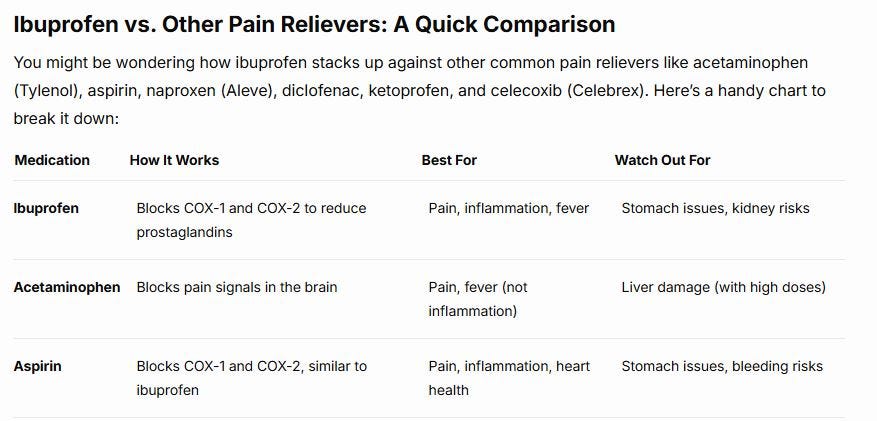
Dosage and Timing Tips
Here’s how to use ibuprofen safely and effectively:
- Dosage: For mild pain, take 200–400 mg. For severe pain, up to 800 mg may be used (with a doctor’s OK).
- Timing: Take every 4–6 hours, not exceeding 1,200 mg daily unless advised by a professional.
- Always take with food or milk to protect your stomach.
Busting a Common Myth
Myth: Ibuprofen is just a stronger aspirin. Fact: While both reduce inflammation, ibuprofen is gentler on the stomach and has different heart-related effects. Aspirin is often used for heart health, while ibuprofen is better for quick pain relief.
When Should You Not Take Ibuprofen?
Ibuprofen isn’t for everyone. Here are a few scenarios where you should think twice:
- Stomach ulcers or bleeding disorders: Since ibuprofen can irritate the stomach lining, it’s a no-go if you have ulcers or a history of gastrointestinal bleeding.
- Kidney disease: Ibuprofen can reduce blood flow to the kidneys, so if your kidneys are already compromised, it’s best to avoid it.
- Pregnancy: Especially in the third trimester, ibuprofen can affect fetal development. Always check with your doctor.
- Allergies: If you’re allergic to NSAIDs or have had reactions to aspirin, steer clear.
When in doubt, talk to your healthcare provider. They can help you find the best pain relief option for your situation.
The Bottom Line: Use Ibuprofen Wisely
So, the next time you reach for that bottle of ibuprofen, you’ll know exactly how it’s working to relieve your pain, reduce inflammation, or bring down a fever. It’s a remarkable drug with a fascinating history and a powerful mechanism of action. But remember, while it’s safe and effective for most people, it’s not without risks. Always follow the recommended dosage, take it with food if needed, and consult your doctor if you have any concerns.
Call to Action: What’s your go-to pain relief trick? Drop a comment below or share this post with a friend who’s always reaching for that pain relief bottle!
This content is for informational purposes only and is not a substitute for professional medical advice.
메타데이터
- post_id
- b2397dbfb85e
- slug
- how-does-ibuprofen-work-your-guide-to-pain-relief-b2397dbfb85e
- url
- https://medium.com/@sogeking757/how-does-ibuprofen-work-your-guide-to-pain-relief-b2397dbfb85e
- canonical_url
- https://medium.com/@sogeking757/how-does-ibuprofen-work-your-guide-to-pain-relief-b2397dbfb85e
- author_url
- https://medium.com/@sogeking757
- status
- ok
- fetched_at
- 2026-07-20 05:02:33



