Engineering the Energy Transition: From Raw Power to Responsible Power
There is a moment in engineering when numbers stop being abstractions and begin to carry weight.
Engineering the Energy Transition: From Raw Power to Responsible Power
There is a moment in engineering when numbers stop being abstractions and begin to carry weight.
Not just the weight of calculations , but the weight of consequence.
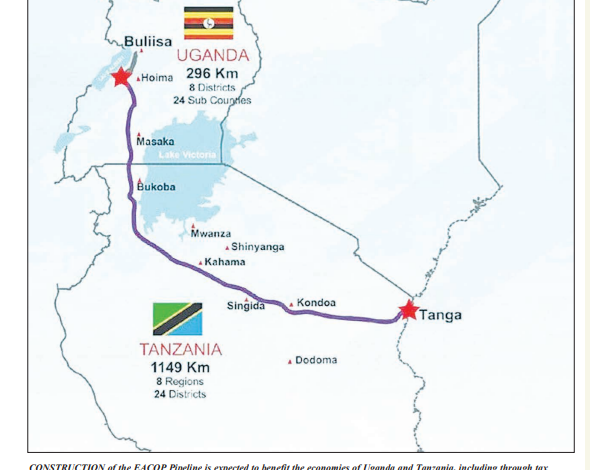
For me, that moment came standing at a pump station site, looking at the scale of what was required to simply move energy so that energy could move oil. It sounds almost philosophical until you begin to quantify it.
Because behind every kilometer of pipeline lies a reality that is rarely discussed:
The energy required to sustain infrastructure is often as demanding ,and as impactful , as the infrastructure itself.
The System We Started With
Before the idea of Carbon Footprint Reduction took shape, the system was brutally simple.
You needed power. You generated power. You burned fuel.
At pump station scale, this is not a small operation. A single station can demand between 5 to 15 megawatts of continuous power , every hour, every day, every year.
That translates to something enormous when you follow the energy backward.
To sustain that load using diesel, the system consumes roughly:
- 10 to 30 million liters of fuel every year, per station
And with every liter burned, approximately 2.68 kilograms of CO₂ enters the atmosphere.
So without realizing it, each station becomes responsible for:
- 27,000 to 90,000 tonnes of CO₂ annually
Not as an accident. But as a direct result of how energy is produced.
Multiply that across multiple stations, across years of operation, and you are no longer looking at operational cost , you are looking at a permanent environmental signature.
The Real Question
At some point, the conversation shifted.
It was no longer about whether the system worked.
It clearly did.
The question became:
Should it continue working like this?
That question was not answered with a single idea. It required a system.
The Shift That Changed Everything
I remember a discussion with Paul while reviewing system configurations.
He leaned over the drawings and said:
“We don’t need a new power source. We need a new way of handling power.”
It sounded simple. But it changed the entire approach.
Because the solution was no longer about replacing diesel with grid power.
It was about engineering the transition itself.
More Fuel Consumption = More Emissions = More Impact
⚡ When Raw Power Arrives
Grid power seems clean at first glance. Electrified. Efficient. External.
But the moment you connect it, reality reveals itself.
Grid power is:
- Unpredictable
- Fluctuating
- Untamed
Voltage rises and falls. Loads shift abruptly. External systems behave independently of your needs.
As Zara once put it during a technical walkthrough:
“The grid gives you power. But it doesn’t guarantee how it behaves.”
And that is where most systems fail , not in supply, but in control.
The Moment Everything Changes
Somewhere between the grid and the system, something must exist.
Not just to pass energy, but to shape it.
That moment exists in a single piece of infrastructure:
The Grid Buffer Transformer.
Raw Power + Control = Stable Power
🔌 The Interface
At that point, raw power meets engineering.
Not in theory. In action.
The transformer does not change voltage significantly it remains 33kV to 33kV but its purpose is far deeper.
It isolates. It regulates. It stabilizes.
It creates a boundary where energy stops being external and begins to belong to the system.
And once energy crosses that boundary, it is no longer unpredictable.
It becomes controlled power.
🔋 And Then, It Becomes Intelligent
But control alone is not enough.
Because real systems are dynamic.
They breathe in load variations.
They respond to demand spikes.
They absorb disturbances.
That is where storage enters , not as backup, but as intelligence.
The Battery Energy Storage System (BESS) does something subtle but powerful.
It interacts with time.
When demand surges, it gives. When excess exists, it absorbs. When instability appears, it neutralizes.
What was once a linear system becomes adaptive.
🔁 The New System in Motion
Now something different is happening.
Energy is no longer flowing in one direction.
It is negotiating itself through the system.
The grid supplies. The transformer stabilizes. The battery balances. The system responds.
And suddenly, what used to be a consuming system becomes an optimizing one.
📉 When the Numbers Begin to Shift
CO₂ = Fuel × Emission Factor
And then, quietly, the numbers change.
Where once the system required 10 to 30 million liters of diesel per year, it now relies on it only as a backup.
Consumption drops.
Not marginally — but dramatically.
- Up to 70–90% reduction in diesel usage
Emissions follow the same path.
From tens of thousands of tonnes annually, levels fall significantly:
- CO₂ emissions reduced by 20,000 to 65,000 tonnes per station per year
And across a project lifecycle of over 20 years:
- Each station avoids hundreds of thousands to over a million tonnes of CO₂
But the most important number is not emissions.
It is stability.
Because the system is no longer reacting to power.
It is controlling it.
🏗️ Where It Becomes Real
On site, these numbers do not appear as reports.
They appear as:
- A grid connection established
- A transformer aligned perfectly onto foundations
- Cables routed with precision
- Systems tested under load
This is where engineering becomes tangible.
You do not see carbon reduction.
You see systems behaving correctly.
And that behavior is what reduces carbon.
🌱 The Real Transition
At the end of it all, the biggest change is not technical.
It is philosophical.
We moved from a system where:
Energy is consumed.
To a system where:
Energy is managed, stabilized, and made responsible.
Stability + Flexibility = Efficiency + Sustainability
Final Reflection
At one point, Paul summarized it in a way that stayed with me:
“The real success is not that we reduced emissions. It’s that we designed a system where emissions are no longer the default.”
And that is what makes the difference.
Energy does not become responsible by accident. It becomes responsible by design.
And that design happens at the exact moment where raw power meets engineering.
Where instability meets control.
Where energy becomes a system.
More Fuel = More Impact
Raw Power + Control = Stability
Stability + Flexibility = Sustainability
메타데이터
- post_id
- b275a5221de2
- slug
- engineering-the-energy-transition-from-raw-power-to-responsible-power-b275a5221de2
- url
- https://medium.com/@5.0jawadi/engineering-the-energy-transition-from-raw-power-to-responsible-power-b275a5221de2
- canonical_url
- https://medium.com/@5.0jawadi/engineering-the-energy-transition-from-raw-power-to-responsible-power-b275a5221de2
- author_url
- https://medium.com/@5.0jawadi
- status
- ok
- fetched_at
- 2026-07-13 06:23:13