How the Bikini Liberated Women
And Its Impact on Feminism
How the Bikini Liberated Women
And Its Impact on Feminism
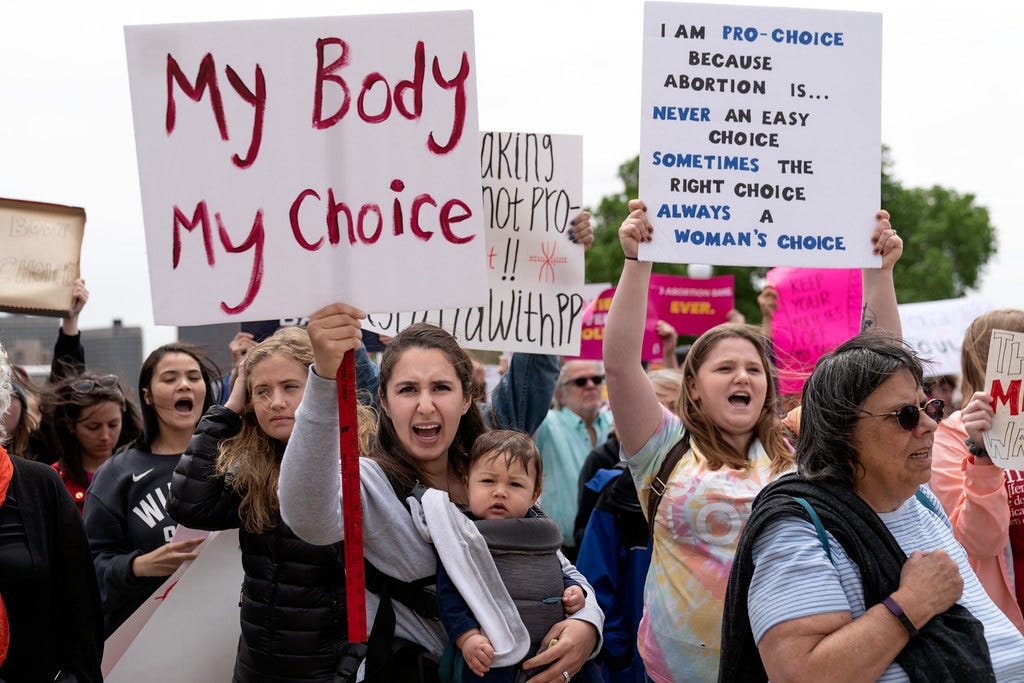
My body my choice sign at a Stop Abortion Bans Rally Flickr
The bikini is one of the most influential fashion items of the twentieth century. Since its introduction in 1946, it has become much more than a piece of swimwear. However, today, sadly, the bikini has increasingly become under attack due to anti-feminist forces growing in Societies in the Western World.
For many women, the bikini symbolised freedom, self-expression, and independence from traditional social expectations. It’s that freedom is a big reason why the bikini is under attack in an attempt to curtail the freedoms won by women and feminists over the last 80+ years.
The bikini also sparked debate about social norms and traditional and contemporary values.
At the same time, it sparked debates about modesty, sexuality, and the treatment of women’s bodies in society, and for feminists and women, what the bikini represented was a woman taking control of her own body and sexuality.
Before, a woman’s body autonomy was controlled by men and society; women did not control their own bodies, which was due to the social and economic consequences of having children.
Women were liberated with the development of the contraceptive pill, which gave women more control over who they got into relationships with by controlling their own ability to get pregnant.
With this new sexual freedom, women could have sex like men without the risk of getting pregnant. Also, the development of the welfare states meant that woman could now live their lives without a man to support them; instead, the state took over.
We can see this with the collapse of the African-American family in the 1960s and 1970s, where black women, for many reasons, made the choice not to be with black men.
Now let’s stay focused on the bikini and its relationship with feminism, which has therefore been both positive, controversial, and maybe, from a certain point of view, harmful. Still, I think that it is more due to men harming women.
Most men are much more sexually aggressive than women, and most have a much greater sex drive, meaning for a man, a bikini is a red flag to the bull.
That’s not women’s fault; it’s the men who need better women.
While some viewed the bikini as a symbol of women’s liberation, others argued that it encouraged the objectification of women, but that’s been institutionalised in our society, such as OnlyFans and the Kardashian lifestyle aesthetic.
Nevertheless, the bikini played an important role in the changing position of women and had a significant impact on feminist movements worldwide. Also, let me be clear: not all feminists support the bikini.

Bikini woman 1940s Wikipedia
The History of the Bikini
The modern bikini was introduced by French engineer Louis Réard in 1946. The design was revolutionary because it exposed much more of the female body than traditional swimsuits.
At first, many people considered it shocking and immoral. Several countries banned bikinis on public beaches, and many beauty contests prohibited contestants from wearing them.
Religious leaders and conservative groups criticised the garment as inappropriate.
However, despite the opposition, the bikini gradually gained popularity. During the 1950s and 1960s, Hollywood stars such as Brigitte Bardot, Marilyn Monroe, and, later, Ursula Andress helped popularise it.
As films, magazines, and advertising spread images of women confidently wearing bikinis, public attitudes began to change. The bikini became associated with youth, modernity, and freedom.
It also helped with the fact that one of the golden rules of marketing is that sex sells.
The Bikini as a Symbol of Women’s Liberation
One of the most significant ways the bikini contributed to women’s liberation was by giving women more control over their appearance.
For centuries, women were expected to cover most of their bodies in accordance with strict social and cultural rules.
Clothing often reflected the belief that women should be modest and obedient. The bikini challenged these expectations by allowing women to choose a style that emphasised comfort and personal freedom.
It could also be argued that the 20-year war in Afghanistan from 2001 to 2021 was the fight for women’s rights to wear bikinis and to be liberated. I say this not to be rude, but to point out the cultural freedom and symbolism of a bikini that people born after the 1970s take for granted in the West.
Again, that’s due to the rise of the bikini coinciding with major social changes after World War II.
Women were entering universities, joining the workforce in greater numbers, and demanding equal rights.
As women gained more independence, fashion also became a way to express that independence.
Wearing a bikini could be seen as a declaration that women had the right to make decisions about their own bodies without societal interference.
The bikini also helped challenge the idea that the female body should be hidden because it was shameful or inappropriate; again, that was done to control a woman’s sexuality, but also as a means to keep a woman safe from men.
Many women embraced the garment as a celebration of body confidence. By choosing to wear a bikini, women could reject outdated rules and demonstrate personal autonomy.
This aspect of choice became closely connected with feminist ideas about bodily freedom and self-determination.
Photo by Joshua Rawson-Harris on Unsplash
The Bikini and the Feminist Movement
During the 1960s and 1970s, second-wave feminism focused on issues such as workplace equality, reproductive rights, and freedom from gender discrimination. Within this context, discussions about women’s clothing became important.
Feminists argued that women should have the freedom to dress however they wished without being judged by society.
Many feminists viewed the bikini as a symbol of this freedom. They believed that true equality meant allowing women to make their own decisions about their appearance.
If a woman chose to wear a bikini because she felt comfortable and confident, that choice should be respected. The bikini therefore became linked to the broader feminist principle that women should have control over their own lives.
In addition, the bikini challenged traditional gender norms. It encouraged women to participate in sports, swimming, and beach culture without restrictive clothing.
This helped normalise the idea that women could be active, confident, and visible in public spaces. Such developments supported feminist goals of expanding opportunities and freedoms for women.

Women in World War II Wikipedia
Criticisms and Controversies
Despite its association with liberation, the bikini has also been criticised by some feminists.
Critics argue that the garment can contribute to the sexualisation and objectification of women, but the issue with that view is that it is men who are doing the objectification.
Advertising and media often portray women in bikinis according to narrow beauty standards, emphasising physical appearance rather than personality, intelligence, or achievements.
But ignoring the complexity of the human condition regarding sex, love, and commitment, they are very complex, and we all want different things at different times. What people want in their 20s, 30s, and 40s is very different, and everybody likes to be or feel hot.
This criticism raises an important question: does wearing a bikini represent freedom, or does it reflect pressure to conform to societal expectations of beauty?
For the time we live in today in the West and English-speaking world, I would say it’s more a matter of conforming.
Some feminists argue that women may feel compelled to wear revealing clothing to gain social acceptance, attention, or approval. In this view, the bikini may sometimes reinforce rather than challenge unequal power structures.
Another concern is the impact of unrealistic beauty standards. Images of models and celebrities wearing bikinis can create pressure for women to achieve certain body shapes.
This pressure may negatively affect body image, self-esteem, and mental health, which can also be an issue for the young, who have been hit by the 2008 financial crisis, COVID-19, and the impact of the iPhone in 2007.
Therefore, while the bikini can be empowering for some women, it may also create challenges for others; again, it’s all about context.

Joan of Arc Wikipedia
Modern Feminist Perspectives
Today, feminism generally emphasises the importance of choice.
Many contemporary feminists believe that empowerment comes from a woman’s ability to make her own decisions, whether she chooses to wear a bikini, a one-piece swimsuit, or more modest clothing.
The key issue is not the garment itself but the freedom to choose, without coercion or judgment; the bikini is a symbol, like Joan of Arc or Elvis.
The body positivity movement has also influenced attitudes toward the bikini.
Women of different sizes, ages, ethnicities, and backgrounds increasingly use social media to challenge traditional beauty standards.
As a result, the bikini has become a symbol not only of freedom but also of diversity and self-acceptance. Many women wear bikinis to celebrate their bodies rather than to meet society’s expectations.
Furthermore, modern discussions focus on respecting all choices. Feminists argue that women should not be criticised either for wearing revealing clothing or for choosing modest dress.
This perspective reflects a broader commitment to personal autonomy, equality, and respect.
메타데이터
- post_id
- b287d7c5d65b
- slug
- how-the-bikini-liberated-women-b287d7c5d65b
- url
- https://medium.com/bouncin-and-behavin-blogs/how-the-bikini-liberated-women-b287d7c5d65b
- canonical_url
- https://medium.com/bouncin-and-behavin-blogs/how-the-bikini-liberated-women-b287d7c5d65b
- author_url
- https://medium.com/@jonathanrileywriter
- status
- ok
- fetched_at
- 2026-07-10 06:10:56