WhatsApp Just Quietly Ended Its Biggest Privacy Problem
For fifteen years, WhatsApp asked you to trade your phone number for the ability to talk to anyone. Want to join a group chat with people…
WhatsApp Just Quietly Ended Its Biggest Privacy Problem
For fifteen years, WhatsApp asked you to trade your phone number for the ability to talk to anyone. Want to join a group chat with people you met once at a conference? Hand over your number. Want to message a seller from a Facebook Marketplace listing? Same thing. Your number — the one thing tied to your bank, your two-factor authentication, your entire digital identity — became the price of admission for every casual conversation.
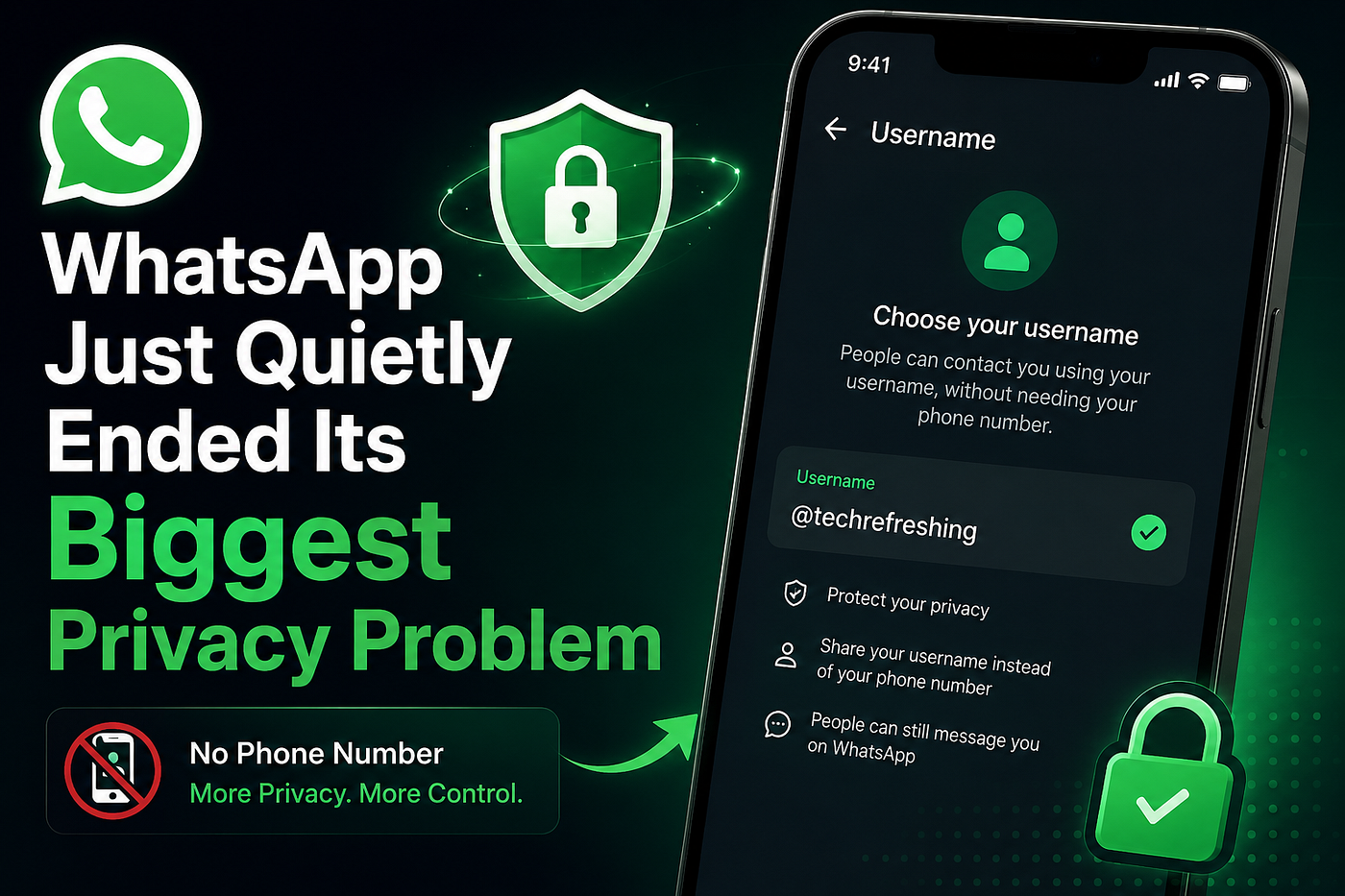
That changed on June 29, 2026, when WhatsApp officially opened username reservations to its more than three billion users. The New WhatsApp Username Feature lets you swap your phone number for a handle — something like @yourname — and share that instead. It sounds small. It isn’t.
The Feature, Explained Simply
Your phone number doesn’t disappear. It still powers login, account recovery, and verification. What changes is what other people see. Once you claim a username, anyone you haven’t already shared your number with will see your handle instead — in new chats, new groups, and first-time conversations with businesses.
What sets WhatsApp’s version apart from, say, Instagram usernames is what it deliberately doesn’t do. There’s no public directory. No autocomplete. No search suggestions. Someone has to already know your exact username to find you. WhatsApp’s VP of Product, Alice Newton-Rex, called it a “core privacy feature” — and structurally, it’s closer to Signal’s private-by-design approach than Telegram’s more discoverable model.
There’s also an optional layer on top: a username key. Turn it on, and people need both your handle and a short code before they can message you the first time. It’s a smart hedge for anyone who wants to share their username somewhat publicly — a resume, a LinkedIn bio — without opening the floodgates.
The Rules Aren’t Arbitrary
WhatsApp capped usernames at 3–35 characters, required at least one letter, and restricted the character set to lowercase letters, numbers, periods, and underscores. More interestingly, handles can’t start with “www.” or end in “.com” or “.net” — a direct, deliberate defense against phishing accounts impersonating brands or websites.
Businesses Have Homework Too
If you build or manage anything on the WhatsApp Business API, this update isn’t cosmetic. Customers who message you using a username instead of a number now show up in your webhook as a Business Scoped User ID (BSUID) — a stable, unique identifier per customer, per business portfolio. If your CRM or support stack still treats phone number as the primary key, that assumption just broke.
Why This Matters Beyond WhatsApp
This is part of a broader pattern across messaging platforms: phone numbers are increasingly seen as a liability rather than a convenience. Telegram figured this out in 2013. Signal followed in 2022. WhatsApp, despite its scale, was the last major holdout — and its arrival at this particular privacy standard says something about where user expectations have landed industry-wide.
If you value your privacy, reserving a username now — before the best handles disappear — is one of the easiest, most consequential five-minute decisions you can make on the app today.
WhatsApp #WhatsAppUpdate #PrivacyMatters #TechNews #WhatsAppUsername #DigitalPrivacy #StayPrivate
메타데이터
- post_id
- b29143dee23f
- slug
- whatsapp-just-quietly-ended-its-biggest-privacy-problem-b29143dee23f
- url
- https://medium.com/@techrefreshing02/whatsapp-just-quietly-ended-its-biggest-privacy-problem-b29143dee23f
- canonical_url
- https://medium.com/@techrefreshing02/whatsapp-just-quietly-ended-its-biggest-privacy-problem-b29143dee23f
- author_url
- https://medium.com/@techrefreshing02
- status
- ok
- fetched_at
- 2026-07-07 16:23:37