Jesus Had the Power to Stop Them. He Chose to Hide Instead.
On learning that retreat isn’t cowardice—it’s divine timing
ON LEARNING THAT RETREAT ISN’T COWARDICE—IT’S DIVINE TIMING
Why Jesus Went Silent When He Could Have Fought Back
On learning that retreat isn’t cowardice—it’s divine timing
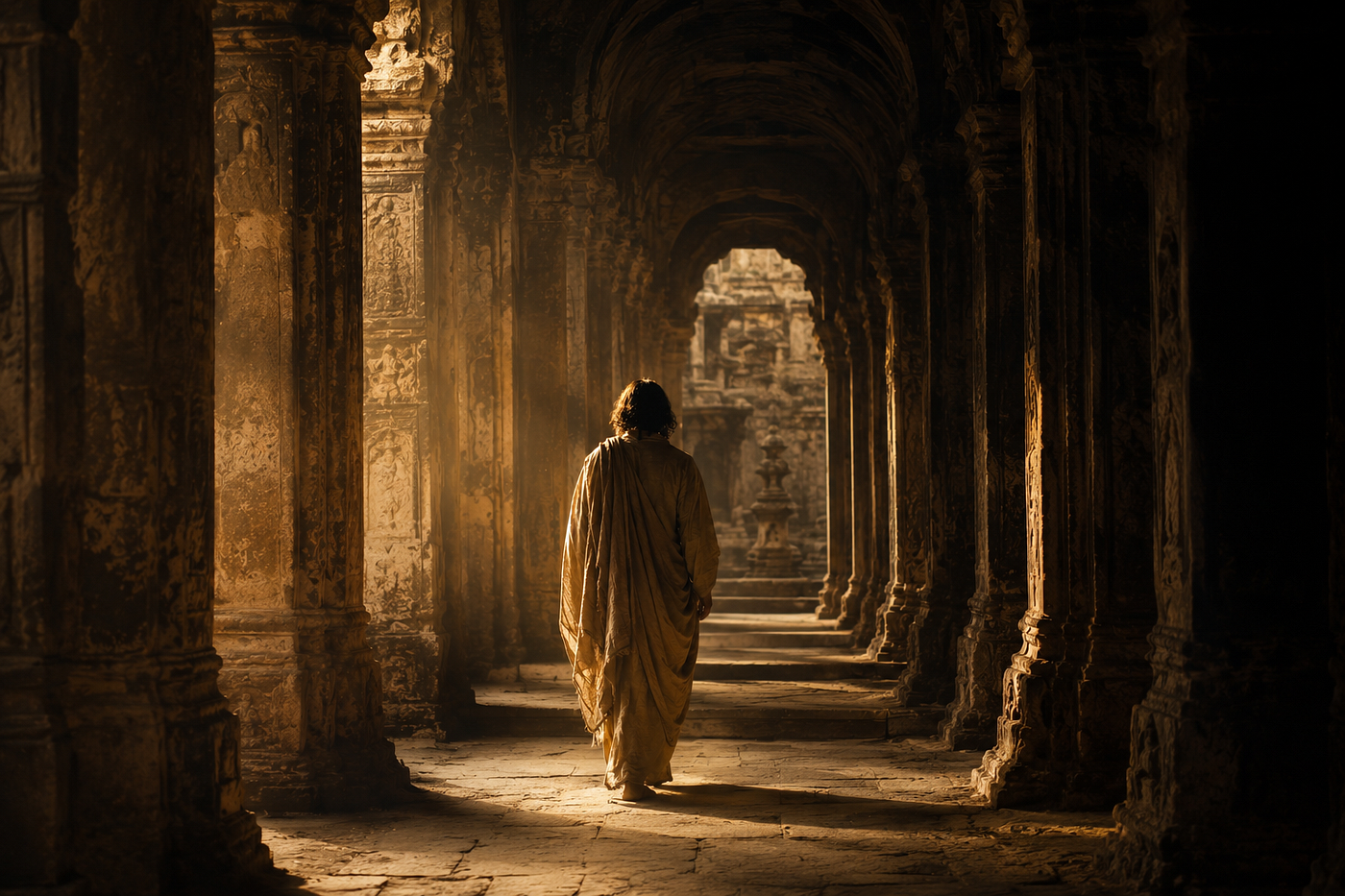
Silhouette of a lone figure walking through ancient stone temple columns at sunset, representing Jesus withdrawing from the crowd in John 8:59 image created by Author
I used to think courage looked like a clenched jaw.
Growing up, the Jesus I was taught was either meek and mild or thunder and lightning. He was the guy who flipped tables in the temple, who silenced Pharisees with a sentence, who walked on water while his friends panicked. So when I first read John 8:59 as an adult—when I actually sat with it instead of skimming past it in a reading plan—I felt confused. Then betrayed. Then, eventually, freed.
The scene is electric. Jesus has just said the most outrageous thing He ever claimed on record. Standing in the temple courts, surrounded by religious leaders who have spent the entire chapter trying to trap Him, He looks them in the eye and says: "Before Abraham was, I am."
Not "I was." Not "I existed." I am.
He is claiming the name God gave Moses from the burning bush. He is claiming to be the eternal, self-existent One. And the crowd? They know exactly what He means. The text says they picked up stones to execute Him on the spot for blasphemy.
This is the moment where the superhero is supposed to act.
Instead, three words stopped me cold: "Jesus hid Himself."
He didn’t call down angels. He didn’t part the crowd like the Red Sea. He didn’t even offer a final mic-drop rebuttal. The man who had just declared Himself to be the eternal God slipped through the mob, walked out of the temple, and vanished into the streets of Jerusalem.
I remember closing my Bible and staring at the wall. He ran?
It felt like finding out your favorite athlete faked an injury. It felt like weakness. It felt like—if I’m honest—a Jesus who didn’t fit the motivational poster I’d built my faith around.
But the more I sat with that verse, the more I realized I had misunderstood the entire nature of His power.
Jesus didn’t hide because He was afraid. He hid because He was on a schedule that wasn’t theirs.
Every time we see Him escape violence in the Gospels—in Nazareth when the crowd tried to throw Him off a cliff, in Jerusalem when the temple guards couldn’t lay hands on Him—He is protecting something we rarely value: the right timing of things. He tells His own mother, "My hour has not yet come" (John 2:4). He tells His brothers, "The right time for me has not yet come" (John 7:6). Even His death was a voluntary appointment, not an ambush: "No one takes my life from me. I lay it down of my own accord" (John 10:18).
This means the temple escape wasn’t a failure of nerve. It was a refusal to let someone else dictate the terms of His sacrifice.
And that distinction wrecked me, because I realized how much of my own "faith" had been performative courage. I thought being brave meant forcing every confrontation, meeting every challenge head-on, proving my conviction by refusing to budge. I had confused stubbornness with strength. I had turned my ego into a spiritual virtue.
But Jesus—actual Jesus, not the action-figure version—had the power to stop that crowd. He had already demonstrated authority over demons, diseases, and temple guards. He could have silenced them with a word. Instead, He chose obscurity over spectacle. He chose the long obedience over the dramatic showdown. He chose to wait.
I don’t know what you’re facing right now. Maybe it’s a conversation you’re itching to have, a resignation letter you’re ready to send, a truth you’re desperate to speak. Maybe your hands are wrapped around your own stones, ready to defend yourself against accusations that aren’t even fair.
But what if the bravest thing you could do today is… nothing?
What if the most powerful move isn’t the mic drop, but the quiet exit? What if protecting the timing of your life is more important than proving your point in this moment?
Jesus didn’t lose that day in the temple. He simply refused to die on someone else’s terms.
And eventually, when His hour did come, He walked toward the cross with the same unhurried authority. No one could stop Him. No one could rush Him. He laid His life down exactly when He meant to—because He had spent His whole ministry learning the discipline of not laying it down when He wasn’t meant to.
That is a courage I am still learning. It doesn’t look like a clenched jaw. It looks like a open hand, releasing control of the timeline.
What about you? Have you ever had to walk away from a fight you could have won, just because it wasn’t the right time?
메타데이터
- post_id
- b2920da315a7
- slug
- jesus-had-the-power-to-stop-them-he-chose-to-hide-instead-b2920da315a7
- url
- https://medium.com/the-great/jesus-had-the-power-to-stop-them-he-chose-to-hide-instead-b2920da315a7
- canonical_url
- https://medium.com/the-great/jesus-had-the-power-to-stop-them-he-chose-to-hide-instead-b2920da315a7
- author_url
- https://medium.com/@joeb36250
- status
- ok
- fetched_at
- 2026-06-10 18:44:10



