Lockheed’s Cheaper Patriot Missile Reveals the Real Crisis in Modern Warfare
The PAC-3 ACE sacrifices some capability to cut unit costs — but its biggest insight is that future wars may be decided by production…
Lockheed’s Cheaper Patriot Missile Reveals the Real Crisis in Modern Warfare
The PAC-3 ACE sacrifices some capability to cut unit costs — but its biggest insight is that future wars may be decided by production depth, not peak performance.
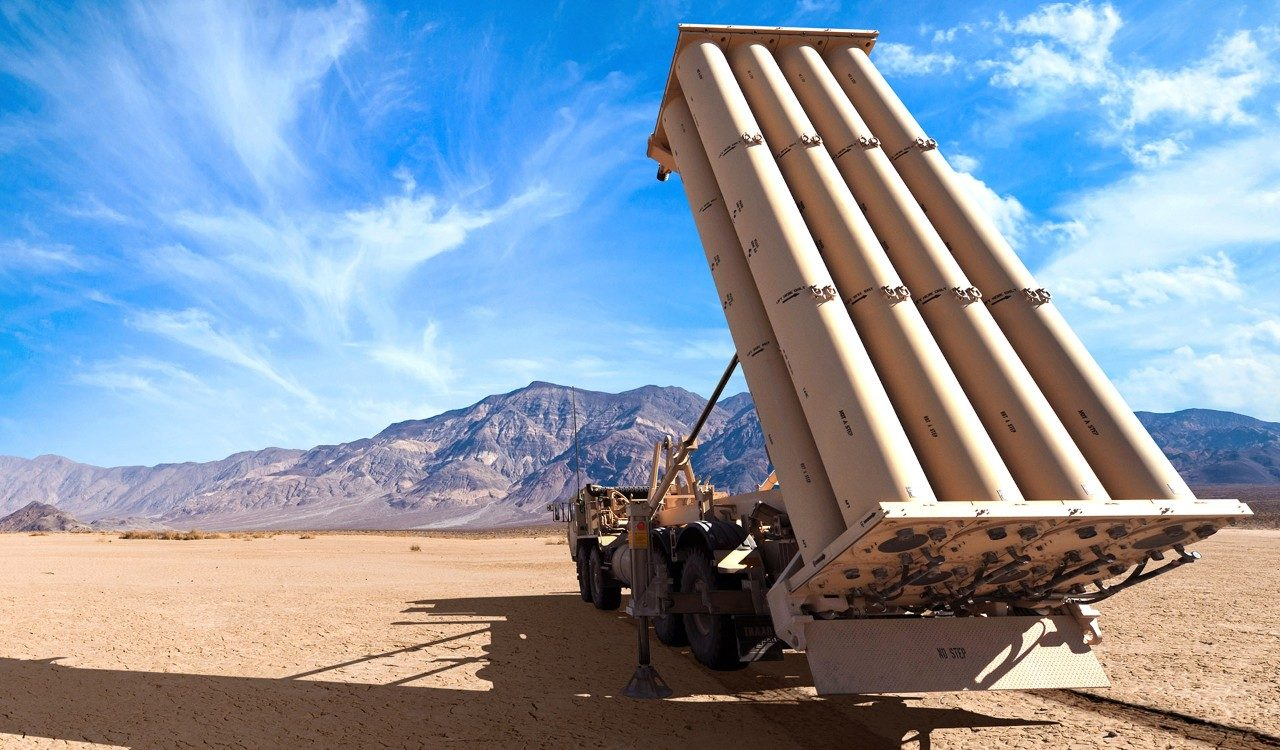
PAC-3 air-defense launcher. Photo courtesy of Lockheed Martin.
For decades, the logic of advanced warfare seemed straightforward: build the most capable weapon possible, then use technological superiority to overwhelm the enemy.
Lockheed Martin’s newest Patriot interceptor quietly challenges that logic.
The PAC-3 Adapted Capability Effector, or PAC-3 ACE, is being designed to cost less than half as much as the company’s premium PAC-3 Missile Segment Enhancement. It will not fly as far or offer the same sophistication. That is not an engineering failure. It is the point.
Modern air defense is confronting a problem that better performance alone cannot solve. Drones, cruise missiles, ballistic missiles and decoys can arrive together, forcing defenders to make rapid decisions about which interceptor to use against which threat. Even a highly advanced defense system can be worn down if it runs out of ammunition faster than factories can replace it.
The real breakthrough behind PAC-3 ACE, therefore, may not be the missile itself. It is the admission that the age of the “perfect” weapon is giving way to the age of the available one.
A Patriot interceptor built around a different priority
Lockheed introduced PAC-3 ACE at the Farnborough International Airshow on July 20. The company says the interceptor will counter cruise missiles, aircraft and short-range ballistic missiles while costing less than half as much per unit as PAC-3 MSE.
Axios reports that the price could land around $2 million, although the program remains in development and its first flight is not expected until 2028.
ACE is intended to fit into the existing Patriot architecture. It is expected to retain the same external dimensions as PAC-3 MSE, operate from the M903 launcher and be carried in 12-missile configurations. That compatibility matters because militaries would not need an entirely new launcher network to add it to their defenses.
The savings come from deliberate simplification. According to Janes, the design replaces PAC-3 MSE’s hit-to-kill approach with a blast-fragmentation warhead, uses a simplified seeker, removes attitude-control motors and substitutes a single-pulse rocket motor for the MSE’s dual-pulse design.
Those choices reduce performance. They may also make the interceptor easier and cheaper to manufacture in meaningful quantities.

PAC-3 ACE reflects a deliberate trade: less peak capability in exchange for lower cost and greater production potential. AI-generated editorial illustration.
The most advanced missile can still lose the inventory war
Air-defense systems are usually judged by what they can intercept. In a sustained conflict, an equally important question is how many times they can do it.
Attackers increasingly have the option of mixing expensive missiles with cheaper drones and decoys. The goal is not always to penetrate on the first attempt. It can be to force defenders to activate radars, expose positions and consume scarce interceptors.
That changes the meaning of superiority. A missile that performs brilliantly but exists in limited numbers may be less strategically useful than a slightly less capable alternative that can be produced, distributed and replenished at scale.
Lockheed is already working with the Pentagon to increase annual PAC-3 MSE production from roughly 600 interceptors to 2,000 under a multiyear framework. Yet even that expansion illustrates the difficulty. Production lines, rocket motors, seekers, skilled labor and specialized suppliers cannot be multiplied overnight.
The bottleneck is no longer merely invention. It is industrial endurance.

Mixed waves of drones, missiles and decoys can pressure even sophisticated defenses by consuming limited interceptors. AI-generated editorial illustration.
“Cheaper” does not mean cheap
There is an important reality check: a roughly $2 million interceptor is still far too expensive to be the default answer to every inexpensive drone.
It would also be misleading to compare the price of an interceptor only with the price of the object it destroys. A missile may be protecting an air base, power plant, command center or populated area worth far more than either weapon. The value of what is being defended matters.
That is why PAC-3 ACE should not be viewed as a universal low-cost drone killer. It makes more sense as part of a layered portfolio.
Premium interceptors such as PAC-3 MSE can remain available for the hardest ballistic-missile threats. A less costly interceptor such as ACE could handle targets that demand serious capability without requiring the most expensive option in the magazine. Interceptor drones, electronic warfare, guns, microwaves and eventually lasers can address lower-cost threats where conditions allow.
The strategic advantage comes from matching the weapon to the threat instead of firing the most capable interceptor simply because it is the only one available.
The defense industry is rediscovering mass
Western defense procurement spent decades prioritizing small numbers of highly sophisticated platforms. That approach made sense for short campaigns conducted under overwhelming technological superiority.
It looks less comfortable in an era of persistent drone attacks, missile salvos and multiple simultaneous regional crises.
PAC-3 ACE reflects a broader change now visible across the defense sector. Companies are developing cheaper interceptors, autonomous aircraft, counter-drone systems and directed-energy weapons. Governments, meanwhile, are pushing manufacturers to expand output and create supply chains that can survive disruption.
Lockheed says it intends to work with American and European partners on ACE, while international manufacturing is reportedly under consideration. That may prove as consequential as the missile’s seeker or warhead.
If allied countries can manufacture components, sustain systems and replenish inventories closer to where they are needed, production geography becomes part of deterrence. An adversary must consider not only the weapons already deployed, but also the network capable of replacing them.

Distributed manufacturing and allied supply chains are becoming part of military deterrence. AI-generated editorial illustration.
The contrarian lesson
PAC-3 ACE is easy to describe as a budget version of an existing Patriot missile. That interpretation misses the larger signal.
Lockheed is not simplifying the interceptor merely because governments want to spend less. It is responding to a battlefield where the premium option may be too expensive, too scarce and too slow to replace for every engagement.
The next era of military advantage may belong to the side that can combine exquisite weapons with affordable ones — and manufacture both faster than an opponent can exhaust them.
In that environment, reducing capability can sometimes increase strategic power.
What happens next
PAC-3 ACE remains a development program rather than a deployed weapon. Its first flight is expected in 2028, its seeker supplier had not been finalized when Axios reported on the project, and its eventual price and production rate could change.
The program’s direction is nevertheless clear. Air defense is moving away from a single-interceptor mindset and toward layered magazines organized by threat, cost and availability.
The question is no longer whether a missile can make an extraordinary interception.
It is whether enough missiles will still be available when the next wave arrives.
TrendWatchInsider delivers breaking developments and contrarian strategic analysis across technology, science, business and world affairs. Stay informed, stay trendy.
Sources
메타데이터
- post_id
- b2b6f29cfcc7
- slug
- lockheeds-cheaper-patriot-missile-reveals-the-real-crisis-in-modern-warfare-b2b6f29cfcc7
- url
- https://medium.com/@trendwatchinsider/lockheeds-cheaper-patriot-missile-reveals-the-real-crisis-in-modern-warfare-b2b6f29cfcc7
- canonical_url
- https://medium.com/@trendwatchinsider/lockheeds-cheaper-patriot-missile-reveals-the-real-crisis-in-modern-warfare-b2b6f29cfcc7
- author_url
- https://medium.com/@trendwatchinsider
- status
- ok
- fetched_at
- 2026-08-23 01:06:34