Why Conflating Conservatism and Fascism is Anti-Liberal
It’s just one more way critical anarchism is trying to discredit liberalism
Why Conflating Conservatism and Fascism is Anti-Liberal
It’s just one more way critical anarchism is trying to discredit liberalism
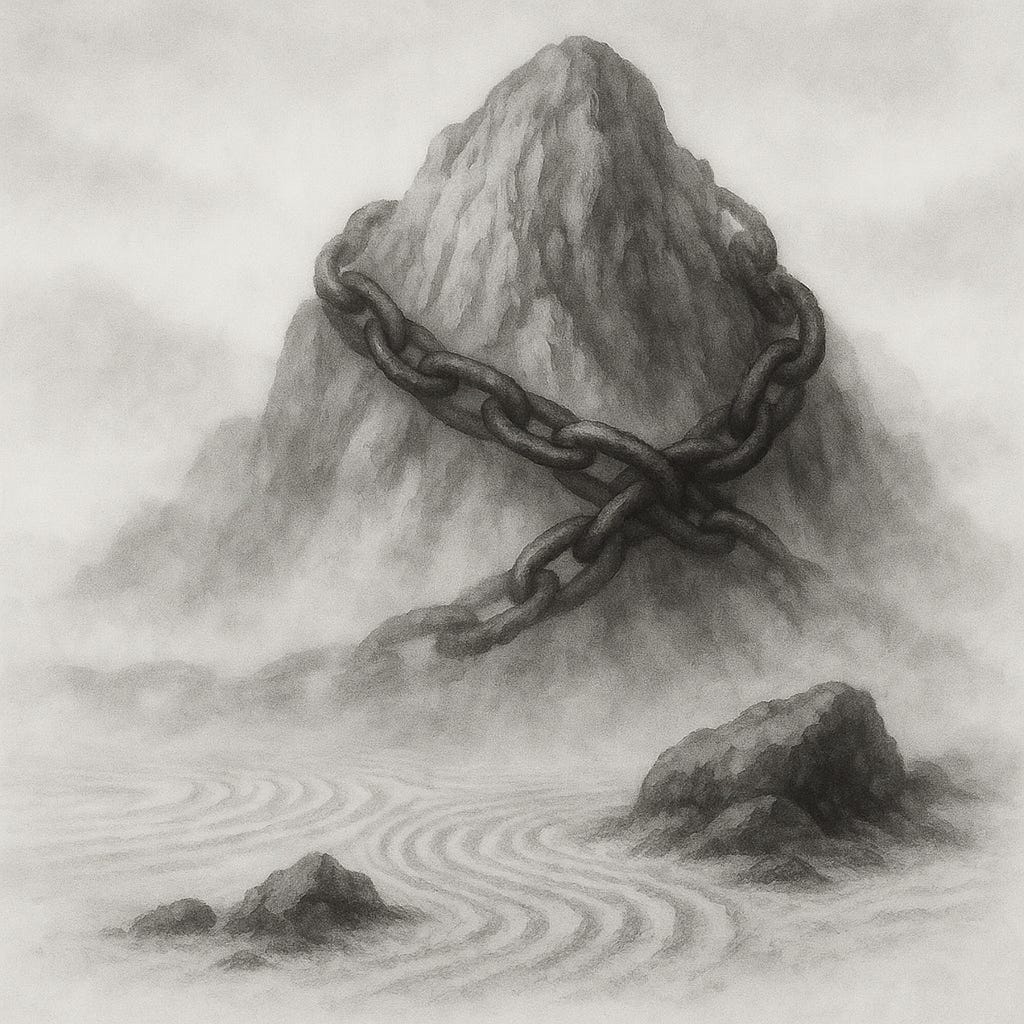
Photo by Marija Zaric on Unsplash
My regular audience already knows that I strongly disagree with the far-left take that conservatism and fascism (and MAGA-ism, which they generally roll into fascism) are literally one and the same. Any more dwelling on this topic would be considered excessive by some. Yet, today I’m going to reply to an article that argues about this matter once more. I promise you that it isn’t just an exercise in repetition. The article I’m going to reply to actually makes clear, more than any other previous article I’ve ever read, the ‘woke’ left’s worldview, through its examination of this issue. Thus, by responding to it, I hope I can clarify the differences between the liberal reformist tradition and the ‘woke left’ once and for all. This is important, because such differences have major implications for our approach to many issues. Only by understanding the differences, and why, at least in my belief, the liberal reformist side is the correct side, will we be able to regain our confidence, and hence the passion required to sustain our movement long term.
The article in question is It Was Fascism All Along by Silvaria Lysandra Zemaitis. It is actually a reply to Toby Buckle’s It Wasn’t Fascism All Along, an article that I also replied to, although effectively taking the opposite angle to the one Zemaitis is taking. Zemaitis starts by stating where she agrees and disagrees with Buckle. Where she agrees with Buckle is that ‘there is nothing to redeem or to save in the conservative project’, the very position I disagreed with in my response. Where she disagrees with Buckle is that she sees conservatism and fascism as only being distinct on the surface, but actually share the same kind of ‘structural logic’. What ‘structural logic’, you might ask? Zemaitis starts by stating that ‘I, the author, am a Black trans woman’, and that both conservatism and fascism are ‘aimed at the eradication of people like me’. For Zemaitis, conservatism and fascism are ‘a single ideological project seeking different means to defend the social order against liberal attacks, switching those means up as necessary dependent on the time and place’. Even Edmund Burke was not spared in this view: in Zemaitis’s view, since Reflections on the Revolution in France was written in response to the French Revolution and its belief that ‘the entire social order was in fact not natural and thus could be overthrown by the people’, Burke was acting to protect the ‘exploitative social order’, and was thus acting with the same ‘structural’ goal in mind as actual fascists.
Those who have some experience with the analysis and deconstruction of ‘woke left’ ideas and arguments, like myself, would find many familiar themes in the way Zemaitis has laid our her argument. These include: 1) prioritization of supposed ‘structural’ views over empirical views, which are dismissed as superficial, 2) rejection of the very idea that there might be nuanced but important differences at play, 3) flattening out all political actors into an oppressor vs oppressed model, i.e. every political position is ultimately judged solely by whether they are seen to side with the ‘oppressor’ or the ‘oppressed’, and 4) equation of rejection of leftist change with support for reactionary change. These four points also interact with, and rely upon each other.
Now that we’ve gotten the jargon out of the way, let me explain more clearly. Firstly, the prioritization of supposed ‘structural’ views basically means seeing everything as an ‘oppressor vs oppressed’ or otherwise exploitative structure by default, rather than examining phenomenon on an empirical basis and seeing what’s actually there on a case-by-case basis. It is effectively the application of the ‘woke left’ lens to examine everything, and would represent an a-priori bias if you don’t start from the position of agreeing with the ‘woke left’ ideology in the first place. This naturally links into the second point, rejection of the very idea that there might be nuanced but important differences at play, because when everything is about oppressor vs oppressed structures, then any nuances would just be seen as differences in style rather than substance, decorations at best, or distractions at worst. This, again, is a recurrent theme in ‘woke left’ thinking, and is also essentially the lynchpin in the argument that conservatism and fascism are one and the same. The rejection of objective, empirical observation of phenomenon and taking nuanced differences into account, and the insistence of the primacy of oppressor vs oppressed analysis naturally leads to the flattening out of all political actors into an oppressor vs oppressed model, with everyone who is seen as favoring the ‘oppressor’ at some point lumped into the ‘oppressor’ side. This naturally leads to the final conclusion, where rejection of leftist change (what conservatism is about) is equated with the active implementation of oppressive, reactionary change (what MAGA-ism and fascism are about), because after all, the only thing that matters is oppressor vs oppressed dynamics, and everything else is just window dressing and strategy. This, ladies and gentlemen, is how Edmund Burke’s concerns about the French Revolution’s overreach can be equated with Hitler’s systematic implementation of evil and mass murder, or how classical liberals upholding free speech against woke-left cancel culture can be equated with the Trump’s administration’s trampling on free speech at will.
There are several problems with this kind of analysis (and therefore ‘woke left’ thinking in general). Firstly, it force-fits an a-priori defined ideology onto the world, rather than trying to understand the world in an objective and empirical manner first. This is basically the same mistake that Lysenkoism made, and the results of Lysenkoism is, I think, adequate demonstration of why one shouldn’t think in this manner. (To be fair, the left isn’t the only side that thinks like this. The right’s numerous conspiracy theories during Covid were also very Lysenkoist in essence.) Secondly, it inevitably leads to polarization, conflict, and intensification of the culture wars, which history has shown is particularly dangerous for minorities. Finally, it must be noted that this kind of thinking is, by definition, a break with, rather than a continuation of, the liberal reformist tradition that brought us everything from women’s suffrage to civil rights to gay marriage. The liberal tradition is deeply tied to empiricism. John Locke, often considered the father of liberalism, was a foundational figure in British Empiricism, and other important classical liberal thinkers like John Stuart Mill and Adam Smith also widely employed the empirical method in their works. Liberalism works by examining the problems in society in an empirical way, and then coming up with proposals for reform to fix those problems, and advocating for those reforms. In other words, liberals seek to understand things as they are first, before trying to fix the problems. If we jettison the first part, then we would be jettisoning the whole liberal tradition itself. This is why I’ve long argued that ‘woke left’ thinking, in its substitution of empirical exploration and understanding with a-priori ideological pre-specification, is inherently illiberal. To thinkers in the liberal tradition, like myself, it simply makes no sense to try and ‘fix’ problems without first truly and objectively understanding the nature of the problem. It is even more nonsensical to create an us-vs-them divide that makes it harder for everyone to understand things objectively.
The reason why ‘woke left’ thinking is anti-liberal, especially in the realm of objectivity and empiricism, lies in its historical roots in the reform vs revolution split in early 20th century European socialism. The whole cannon that underpins ‘woke left’ thinking, including critical theory, postmodernism, and other associated philosophies, ultimately have their roots in the revolution side of that argument. This is why these philosophies often have a strong anti-reformist bent, as seen in their insistence that ‘oppressive’ institutions can’t be reformed and must be deconstructed. Given that the whole point of anti-reformism is to discredit reformism, rejecting, and even demonizing, the fundamental tools of liberal reformism would be a natural part of its argument. This is why critical theory and postmodernism have little use for objectivity and empiricism. Indeed, I think one could even argue that some strands of critical theory and postmodernism are ultimately all about discrediting objectivity and empiricism, their use of identity politics in doing so is only a means, with the discrediting of liberal reformism being the real ultimate goal. (This argument would actually turn the common view that the ‘woke left’ is all about identity politics on its head, but that’s a discussion for another article.) The postmodern-critical far-left’s strong disdain for liberal reformism is also very much consistent with their actions in real life, ranging from attempts to derail liberal reforms like gay marriage in various countries during the 2000s-2010s, to their tacit support of Brexit in the UK, to their recent attempt to whip up a boycott of Kamala Harris in the 2024 US Elections, even if it meant helping Trump get elected (something which they seem pretty proud of, as seen in their ongoing bullying of left-wing influencer ContraPoints for endorsing Harris in 2024). While they do certainly loathe fascists and conservatives (which they see as one and the same), they appear to me to loathe liberal reformists like myself even more. Which again, is just very consistent with their worldview.
This is also why Zemaitis’s assertion that ‘the socialist-liberal synthesis is natural, and in fact should be reinforced and reaffirmed, despite its epistemic split in the 20th century’ is too simplistic and naive. The real epistemic split on the ‘left’ in the 20th century wasn’t between socialists and liberals per se, it was between reformists and revolutionaries in the socialist camp. The reformists joined force with liberals, creating the ‘liberal-left project’ that Zemaitis observed (welfare, progressive taxation and publicly funded healthcare), but the revolutionaries have been trying to wreck this project since day one. If liberal reformists aren’t aware of this, the liberal reformist movement will eventually get wrecked, either by the direct actions of the revolutionaries (like their repeated attempts to derail liberal reformist goals and defeat liberal administrations at the ballot box), or by the stealthy supplantation of true liberal reformism with illiberal ‘woke left’ ideology.
Liberals have historically harbored a range of attitudes towards conservatism (remember that Burke was a liberal too), but what a true liberal wouldn’t do is to conflate conservatism with fascism on the basis of far-left ideological categories. A liberal can indeed examine conservatism objectively and empirically, and find it unworthy and distasteful as a conclusion, as Toby Buckle did, but that would still be very different from concluding that it is one and the same as fascism after examining everything through a far-left lens that rejects empiricism. In liberalism, conservative ideas, like every other set of ideas, are to be examined on their own merits, and whatever those merits (or lack thereof) are, they are clearly not the same as fascism. If one at least tried to examine the two ideologies empirically and honestly, like true liberals would do, one simply couldn’t have come up with the conclusion that they are the same. This is why I respect the way Buckle approached the question even though I don’t necessarily agree with his conclusions (because I don’t believe conservative philosophy, as properly defined, is liberalism’s enemy or inherently a bad thing), but I can’t say the same about Zemaitis’s approach. The fact is, the idea that conservatism and fascism are one and the same is a product of an ideology that is incompatible with the liberal tradition.
Finally, I think we really have to examine the motivations of, and practical effect of, the far-left’s constant demonization of conservatism. As I have said several times before, moderatism already includes conservative philosophy (the proper Burkean kind, not the Republican kind), by definition. If you are a moderate (like myself), then you are already a conservative to some extent, even if not to the extent of those who self-identify as conservatives first and foremost. And it’s not a bad thing. Because if you are truly not conservative at all, you would be a radical far-leftist by definition. This, I think, is why the far-left wishes to demonize conservatism at every turn. Because if conservatism is always and inherently bad, then far-left radicalism would be justified over not only conservatism itself, but also moderatism, because it contains conservative thinking to some degree. The blanket demonization of conservatism can also be used against liberalism, because liberalism effectively allows people to choose the conservative stance on an issue-by-issue basis, if that’s what their conscience tells them on a particular issue. Indeed, I think the demonization of conservatism is one of the major reasons why the far-left has been able to seize the moral high ground for themselves: if conservatism is so evil, then moderatism would also be evil for harboring conservative sentiment, and liberalism would at least be complicit in evil for allowing people to choose the conservative position. To overturn the morality of the far-left would therefore require us to uphold the position that conservatism is sometimes good and necessary. Conservatism doesn’t have to be what the Republican Party and its fellow travelers stand for. It doesn’t have to mean anti-LGBTism, authoritarianism and the religious right (in fact I would call those things reactionary rather than conservative). It can instead mean wanting to preserve the basic culture, institutions and values of society while trying to make it more inclusive and better for everyone. Rejecting the far-left’s radicalism is indeed a conservative thing, but it is the good kind of conservatism, and there is indeed such a thing.
[embed]
Originally published at https://taraella.substack.com.
***TaraElla is a singer-songwriter and author, who is the author of the [Progressive Conservative Manifesto](https://taraella.substack.com/p/the-progressive-conservative-manifesto), the [Moral Libertarian Manifesto](https://taraella.substack.com/p/the-moral-libertarian-manifesto) and the [Moral Libertarian book series](https://taraella.substack.com/p/the-moral-libertarian-perspective). She is also the author of her autobiography [The TaraElla Story](https://taraella.substack.com/p/the-taraella-story)*.
메타데이터
- post_id
- b2c39d42abcc
- slug
- why-conflating-conservatism-and-fascism-is-anti-liberal-b2c39d42abcc
- url
- https://medium.com/taraellas-liberal-conversation/why-conflating-conservatism-and-fascism-is-anti-liberal-b2c39d42abcc
- canonical_url
- https://medium.com/taraellas-liberal-conversation/why-conflating-conservatism-and-fascism-is-anti-liberal-b2c39d42abcc
- author_url
- https://medium.com/@taraella
- status
- ok
- fetched_at
- 2026-06-09 15:37:30