Home Backup Power Maintenance Checklist (2026 Guide)
Learn the exact monthly routine to keep portable power stations, solar panels, and emergency batteries ready for a grid failure.
Home Backup Power Maintenance Checklist: How to Keep Batteries, Cables, Solar Panels, and Generators Ready

Affiliate Disclosure: Resilient Life may earn a commission from qualifying purchases made through links in this article, at no additional cost to the reader. We only reference products that fit a serious household resilience strategy.
Backup power equipment fails when batteries are discharged, cables are missing, solar panels are untested, UPS units are aging, fuel systems are neglected, and no one has tested the load plan. A serious household needs a monthly maintenance routine to guarantee immediate operational readiness before an outage occurs.
Quick Decision
- Most common failure: the battery is not charged when the outage begins.
- Most overlooked failure: the correct cable, adapter, or extension cord is missing.
- Most important monthly task: test the actual critical-load setup, not just the battery display.
- Best plug-and-play portable backup option: Jackery.
- Best high-capacity expandable option: BLUETTI.
- Useful market benchmarks: EcoFlow, Anker SOLIX, and Goal Zero are worth comparing when evaluating battery health tools, expansion batteries, solar input, and home backup architecture.
- Best strategy: maintain backup power as a system — battery state of charge, cables, solar panels, UPS units, generator readiness, printed load plan, and monthly testing.
Why Does Backup Power Equipment Fail Before the Outage Even Starts?
A comprehensive home backup power plan is frequently compromised not by the severity of a weather event, but by the slow, invisible degradation of infrastructure during periods of grid stability. The underlying architecture of backup power maintenance relies on active chemistry, mechanics, and logistics. When any of these pillars are neglected, the system fails to perform precisely when the household relies upon it most. Many backup power failures are not caused by storms; they are caused by poor maintenance, including discharged batteries, missing cables, untested solar panels, aging UPS units, forgotten fuel, dead power banks, outdated load plans, and untrained household members.
The most insidious cause of battery failure is phantom drain driven by the internal Battery Management System (BMS). A sophisticated BMS acts as the electronic brain of a portable power station, responsible for monitoring individual cell temperatures, balancing voltage across the pack, and preventing thermal runaway events during discharge. However, this vital safety component requires a continuous, albeit minuscule, draw of electrical power. If a portable power station for home backup is placed into deep storage at a zero percent state of charge, the BMS will eventually consume the absolute reserve voltage of the lithium cells. Once a lithium-ion or Lithium Iron Phosphate (LiFePO4) cell drops below its critical minimum voltage threshold, the internal chemistry degrades irreversibly. The BMS, detecting an unsafe undervoltage condition, will actively prevent the battery from accepting a new charge to avoid a potential fire hazard, leaving the household with a highly expensive, inert piece of hardware.
Mechanical and logistical failures present equally catastrophic vulnerabilities to any grid down power plan. A robust energy reserve is functionally useless if the heavy-duty extension cord required to connect the refrigerator to the power station has been misplaced, or if solar adapters are left in a different building. Similarly, standby generators suffer from neglected fuel systems and unlubricated components. Gasoline containing ethanol attracts ambient moisture through condensation, leading to phase separation and engine stalling, while diesel fuel is susceptible to microbial growth and accelerated oxidation. A generator maintenance checklist that ignores fuel rotation or expects the machine to start on stale fuel guarantees mechanical failure under a heavy electrical load. Furthermore, human error — such as untrained household members failing to safely operate the equipment or not understanding the transfer switch sequence — can instantly neutralize an otherwise robust emergency power for home strategy.
Ultimately, an effective strategy views backup equipment not as a one-time purchase, but as an active, continuous operational capability. Without ongoing backup power maintenance, unexercised hardware represents a dangerous false sense of security.
What Should a Home Backup Power Maintenance Routine Include?
To successfully mitigate infrastructural risk, a household must implement a system-of-systems approach to equipment readiness. A localized failure in one component — such as an aging uninterruptible power supply (UPS) or a damaged solar connector — can sever the entire continuity chain. A rigorous, systems-based, and practical monthly routine systematically eliminates these single points of failure.
The core architecture of a proper maintenance schedule must address several distinct categories of hardware. First, portable power stations require meticulous state-of-charge management, BMS evaluation, and inverter exercising to ensure the primary energy reservoir is healthy. Second, UPS units must be tested to guarantee the health of the sealed lead-acid batteries that maintain instantaneous network connectivity for critical routers and modems. Third, smaller power banks and handheld radio batteries necessitate rotation to ensure tactical lighting and communications gear remains viable.
Additionally, the routine must encompass the inspection of solar panels and their corresponding charging cables to verify that the photovoltaic surfaces are clean and the electrical connectors are free of oxidation. If the household operates combustion systems, generator systems must undergo rigorous fuel quality checks, lubrication assessments, and load-bearing operational runs. Extension cords and adapters — the vital conduits of the system — must be inventoried, inspected for jacket damage, and kept strictly organized. Finally, the routine must culminate in the review of a printed load-priority plan and a physical household test routine, ensuring that family members can execute the power transfer gracefully to build muscle memory before a crisis strikes.
How Should Portable Power Stations Be Maintained?
Strict adherence to portable power station maintenance protocols is the definitive factor in whether a battery survives a decade of service or degrades prematurely within two years. Lithium-based power stations are high-performance energy reservoirs that respond poorly to environmental extremes and neglected charging cycles. To ensure a reliable portable power station for home backup, operators must follow precise, chemistry-specific guidelines.
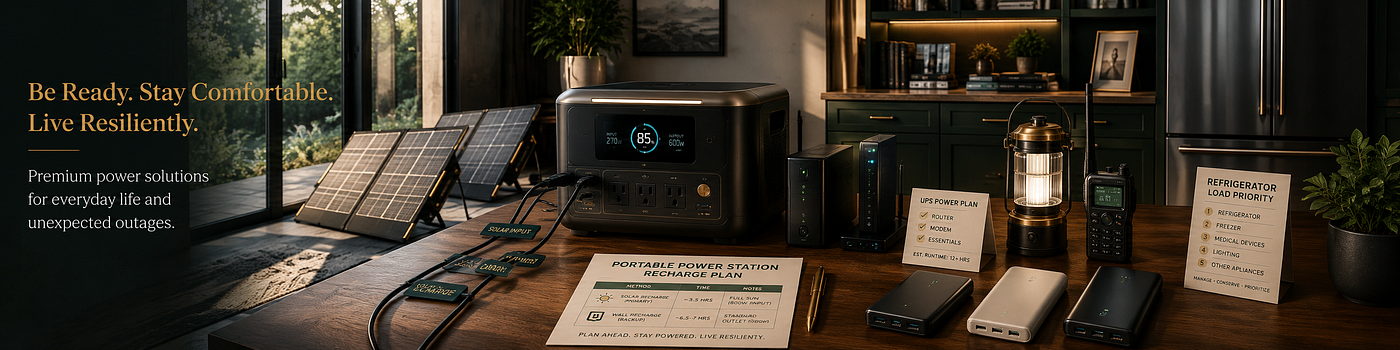
The primary directive for maintaining these systems is keeping the unit charged according to manufacturer guidance while strictly avoiding long-term storage at terminal states of charge (0% or 100%). Leaving a battery completely empty risks chemical death via deep discharge, while storing it at a continuous 100% capacity places excessive stress on the internal cell structures, accelerating long-term capacity fade. To preserve longevity, operators should adhere to the “50/80 Rule,” which dictates that units placed into long-term storage should be held at a state of charge between 50% and 80%. To prevent the BMS state-of-charge display from drifting out of calibration, the unit requires a quarterly pulse. This involves activating the unit, running an actual load test with a refrigerator, router, lights, or other critical devices to drop the capacity slightly, and then recharging it back to the optimal storage threshold while recording the battery’s behavior. This periodic cycling ensures that the percentage displayed accurately reflects the chemical reality of the cells.
Environmental control is equally paramount. Operators must avoid storing the equipment in extreme heat or cold. High-capacity batteries must be stored in cool, dry, and well-ventilated locations, ideally within a temperature range of 32°F to 104°F (0°C to 40°C) and a humidity level below 60%. Storing a portable unit in an uninsulated outdoor shed, damp basement, or a vehicle trunk subjects it to extreme temperatures that can lead to rapid cell degradation or internal corrosion of the circuitry. During the monthly check, it is critical to physically inspect the AC outlets, USB ports, and solar input connectors for dust ingress or physical damage. Firmware or application status should be confirmed and updated only if relevant to the unit’s operational stability, ensuring that software bugs do not interfere with the inverter’s performance.
For households building a serious backup layer, brands like Jackery and BLUETTI serve as strong reader-facing options. Their hardware supports rigorous portable power station maintenance routines by offering clear telemetry, responsive battery management systems, and well-documented storage parameters, allowing homeowners to manage their electrical reserves with precision and confidence.
How Should UPS Units Be Maintained?
While a portable power station serves as the heavy-duty engine of a home backup power plan, Uninterruptible Power Supply (UPS) units function as the instantaneous reflex system. Typically deployed to keep internet modems, routers, and desktop computers online during the initial seconds of a blackout, UPS devices bridge the gap before larger manual backup systems or standby generators can take over. However, UPS units are excellent for short network continuity but should not be confused with large home backup batteries.
Proper UPS battery maintenance requires understanding the limitations of the internal chemistry. Most consumer and prosumer UPS units utilize sealed lead-acid (SLA) batteries rather than lithium-ion cells. SLA batteries have a comparatively short operational lifespan, usually degrading significantly within three to five years depending on ambient temperature, float voltage levels, and the frequency of power fluctuations. A UPS unit that has sat silently under a desk for five years will almost certainly fail immediately under load when the grid drops, resulting in an abrupt loss of critical network infrastructure.
To verify readiness, operators must conduct dedicated router and modem UPS testing. This involves unplugging the unit from the wall outlet while the connected networking gear is actively drawing power. If the UPS executes its audible alarm checks and successfully keeps the network online without interruption, the battery is viable. Runtime testing should also be observed to ensure the battery hasn’t lost significant capacity. If the connected equipment shuts down instantly or the UPS emits a continuous fault tone, the internal SLA battery must be replaced in strict accordance with battery replacement intervals established by the manufacturer guidance.
Furthermore, UPS operators must respect the surge protection limitations of the hardware. These units are specifically rated for low-draw electronics. Connecting high-draw devices such as laser printers, space heaters, or heavy motorized equipment into the battery-backed outlets of a UPS will cause a severe overload, potentially leading to immediate hardware failure, inverter damage, or fire risks. Keeping networking gear labeled prevents untrained household members from inadvertently plugging a vacuum cleaner into a critical network UPS during an outage, thereby avoiding overload and preserving the integrity of the communication layer.
How Should Power Banks and Small Batteries Be Rotated?
The deepest, most tactical layer of a grid down power plan involves the micro-electronics required for personal navigation, illumination, and localized communication. Flashlights, headlamps, weather radios, and mobile devices rely on small-form-factor energy storage that is frequently forgotten in drawers until an emergency strikes. A structured battery rotation plan prevents the disastrous discovery of corroded alkaline batteries or deeply discharged lithium-ion power banks when the household is thrust into darkness.
A robust battery rotation plan operates on a strict quarterly recharge schedule. Phone power banks, which are frequently utilized for keeping smartphones and tablets operational, suffer from continuous self-discharge and BMS phantom drain. These small lithium-ion cells should be gathered every three months, drained slightly, and recharged to approximately 80% to ensure cell health. Leaving a phone power bank fully depleted in an emergency kit will permanently destroy its capacity over time.
For tactical and utility devices, radio batteries and headlamp batteries should be rigorously managed. Households serious about resilience should migrate entirely to high-quality, low-self-discharge rechargeable AA and AAA batteries. These should be cycled through a smart diagnostic charger that tests for internal resistance and capacity health. Implementing a system of battery labeling by date allows the homeowner to track degradation over the years and cull weak cells before they fail under load or leak corrosive acid inside expensive equipment.
Furthermore, standardizing power delivery is crucial. Maintaining a dedicated, centralized waterproof container for standardized USB-C cable kits ensures that the household can aggressively route power from their larger portable power stations to their smaller communication devices without frantically searching for proprietary charging cords. By avoiding forgotten dead batteries in drawers, the household ensures that critical medical-adjacent continuity, security lighting, and local emergency communications remain uninterrupted regardless of the outage duration.
How Should Solar Panels and Charging Cables Be Tested?
A common vulnerability in modern resilience planning is the assumption that possessing a solar panel automatically equates to possessing infinite, reliable energy. Solar panels should not remain untested until an outage occurs. Solar panel maintenance and testing are critical because photovoltaic generation is highly sensitive to environmental factors, shading, micro-fractures, and mechanical connection integrity.
Effective solar panel maintenance requires regular, detailed panel inspection of the tempered glass or ETFE polymer surfaces. Dust, pollen, bird droppings, and urban smog significantly reduce the light permeability and conversion efficiency of the monocrystalline cells. Panels must be carefully cleaned to remove dust or debris using water and non-abrasive materials. For portable, folding panel storage, operators must be cautious; the repeated mechanical stress of deploying and repacking can cause microscopic fractures in the wiring or the solar cells themselves, leading to sudden, unexplained drops in wattage output.
Furthermore, a household must proactively engage in sun-angle testing and shade testing using the actual environmental conditions present at their property. A panel that generates a robust 200 watts of input during the peak overhead sun of June may struggle to generate 40 watts during the low-angle, heavily shaded afternoons of December. By observing the input-wattage on the power station’s display, the household gains accurate, empirical data regarding their true recharge capabilities across different seasons. Exaggerated solar recharge claims found in marketing materials must be discarded in favor of actual localized testing.
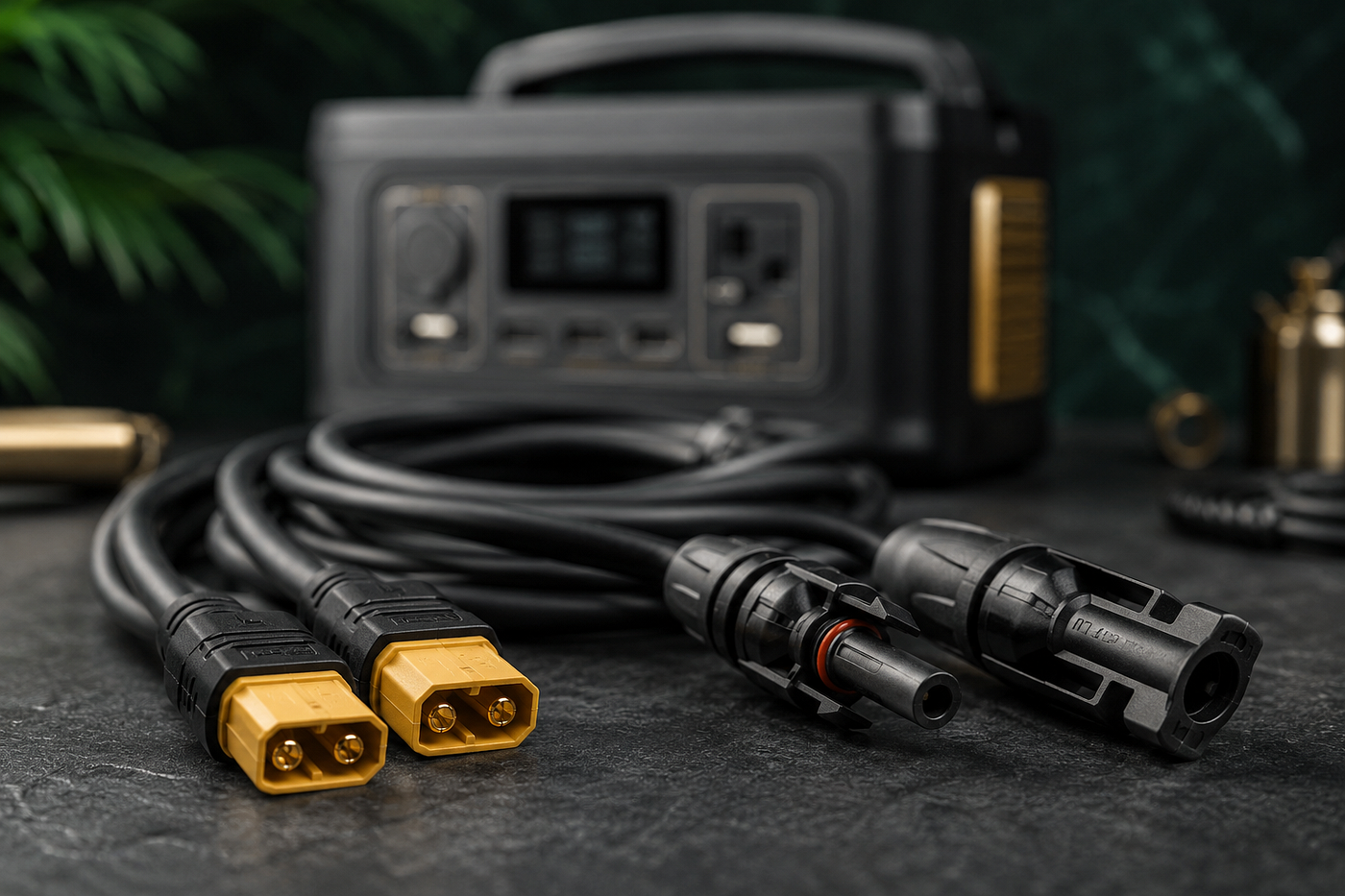
Equally important is comprehensive cable inspection and the verification of connector compatibility. MC4 connectors and XT60 adapter cables are the lifeblood of the solar generation system. If these connectors are left exposed to damp environments or dirt, the metal contacts will oxidize, introducing extreme electrical resistance that throttles wattage or creates a thermal hazard. Testing solar charging with the actual power station guarantees that all proprietary adapters are present, physically intact, and electrically sound, preventing a scenario where a household has perfect sunlight but no physical means to transmit the power to their batteries.
How Should Fuel Generators Be Maintained If the Household Uses One?
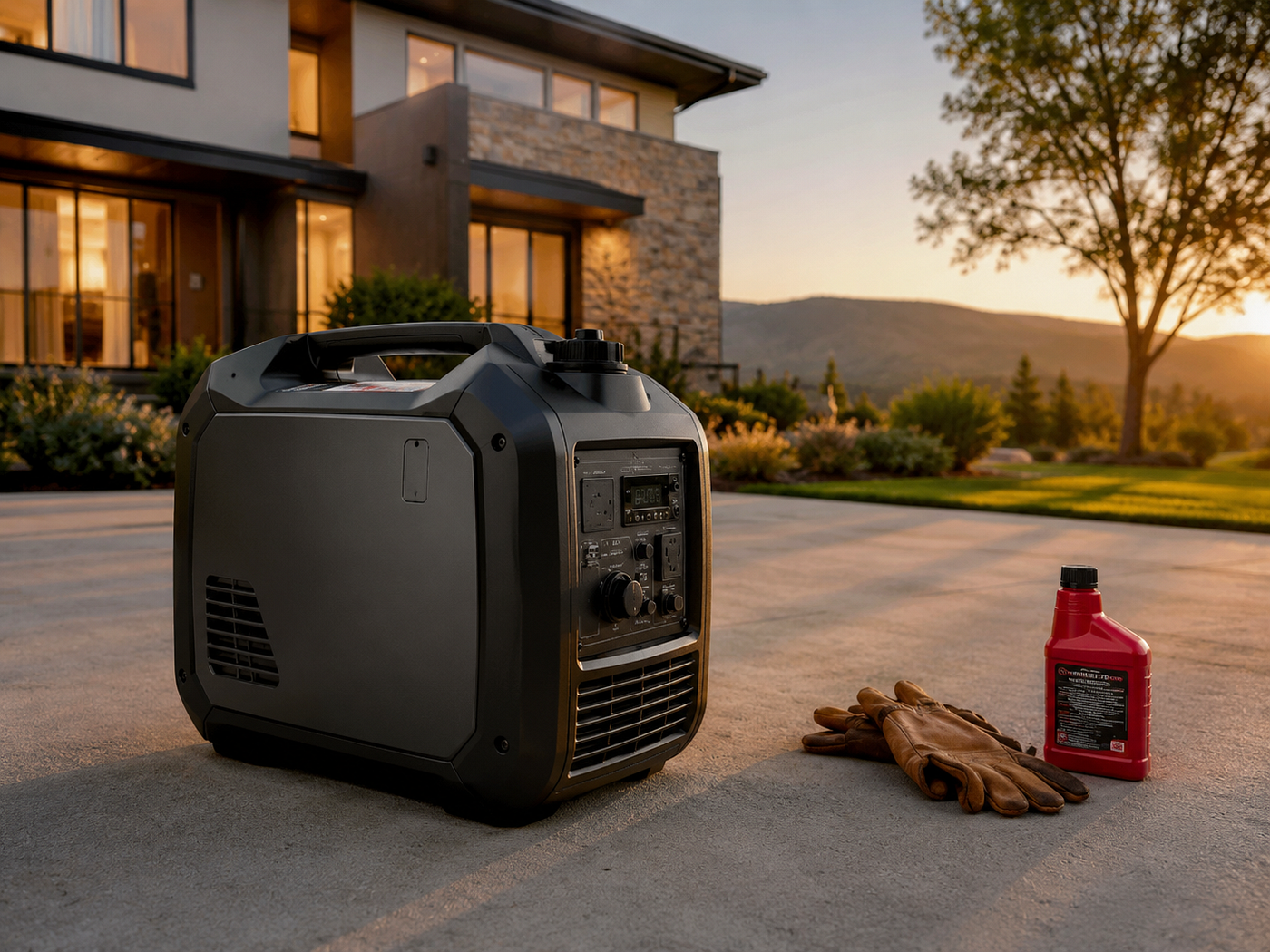
For estates and properties that integrate combustion engines into their infrastructure, a rigorous generator maintenance checklist is a life-safety imperative. Unlike silent solid-state batteries, fuel generators introduce profound mechanical complexities and severe risks regarding carbon monoxide (CO) exposure, fire, and catastrophic engine failure.
Taking cues from strict NFPA 110 guidelines designed for commercial continuity, residential standby and portable systems must follow manufacturer service intervals with absolute precision. Fuel storage and rotation represent the most critical vulnerability for combustion systems. Gasoline degrades rapidly, losing volatility and forming varnishes that clog carburetors, while diesel is prone to microbial contamination. A resilient household must enforce a strict fuel rotation policy, utilizing high-quality chemical stabilizers and cycling stored fuel into daily-driver vehicles before it expires. Regular oil and filter service is mandatory, as running a generator under heavy load with degraded lubrication will seize the engine.
Operational safety protocols cannot be compromised. The U.S. Consumer Product Safety Commission (CPSC) explicitly dictates outdoor-only operation. Portable generators must never be operated indoors, in garages, basements, or near open windows, as generator exhaust contains lethal levels of carbon monoxide that can incapacitate a family within minutes. Verifying the operational status of interconnected indoor carbon monoxide alarms is a non-negotiable step in any generator maintenance checklist.
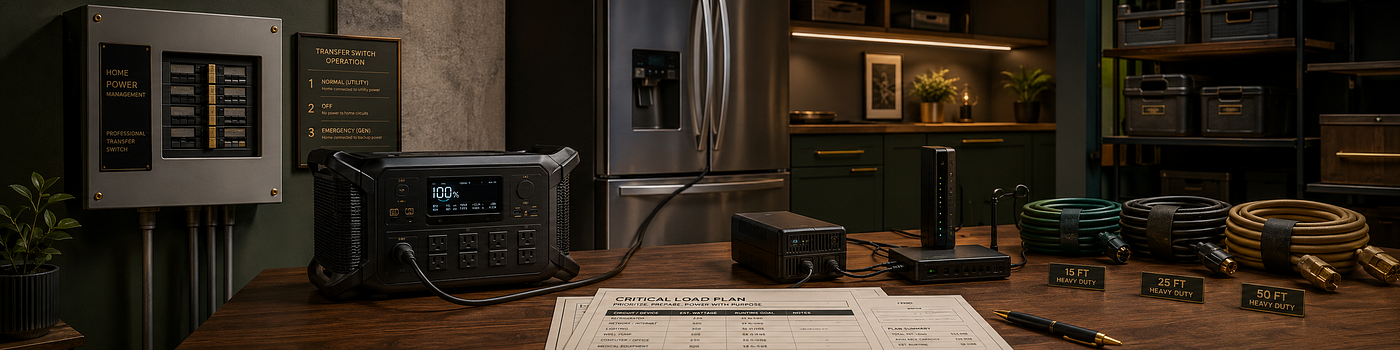
Furthermore, extension cord and transfer switch inspection must be conducted to ensure that the high-amperage connection to the home remains electrically sound, with no jacket abrasions or bent prongs. The system requires monthly or seasonal test runs under an actual electrical load to burn off internal moisture, lubricate seals, and verify alternator performance. For integrated, liquid-cooled standby systems, professional service should be scheduled annually to inspect complex transfer switch electronics and conduct deep diagnostic evaluations. Operators must not attempt mechanical repair instructions or unsafe generator setup steps beyond their technical competency.
How Should Extension Cords, Adapters, and Cable Kits Be Organized?
The highest-capacity battery in the world is functionally useless if the power cannot reach the critical load. Extension cords, adapters, and proprietary charging cables are frequently the weak point in any power outage equipment checklist. During the chaos of a sudden blackout, searching through dark closets for the correct heavy-gauge cable induces unnecessary stress and delays critical preservation efforts.
To prevent this logistical failure, cables must be treated as dedicated emergency infrastructure. A proper routine involves highly specific organization: label the refrigerator cord with high-visibility tags to ensure it is easily identifiable. Label the router and modem power cable so that network connectivity can be restored immediately without untangling irrelevant wires. Label solar adapters to prevent them from being mixed in with generic household electronics.
The primary AC charging cable necessary to recharge the power station from the wall must be kept directly with the power station at all times. Specialized vehicle charging cables should be kept accessible in the event the household must recharge the unit using a vehicle’s 12V port during an extended disruption. It is imperative to store heavy-duty, low-gauge extension cords — required for high-surge appliances — separately from small USB cables to prevent confusion.
During the monthly check, operators must inspect cord damage. Looking for signs of cracking, exposed copper, or bent ground prongs guarantees that power is transferred safely, preventing arc faults or electrical fires. Furthermore, households must avoid wet-location misuse; standard indoor extension cords must never be routed through snow or standing water to reach an outdoor generator or solar array.
How Should a Household Test the Full Backup Power System?
Theory and isolated hardware checks are insufficient; an emergency system must be proven through comprehensive, integrated testing. An affluent household operating a serious infrastructure-resilience strategy should conduct a monthly or quarterly drill. This ensures that the disparate components of the battery backup for home operate smoothly as an interconnected network. Emphasize that the point is to test the actual system, not merely check that the device powers on.
A full system test begins when you charge the power station to its operational capacity and physically deploy it to the critical load zones. The household must plug in the actual refrigerator or test load to observe the exact continuous wattage draw on the battery’s display screen. This empirical testing answers critical questions regarding compressor surge limits and actual runtime duration. Following this, the household should run the router and modem on the UPS, intentionally dropping the wall power to verify the network remains stable during the transition.
The drill must also incorporate secondary systems. Test emergency lighting coverage to ensure safe navigation of the property. Charge phones and radios using the designated power banks to verify cable integrity and device acceptance. If weather allows, deploy the panels to test solar input and confirm the system can accept a charge while simultaneously discharging power. Confirm cables are present in their designated emergency bins. Review generator readiness if used, ensuring fuel stabilizers are active and the starting battery is healthy.
The culmination of this drill is to update the printed load-priority card. This document dictates which devices are allowed to draw power during specific phases of the outage. If the household recently purchased a larger, less efficient appliance, the load-priority card must be adjusted to reflect the new energy demands, ensuring the system is never inadvertently overloaded by outdated assumptions.
Which Portable Power Brands Fit a Maintenance-First Strategy?
Evaluating battery backup for home systems requires looking past simple marketing claims and focusing on the underlying architecture. Brands should be evaluated by their battery chemistry, cycle life longevity, the accuracy of their state-of-charge display, their maximum solar input thresholds, and AC recharge speed. Furthermore, expansion options, logical port layout, specialized cable availability, comprehensive manufacturer documentation, and reliable warranty and support structures dictate whether a unit can be successfully maintained over a decade.
Jackery: Simple Maintenance for Plug-and-Play Backup
Jackery is a strong fit for households that want a simple, mobile, plug-and-play portable power station for short-term outage coverage, refrigerator support, communications, lighting, and device charging. The brand emphasizes intuitive interfaces and straightforward functionality. This makes it highly practical for households that want a clear first-layer backup system they can test monthly without requiring complex, hardwired infrastructure or advanced technical training.
BLUETTI: Expandable Backup for Deeper Maintenance Planning
BLUETTI is a strong fit for households that want larger capacity, expandable batteries, LiFePO4 longevity, and a more stationary home backup role. Utilizing stable lithium iron phosphate chemistry, these systems offer thousands of charge cycles before experiencing significant degradation. This architecture is highly useful for households that want deeper continuity and are willing to maintain a more structured battery system, integrating modular expansion packs into a comprehensive residential microgrid.
EcoFlow, Anker SOLIX, and Goal Zero: Market Benchmarks
When conducting broad technical evaluations, EcoFlow, Anker SOLIX, and Goal Zero are useful market benchmarks when comparing AC recharge speed, expansion systems, solar input capabilities, app controls, and overall home backup architecture. These brands provide a valuable comparative lens for assessing rapid inverter charging technologies, structural durability, and heavy-duty cold-weather operational limits, ensuring households can contextualize their chosen systems against the broader market standards.
What Is the Home Backup Power Maintenance Checklist?
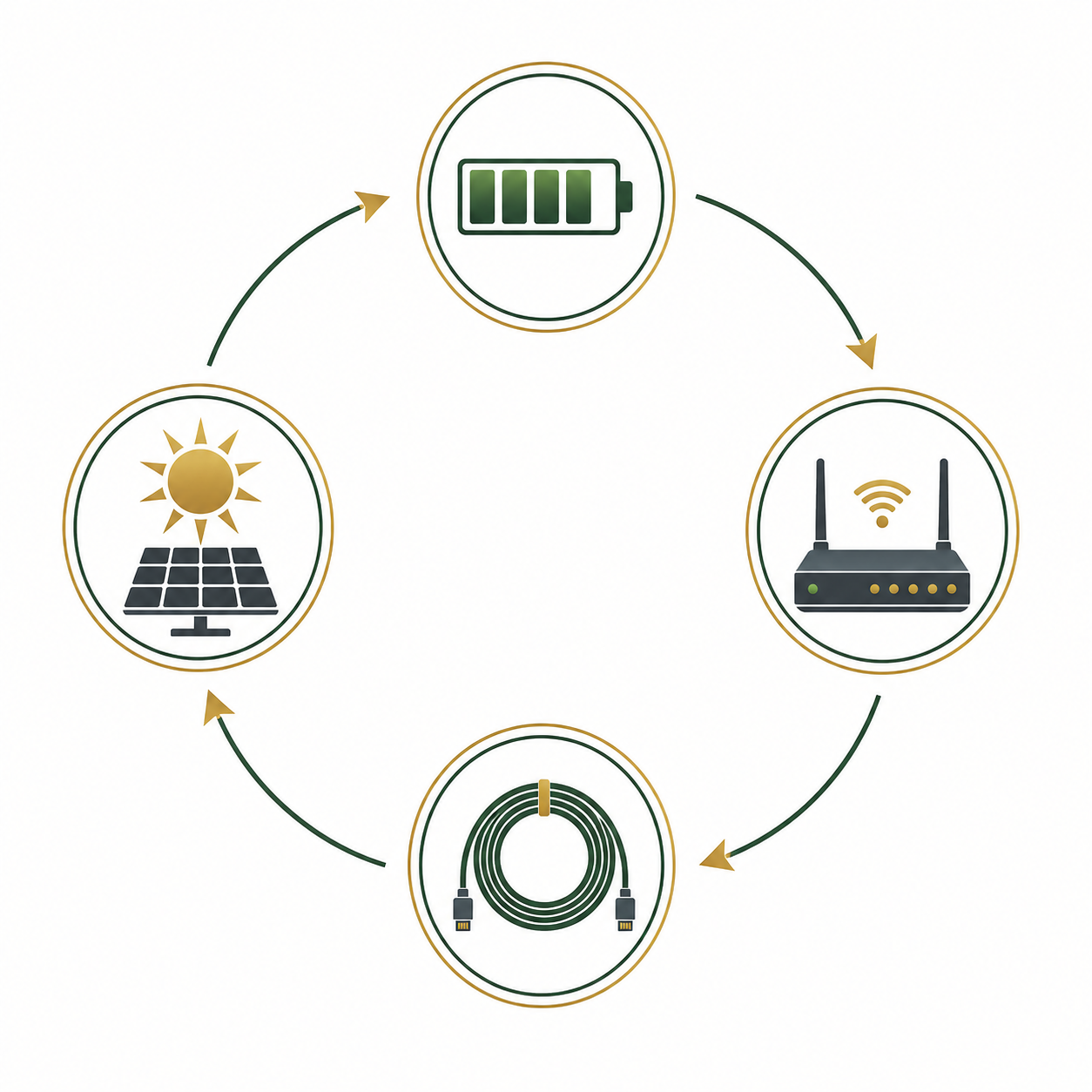
The following matrix provides a structured overview of the mandatory resilience checks required to maintain operational continuity.
Home Backup Power Maintenance Checklist

Plain-English Maintenance Rule
Backup power is not a purchase. It is a maintained system. A household that owns a battery but never tests it does not have a backup plan; it has stored hardware. Readiness is defined solely by what a household can successfully operate, under realistic loads, on zero notice.
What Mistakes Cause Backup Power Maintenance Plans to Fail?
Even with premium equipment, backup power maintenance plans routinely fail due to predictable, avoidable errors in judgment and execution. The most devastating mistake is storing the power station empty, allowing the BMS to drain the remaining reserve voltage and permanently lock the lithium cells. Conversely, never testing the actual refrigerator or router load guarantees that the household will be surprised by unexpected wattage surges or insufficient runtimes when the grid drops.
Logistical mistakes during peacetime translate to operational paralysis during an emergency. Losing the AC charging cable or forgetting solar adapters renders the battery a finite, un-rechargeable asset. Letting UPS batteries age unnoticed guarantees that critical network infrastructure will crash instantly during a power fluctuation. Mixing old and new batteries in tactical flashlights invites acid leaks, while leaving power banks uncharged in gloveboxes destroys their capacity.
Environmental negligence is equally destructive. Storing equipment in heat or damp areas accelerates chemical decay and invites condensation-related short circuits. For combustion systems, forgetting generator fuel and service leads to catastrophic engine stalling exactly when the heavy electrical load is applied. Finally, not updating the printed load-priority card and assuming equipment will work because it worked once ensures that in the confusion of a sudden blackout, the household misallocates precious wattage, draining the system on non-essential luxuries.
Why Is Backup Power Maintenance a Wealth Preservation Layer?
Maintenance protects more than equipment. It protects refrigeration, communications, medical-device support where applicable, lighting, security systems, remote work capability, documentation access, and decision-making capacity during disruption. When the primary grid goes dark, the ability to maintain these core functions prevents the immediate degradation of lifestyle, security, and professional obligations.
For high-value households, resilience is not only owning backup gear. It is keeping critical systems operational before they are needed. A maintained power system helps prevent food loss, security gaps, business interruption, medical disruption, unnecessary relocation, and avoidable financial stress. A family forced to evacuate a secure property due to a localized power failure incurs massive logistical friction and leaves their primary asset vulnerable. By strictly adhering to a home backup power maintenance checklist, the estate remains an operational fortress. Physical resilience protects the household. Financial resilience protects the future.
***Join the free Resilient Life newsletter* for weekly technical guides on off-grid power, emergency food storage, household security, and tactical wealth preservation.
Frequently Asked Questions (FAQ)
How often should I charge a portable power station?
A portable power station should be checked every three months. To maintain battery health, discharge the unit slightly by running a small appliance, and then recharge it. For long-term storage, lithium batteries should ideally be kept between 50% and 80% state of charge to prevent chemical degradation.
How often should I test my home backup power system?
A household should conduct a full load test of their emergency equipment at least quarterly, if not monthly. This involves cutting power to critical appliances, running the refrigerator and internet router off the backup batteries, verifying solar panel input, and ensuring all necessary extension cords are physically present.
Do UPS batteries need to be replaced?
Yes, the sealed lead-acid (SLA) batteries inside typical UPS units naturally degrade over time and usually require replacement every three to five years. Regularly running the unit’s built-in self-test will alert the household when the battery can no longer hold a sufficient charge to support connected devices.
What is the most common backup power maintenance mistake?
The most critical mistake is storing a battery or portable power station at a 0% state of charge for extended periods. The internal Battery Management System (BMS) continuously draws a tiny amount of power, and if the battery remains uncharged, it can slip into a deep discharge state that permanently damages the lithium cells.
Works Cited
- Federal Emergency Management Agency (FEMA) / Ready.gov. “*Power Outages and Generator Safety Guidelines.”*
- U.S. Consumer Product Safety Commission (CPSC). “*Carbon Monoxide Information Center: Generators.*”
- National Fire Protection Association (NFPA). “*NFPA 110: Standard for Emergency and Standby Power Systems.*”
메타데이터
- post_id
- b2cc03312dbb
- slug
- home-backup-power-maintenance-checklist-2026-guide-b2cc03312dbb
- url
- https://medium.com/@resilientlife-premium/home-backup-power-maintenance-checklist-2026-guide-b2cc03312dbb
- canonical_url
- https://medium.com/@resilientlife-premium/home-backup-power-maintenance-checklist-2026-guide-b2cc03312dbb
- author_url
- https://medium.com/@resilientlife-premium
- status
- ok
- fetched_at
- 2026-06-09 15:37:30