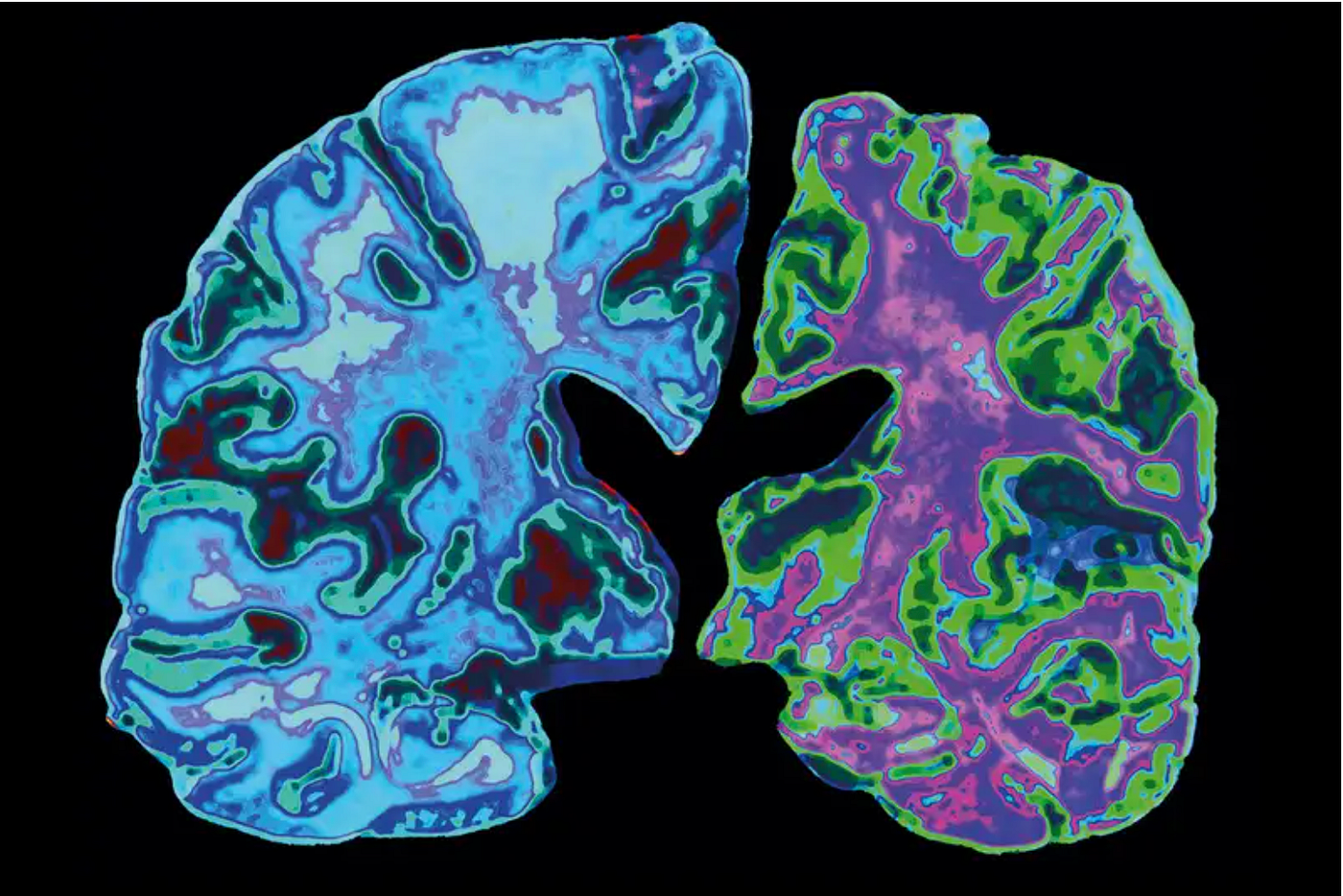
Empowering Discovery Through a Type 2 Diabetes Study in South Asia
Variant Bio recently launched a new study focused on diabetes in Bangladesh in partnership with Novo Nordisk and icddr,b
Empowering Discovery Through a Type 2 Diabetes Study in South Asia
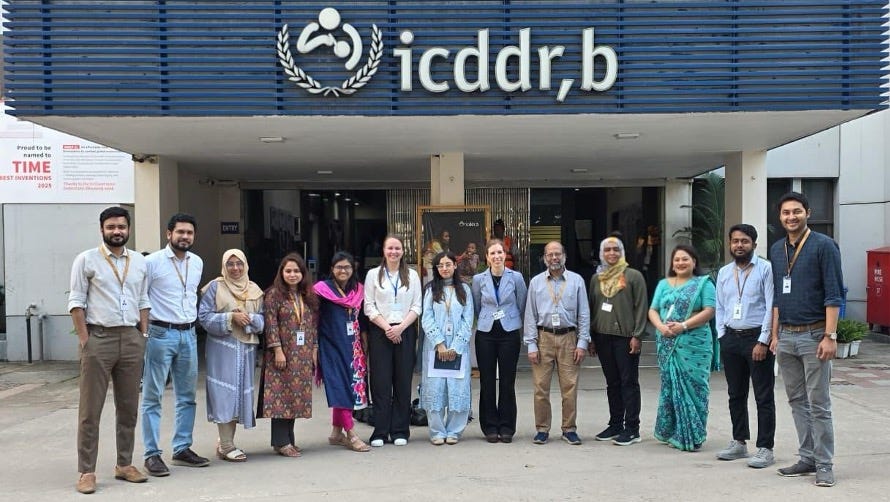
Study Principal Investigator Dr. Aliya Naheed (third from right) accompanied by co-investigators and research team members from icddr,b and Variant Bio in Dhaka, Bangladesh
Note: See below for the Bangla translation of this article.
Recently, Variant Bio’s partnerships team members have been traveling to different regions of the world to launch a number of new studies as part of our collaboration with Novo Nordisk. Over the last six months, we launched several new studies with Novo Nordisk, including one in French Polynesia, one in Samoa, and one in Aotearoa New Zealand.
I am very excited to be part of Variant Bio and Novo Nordisk’s lean Type 2 diabetes study in Bangladesh in partnership with the International Centre for Diarrhoeal Disease Research, Bangladesh (icddr,b). This project has been approved by the Ethical Review Committee (ERC) of icddr,b, and is being carried out in the capital city of Dhaka by an all-Bangladeshi study team of amazing medical doctors, phlebotomists (skilled blood collection technicians), nurses, and co-investigators under the dynamic leadership of Dr. Aliya Naheed.
Traveling from the Pacific Northwest to South Asia last year was one of the longest journeys I’ve taken. Surprisingly, the vibrant energy of Dhaka–its bustling streets and constant honking–quickly pushed my jetlag aside and helped me dive into a busy work week despite the 14-hour time difference.
We recently marked an important milestone by launching recruitment for the study at two hospitals in Dhaka: a large general hospital that serves 7,000 patients per day, and a private hospital with a daily patient volume of 500. Yet the formal launch of the study was not the true beginning of the project. It followed months of preparation, community engagement, research scoping, and dedicated training designed to ensure that the teams in Dhaka were equipped to conduct the research with rigor, confidence, and respect.
The prevalence of diabetes is rising globally, with the number of affected individuals projected to increase from 589 million in 2024 to 853 million by 2050. According to the 2025 International Diabetes Federation (IDF) Diabetes Atlas, 11.1% of adults worldwide aged 20–79–roughly 1 in 9–are living with diabetes, and about half of them (40%) are unaware of their diagnosis. Prior to the discovery of insulin in the early 20th century, a diagnosis of diabetes, particularly type 1 diabetes, was often fatal, with patients surviving only months to a few years. The large-scale production and global distribution of insulin, led by companies such as Novo Nordisk, transformed diabetes from an acute, life-threatening illness into a manageable chronic condition. This development significantly improved both life expectancy and quality of life for millions of individuals worldwide.
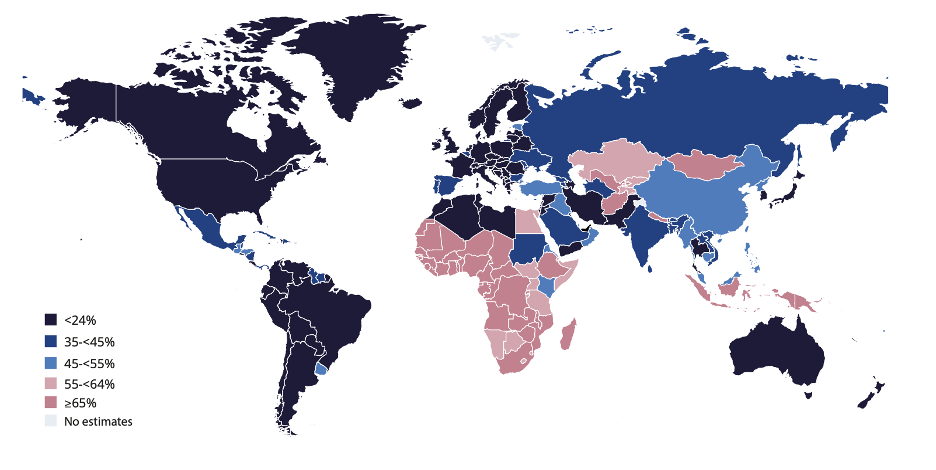
Map showing the proportion of adults (20–79 years) with undiagnosed diabetes by country in 2024. Image credit: International Diabetes Federation (IDF)
Per the IDF, Bangladesh ranks among the top ten countries with the highest prevalence, with 13.9 million cases in 2024, projected to reach 23.1 million by 2050. High rates of undiagnosed and uncontrolled diabetes persist; three in five individuals (60%) with diabetes in Bangladesh are unaware of their condition, according to a study published in PLOS Global Public Health (2022), which is a much higher rate than the global average. Notably, a study recently published in Scientific Reports (2024) reports that in Bangladesh about one in four (24.3%) individuals with Type 2 diabetes (T2D) fall within a healthy weight range–an indication of “lean diabetes.” Lean diabetes is particularly common among individuals of South Asian ancestry, as discussed in a review published in Diabetology & Metabolic Syndrome (2025).
Through this study, we aim to understand the genetic and multi-omic signatures that contribute to the early onset of diabetes, as well as the differences between lean diabetes and non-lean diabetes to help improve diagnostic accuracy, inform tailored therapeutic strategies, and guide appropriate public health interventions in Bangladesh and other regions that share similar biological or demographic characteristics.
We were initially introduced to icddr,b through a Variant Bio team member who was previously a research fellow there, and recommended icddr,b as a fantastic potential partner. As a next step, my colleagues Prathap Kasina and Casey Johanns first visited Dhaka last year to meet with Dr. Aliya Naheed as well as the directors of the hospitals that were proposed by Dr. Aliya to be the most suitable study sites, where the research is being conducted. Casey then returned with two additional team members from Variant Bio, Dr. Melissa Hendershott and myself, to train a large group of 30 members–including physicians, nurses, phlebotomists, lab technicians, co-investigators, and several other physicians of other research teams for capacity building on using various medical apparatuses. We spent the week covering how to use these medical devices to measure key health parameters and the process of participant identification and recruitment, sample handling, and administering questionnaires to participants. This trip also gave us a chance to assess logistics on the ground and collaboratively tackle challenges before the project officially launched.
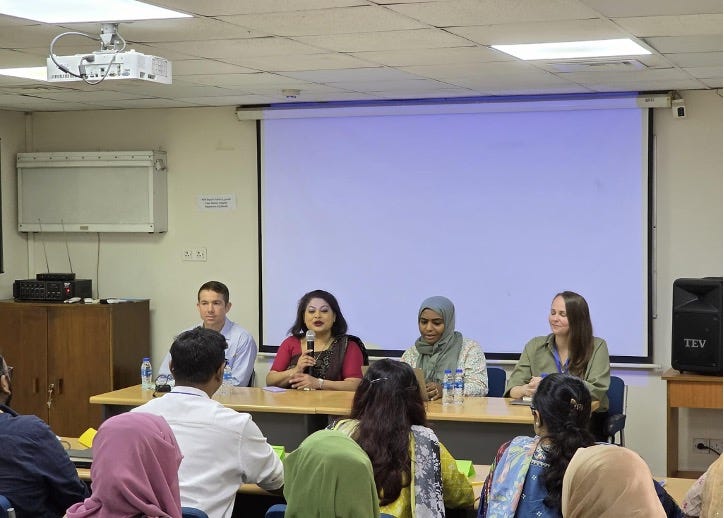
From L-R: Dr. Thaddaeus David May, Senior Director, and Dr. Aliya Naheed, Senior Scientist, of the Nutrition Research Division from icddr,b with Dr. Hiba Babiker and Casey Johanns from Variant Bio, at the inaugural training session carried out at icddr,b. Photo credit: Dr. Tarikul Islam
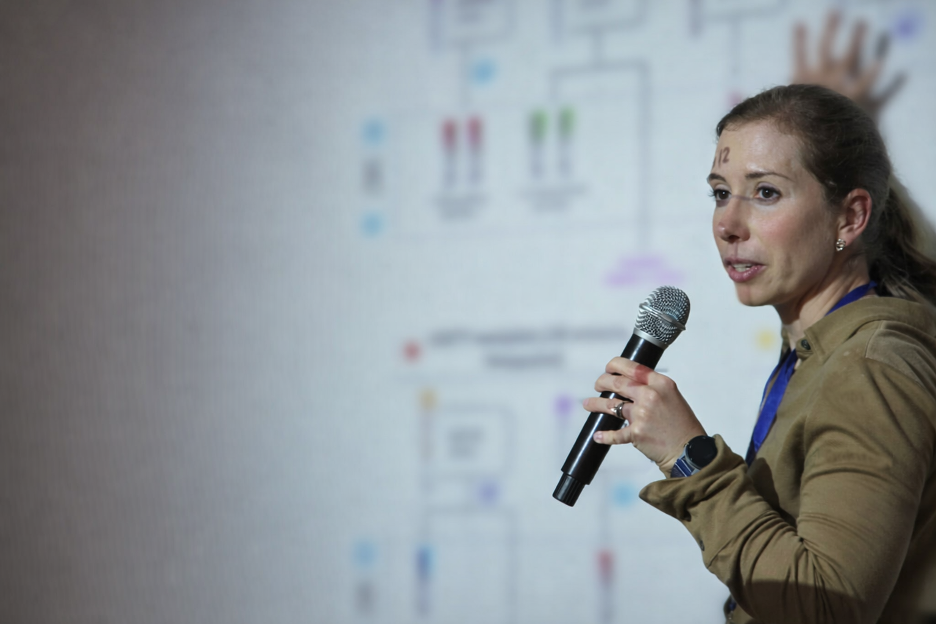
Dr. Melissa Hendershott from Variant Bio presents the sample workflow management during a training session at icddr,b. Photo credit: Dr. Tarikul Islam
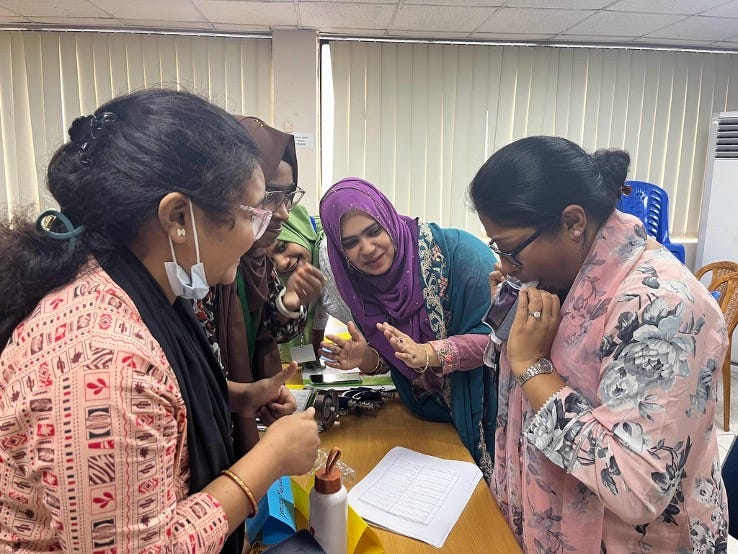
Dr. Rukaeya Amin Sobi performs a spirometry breath test while surrounded by fellow team members during a training session at icddr,b. Photo credit: Hiba Babiker
Next, Casey Johanns and I joined the icddr,b study team in Dhaka to lead the pre-launch setup at the study sites, including refresher training on the use of essential medical equipment for measuring health parameters and sample workflow. As part of our engagement, we also met with Dr. Faria Afsana, President, and Dr. Shahjada Selim, President-elect of the Bangladesh Endocrine Society in Dhaka, to introduce the project and identify diabetic community stakeholders and potential local beneficiaries and results return mechanisms following completion of the research.
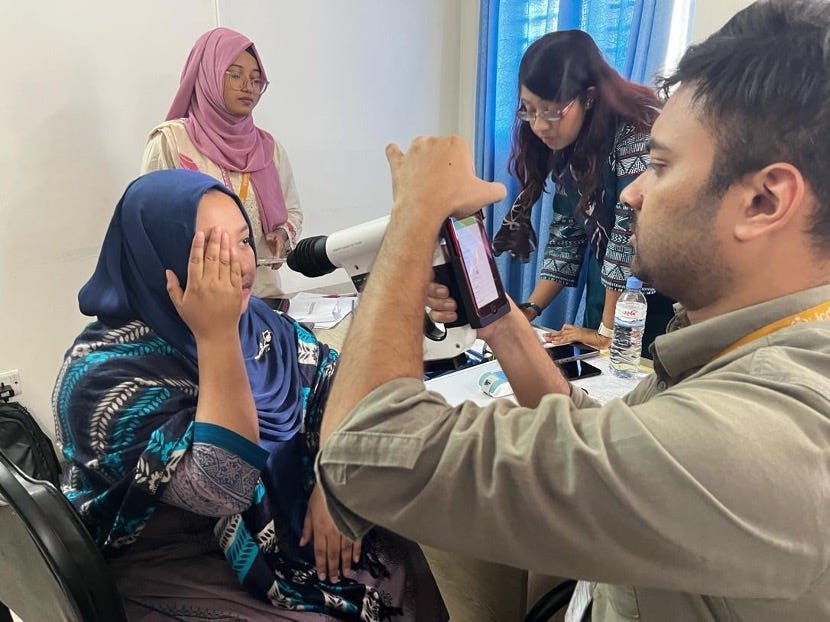
Dr. Tarikul Islam and nurse Tamanna Akter practicing retinal imaging capture steps using a Remidio camera during a training session at icddr,b. Photo credit: Hiba Babiker
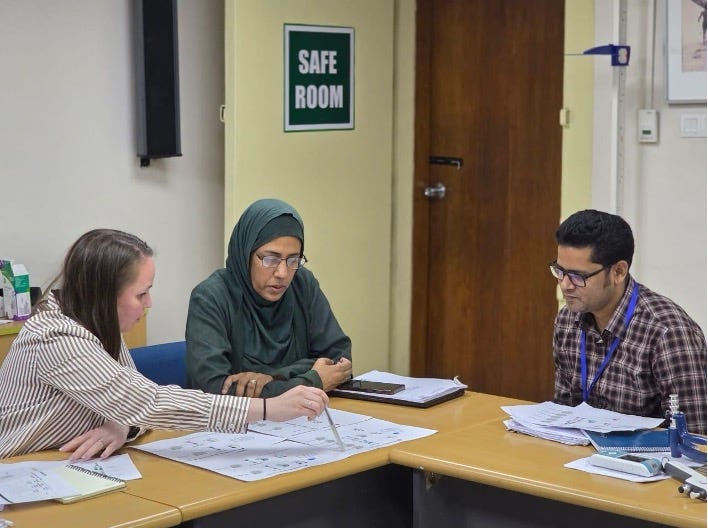
Casey Johanns from Variant Bio (L) with project co-principal investigator Dr. Syeda Momena Afsana, and the project’s medical technologist, Rakibul Islam, during a sample workflow training session. Photo credit: Dr. Tarikul Islam
Our follow-up visit earlier this year focused on supporting the launch of the study at both hospitals and ensuring full adherence to the research protocol. During this visit, we worked closely with the project teams to strengthen implementation workflows and address site-specific operational challenges. We provided hands-on support throughout the recruitment process, data collection, and sample handling and transfer.
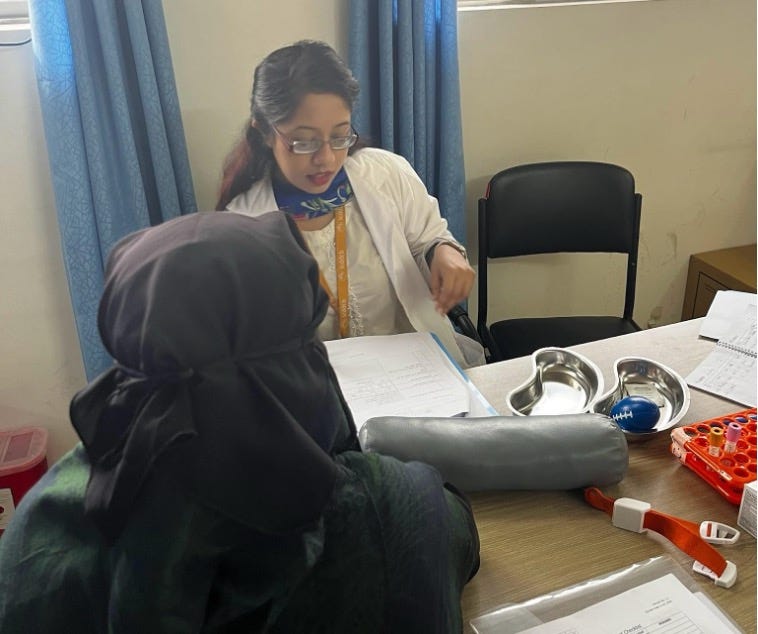
Dr. Nowrin Nusrat Nova of icddr,b with one of the project’s first participants during an interview session. Photo credit: Hiba Babiker
Although this study centers on metabolic health and diabetes–areas where balanced nutrition is essential–I have to confess that the food in Dhaka was hard to resist for a spice lover like me. In addition to traditional curry dishes, I also got to try chinigura rice for the first time, and its rich, fragrant aroma had me wanting more even when I was already full.
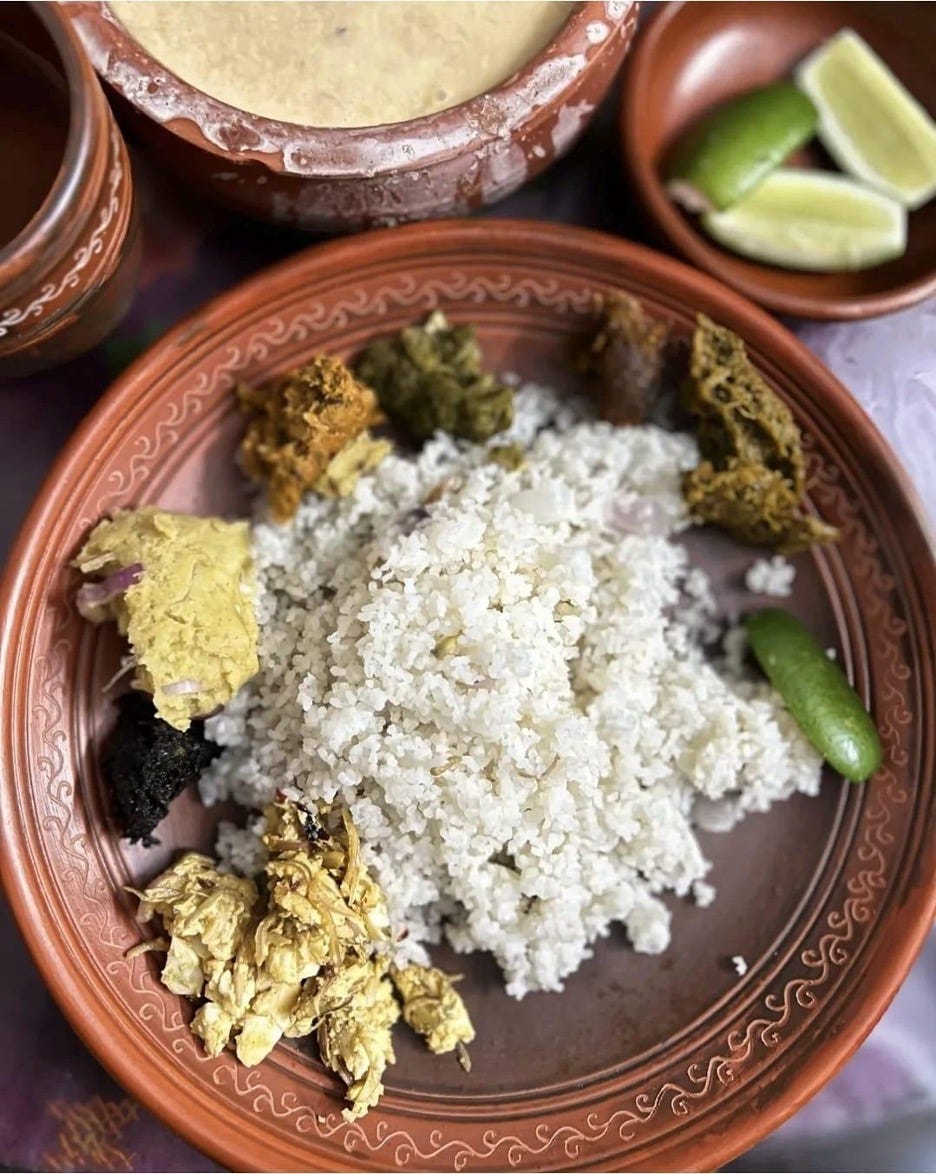
A mound of steamed rice enriched with assorted mashed vegetables, mashed fried eggs, nigella seeds, dried fish, lentils, beans, and fresh lime wedges, served on a traditional earthen clay plate. Photo credit: Dr. Tarikul Islam
After many months of hard work and travel, we were thrilled to have launched this study at two hospitals in Dhaka earlier this year. This milestone marks the first step in a project that holds great promise for understanding lean diabetes and metabolic health in Bangladesh and beyond. I am honored to work alongside leading Bangladeshi scientists and Novo Nordisk to address a condition that affects so many people around the world. Furthermore, I am confident that this research will uncover important findings about diabetes and inspire other scientists to follow Variant Bio’s approach — focusing on partnering with underrepresented populations to maximize discovery and advance novel treatments for diseases both in Bangladesh and globally.
Bangla translation:
টাইপ ২ ডায়াবেটিস গবেষণার মাধ্যমে দক্ষিণ এশিয়ায় নতুন ওষুধ আবিষ্কারের পথ উন্মোচিত হচ্ছে
সাম্প্রতিক সময়ে, ভ্যারিয়েন্ট বায়ো-র সহযোগী দলের সদস্যরা নভো নরডিস্ক-এর যৌথ উদ্যোগের অংশ হিসেবে একাধিক নতুন গবেষণা কার্যক্রম শুরু করার জন্য বিশ্বের বিভিন্ন অঞ্চলে ভ্রমণ করছেন। এই যৌথ উদ্যোগের ফলশ্রুতিতে গত ছয় মাসে ফ্রেঞ্চ পলিনেশিয়া, সামোয়া এবং নিউজিল্যান্ডের আওতেয়ারোয়াতে গবেষণা শুরু হয়েছে।
বাংলাদেশে ভ্যারিয়েন্ট বায়ো ও নভো নরডিস্ক-এর যৌথ উদ্যোগে আন্তর্জাতিক উদরাময় গবেষণা কেন্দ্র, বাংলাদেশ- আইসিডিডিআর, বি-র পরিচালনায় লিন টাইপ ২ ডায়াবেটিস বিষয়ক গবেষণার অংশ হতে পেরে আমি সত্যিই আনন্দিত। ড. আলিয়া নাহিদের সুযোগ্য নেতৃত্বে ঢাকায় একটি সম্পূর্ণ বাংলাদেশি গবেষকের দল দ্বারা এই প্রকল্পটি পরিচালিত হচ্ছে যাদের মধ্যে আছেন চিকিৎসক, ফ্লেবোটোমিস্ট (প্রশিক্ষিত রক্ত সংগ্রহকারী), নার্স, সহ-গবেষক এবং পরিসংখ্যানবিদ। প্রকল্পটি আইসিডিডিআর, বি-র নৈতিকতা পর্যালোচনা কমিটি (ইআরসি) অনুমোদন করেছে।
গতবছর, প্রশান্ত মহাসাগরের ওপারে সিয়াটেল থেকে দক্ষিণ এশিয়ায় আসাটা আমার এ যাবৎকালের দীর্ঘতম যাত্রাগুলোর একটি। তবে আশ্চর্যজনকভাবে, ঢাকার প্রাণবন্ত পরিবেশ, ব্যস্ত রাস্তাঘাট আর অবিরাম হর্নের শব্দ আমার জেটল্যাগকে নিমিষেই দূর করে দেয় এবং ১৪ ঘণ্টার সময়ের ব্যবধান সত্ত্বেও সারা সপ্তাহ ধরে আমি উদ্যমের সাথে কাজ করেছি।
সম্প্রতি, ঢাকার দুটি হাসপাতালে, গবেষণার জন্য অংশগ্রহণকারী অন্তর্ভুক্ত করার কার্যক্রম শুরু করা ছিল এই গবেষনার একটি গুরুত্বপূর্ণ মাইলফলক। দুটি হাসপাতালের মধ্যে রয়েছে একটি বড় সরকারি হাসপাতাল, যেখানে প্রতিদিন প্রায় ৭,০০০ রোগী আসেন, আর একটি বেসরকারি হাসপাতাল, যেখানে দৈনিক রোগীর সংখ্যা প্রায় ৫০০। তবে এই আনুষ্ঠানিক শুরুটা মোটেই এই গবেষণার প্রকৃত সূচনা ছিল না। এর পেছনে ছিল মাসের পর মাস প্রস্তুতি, স্থানীয় জনসম্পৃক্ততা, গবেষণার ক্ষেত্র নির্ধারণ এবং বিশেষ প্রশিক্ষণ কার্যক্রম, যাতে ঢাকার দলটি দক্ষতা, আত্মবিশ্বাস এবং গুরুত্বের সাথে গবেষণাটি পরিচালনা করতে পারে।
বিশ্বজুড়ে ডায়াবেটিসে আক্রান্ত রোগীর সংখ্যা ক্রমশঃ বৃদ্ধি পাচ্ছে । ২০২৪ সালে ডায়াবেটিসে আক্রান্ত রোগীর সংখ্যা ছিল ৫৮ কোটি ৯০ লক্ষ, যা ২০৫০ সালের মধ্যে ৮৫ কোটি ৩০ লক্ষে পৌঁছাবে বলে আশঙ্কা করা হচ্ছে । ২০২৫ সালের আন্তর্জাতিক ডায়াবেটিস ফেডারেশন (আইডিএফ)-এর ডায়াবেটিস অ্যাটলাস এর তথ্য অনুযায়ী, বিশ্বজুড়ে ২০ থেকে ৭৯ বছর বয়সী প্রাপ্তবয়স্কদের মধ্যে ১১.১% — অর্থাৎ প্রতি ১০ জনে ১ জন ডায়াবেটিসে আক্রান্ত, এবং তাঁদের মধ্যে প্রায় অর্ধেক (৪০%) মানুষ জানেনই না যে তাঁদের ডায়াবেটিস আছে। বিংশ শতাব্দীর শুরুতে ইনসুলিন আবিষ্কারের আগে ডায়াবেটিস, বিশেষ করে টাইপ ১ ডায়াবেটিস প্রায়ই মৃত্যুর কারণ হতো, এবং রোগীরা সাধারণত মাত্র কয়েক মাস থেকে কয়েক বছর পর্যন্ত বেঁচে থাকতেন। নভো নরডিস্ক-এর মতো কোম্পানিগুলোর উদ্যোগে ইনসুলিনের ব্যাপক উৎপাদন ও বৈশ্বিক সরবরাহের ফলে ডায়াবেটিস একটি তীব্র ও প্রাণঘাতী রোগ থেকে দীর্ঘমেয়াদে নিয়ন্ত্রণযোগ্য একটি রোগে পরিণত হয়েছে এবং বিশ্বজুড়ে লক্ষ লক্ষ মানুষের আয়ু এবং জীবনমান উল্লেখযোগ্যভাবে উন্নত করেছে।
আইডিএফ-এর তথ্য অনুযায়ী, ডায়াবেটিস প্রকোপের দিক থেকে বাংলাদেশ বিশ্বের শীর্ষ দশটি দেশের মধ্যে একটি। ২০২৪ সালে দেশে রোগীর সংখ্যা ছিল ১ কোটি ৩৯ লক্ষ, যা ২০৫০ সালে ২ কোটি ৩১ লক্ষ ছাড়িয়ে যাবে বলে অনুমান করা হচ্ছে। PLOS Global Public Health-এ প্রকাশিত এর ২০২২ সালের একটি গবেষণায় দেখা গেছে যে বাংলাদেশে প্রতি পাঁচ জন ডায়াবেটিসে আক্রান্ত ব্যক্তির মধ্যে তিন জন (৬০%) মানুষই জানেন না যে তাঁরা এই রোগে ভুগছেন, যা বৈশ্বিক গড়ের তুলনায় অনেক বেশি। আরও উল্লেখযোগ্য বিষয় হলো, ২০২৪ সালে Scientific Reports-এ প্রকাশিত একটি গবেষণায় দেখা গেছে যে বাংলাদেশে টাইপ ২ ডায়াবেটিস রোগীদের প্রতি চার জনের মধ্যে একজন (২৪.৩%) এর ওজন স্বাভাবিক — যাকে “লিন ডায়াবেটিস” বলা হয়। Diabetology & Metabolic Syndrome- এর ২০২৫ সালে প্রকাশিত এক পর্যালোচনায় বলা হয়েছে যে লিন ডায়াবেটিস দক্ষিণ এশীয় বংশোদ্ভূত মানুষদের মধ্যে বেশি দেখা যায়।
এই গবেষণার মাধ্যমে আমরা জানতে চাই, কোন্ কোন্ জিনগত ও মাল্টি-ওমিক বৈশিষ্ট্য প্রাথমিক পর্যায়ে ডায়াবেটিসে আক্রান্ত হওয়ার পেছনে ভূমিকা রাখে। পাশাপাশি, লিন ডায়াবেটিস ও নন-লিন ডায়াবেটিসের মধ্যে পার্থক্য বুঝতে চাই, যাতে রোগ সঠিকভাবে শনাক্ত করা যায়, রোগীর জন্য উপযুক্ত চিকিৎসা পরিকল্পনা করা যায়, এবং বাংলাদেশসহ একই ধরনের জৈবিক বা জনতাত্ত্বিক বৈশিষ্ট্য থাকা অঞ্চলে সঠিক জনস্বাস্থ্য কার্যক্রম পরিচালনা করা যায়।
আইসিডিডিআর, বি-র সাথে আমাদের পরিচয়টা ছিল একটু অন্য রকম। ভ্যারিয়েন্ট বায়ো-র একজন সদস্য বেশ কিছু বছর আগে আইসিডিডিআর, বি-তে রিসার্চ ফেলো হিসেবে ছিলেন এবং তিনিই আইসিডিডিআর, বি-কে এই গবেষণার জন্য উপযুক্ত মনে করেন । এরপর আমার সহকর্মী প্রতাপ কাসিনা এবং কেসি জোহ্যান্স গত বছর প্রথমবার ঢাকায় যান ড. আলিয়া নাহিদের সাথে দেখা করতে এবং তাঁর প্রস্তাবিত সেই হাসপাতালগুলোর পরিচালকদের সাথে পরিচিত হতে যেখানে বর্তমানে গবেষণাটি পরিচালিত হচ্ছে। কয়েক মাস পর কেসি, ভ্যারিয়েন্ট বায়ো-র ড. মেলিসা হেন্ডারশট এবং আমাকে নিয়ে ঢাকা ফিরে আসেন। সেবার আমরা দক্ষতা বৃদ্ধির উদ্দেশ্যে ৩০ জনের একটি বড় দলকে প্রশিক্ষণ দিয়েছিলাম, যেখানে চিকিৎসক, নার্স, ফ্লেবোটোমিস্ট, ল্যাব টেকনিশিয়ান, সহ-গবেষক এবং অন্যান্য গবেষণা দলের চিকিৎসকরাও অন্তর্ভুক্ত ছিলেন। আমরা পুরো সপ্তাহজুড়ে অংশগ্রহণকারীদের বিভিন্ন রোগনির্ণায়ক যন্ত্রপাতির ব্যবহার করে স্বাস্থ্যের বিভিন্ন পরীক্ষা করা থেকে শুরু করে অংশগ্রহণকারী শনাক্তকরণ, নমুনা সংগ্রহ, এবং অংশগ্রহণকারীদের কাছ থেকে প্রশ্নপত্র পূরণ করার প্রক্রিয়া সম্পর্কে প্রশিক্ষণ দিয়েছি। এই সফরের মাধ্যমে আমরা মাঠপর্যায়ের বাস্তবতাও যাচাই করতে পেরেছিলাম এবং গবেষণাটি আনুষ্ঠানিকভাবে শুরু হওয়ার আগেই বিভিন্ন চ্যালেঞ্জ সবাই মিলে একসাথে সমাধান করেছিলাম।
গবেষণা শুরু হওয়ার আগে ডিসেম্বর মাসে, কেসি জোহ্যান্স এবং আমি আবার ঢাকায় আইসিডিডিআর, বি-র গবেষণা দলের সঙ্গে যুক্ত হই, যেখানে আমরা রোগনির্ণায়ক যন্ত্রপাতির প্রয়োগ ও নমুনা সংগ্রহের কর্ম প্রবাহ নিয়ে পুনরায় হাতে-কলমে প্রশিক্ষণসহ বিভিন্ন প্রস্তুতিমূলক কাজ করি। এই সফরে আমরা আমাদের গবেষণা প্রকল্পটির ব্যাপারে অবহিত করার জন্য এবং গবেষণা শেষে ফলাফল কী ভাবে অংশগ্রহণকারী এবং স্থানীয় জনগোষ্ঠীর কাছে পৌছে দেওয়া হবে তা নিয়ে বিস্তারিতভাবে জানার জন্য বাংলাদেশ এন্ডোক্রাইন সোসাইটির সভাপতি ড. ফারিয়া আফসানা এবং নির্বাচিত সভাপতি ড. শাহজাদা সেলিমের সাথেও দেখা করেছিলাম ।
এই বছরের জানুয়ারিতে আমাদের পরবর্তী সফরের মূল লক্ষ্য ছিল দুটি হাসপাতালে গবেষণা শুরুর কাজে সহায়তা করা এবং গবেষণার নিয়মগুলো ঠিকভাবে মানা হচ্ছে কি না তা নিশ্চিত করা। গবেষণা দলের সাথে আমরা ঘনিষ্ঠভাবে কাজ করেছি, যাতে কাজের প্রক্রিয়াগুলো আরও উন্নত করা যায় এবং প্রতিটি গবেষণা দলের নির্দিষ্ট সমস্যাগুলো সমাধান করা যায়। এছাড়াও আমরা গবেষণায় অংশগ্রহণকারী অন্তর্ভুক্ত করা, তথ্য সংগ্রহ এবং নমুনা সংগ্রহ ও স্থানান্তরের পুরো প্রক্রিয়ায় গবেষণা দলকে সরাসরি সহায়তা করেছি।
এই গবেষণাটি যদিও ডায়াবেটিসকে কেন্দ্র করে, যেখানে সুষম খাবার গ্রহণ অত্যন্ত গুরুত্বপূর্ণ, একজন মশলাপ্রেমী হিসেবে আমি স্বীকার না করে পারছি না যে ঢাকার খাবারের লোভ সংবরণ করাটা সত্যিই কঠিন ছিল। মৌসুমি ও ঐতিহ্যবাহী খাবারের পাশাপাশি এই প্রথম চিনিগুড়া চালের ভাত খেলাম- পেট ভরা থাকা সত্ত্বেও এটির অপূর্ব ঘ্রাণে আরও খেতে মন চাইছিল।
অনেক মাসের কঠোর পরিশ্রম ও ভ্রমণের পর, এই বছরের শুরুতে ঢাকার দুটি হাসপাতালে এই গবেষণা শুরু করতে পেরে আমরা খুবই আনন্দিত। এই মাইলফলকটি একটি বিশাল গবেষণা কর্মসূচির প্রথম পদক্ষেপ, যা বাংলাদেশসহ বিশ্বজুড়ে লিন ডায়াবেটিস এবং বিপাকীয় স্বাস্থ্য বোঝার ক্ষেত্রে গুরুত্বপূর্ণ অবদান রাখবে বলে আমরা আশা করছি। আমি গর্বিত যে বাংলাদেশের শীর্ষস্থানীয় বিজ্ঞানী এবং নভো নরডিস্ক-এর সাথে এমন একটি রোগ নিয়ে কাজ করার সুযোগ পেয়েছি যা সারা বিশ্বের অনেক মানুষকে আক্রান্ত করে। আমি আশাবাদী যে এই গবেষণা ডায়াবেটিস সম্পর্কে গুরুত্বপূর্ণ তথ্য উন্মোচন করবে। এছাড়া অন্যান্য বিজ্ঞানীদেরও ভ্যারিয়েন্ট বায়ো-র পদ্ধতি অনুসরণ করে পিছিয়ে পড়া জনগোষ্ঠী- বিশেষ করে যারা এখনো গবেষণায় কম প্রতিনিধিত্ব পায়, তাদেরকে যুক্ত করে বৈজ্ঞানিক উদ্ভাবনকে এগিয়ে নিতে উৎসাহিত করবে যা বাংলাদেশ ও বিশ্বের অন্যান্য দেশে নতুন চিকিৎসা পদ্ধতির উন্নয়নে অবদান রাখবে।
메타데이터
- post_id
- b2df3cbbb53b
- slug
- empowering-discovery-through-a-type-2-diabetes-study-in-south-asia-b2df3cbbb53b
- url
- https://medium.com/variantbio/empowering-discovery-through-a-type-2-diabetes-study-in-south-asia-b2df3cbbb53b
- canonical_url
- https://medium.com/variantbio/empowering-discovery-through-a-type-2-diabetes-study-in-south-asia-b2df3cbbb53b
- author_url
- https://medium.com/@hiba_23959
- status
- ok
- fetched_at
- 2026-06-09 15:37:30