Greek Orientalism and The Stereotyped “Other”
By Kaison Russell
Greek Orientalism and The Stereotyped “Other”
By Kaison Russell
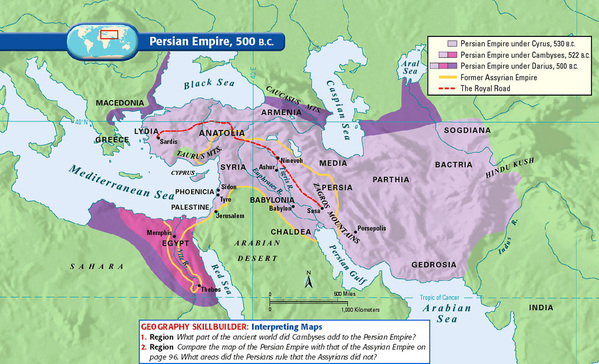
With advanced technology comes multimedia communication, international art, and constant, easy interaction across the world primarily seen in politics and economics. In today’s world, there are terms thrown around like “xenophobia” or “ethnocentrism” which in and of themselves mean nothing. But if you take a long, in-depth look around to observe the world, you may see its prevalence. A well-known sociologist, George Herbert Mead, coined the term “generalized other” in an effort to explain a phenomenon where a singular person or a group of people attribute behavior or societal expectations to a group of people they are not a part of. From within a society, like the United States, or the relationship between societies, like the United States and Russia in contemporary times this “generalized other” concept dictates foreign affairs and intrasocietal harmony. This phenomenon has existed well before it was given its own terminology. In light of this, we can trace its origins back to an impactful civilization that formed most of current culture throughout the western world. It is important to have a clear understanding of the generalized other as you navigate this reading, but also what it meant by the East. The East in this context is the Greek idea of the eastern end of the world, which included most of the Middle East and some parts of Western and Central Asia. It is also important for one to look at the success of Ancient Greece Orientalism evident in historical contexts like art and writing, in order to understand a lot of mechanisms we see in society today. Edward Said’s idea of Greek orientalism and the eventual formation of a clear generalized other of the East shaped today’s view of the East. In his book Orientalism, Said determines this concept of Orientalism as “the East being ‘otherised’ as ontologically different, exotic, and inferior by influential thinkers in the West for hundreds of years”. After the Persian Wars, Greek cultural production from vase-painting to tragedy helped turn contact with eastern societies into a coherent stereotype of “the East,” a generalized other that both united Greeks and led to development of imperial arrogance. What I want to focus on is Orientalism that can be traced back to just shortly after the Persian Wars. This was when the Persian Empire, led by Darius I or Darius the Great in the Late Archaic period, ultimately initiated a conflict that would be a time of Greek unity and identity stratification.
Ancient Greek Influence
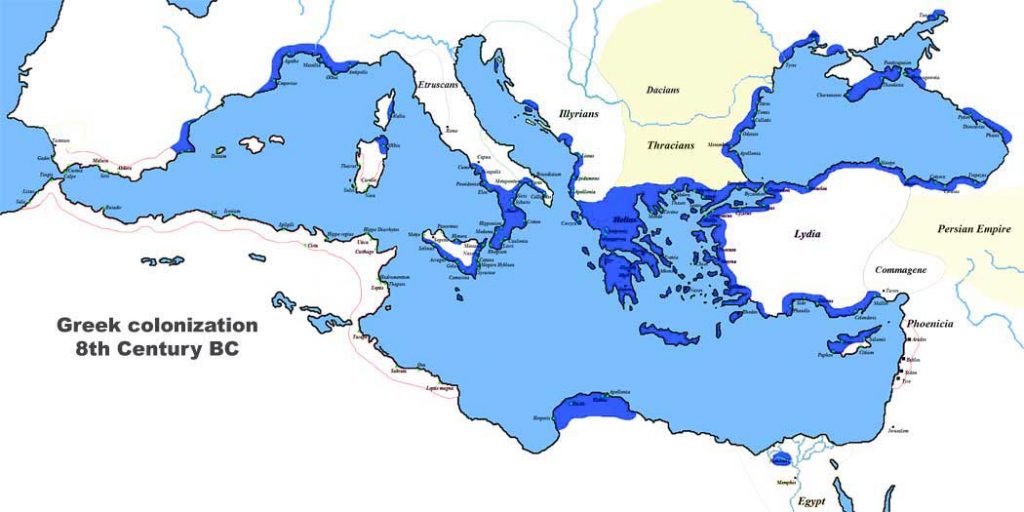
Ancient Greece is among the most influential, if not the most influential, empires or civilizations in world history. Its cultivation of art, writing, societal ideologies, and politics throughout its development has shaped what we look at in those elements today. The Greek World would eventually reach most of the areas surrounding the Mediterranean, modern-day Turkey, Greece, Italy, Northern Africa, and stretching towards the West Bank.
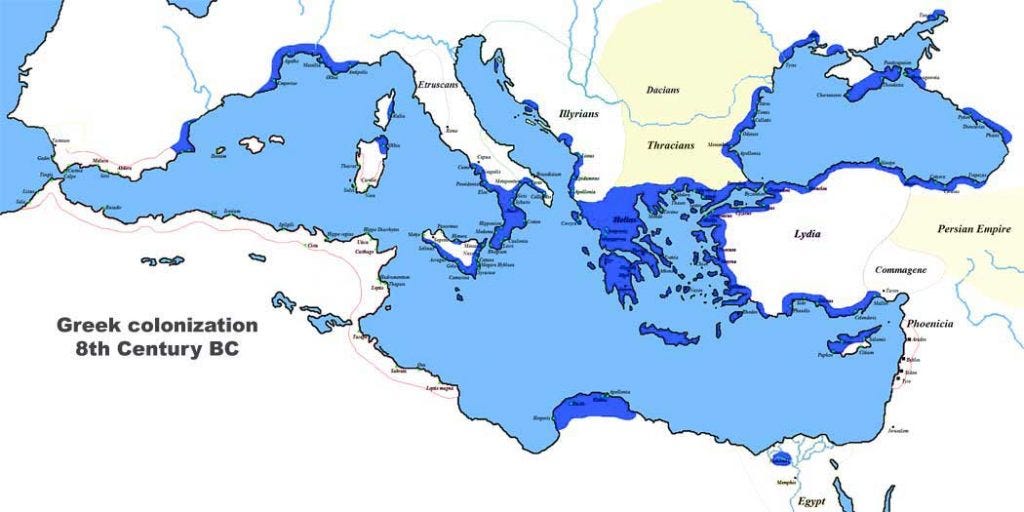
The scarcity of viable land contributed to the Greek Diaspora and from there, between the eight and seventh centuries B.C. Greeks began to trade and interact with the “East”. It is at this point the cultures start to mingle. The Orientalism of Greece is a major part of Greek history. These interactions produced what scholars call the “Orientalizing” period. Understanding this process is important when trying to grasp what Orientalism actually means in the ancient world. In this space, the interconnectivity of these two created a lot of promising economic growth, adoption and reinvention of art and myth, a true benefit for the development of Greek culture and overall growth as a civilization. What I want to focus on is Orientalism that can be traced back to just shortly after the Persian Wars. This was when the Persian Empire, led by Darius I or Darius the Great in the Late Archaic period, ultimately initiated a conflict that would be a time of Greek unity and identity stratification. It was in the Persian Wars where Greeks would come together to squash a power that threatened the “Greek way of life”, although the city-states at the time were not unified in politics or daily life, the external threat brought them together. Ethnocentrism began to sprout up like a tree and would eventually become the same reason the Greeks and many other empires rose and fell. A similar thing happens today with powers like NATO. This can almost directly compare to the Delian League and Hellenic (Peloponnesian) League. These Leagues were instances of inter-Greek alliances between the city-states during and through the Persian Wars. When the generalized other has become demonized to enough people, there is not anything that will stop divided powers from uniting against a common enemy, especially when it comes to an ethnic or moral principles. The Persian Empire had become quite an entity in the East.
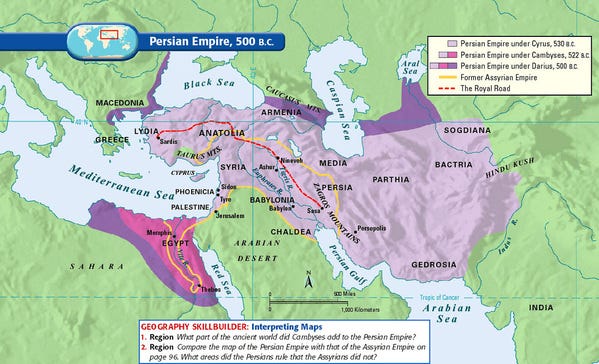
Persian War Effects
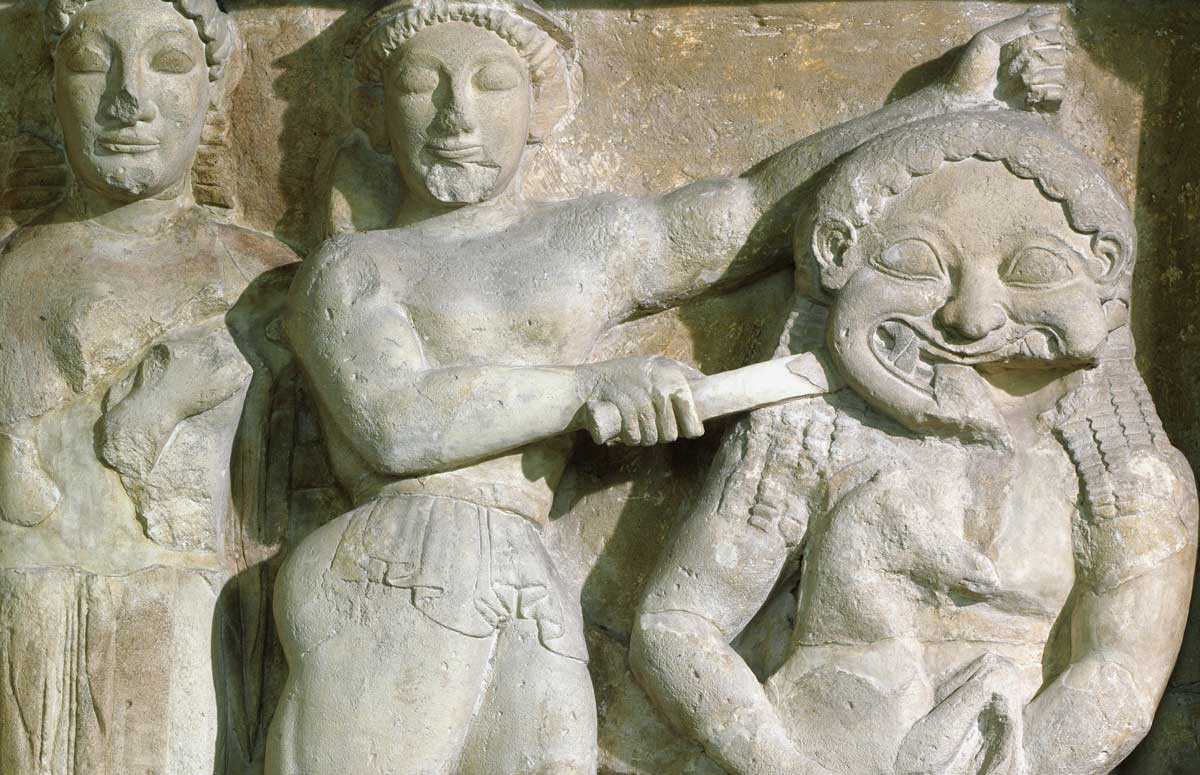
The unique aspect of these powers coming together is that without this coming together of city-states, the Persian War would have gone differently. In fact, George Cawkwell puts it as, “The Persian failure was not due to the might of the Greeks but entirely intra-Persian course of things,” which reveals a lot about the nature of this war. Without the idea of the “generalized other”, the Greeks probably would not have been able to effectively combat the Persians and therefore reinforced ethnocentric ideations and the demonization of anything other than the Greek ideal. In the moments of the Persian invasions, the attitudes towards the Persians was nothing short of disrespectful and demoralizing. This attitude was almost necessary in the formation of a strong Greek identity that separated itself from its opponent, in this specific instance, Persia. The depictions and imagery of Persians painted through oration and propaganda was intentional. It was meant to encourage and raise the Greeks and boost morale so that when facing the lines of war, there was not a doubt of the victory to come for the soldiers. But also back in the mainland, artists were meant to keep the peace and comfort of the people. It was at the time of the Persian War that art, specifically in Athens, began to gain speed. The feminization of the Persians in art, and the presence of monsters that were previously constructed from Eastern myth both play roles in the unrealistic view of the Persians (and the East overall) and their attributed qualities. It is in art that existed before these wars and eventually the contemporary art, visual and written, at the time of the war is important in recognizing the Greek attitude towards the generalized other. In the image below, Perseus is decapitating Medusa, the myth itself is not the reason for including this image, instead the underlying message.
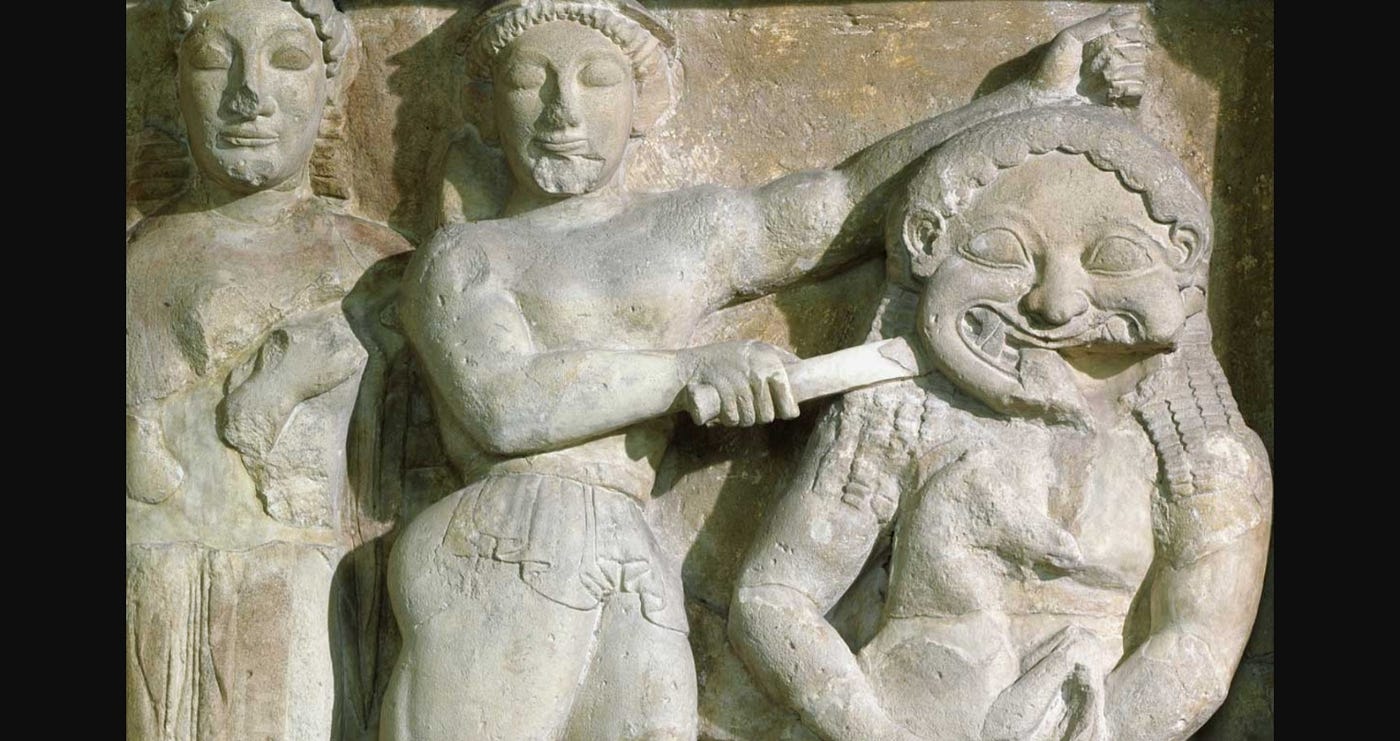
As Jeremy McInerney puts it in his textbook, Ancient Greece: A New History , “Giants, amazons, and hybrid monsters served as a dramatic reminder of the dangers and threats constantly lurking on the borders of the known world. The message here was complex, since it reinforced the sense of difference between Greeks and others, permitting a state of permanent hostility to exist, even at a time when the Greeks were engaged in such widespread commerce and travel around the Mediterranean that contacts were inevitable.” Even before the Persian Wars, the Greeks already saw themselves as very different from and often superior to the peoples of the East. The wars only intensified this attitude and directed it more clearly toward the Persian Empire.
Orientalism Today?
Looking specifically at the impact of the attitudes of the Greeks toward the Persians, we can recognize the irony. Most of what the Greeks had, was not originally all Greek. The start of the interactions between the Greeks and the East during the Archaic period is a prime example of what we see a lot today. There is an ethnocentric, imperialistic mentality that reigns in a lot of powerful nations: the United States, Russia, China, just to name a few. This was true for both the Persians and the Greeks, yet when the Greeks won the war, there was something to be said about how Greeks looked at anyone that was not Greek. In a lot of ways the aftermath of the Persian Wars established this generalized other when it came to Persians. But shortly after, even the Greek city-states began to think similarly of one another, leading to collapse of internal relations. Separating themselves from each other and looking to exemplify their own glory and influence. Sparta historically remained pretty conservative, while Athens shot itself onto a pedestal in most every aspect such as art, architecture, literature, technology, and ideology. If what I mentioned above is true and successful nations or powers end up having an imperialist mindset while also constructing a generalized other, a conflict was meant to arise. This particular phenomenon is actually explained by a prominent Greek historian named Thucydides, called the Thucydides Trap. Although the Greeks weren’t the only ones shaping our culture and society, their influence especially through art and literature during the Orientalism during the Archaic Period was important but this attitude specifically, after the Persian Wars played a major role in how ideas and attitudes were passed down.
The generalized other is as mentioned previously, is a natural societal mechanism. It is a simple in-group and out-group scenario and can be helpful even in our daily lives. Recognizing these biases and schemas in respect to history is truly beneficial as it pertains to the current state in politics, economy, and culture as a whole. We see Greek influence in architecture, with banks and museums, town centers, etc. In the United States specifically, we have a Greek influenced representative democracy and most people would just take that at face value, but dive a little deeper into that. How has America, a successful, prominent power in the world currently, carry this out? Are the people within the country actually given a voice? How do we treat other countries that are not democratic? It all goes back to Greek Orientalism: by defining themselves in opposition to others, the Greeks both distinguished their own identity and engaged with those same groups on their own terms. McInerney alludes to that by Athenians constructing Persians and other foreigners as a generalized other, Athenians reinforced the idea that their political system was uniquely enlightened, which justified internal hierarchies and laid the groundwork for imperial ambitions. As a country, we are an imperial power, focusing on the same areas that the Greeks once viewed as the other. This is no coincidence. This is why studying Greek history, and its implications on the modern world, our world, is crucial. No, Greeks are not the only attributable civilization or empire to form our world, but it would be a foolish mistake to miss the key roles of orientalism and the generalized-self at play today. Because unfortunately these are humanity problems, meaning that these problems happen because it is human nature. This attitude of the “other” has remained unchanged since, which reflects Said’s stance on Orientalism. It would do some good to acknowledge what happened in the past, what really happened on a large scale in the minds of these people and adjust our trajectory before the contemporary imperial empires of today’s world end up destroying one another due to pure ignorance.
메타데이터
- post_id
- b2ee87fba73d
- slug
- greek-orientalism-and-the-stereotyped-other-b2ee87fba73d
- url
- https://medium.com/@kaison.russell/greek-orientalism-and-the-stereotyped-other-b2ee87fba73d
- canonical_url
- https://medium.com/@kaison.russell/greek-orientalism-and-the-stereotyped-other-b2ee87fba73d
- author_url
- https://medium.com/@kaison.russell
- status
- ok
- fetched_at
- 2026-06-09 15:37:30