“Language Debate in Tamil Nadu: Choice or Compulsion?”
Language is an important topic in Tamil Nadu. It is connected to politics, education, and culture. The three-language policy, part of the…
“Language Debate in Tamil Nadu: Choice or Compulsion?”
Language is an important topic in Tamil Nadu. It is connected to politics, education, and culture. The three-language policy, part of the National Education Policy (NEP), says students should learn three languages: their mother tongue, English, and another Indian language. This policy aims to help students know more languages, but Tamil Nadu prefers the two-language policy of Tamil and English. The big question is — will the three-language system help or create problems for Tamil Nadu?Tamil Nadu has always opposed learning Hindi as a compulsory language. This started in the 1930s and 1960s with anti-Hindi protests. People in the state feel that forcing Hindi will affect their culture and identity. The Dravidian movement supported Tamil and English, making sure Tamil was the main language and English was used for global communication. Any change to this system faces strong protests, like the recent opposition to the NEP’s three-language rule.Some people believe that learning another Indian language, especially Hindi, can help students in their careers. Since Hindi is spoken by many people in India, knowing it can help in jobs and communication across states. Learning multiple languages can also improve thinking skills and promote unity in the country.
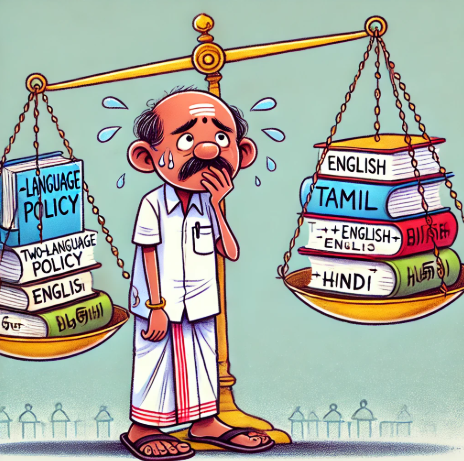
Some also argue that Tamil Nadu’s students are at a disadvantage because other states teach a third language. Many government and private jobs require Hindi, so not knowing it may limit job opportunities outside Tamil Nadu.On the other hand, Tamil Nadu has strong reasons to continue with two languages. First, adding another language can make studies more difficult for students who already have a lot to learn. Tamil is their main language, and English is necessary for jobs and higher studies, so learning a third language may not be needed.Also, many believe that making Hindi compulsory is a political decision rather than an educational one. If students want to learn a third language, they should have a choice instead of being forced. The Tamil Nadu government has always said that students should be free to choose additional languages, not follow a strict rule.A good solution could be to make the third language optional. If students want to learn Hindi or any other Indian language, they can, but it should not be compulsory. This way, students who find Hindi useful for their future can learn it, while others can continue with Tamil and English.Tamil Nadu is very proud of its language and culture, and any change to this system will face opposition. Learning more languages has benefits, but forcing a third language may not be the best idea. The focus should be on providing good education rather than me
메타데이터
- post_id
- b2f17ef628ef
- slug
- language-debate-in-tamil-nadu-choice-or-compulsion-b2f17ef628ef
- url
- https://medium.com/@23udj045/language-debate-in-tamil-nadu-choice-or-compulsion-b2f17ef628ef
- canonical_url
- https://medium.com/@23udj045/language-debate-in-tamil-nadu-choice-or-compulsion-b2f17ef628ef
- author_url
- https://medium.com/@23udj045
- status
- ok
- fetched_at
- 2026-07-13 06:23:13





