Ideals And Life, And Perhaps Death
Why is it so hard to pursue an ideal?
Ideals And Life, And Perhaps Death
Why is it so hard to pursue an ideal?
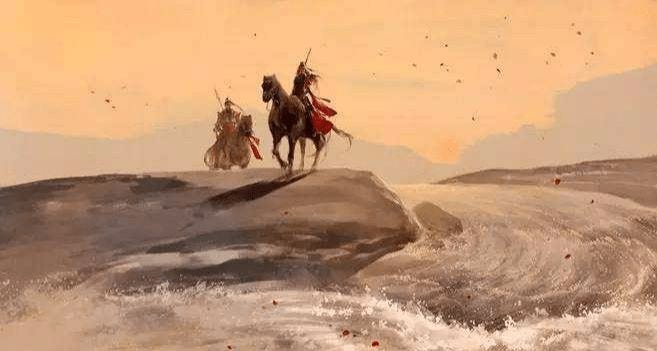
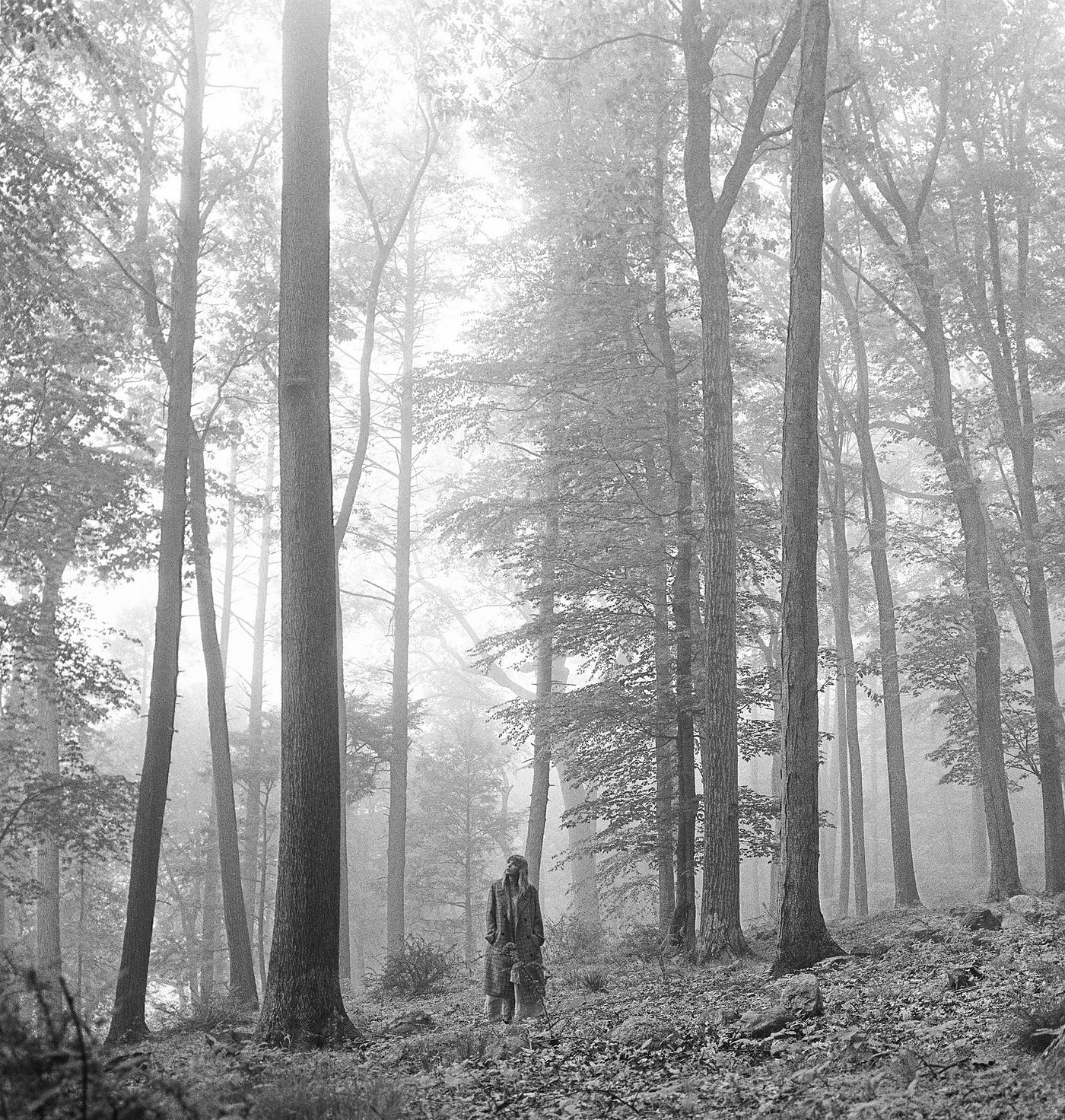
There are no words to describe the beauty of nature. In the white snowy landscape, Todd Anderson cries for the death of Neil Perry. The shortness of life and stunning nature intertwine to create the world’s most brilliant and fleeting light.
[embed]
Ideal
The road of life is not really long; what is long is the difficulty of making choices. The movie Dead Poets Society (1989) gives the most concise answer:
poetry is your heart, follow your heart and step into your new world
— Rita Frances Dove (born August 28, 1952), Heart to Heart
But the result may be death.
There are two kinds of careers in this world:
One is in line with the Matthew effect, winners take all, examples include the arts, sports, and entrepreneurs…
The other kind is the law of averages, or income in line with the Power-law Distributions, such as doctors, lawyers, programmers…
Neil’s father, Mr. Perry, knew this, and he knew that Neil had chosen a career in acting that, in most cases, led to poverty. Like all parents in the world, he doesn’t expect his child to live as struggling. The years had eroded ideals; in fact, it was the years that taught one to live. A father wants his children to seize a reliable life from the beginning of their lives, not to know the warmth of the sun only in the middle of a flying snowstorm.
What were Mr. Perry’s ideals? We don’t know. In fact, most people’s ideals have been erased by life. Few people often miss them; most forget them and laugh at everything with “ideals.”
Life
If human beings did not need to eat, everything would be simple. But “life” is first and foremost “living.”
Many people regard the simple life of the primitive human being as an ideal, while totally ignoring the fact that it is nothing more than a “beastly” existence. Civilization was born out of the leisure that followed survival, and the random thinking or mind wander, culturally speaking, “reverie” that followed leisure.
In civilization, the biggest decision we face is whether to follow our hearts or to follow the rules and preserve our ability to survive and reproduce.
Hamlet, a tragic work written between 1599 and 1602 by William Shakespeare (April 26, 1564 (date of baptism) — April 23, 1616), is his most famous and quoted play. In the play, he lends Hamlet the voice of his reflections.
To be, or not to be, that is the question: Whether ’tis nobler in the mind to suffer The slings and arrows of outrageous fortune, Or to take Arms against a Sea of troubles, And by opposing end them: to die, to sleep No more; and by a sleep, to say we end The heart-ache, and the thousand natural shocks That Flesh is heir to? ’Tis a consummation Devoutly to be wished. To die, to sleep, To sleep, perchance to Dream; aye, there’s the rub, For in that sleep of death, what dreams may come, When we have shuffled off this mortal coil, Must give us pause. There’s the respect That makes Calamity of so long life: For who would bear the Whips and Scorns of time, The Oppressor’s wrong, the proud man’s Contumely, The pangs of dispised Love, the Law’s delay, The insolence of Office, and the spurns That patient merit of th’unworthy takes, When he himself might his Quietus make With a bare Bodkin? Who would Fardels bear, [F: these Fardels] To grunt and sweat under a weary life, But that the dread of something after death, The undiscovered country, from whose bourn No traveller returns, puzzles the will, And makes us rather bear those ills we have, Than fly to others that we know not of? Thus conscience does make cowards of us all, And thus the native hue of Resolution Is sicklied o’er, with the pale cast of Thought, And enterprises of great pitch and moment, [F: pith] With this regard their Currents turn awry, [F: away] And lose the name of Action. Soft you now, The fair Ophelia? Nymph, in thy Orisons Be all my sins remember’d.
— Shakespeare,Hamlet
Be is extremely abstract in English. Be is timeless, even factual.
To have or take place in the world of fact, to exist, occur, happen. To have place in the objective universe or realm of fact, to exist; also, to exist in life, to live.
— Oxford Dictionary
**Martin Heidegger* (September 26, 1889 — May 26, 1976) was a German philosopher influential in phenomenology, existentialism, deconstructionism, hermeneutics, postmodernism, political theory, psychology, and theology. He published Being and Time* (German: Sein und Zeit) in 1927. This work claims that the mundane and even the ordinary “being-in-the-world” provides “access to the meaning, or ‘sense of being.’ (Sinn des Seins).” This access through Dasein is also “insofar as something becomes intelligible as something.” This meaning would then clarify the ordinary “pre-scientific” understanding that precedes abstract ways of knowing, such as logic or theory.
Because of this, this is the problem. It is also at the heart of human thinking about the meaning of life.
Death
Ordinary people loathe death and are reluctant to talk about it.
The thinker thinks more deeply about death. Life may lack power and be ruled by “fate,” so death may be more powerful. Death is the action itself, a confrontation with Be.
Albert Camus (French: Albert Camus; November 7, 1913 — January 4, 1960) was a novelist, philosopher, dramatist, and critic born in Mondovi, French Algeria, who was awarded the 1957 Nobel Prize for Literature. He published the philosophical essay The Myth of Sisyphus (French: Le Mythe de Sisyphe) in 1942.
There is but one truly serious philosophical problem and that is suicide. Judging whether life is or is not worth living amounts to answering the fundamental question of philosophy. All the rest — whether or not the world has three dimensions, whether the mind has nine or twelve categories — comes afterwards. These are games; one must first answer.
— Albert Camus, The Myth of Sisyphus
Camus’s reflections have a human universality. Man, born seeking the meaning of everything, expects unity and clarity, but the world is full of incomprehensions, and this opposition between man and the world is absurdism.

Sisyphus (Greek: Σίσυφος) is a character in Greek mythology. In Greek mythology, Sisyphus was the son of Aeolus** (Ancient Greek: Αἴολος), king of Aeolian**, located in Asia Minor, bordering the eastern shore of the Aegean Sea, who founded the city of Corinth.
Sisyphus was resourceful and cunning, and through a witty deception, he got Thanatos (Greek: θάνατος), the god of death, handcuff himself. As a result, no more world died, and no one entered the underworld. The people also stopped offering sacrifices to Hades** (Ancient Greek: ᾍδης), the king of Tartarus* (Ancient Greek: Τάρταρος, romanized: Tártaros)*.
An enraged Zeus** (Ancient Greek: Ζεύς) ordered Ares (Ancient Greek: Ἀρης), the god of war, to free Thanatos and to take Sisyphus’ soul. Sisyphus was condemned to push a boulder up a steep mountain. But every time he tried his best to push the boulder to the top of the mountain, the boulder would slip away, so Sisyphus had to push it back up again, doing never-ending labor. (Detailed reference: **Written in the Stars·Stand — Feast of Human Flesh)
Sisyphus dies, but in Tartarus, he exists as a cycle. Shakespeare’s “not to be” is not a fear of death, but a fear of dying and not being able to enter the void (not to be), only to change worlds and continue to pursue the meaning of life.
The body, affection, creation, action, human nobility will then resume their places in this mad world. At last man will again find there the wine of the absurd and the bread of indifference on which he feeds his greatness.
— Albert Camus, The Myth of Sisyphus
Jean-Paul Sartre (June 21, 1905 — April 15, 1980) was a French philosopher, playwright, novelist, screenwriter, political activist, biographer and literary critic. He received the 1964 Nobel Prize for Literature, which he refused to accept. His major philosophical work, Being and Nothingness: An Essay on Phenomenological Ontology (French: L’Être et le néant : Essai d’ontologie phénoménologique, 1943), includes a reading of Heidegger’s Being and Time.
[W]hat are we then if we have the constant obligation to make ourselves what we are if our mode of being is having the obligation to be what we are?
— Jean-Paul Sartre, Being and Nothingness
Humans expect that their reason can deconstruct the world properly, and get the meaning of existence. But perhaps this is an exercise in futile Sisyphus. Since the boundaries of reason are nothing more than high walls to our understanding of the world, it is better to follow the thinking of John Keating, the teacher in the Dead Poets Society, and pursue the expectations of the heart without regard to the difficulties of existence — this may be a simple choice, but it is the most difficult path — man, who was born to walk.
The passage on the title page of the Poetry Club’s “Treasure Book” at the end of the movie is from Walden; or, Life in the Woods, a collection of essays by **Henry David Thoreau** (July 12, 1817 — May 6, 1862), an American author, poet, philosopher, abolitionist, and transcendentalist.
I went to the woods because I wished to live deliberately, to front only the essential facts of life, and see if I could not learn what it had to teach, and not, when I came to die, discover that I had not lived. I did not wish to live what was not life, living is so dear; nor did I wish to practise resignation, unless it was quite necessary. I wanted to live deep and suck out all the marrow of life, to live so sturdily and Spartan-like as to put to rout all that was not life, to cut a broad swath and shave close, to drive life into a corner, and reduce it to its lowest terms, and, if it proved to be mean, why then to get the whole and genuine meanness of it, and publish its meanness to the world; or if it were sublime, to know it by experience, and be able to give a true account of it in my next excursion. For most men, it appears to me, are in a strange uncertainty about it, whether it is of the devil or of God, and have somewhat hastily concluded that it is the chief end of man here to “glorify God and enjoy him forever.”
— — Henry David Thoreau,Walden; or, Life in the Woods
From another perspective, Sisyphus always has a definite goal, and for that goal, mountains and boulders become, in order to fulfill Sisyphus’ existence.
Seize the day,make your lives extraordinary
— Dead Poets Society
Arno Will, December 25, 2022
[embed]
Ideals And Life, And Perhaps Death
The Gödel Loophole — Making America a Dictatorship
From a Sexy Celebration to an Anniversary of Love — The Truth About Valentine’s Day
Theory of Relativity in Economics — The Coase Theorem Under the Mass Critique
메타데이터
- post_id
- b32c86895613
- slug
- ideals-and-life-and-perhaps-death-b32c86895613
- url
- https://medium.com/@acex/ideals-and-life-and-perhaps-death-b32c86895613
- canonical_url
- https://medium.com/@acex/ideals-and-life-and-perhaps-death-b32c86895613
- author_url
- https://medium.com/@acex
- status
- ok
- fetched_at
- 2026-07-21 16:18:20