The Architecture of Asking: What It Takes to Build a Crowdfunding App
Asking for money is one of the oldest human interactions there is. The town collection for a new church roof. The neighbor going door to…
The Architecture of Asking: What It Takes to Build a Crowdfunding App
Asking for money is one of the oldest human interactions there is. The town collection for a new church roof. The neighbor going door to door for a family that lost everything in a fire. The street musician’s open guitar case. What crowdfunding platforms did was take that ancient act — the ask — and give it infrastructure: a page instead of a doorstep, a progress bar instead of a passed hat, and a payment rail instead of loose change.
And it worked, spectacularly. Films, gadgets, medical bills, indie games, disaster relief, startup equity — billions of dollars now move through the simple mechanism of strangers deciding, together, that something deserves to exist.
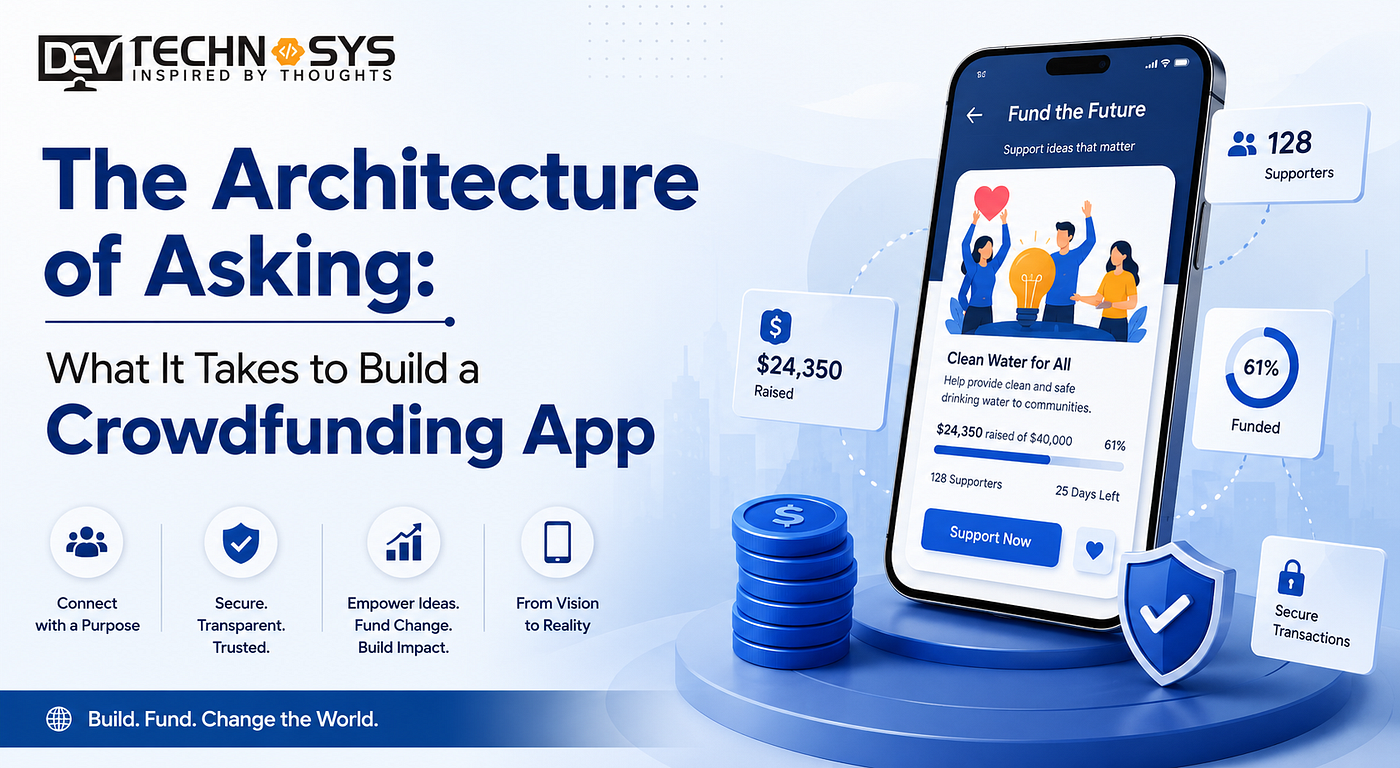
But here’s what most people considering a crowdfunding platform underestimate: the ask is the easy part. The architecture underneath it — money custody, trust mechanics, fraud defense, and the psychology of the progress bar — is where these platforms are actually won and lost. Let’s walk through what it really takes to build one.
First, Decide What Kind of Asking You’re Building
“Crowdfunding app” describes at least four very different machines:
Reward-based — backers fund a project and receive a product or perk (the Kickstarter model). The core challenge is campaign tooling and fulfillment tracking.
Donation-based — pure generosity, for causes, medical needs, and communities (the GoFundMe model). The core challenge is trust and fraud prevention, because sympathy is exactly what scammers exploit.
Equity crowdfunding — backers receive actual shares in a company. The core challenge is regulation: securities law, investor verification, and compliance frameworks that vary by country and change often.
Debt/P2P lending — backers lend money expecting repayment with interest. The core challenge is credit assessment and repayment infrastructure.
These are not variations of one product. They have different legal exposure, different payment flows, and different failure modes. Equity and lending platforms live under financial regulation that reward and donation platforms largely escape. The first architectural decision isn’t technical at all — it’s choosing which ask you’re in the business of hosting, because everything downstream inherits from it.
The Money Problem Is Harder Than the Software Problem
Here’s the thing that separates crowdfunding from ordinary e-commerce: the platform holds other people’s money in a state of suspended promise.
In a normal checkout, money moves once — buyer to seller, done. In crowdfunding, a backer pledges on day one of a thirty-day campaign that might not hit its goal. Do you charge the card now and refund later if the campaign fails? Authorize now, capture later, and pray the card is still valid in a month? Hold funds in escrow until milestones are met?
Every answer creates engineering and legal consequences. All-or-nothing models (funds released only if the goal is met) need reliable mass refund or delayed-capture mechanics. Keep-what-you-raise models simplify payments but shift risk onto backers. Escrow arrangements build trust but add regulatory weight and cost. And the moment your platform touches held funds, you’re in conversations about money transmission rules, KYC verification, and payout compliance that a food delivery app never has to have.
This is why payment architecture — gateway choice, escrow design, refund flows, multi-currency support, payout scheduling for campaign creators — deserves more design time than any screen in the app. The interface is what users see. The money plumbing is what they’re actually trusting.
Trust Is a Feature. Build It Like One.
A crowdfunding platform sells exactly one thing: the belief that a stranger’s promise is worth funding. Everything that supports that belief is core product, not polish.
Campaign verification. Identity checks for creators, documentation for medical or cause-based campaigns, and review queues before campaigns go live. Too strict and creators leave; too loose and one viral scam headline destroys the platform’s reputation permanently.
The progress bar. The most psychologically important pixel in the product. Live funding totals, backer counts, and time remaining create the social proof and urgency that make crowdfunding work at all. It must update in real time and it must never, ever be wrong — a progress bar that glitches backward kills campaigns.
Updates and comment threads. Backers aren’t customers; they’re participants. Creator updates, Q&A, and community discussion turn a transaction into a relationship — and give backers the ongoing signal that their money went somewhere real.
Transparent fees. Platform fees, payment processing costs, and payout timelines stated plainly. Every hidden cost discovered later converts a supporter into a critic with a public comment section.
Dispute and refund mechanics. Some campaigns will fail to deliver. The platforms that survive are the ones with a visible, fair process for when promises break.
The Feature List, Honestly Prioritized
Strip the category to its essentials and a version one needs: campaign creation tools (story, media, goal, deadline, reward tiers), browsing and search with categories, secure payment and pledge flows, the real-time progress mechanics, backer profiles and history, creator dashboards with analytics and payout management, an admin panel with moderation and verification queues, and notifications that pull backers back at campaign milestones.
Version two — funded by a working version one — is where social sharing integrations, recommendation feeds, stretch goals, team fundraising, recurring donations, and mobile-first creator tools belong. Equity platforms add investor accreditation flows and document rooms. The mistake to avoid is the same one that sinks most marketplace builds: specifying everything into launch, and shipping late, heavy, and broke.
On cost: a focused MVP for a reward or donation platform typically runs $15,000–$30,000 with an experienced team; a full-featured platform with escrow mechanics, advanced trust tooling, and mobile apps lands between $30,000–$70,000; and regulated equity or lending platforms start beyond that, with compliance driving the premium. Teams with genuine fintech and marketplace experience — firms like Dev Technosys, which has been building payment-heavy platforms since 2010 — will scope the money architecture before quoting, which is precisely the behavior to select for. Anyone who prices your crowdfunding platform without asking how funds are held is quoting a website, not a financial product.
The Part Nobody Budgets For
The platform is the stage; the campaigns are the show. Every successful crowdfunding platform solved a chicken-and-egg problem the software alone can’t: attracting creators worth backing, and backers worth creating for. That means launch strategy — a seeded first cohort of campaigns, a niche focus where you can be the obvious home (creators in one industry, causes in one region), and community management from day one.
The technology’s job is to never give either side a reason to leave: payments that don’t fail, progress bars that don’t lie, payouts that arrive on time, and fraud that gets caught before the headlines do.
The Ask, Answered
Crowdfunding endures because it answers something old: people want to be part of making things exist. The platforms that channel that impulse well are the ones that treat trust as architecture — money custody designed before screens, verification treated as product, and a progress bar that tells the truth in real time.
Build the jar carefully. Strangers on the internet are surprisingly willing to fill it.
메타데이터
- post_id
- b334e79c182d
- slug
- the-architecture-of-asking-what-it-takes-to-build-a-crowdfunding-app-b334e79c182d
- url
- https://medium.com/@arpit.mishra_26414/the-architecture-of-asking-what-it-takes-to-build-a-crowdfunding-app-b334e79c182d
- canonical_url
- https://medium.com/@arpit.mishra_26414/the-architecture-of-asking-what-it-takes-to-build-a-crowdfunding-app-b334e79c182d
- author_url
- https://medium.com/@arpit.mishra_26414
- status
- ok
- fetched_at
- 2026-08-07 04:39:38