Fresh Bread in a Stale Breadbox: The Hegemony of Reason
The journey to flipping the script
Fresh Bread in a Stale Breadbox: The Hegemony of Reason
The journey to flipping the script

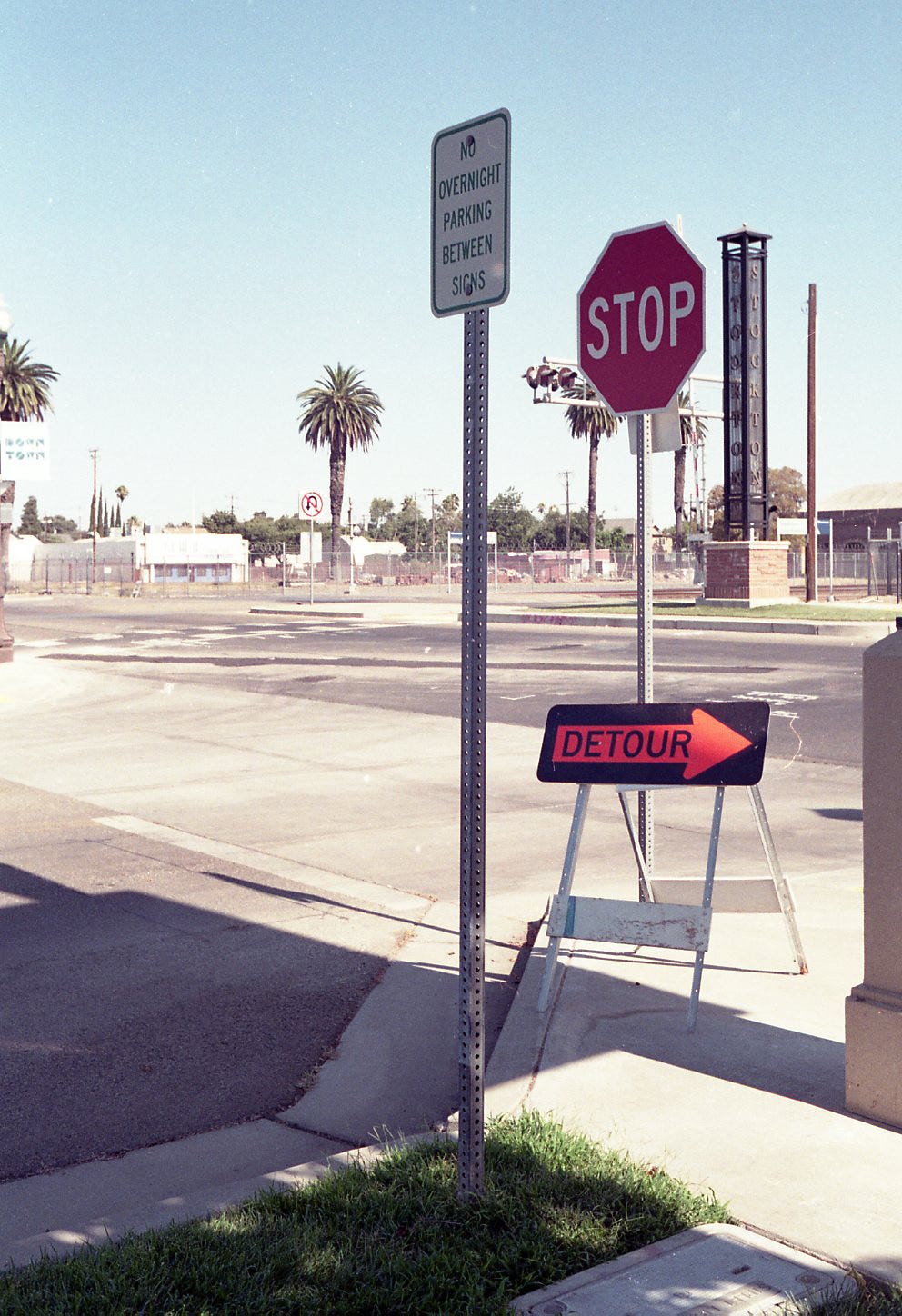
By the author, on flickr.
Teenage diplomat
Growing up in a household where we worshiped under the alter of putative logic, the patterns of rational thought were the only thing that was accepted and without any tolerance of other aspects of contemplation, never mind life. We were groomed to be the next generation of our parents — dedicated to the proposition that all men are created to live in a box specifically fitted and within key limitations. My siblings and I knew nothing else and eschewed anything other than the stereotypical Asian demeanor and perspective.
So what this meant was the need to operate in one lane and one lane only, not even acknowledging the existence never mind the choice of being in another. The difficulty was that we were not living in Asia, but in the USA where tacit and not so tacit feelings about those who were different were more than a reality. My parents were immigrants and knew nothing but the home country and their traditions, which could not be more different than what they hit once they got to this country.
Greetings
My dad’s introduction into western culture was less than auspicious. He was from Taiwan after fleeing China during the war, to attend graduate school. Getting to Waco after a several hour bus drive from Dallas, entered campus speaking limited English. He was able to register for his graduate school classes, but found to his dismay that his graduate school stipend didn’t start for two weeks, in concert with the beginning of instruction. He had nineteen cents in his pocket, and had to find a job right away. Wandering over to the cafeteria, he saw that there was a busboy job, which he didn’t know what that was, but it included breakfast and lunch every day, so he spoke to the head and was given the job. He worked for two weeks straight every day, being constantly admonished due to his limited English understanding, and having to learn on the fly about clearing tables, about piling dishes, washing dishes, and pulling them out of hot washers. He told me this is where he learned the word, “stupid”. He was able to stop working once classes started, but always remembered the experience, and one other one.
He had moved into a graduate student residence, where there were several other Asians. All of them were studying to pass the English exam required for foreign graduate students. One day before the exam, as he and one of his Asian colleagues walked back to the house late at night, they saw something burning on the front lawn; as they came closer, they saw it was a cross. Only after the campus authorities put out the fire, did the residents learn about the Ku Klux Klan, and what that burning cross represented. It was a warning, and all the graduate students of color took it seriously. For his entire time in Waco, he and his colleagues always travelled at least in pairs.
Welcome to the USA.
Needing urgency
And yet, probably understandably, they continued to hold even more tightly onto their own biases. However it was now tinged with the pain of experience — my father many times rightfully acknowledged the discrimination we would (and did) encounter, and thus we had to be three times better than the Caucasian competition if we’d be considered for admissions/considerations/jobs in the future. But this didn’t make him think we should vary from the path set out for us — engineer/doctor/lawyer and work 24/7.
What this translated to was uni-dimensionality — as flat as a trombone out of tune. It was difficult being in a society that you were different and the diversity was much, much more than the traditional manifestations one’s parent’s might be accustomed to. As I saw this more vividly through not fitting in during school, I began clandestinely imagining breaking out of the mold. Being an introvert afforded me the ability to mentally play out many scenarios, but of course without action. So fantasy become the game with me — until I had a specific experience with Chris.
Duded up for Sunday night
Chris like me was planning to go to medical school. We’d shared some classes together and got to know each other pretty well given our focus on the grade game. He’d noted to me he was an “Oreo cookie” — black on the outside and white on the inside. “I’ll take whatever advantage I can of my skin color,” he noted to me during one of our study breaks, “but I’m no nigga. I hate the fuckin’ role and the bro thing. That’s not me”.
Chris didn’t follow sports; played mahjong not basketball; he purposefully and consciously articulated well, often alliterating (a “network news” accent, as he put it; non-identifiable to race or place). But when in front of professors or “bro’s” he put on a show, with a stereotypical as he called it “black personae” — noting how the Celtics had done the night before (with no details), mentioning intramural games off hand (to which he didn’t belong but knew the schedule) and changed his voice (to deeper and “Ebonics” in nature). So as opposed to me who played the respected role of the anonymous chinaman but fantasized outside this box, he WANTED to promulgate the stereotype for his goal to be a doctor. It was amazing — our dichotomies were similar yet different.
One day Chris and I were studying for the last philosophy exam of the semester. We did, as was our wont, go to the empty liberal arts building on campus and finding empty classrooms where we could use the boards to teach ourselves whatever we needed in the days before more sophisticated electronic means. After a few hours he wandered into my room and asked if I needed a break. I nodded and after a moment tossed the chalk into the blackboard tray.
Spirit of the night
Chris noted “You know, neither of us needs this exam — we’ve both got enough points for A’s in this class. Why are we working so hard?”
It never occurred to me to do anything but hit the books hard for every exam. “Ummm — because it’s what we do?”
“I dunno Bert — I’m just so tired of having to be something for someone else. I wish I had the balls just once to do something different, unexpected…totally out of character.” He looked as much frustrated as he did incredibly tired.
I knew the feeling. It seemed we were playing roles to some faceless director we didn’t know and guessing what they wanted in order to pass a threshold, to whatever goals someone else may have put in front of us. As noted in Shakespeare, we strut our hour upon the stage and in the end it means nothing. And for some reason, my fantasies came to mind, and I quoted Macbeth “Yeah…’and all our yesterdays are lighted fools, the way to dusty death.’”
Chris snapped at the quote. “Exactly!” he said. “Isn’t this the opportunity to do something different? Can’t we fuckin break out of the mold?” He pondered for a moment. “Why don’t we just blow this off? Why don’t we go to the Underground (a local all night bar) and drink our way to the exam?”
“I don’t drink,” I noted — “it gets me sick.”
“Well, me too,” said Chris. “I know — I can get some weed from my roommate — we can smoke ‘til the exam — and take the exam high!”
Diamond-hard look
Well, to say the least this wasn’t what I was expecting when I started studying that night. We were supposed to be the paragons of our races — carrying the stereotypes we needed to and for our and society’s comfort. But I understood the point — being iconoclastic was the least thing anyone expected of us. And honestly the only ones who could be hurt by this behavior were ourselves. Frankly, only the two of us would know.
But I still had doubts. The years of ingrained conventions and expectations were a considerable pressure, acting like a wind in a storm, pushing me inexorably in the direction traditionally associated in-the-box of Asian-conformity, of my stereotype. Who would I disappoint? What would the professors think? What would anyone think?
“Who the hell cares what people think?” Chris noted, with a hint of guilt in his voice. It was as if he’d read my mind, and most likely, he was feeling something similar on maintaining our pigeon-holed personae of smart minorities. “Just this once, I am NOT going to care.”
It was in that moment when I realized that the stereotype, per se, was a source, perhaps THE source, of my discontent, my dukka, or suffering. And that I had embraced this unwittingly, to let it define me as a place of belonging, notwithstanding hating it. That like so many others who keep themselves in abusive relationships I was holding onto the personae because most likely, I feared what it might be like free of it.
“Fuck it,” I said, with more conviction that I had. “Let’s do this.”
Dive in
I told Chris I hadn’t smoked marijuana before, and Chris noted he was more of a veteran. Both were lies.
When I was a teenager, my parents had allowed me to use my father’s old Kodak Retina 35mm camera, and thus an “approved” distraction. I’d joined a small group of photographers in a school club, of which the eldest was a laid-back character who was still in high school, endlessly, but older and more experienced than the rest of us. We’d go on photo walks, but beforehand he’d offer his “toking” habit to anyone who wanted to partake. I’d tried it once out of peer pressure, and of course coughed and hacked, but did learn to inhale more smoothly. It didn’t really affect me much, but I knew the slight calm it provided. That was the only time I’d used “the evil weed”.
Chris, I came to find out later, had never partaken in marijuana. I don’t know why he didn’t admit it, and for that matter, why I didn’t admit I had tried it, but it must’ve come from some level of embarrassment or insecurity that was anchored to our young minds.
We went back to Chris’ dorm, and he spoke with his roommate who was glad to supply us a bag of stuff and rolling papers for $40. Chris awkwardly rolled up a joint, and we took up an evening of smoking and not studying deontology nor teleology. I remember waking up after a few joints, feeling that calm once again, and, not noticing anything around me, plodded to my dorm half-dazed. After taking a shower and changing, I headed over to the exam, getting there a few minutes early. I didn’t see Chris, and in fact, didn’t see him until about half way through the exam, when he showed up.
He looked pretty awful. He clearly had just rolled out of bed, and looked about as disheveled as one could be, with the exception that he had the broad smile on his face. We both took the maximal time for the exam, and I noted I only started to think straight and not be distracted by every noise, change in light, misdirections of thought randomly coming into my mind at the very end of our allowed time.
After the exam, Chris was subdued but mellow, and I have to say, very happy. “That’s the best thing I’ve ever done,” he noted. I only nodded, now worrying about my exam score and expectations once again, despite knowing in the back of my mind I didn’t need the exam. “I’ve never really done anything for myself, or for a reason, but this was soooo satisfying. No fuckin’ worries.”
The next episode
I don’t remember how poorly we did on the exam, but I’m sure it was pretty bad. I felt a lot of guilt and a sense of dishonor, and although it didn’t reflect on my grade, it certainly did on my psyche, at least at the time. But I filed this away, noting that in fact there were other things in life that could be experienced, that could be used to broaden one’s horizons beyond the sole rationale of goal-directed behavior. Indeed, as I went further into my experiences and beyond the goal of medicine per se, I distinctly recalled the experience with Chris, and that there were ways I might be able to contribute to society even if it meant breaking the expectations of what other’s might think was appropriate.
Chris, for good or bad, changed completely after the experience. Despite a couple of years with excellent credentials for his then stated goal, he began smoking regularly, and let the academic part of his life be put on the back burner. He stopped taking the required classes as a pre-medical student, and really put his effort behind writing and journalism. During our junior year we reflected on our experiences, and he noted that if it hadn’t been for me, he never would’ve “found” himself, and abandoned the idea of medical school, which was really something his family wanted but he never really did. I demurred, noting it was his idea at the very beginning to do something uncharacteristic of us both. “But if it hadn’t been for you, and your willingness to ditch the bullshit, even for one exam, I never would’ve done it myself,” he said to me. “You’re going to be a great doc,” he noted, “…and I’m NOT going to be one.” He laughed. “But I am going to do what I want, and not be goddamned tied to someone else’s image of what I should be.”
Chris and I stayed in contact after we left college. Chris became a journalist covering domestic conflicts, especially in the southern part of the US. He was in NY during the World Trade Center attack, and apparently was a victim, whose remains were never found.
I will always be grateful to Chris for his friendship, his opening my mind to new experiences, and all that we shared for too brief a time. As he would’ve said, tempus fugit.
메타데이터
- post_id
- b33b2e4903d5
- slug
- fresh-bread-in-a-stale-breadbox-the-hegemony-of-reason-b33b2e4903d5
- url
- https://medium.com/counterarts/fresh-bread-in-a-stale-breadbox-the-hegemony-of-reason-b33b2e4903d5
- canonical_url
- https://medium.com/counterarts/fresh-bread-in-a-stale-breadbox-the-hegemony-of-reason-b33b2e4903d5
- author_url
- https://medium.com/@liangbc
- status
- ok
- fetched_at
- 2026-07-20 03:36:17