She Was Locked in a Dark Room for 25 Years — Because She Wanted to Marry the Wrong Man
For decades, no one questioned why Blanche Monnier disappeared. The answer was waiting behind a locked door.
She Was Locked in a Dark Room for 25 Years — Because She Wanted to Marry the Wrong Man
For decades, no one questioned why Blanche Monnier disappeared. The answer was waiting behind a locked door.
For twenty-five years, Blanche Monnier lived in a room no larger than a prison cell.
The windows were shuttered. The door was locked from the outside. The air was stale, heavy with decay and human waste. Light rarely entered. Sound rarely escaped. Time, as the outside world understood it, ceased to exist.
And all of this happened in the middle of a respectable French city — inside a well-known family home.
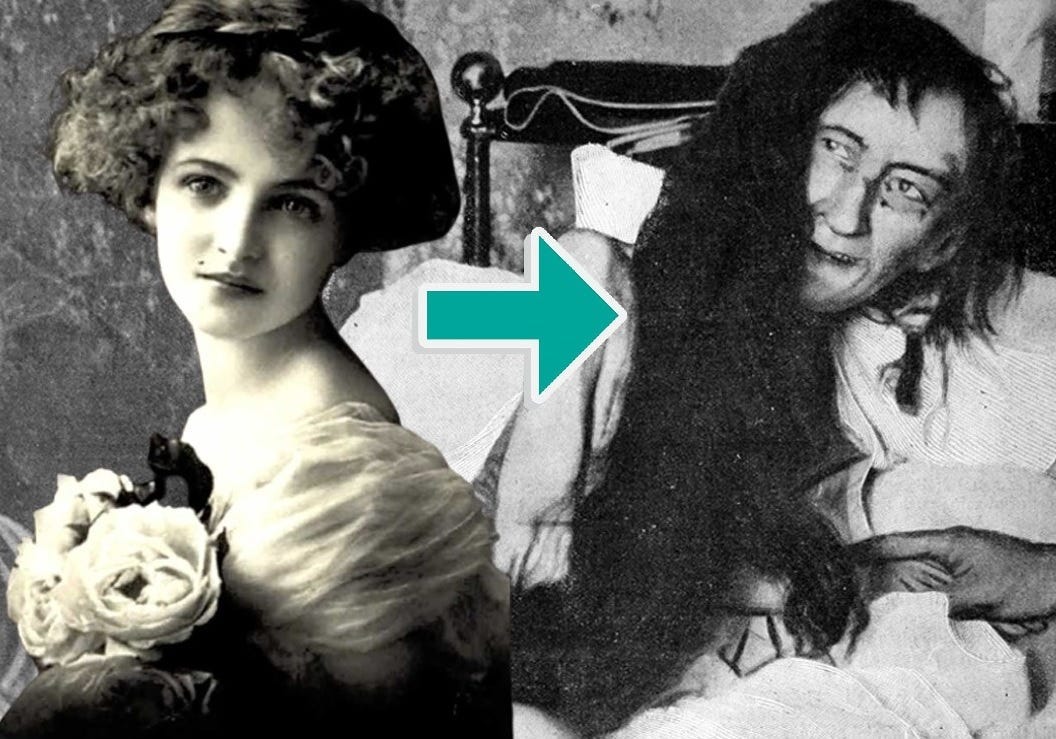
Blanche Monnier was born in 1849 into a wealthy, socially prominent family in Poitiers, France. The Monniers were not hidden or reclusive. They were respected, visible, and admired. Blanche herself was once considered a suitable match in polite society — educated, refined, and expected to marry well.
But Blanche made a choice that would end her life without killing her.
She fell in love with a man her mother disapproved of.
Louise Monnier, Blanche’s mother, was deeply invested in appearances and social standing. The man Blanche wished to marry was older, poor, and considered socially unacceptable. To Louise, the relationship was not merely disappointing — it was humiliating.
Blanche refused to abandon him.
What followed was not a public argument, not a disownment, not exile.
It was confinement.
Sometime around 1877, Blanche Monnier vanished from public life. Friends were told she had left. Others were told she was ill. Over time, people stopped asking. The Monnier family continued to appear in society. Louise maintained her reputation as a charitable woman. Blanche’s brother, Marcel, lived in the home and went about his life.
Inside that same house, Blanche was locked in a small attic room.
The shutters were sealed shut. The room was stripped bare. Blanche was denied sanitation, denied light, denied contact. Food was lowered to her irregularly. She was not allowed to leave. She was not allowed to speak to anyone outside the household.
Years passed.
Then decades.
Blanche’s lover died — and she was never told.
By the time ten years had passed, Blanche was no longer simply imprisoned. She was erased.
Her body deteriorated. Her hair grew long and matted. Her teeth decayed. She became accustomed to darkness so complete that sudden light would later cause her physical pain. She lived among filth, insects, and rodents. Her bed rotted beneath her.
The most disturbing part is not that no one rescued her.
It is that no one noticed.
The Monnier family remained respected. Louise Monnier even received awards for her charitable works. Visitors entered the home without ever suspecting that a woman was being kept captive just above their heads.
Blanche’s screams — when they occurred — were dismissed as imagination or illness. Over time, they stopped altogether.
In 1901, more than two decades after Blanche had disappeared, the French authorities received an anonymous letter. It was brief. It claimed that a woman was being held prisoner in the Monnier home.
Police did not immediately believe it.
But when officers arrived and forced open the attic door, they were unprepared for what they found.
Blanche Monnier was discovered lying on a rotting mattress, naked, emaciated, and surrounded by human waste. She weighed barely 55 pounds. She had not seen sunlight in years. The smell was overpowering. Insects crawled over her body.
When the shutters were opened, Blanche screamed.
She was not accustomed to light.
Blanche was removed from the house and taken to a hospital. She survived — but she never recovered. Years of isolation had permanently damaged her body and mind. She struggled to adjust to the outside world, to human interaction, to freedom.
Louise Monnier was arrested but died shortly after from complications, never serving a sentence. Blanche’s brother, Marcel, was initially convicted but later released on appeal. The court ruled that he had no legal obligation to intervene.
The law had found a technical absence of responsibility.
Blanche Monnier lived the rest of her life in an asylum. She died in 1913, twelve years after her rescue — free, but never truly restored.
What makes Blanche Monnier’s story so unsettling is not just the cruelty inflicted upon her, but how ordinary it was allowed to become. No chains were required. No dungeon was built. The confinement happened quietly, behind respectability, sustained by obedience and silence.
She was not hidden in the wilderness.
She was hidden in plain sight.
Blanche Monnier did not disappear because society was cruel. She disappeared because society trusted appearances more than absence — because a well-kept home was assumed to be a safe one, and a respectable family was assumed to be incapable of atrocity.
For twenty-five years, Blanche existed just above the normal world — breathing, waiting, and slowly disappearing — while life continued uninterrupted below her.
If stories like this stay with you — stories where cruelty survives behind manners and silence — you can find more of my work on my Medium **profile**. I write about the cases that didn’t look like crimes, until they were impossible to ignore.
Some doors are locked not to keep danger out — but to keep it unseen.
메타데이터
- post_id
- b33be167fc64
- slug
- she-was-locked-in-a-dark-room-for-25-years-because-she-wanted-to-marry-the-wrong-man-b33be167fc64
- url
- https://medium.com/@victoria.vlkva/she-was-locked-in-a-dark-room-for-25-years-because-she-wanted-to-marry-the-wrong-man-b33be167fc64
- canonical_url
- https://medium.com/@victoria.vlkva/she-was-locked-in-a-dark-room-for-25-years-because-she-wanted-to-marry-the-wrong-man-b33be167fc64
- author_url
- https://medium.com/@victoria.vlkva
- status
- ok
- fetched_at
- 2026-07-13 06:23:13