What a Factory Wants You to Feel — and Why Most Industrial Photography Gets It Wrong
The visual argument for trust is built before the camera is unpacked. Here is how we approach it.
What a Factory Wants You to Feel — and Why Most Industrial Photography Gets It Wrong
The visual argument for trust is built before the camera is unpacked. Here is how we approach it.
Most industrial photography does not do what the client paid for.
It documents. It does not argue.
There is a specific difference between evidence and argument, and almost every factory photoshoot produced by an agency that does not specialise in this work delivers evidence. Images that confirm the factory exists. Images that show the machines, the workers, the production line. Images that answer a question nobody is actually asking.
The buyer — the institutional partner, the overseas procurement team, the potential client evaluating whether to commit to a manufacturing relationship — already knows the factory exists. What they cannot determine from any of that is whether this company can be trusted with something that matters to them. Whether it has the scale to handle volume. Whether it has the discipline to maintain standards at that scale.
That is what industrial photography is for. Not to document the facility. To make the argument that the facility deserves to be trusted.
Margaret Bourke-White, who defined the genre, understood this precisely: “Industrial forms were all the more beautiful because they were never designed to be beautiful. They had a simplicity of line that came from their direct application of purpose. Industry had evolved an unconscious beauty — often a hidden beauty that was waiting to be discovered.”
The photographer’s task is to find that hidden beauty — and turn it into an argument.
The planning that makes the difference
The gap between documentation and argument begins before the shoot, not during it.
We never arrive at a factory without having done the reconnaissance first. Before any recce visit, we request a floor plan from the client. When we walk the floor, the floor plan is open on the iPad. We mark each location with a number. Each number corresponds to a row in a prepared spreadsheet: an environment photograph taken during the recce, the intended angle for the actual shoot, and a note on what equipment and personnel will be needed on shoot day.
We leave the recce with a complete, spatially organised shot brief. Every shot has a reason. Every location has a logistics plan. By the time we arrive on shoot day, nothing is left to chance.
The safety requirements make improvisation expensive. Hard hats. Safety boots. High-visibility vests. Eye protection. In most facilities, there is a safety briefing before you enter and a quiz to confirm you understand the requirements. This is not an inconvenience. It is the correct entry point to a serious working environment.
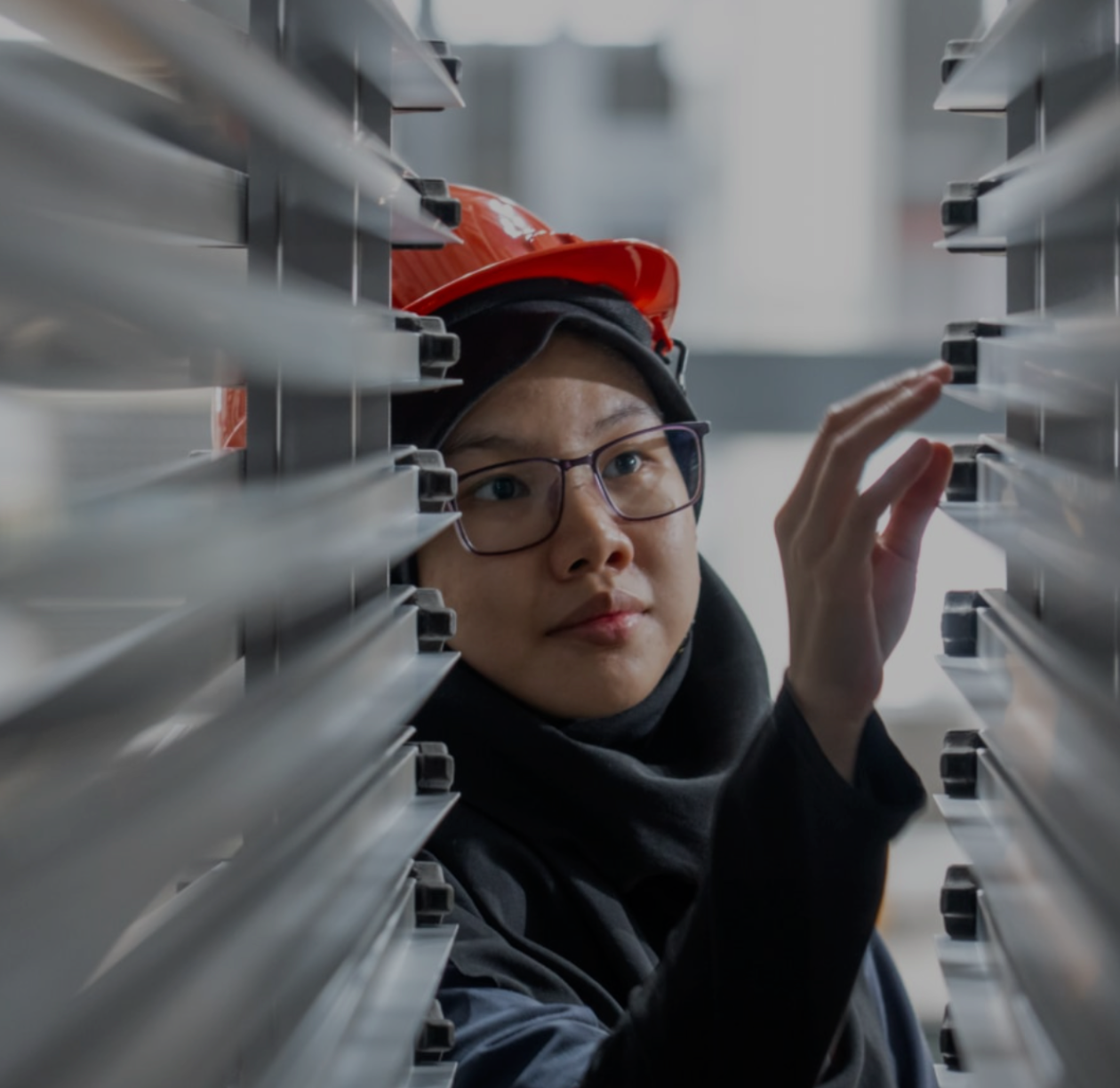
Quality Assurance Officer | Photo by Author
The production cycle constraint nobody talks about
There is a planning constraint in factory photography that has no equivalent in any other kind of location work: the production cycle.
Some shots only exist when production is running. The operator at the machine, the conveyor in motion, the welding arc at full brightness — these are the images that show a factory as a living, purposeful place. You cannot create them when the line is down.
Other shots are only possible during maintenance windows. Faces clearly visible, machinery accessible, the floor still enough to allow longer exposures and wider compositions.
The production cycle is non-negotiable. You plan around it, not against it. Key personnel on the floor cannot leave their workstations for extended periods. When a shot requires a specific person, you go to them. You work efficiently. You do not make them wait.
Most photographers resist this constraint. The photographers who embrace it produce better work — because planning around reality, rather than trying to control it, produces images that feel like they were made inside the working world rather than imposed on it.
The four categories of an industrial shoot
Industrial process documentation captures the factory as a coherent system — the production line in operation, the sequence of steps in a manufacturing process, the organised complexity of a well-run facility. The goal is not to show that the factory has machines. It is to show those machines have a purposeful logic.
Machinery and equipment photography communicates investment and advancement. A precision robotic arm mid-operation, the sensor arrays of an automated quality station, the control interface of a sophisticated production system. These images say: this company is operating at the frontier of its industry.
Workers in action is where the human argument lives. The welder and their arc. The worker at their station surrounded by the personal markers of a long career — the worn tools, the arranged workspace, the belonging that tells you this person has been here for years and is very good at what they do. The quality inspector running vigorous tests. The end product wrapped with care. These images say: this facility is run by people, and the people are good.
ESG and sustainability documentation has become increasingly critical. A mountain of recycled aluminium — with a person walking in front of it not as the subject, but to give the mountain its scale. A fish tank filled with recycled waste water where real fish actually live — a single image that communicates an entire water treatment philosophy.
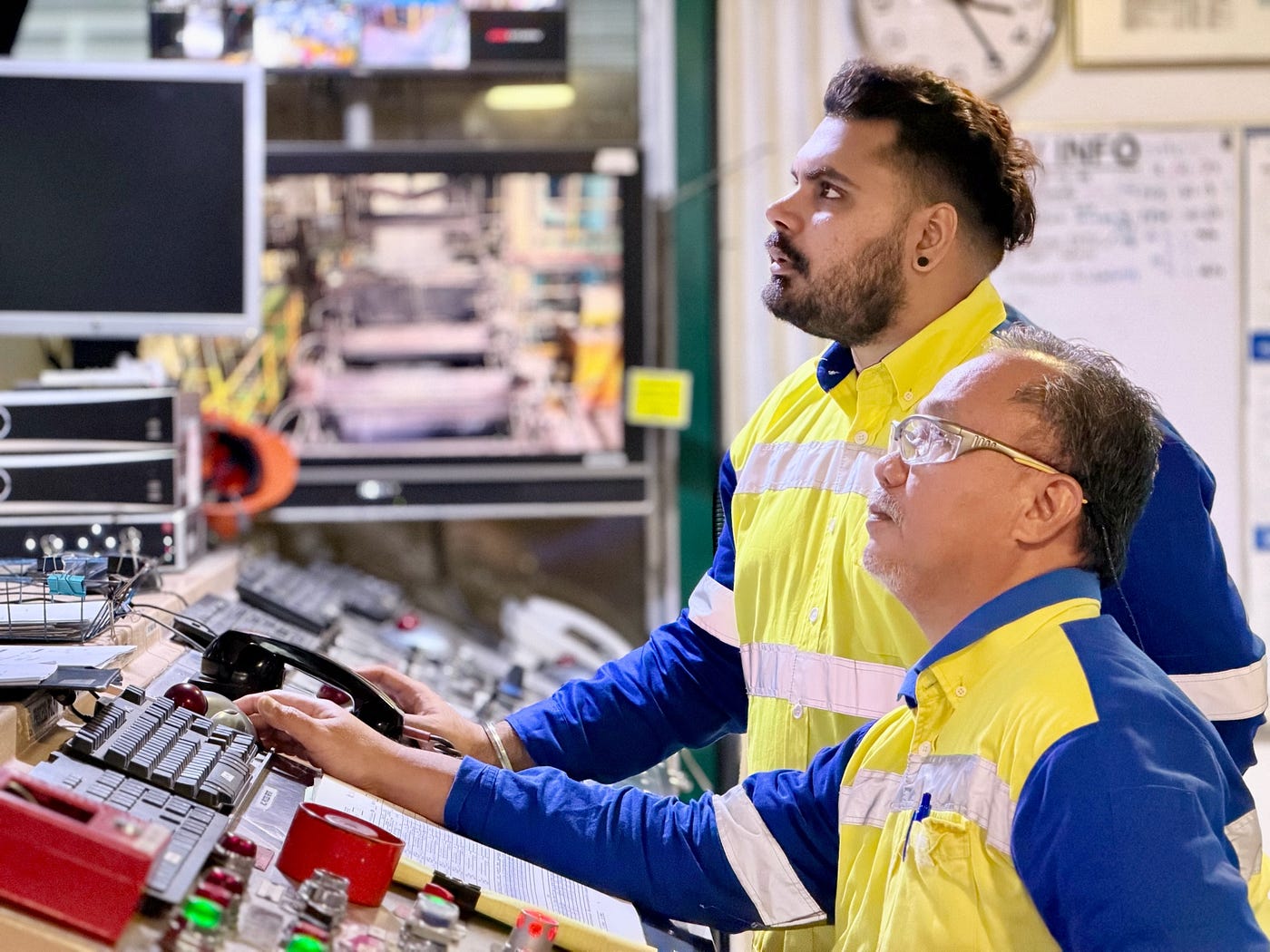
Every single moments tell a story | Photo by Author
The visual grammar of the factory floor
Angle carries more weight in industrial photography than almost any other discipline. A close-up of a machined component gives a viewer something they would never see in ordinary life. An ultra-wide shot communicates capability and investment in a single frame. A medium shot captures human expression and the relationship between worker and machine. A low angle communicates power and authority. A high angle across a production floor shows organised complexity — a well-run operation made legible from above.
Colour communicates before the viewer consciously registers it. The cool blues and neutral greys of a steel production environment communicate precision, stability, and trust. The warm oranges and yellows of heat, arc, and activity bring energy and capability. The contrast between them in a single frame makes the subject stand out.
Man-made geometry is everywhere on a factory floor: symmetrical rows of identical machines, leading lines from conveyors running to a vanishing point, layered structures that naturally frame subjects. Every person in frame must be PPE-compliant. Equipment brand names on machinery are noted during the recce and excluded from compositions — not because they are competitor brands, but because clients may prefer to keep their production setup confidential.
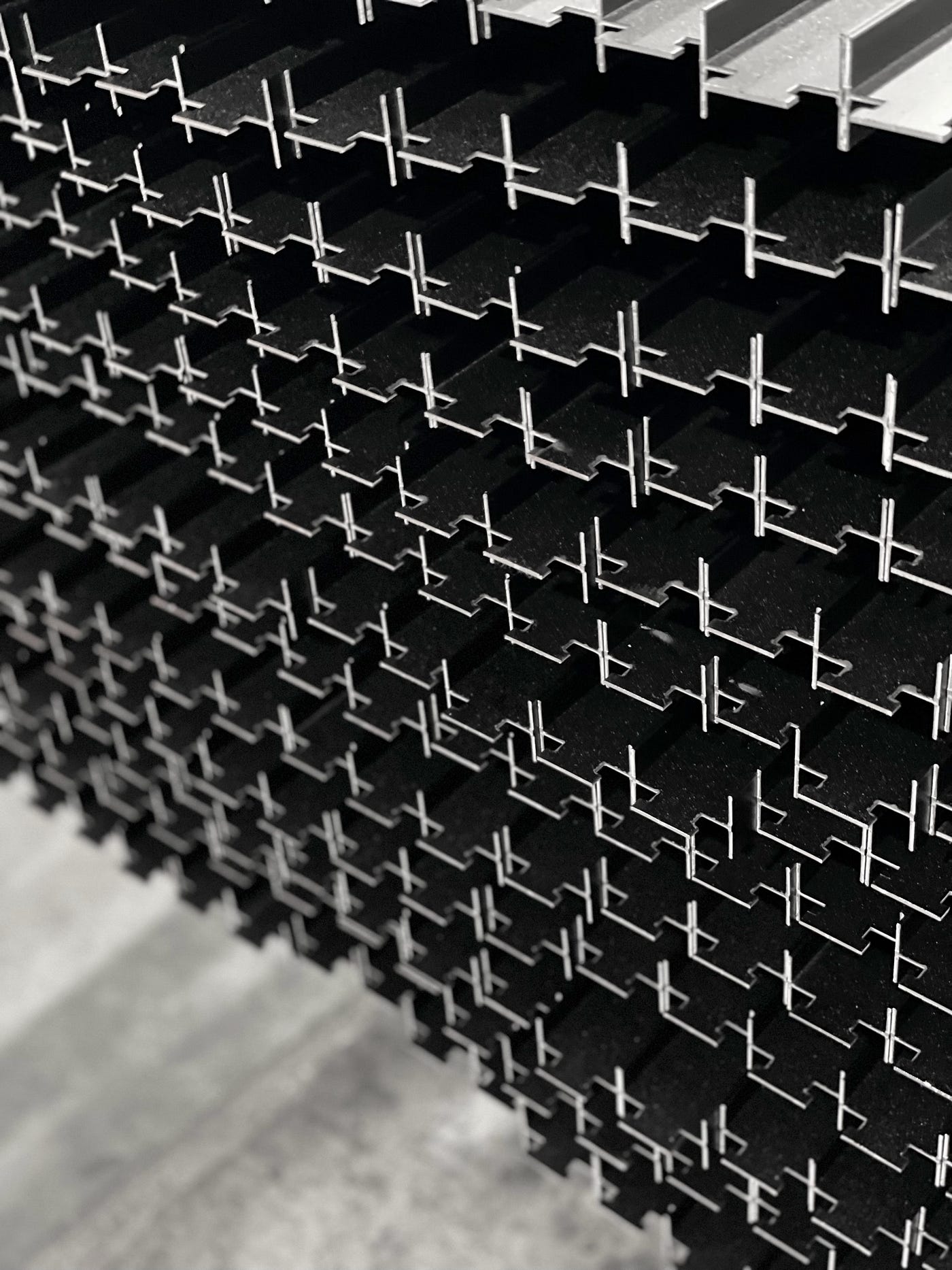
Repeated Pattern as Graphic | Photo by Author
What the images are actually for
The specific frames that do this work most effectively are rarely the obvious ones.
The welding spark caught at maximum brightness. The worker surrounded by the personal markers of decades of experience — the worn handles, the arranged tools, the small details that tell you this is genuinely their place. The storekeeper with organised drawers full of keys — every key a system, every system a responsibility. The end product wrapped with care by hands that know exactly what standard they are working to.
Each of these is a specific argument for a specific quality. Together they build a case that this company is competent, expert, and serious about what it does.
But here is the question I come back to after every factory project: how many industrial clients have a version of that hidden beauty waiting to be found — and have never given a photographer enough time on the floor to find it?
The brief visit. The quick shoot. The standard angles. The images that document rather than argue.
What is the cost, over years of sales conversations and procurement evaluations, of the argument that was never made?
메타데이터
- post_id
- b3571fea82d7
- slug
- what-a-factory-wants-you-to-feel-and-why-most-industrial-photography-gets-it-wrong-b3571fea82d7
- url
- https://medium.com/@likhai/what-a-factory-wants-you-to-feel-and-why-most-industrial-photography-gets-it-wrong-b3571fea82d7
- canonical_url
- https://medium.com/@likhai/what-a-factory-wants-you-to-feel-and-why-most-industrial-photography-gets-it-wrong-b3571fea82d7
- author_url
- https://medium.com/@likhai
- status
- ok
- fetched_at
- 2026-06-11 15:16:29