Colonial Affair of the Bengali Bhadralok
The scholarly narrative of blaming rulers of the Princely States for bowing before the British Raj & aiding the suppression of Independence…
Colonial Affair of the Bengali Bhadralok
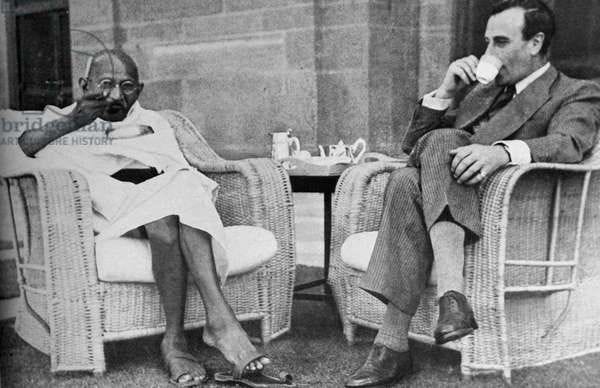
The scholarly narrative of blaming rulers of the Princely States for bowing before the British Raj & aiding the suppression of Independence movement is peddled much often, despite rebuttal claims through rich works like ‘False Allies’ by Manu Pillai & ‘For the Honour of my House’ by Tony Monaghan. But in this carefully designed campaign to target a specific class, what is shrewdly concealed are the pleasant relationships shared by other communities with the Britishers for all pragmatic purposes at that time.
This write-up takes up the case of Pre-independence camaraderie between the Bengali Bhadralok and the British through time and analyze how this relationship developed and how its socio-political impact is reflected till date.

Impact British Rule on Bengali Culture and Society
England’s takeover of the administration of Bengal started in 1757. Kolkata was the capital of British India from 1772 to 1911, and the colonialists left indelible marks on the city. Lasting until 1947, British rule had a profound impact on Bengali culture and society, especially with the introduction of English as the medium of higher education after 1835.²

The relationship between the British and the Bengalis was a curious one: the Bengalis were, by virtue of being the first group in India to have sustained contact with the colonial rulers, the most “British” of the Indian subjects.
Bengalis’ intellectual reputation dates to the 19th century, when Calcutta was the capital of British India. Living directly under the “imperialists” allowed Bengalis to pick up English quickly, exposing them to global ideas, innovation, arts and politics. ³

Between the 19th and 20th centuries only a small section of the middle class and individuals like Swami Vivekananda and Prafulla Chandra Roy represented their tradition as against the European modern. On the contrary, the other section of the middle class, including people such as Nabinchandra Sen and Bipin Chandra Pal, still imitated the Western concept of modernity in their lifestyle. So, from the 19th century onwards these two strands of modernity existed in parallel. Sometimes they clashed with each other, while at other times they were independent.¹⁸
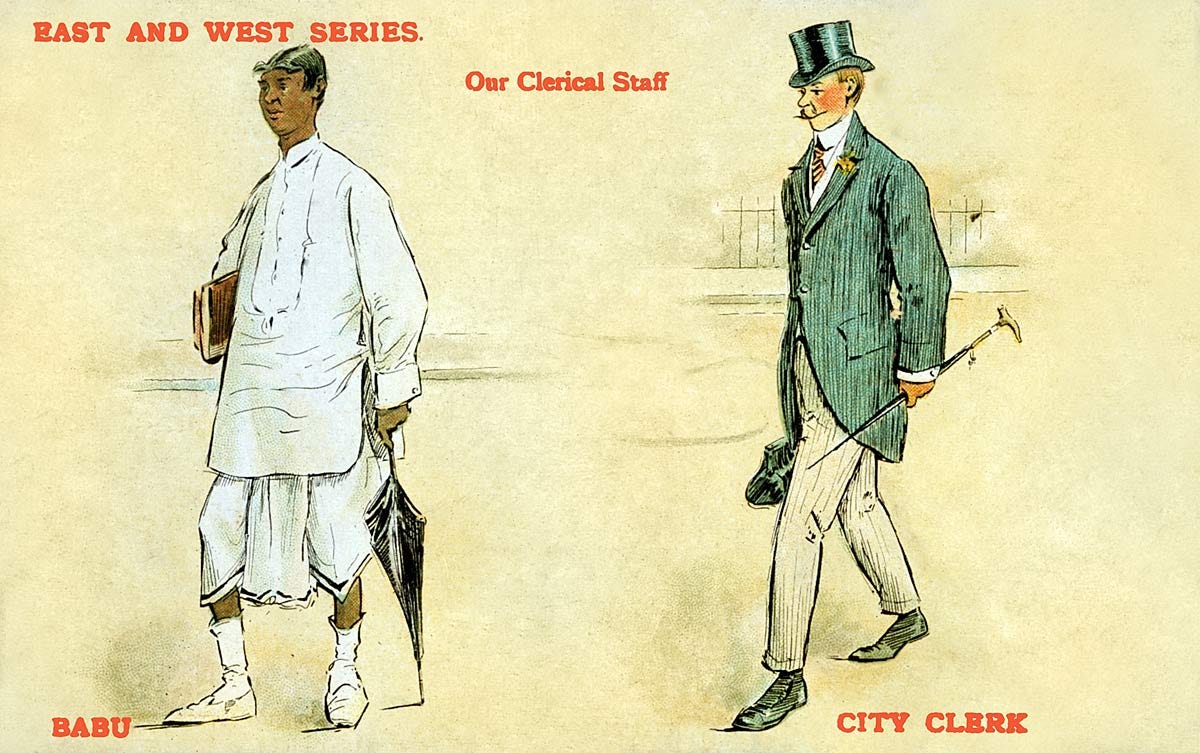
With his belief in the superiority of the Western literature and culture, Macaulay planned to circulate their cultural values amongst Bengalis. His main purpose, however, was to create a class of Bengali men who would perpetuate the ideology of the Colonisers amongst the native folks by rendering themselves as weak and ineffable. These men were later known as the babu class who, Macaulay imagined, would be brown in colour but white in taste. In short, he wanted to create slaves out of those Bengali men by training them in Eurocentric knowledge.¹³

Hindus responded more rapidly than did Muslims to opportunities provided by English education, and the nineteenth and early twentieth centuries saw the rise of a highly Westernized elite, mostly, but not exclusively, Hindu in composition, whose intellectual attainments were coupled with efforts at sociocultural and political reform.²

For Calcutta’s English residents, the Bengalis’ cultivation of English habits was more evidence, should more be needed, that their rule was the destined natural order. They granted Bengalis a kind of imitative intelligence as well as a capacity for breeding more and more Bengalis.⁷
Social impact of British raj
Social impact of Colonists is visible in culture of Addabazi and cuisine. The conquered should so quickly embrace the language and notions of the conqueror was curious, but that is what happened in Bengal. Adda was an expression of the process of trying to cope with ones’ Westernised status within British supremacy and its effects on the dignity of the westernized Bengali middle class as a whole,” writes Debarati Sen, associate professor of Comparative Cultural Studies at University of Houston, in her research paper Speech Genres and Identity: The Place of Adda in Bengali Cultural Discourse (2011). It was the intellectually stimulating pastime of the wealthy upper-caste male with time on their hands. The practice of adda soon spread beyond the upper class.¹⁷
Keshab Chandra Sen, the founder of Brahmo Samaj, champion against child marriage and advocate of widow remarriage and inter-caste marriages, visited Britain for six months in 1870, during which he met Queen Victoria and a variety of political leaders, including W. E. Gladstone & John Stuart Mill. At Osborne House, KC Sen sought the Queen’s support for vernacular and English language schools in India. He even expressed acceptance of the British rule. He declared that the British conquest of India was intended by God to help India “in the path of moral, social, and political reformation.” KC Sen’s daughter, Suniti even modelled herself on Queen Victoria as a modernizing matriarch, writing a series of books about the role of women in Indian history and culture. The contradictory character of KC Sen’s under-age daughter’s marriage to Maharaja of Cooch Behar fractured Keshab’s relationship with his English Unitarians, Nonconformists and reformer allies, who had long acted as his champions, and led to the demise of Keshabite Brahmoism as a force for national transformation in India. Consequently, Sen went ahead to form a new society Naba Bidhan (New Dispensation), which preached a mix of Hindu philosophy & Christian theology.
Cuisine Imperialism in Bengal
Gradually, from the second half of the 19th century, Europeans, Muslims, and lower-caste Hindus started to establish bakeries and manufacturing workshops in the colony. The introduction of these items in Bengali society was not going on in a smooth way. But in the case of popularization among the Bengali middle class it had to face much resistance from the rigid sections of the society. The educated, ‘enlightened’ Bengali middle class not only imbibed the new taste of these items but very often used these items as emblems of liberation and freedom from caste barriers and traditional taboos.¹⁸
Comparative Benefaction of Hindus and Muslims from the Britishers
Most Bengali Muslims believed, as did many Muslims throughout India at that time, that they had benefited less than Hindus under British rule and feared that they would suffer discrimination in a free India dominated by the country’s Hindu majority.²
But interestingly, Migration of Bengalis from the Indian sub-continent to the outside world had started with taking up jobs as Lascars (sailors) in the British East India Company’s ships more than a hundred years before the Company received the grant of the Dewani of Bengal, Behar and Orissa, when almost all the Lascars were Bengali Muslims due to religious taboo on crossing Kalapani (black waters or oceans) applied to Hindus.⁴

Benefaction of the Elite Bengalis from the British
The ‘rich’, ‘middle’ and ‘poor’ peasants, broadly, the jotedars/taluqdars, raiyats and under-raiyats respectively represented three broad categories of peasants in Bengal.
The elite zamindars of Bengal benefitted from their alignment with the British. For instance, Rabindranath Tagore’s industrialist grandfather wanted rail connectivity to the collieries and if the lines were to be laid from Calcutta to the Raniganj coalfields, he even offered to raise one-third of the capital. With a British partner, he established Carr, Tagore and Company in 1843, an outfit that had close commercial ties with the East India Company. Rowland Macdonald Stephenson first arrived in Calcutta in 1843 as a representative of the Steam Navigation Company. When he and Dwarakanath Tagore met, they realised they had a common interest in developing railways in India.At that time, Dwarakanath also owned the Englishman, the newspaper in which Stephenson used to articulate his views about the railways. Consequently, Stephenson formed the East Indian Railway Company (EIRC) in 1845, and in the same year, Dwarakanath formed the Great Western Railway of Bengal (GWRB).²¹
Dwarkanath Tagore also held four large estates — Berhampur, Pandua, Kaligram and Shahazadpur without partners and he placed them in trust for his sons and their descendants in 1840. The unique aspect of Dwarkanath’s zamindari management was that he looked at it entrepreneurially, not feudally, as was the normal habit of his contemporary counterparts. He engaged several European experts to manage his estates.²²
Besides zamindars, other agents of exploitation in East Bengal, such as mahajans (moneylenders) and bhadralok (middle class/professionals including lawyers and doctors) belonged to the Hindu community while the bulk of the peasants were Muslims. The colonial government, because of its indirect rule and distance from the masses, was hardly visible and perceived as exploiters by the bulk of the peasantry. Consequently the peasants’ politics was mostly about how to circumscribe the power and authority of the zamindar-bhadralok-mahajan triumvirate during the late 19th and early 20th centuries. However, during the first 100 odd years of British Raj, up to the 1870s, the British colonial masters had been the main adversaries from the viewpoint of most peasants. This was so because of the Government’s promotion and protection of the zamindari and indigo plantation interests, which directly and adversely affected the peasant interests.¹⁹
Apart from latent displeasure from the Bengali Musalman, the Britishers faced resistance from lower echelons of the Bengali society. In 1769, the East India Company decided to transform the Bengali silk industry. Some features of Piedmontese technologies had a crucial impact on peasants who specialized in the mulberry cultivation and the rearing of silkworms. The Company had to cope with resistance from some rural economic agents in late eighteenth- and early nineteenth-century Bengal, but ‘other elements’ in local society were able to profit from the Company’s interest in producing raw silk.⁵
Who were these ‘other local elements’ who profited from Britishers?
The common people of Bengal could not accept the British rule. Fakir and Sanyasi revolts (1760–1800) and the Nil-Chashi (Indigo farmers) revolution shook the British reign from the very beginning. But the Bhadralok continued patronizing the Britons until the heat reached them.⁶
During 1920–47, due to several government measures and rise of political consciousness among the well-to-do peasants, the zamindars’ power was waning and the hopes of the occupancy raiyats and jotedars were increasing. The significance of the peasantry and the impact of its politics lie in the fact that most of the population in the region was agrarian, about 80.66 percent in 1921. The enfranchisement of the well-to-do peasants was followed by their appreciation of the value of their votes in electing office bearers of the Union Boards and other local self-government bodies. However, at the same time they were aggrieved because of the slump in jute price and bad harvest in the wake of World War I. The issue of Non-Cooperation with the Government espoused by Gandhi in the wake of the War, and his championing of self-rule and civil rights soon attracted the peasantry in East Bengal. While the Congress leaders in the name of swaraj (self-rule) were mobilising them, peasants in the region interpreted swaraj as ‘a golden age when prices should fall, taxation should cease, and when the state should refrain from interfering with the good pleasure of individual man’.¹⁹

Elite Bengalis had met the arriving waves of eighteenth-century Englishmen with little of the hostility or indifference the East India Company would encounter elsewhere. Initially, baboo or babu simply referred to an English- speaking Bengali clerk. Yet while Bengalis may have begun as clerks, they quickly progressed to revenue agents, solicitors and High Court judges.
The Europeans, particularly the British, at this time were in the look out for local partners or ‘banias’ to bridge them to the Indian market. For a brief while the Bengalis served the purpose, and then the Punjabi Khatris. Timberg refers to an exhaustive list of 1863, which consisted of only one non-Bengali intermediary firm. But over time, the Marwaris took over this role almost exclusively.¹²

Politics of Language
Under the British, the upper-class Hindu established themselves in a strong position in due course and turned Bengali (Bangla) into a “high-flying” medium of expression in the Shanscrit mold.¹
Bengal was the province where the British imperial project started to take shape after 1757, and the Fort William College was set up by Lord Wellesley in 1800. If we consult Brajendranath Bandopadhyay’s list of pundits and munshis employed as Bengali language instructors at Fort William College, it becomes very clear that all of them were hired as a result of William Carey’s recommendations, and they cultivated close connections with the Serampore Baptist Mission in return. Carey, in his roles both as an educator and as a missionary, needed competent linguists and translators who could help in the collection, translation and interpretation of classical Sanskrit and Bengali texts, which could be then printed and disseminated widely. His wide circle of acquaintances and associates at Fort William’s Bengali department solved his problems.²⁰
In the 1830s, when the company finally began replacing Farsi with different dialects, clashes broke out all over India. Some localities feared that many of their people, who did court-related work, would be jobless if they were to switch to a new script; others took it as an attack on their religion. In Bengal, a law passed in 1837 lifted the mandate that Persian must be used in court cases or tax disputes. The law also gave the governor power to come up with ideas to create a new language to replace Farsi. In 1838, the governor decided to use vernaculars in Bengal, Bihar and Orissa. To the surprise of many, nearly 500 Dhaka residents petitioned the government in 1839 in favour of Persian against their native Bengali. Today’s Bengalis take enormous pride in the glory of their mother tongue, but their brethren generations ago were of different mold. Call them materialists or thoughtless whatever you like, they loved money more than language. ⁹
Bengali Associations owing Loyalty to the British Raj
Bengal British India Society founded in Calcutta in 1843, was the second politically inclined public association to be formed in British India, the first being the zamindari association (1837). It was, like its predecessor, avowedly a loyalist body based on limited Indo-British collaboration. But unlike the introvert Zamindari Association, representing solely the interests of the landed aristocracy, the Bengal British India Society was an organization dominated by a section of the Bengal intellectuals, particularly by the young Bengal group that boasted of their western education and awareness. It, however, maintained close liaison with the British India Society and with the government in India. Its stated aims and objectives were, to foster good citizenry qualities among the Indian populace, create public awareness about the state of governance and about their ‘just rights’, and strive for their realization through peaceful and lawful means consistent with ‘loyalty to the person and the government of the reigning sovereign’ in England. Lobbying the bureaucracy and petitioning the government comprised the principal modes of its activity. ¹⁰
Coming back to the Bengali Bhadralok, humbled by the patronage received from British rulers, in 1901, few Bengalis had even led a ten- mile- long barefoot cortège mourning the death of Queen Victoria.⁸

Under the British Raj, India suffered countless famines. But the worst hit was Bengal. The first of these was in 1770, followed by severe ones in 1783, 1866, 1873, 1892, 1897 and lastly 1943–44. Previously, when famines had hit the country, indigenous rulers were quick with useful responses to avert major disasters. Prior to this, whenever the possibility of a famine had emerged, the Indian rulers would waive their taxes and see compensatory measures, such as irrigation, instituted to provide as much relief as possible to the stricken farmers. The colonial rulers continued to ignore any warnings that came their way regarding the famine, although starvation had set in from early 1770.¹³

Dissatisfaction with the British Raj and Bhardralok Coterie
Bengal Partition 1905: Curzon drew divided the largely Muslim eastern half from its largely Hindu western half, as the viceroy wanted to empower Bengali Muslims, encourage their loyalty to and identification with the Raj, while sowing suspicion of their Hindu brethren. As a repercussion, the well-heeled and powerful bhadralok class left government service, withdrew their children from educational institutions, and deprived the courts of solicitors after 1905 Bengal Partition. Hence, the Raj was paralysed.¹⁴
When Bengalis launched a massive signature campaign to prevent the 1905 partition, more than 60,000 signatures were collected in what was one of the early examples signs of mass resistance against British rule. The lists start with signatures of men of prominence and authority, mostly Maharajahas and Zamindars. They were followed by common men of different professions. During the first decade of the 20th century, the majority of Bengalis were farmers by profession. But the list does not reflect a proportionate representation of the Bengali population as the majority of the signatories were land owners (Taluqdar) or in money-lending professions (Mahajani, Tejarati).¹⁵

Photo credit: British Library/IOR/L/PJ/6/729, File 2260
Entry of Bengali Bhadralok in the British Army
During the First World War, the British had created a Double Company with men from Bengal in its armed forces. Later this Double Company was renamed and became the 49th Bengalee Regiment. The 49th Bengalis were trained in Karachi and despatched to Mesopotamia in August 1917, reaching there in September. The regiment was raised, despite the British having by then categorized Bengalis as a non-martial race. Some historians argue that the British temporarily abandoned the martial race theory to accommodate the Bengalis because of the manpower they needed to overcome the massive losses at the beginning of the War in Mesopotamia. The 49th Bengalis Memorial Kolkata pays tribute The 49th Bengalis, the only army unit to be composed entirely of ethnic Bengalis. Raised in 1917 and disbanded in 1922, it was deployed on active service in Mesopotamia. Bangladesh’s national poet Kazi Nazrul Islam had served in this regiment. He had joined the British Indian Army in 1917 at the age of eighteen.¹⁶

Post Independence Migration of Bengalis to England
Unlike other areas of the Bengal delta, a ‘large proportion of farmers were independent owner-cultivators rather than tenants’. Competition over land and related status was a prime feature of this talukdar system and Gardner suggests that ‘migration may have been a means to compete, enabling families to improve their economic position through earning foreign wages’. Migrants were not pushed by poverty, therefore, since they enjoyed the financial means to take the opportunity through their position as rich ‘or middle income rural families’.
Colonial Mediation in Faith
Interestingly, The struggle for making Bodh Gaya a Buddhist place, led by Dharampal in the 19th century, pursued legally as well, was shaped not only by Bengali forces such as the British India Association but also by British colonial and international actors from Burma and Sri Lanka to Japan. Dharmapala found the British hugely favourable to Buddhism and the Buddhist claim to Bodh Gaya.¹¹
Reference List
¹https://m-thewire-in.cdn.ampproject.org/v/s/m.thewire.in/article/culture/why-bengali-could-never-surpass-hindi-to-become-indias-top-language/amp?amp_gsa=1&_js_v=a9&usqp=mq331AQKKAFQArABIIACAw%3D%3D#amp_tf=From%20%251%24s&aoh=16535485872956&referrer=https%3A%2F%2Fwww.google.com&share=https%3A%2F%2Fthewire.in%2Fculture%2Fwhy-bengali-could-never-surpass-hindi-to-become-indias-top-language
² https://www.everyculture.com/South-Asia/Bengali-History-and-Cultural-Relations.html
³In India, Bengalis seek to recapture their glory as intellectuals: BY MARK MAGNIER, LOS ANGELES TIMES : SEPT. 8, 2012 12 AM PT
⁴ Bengali Settlement in Britain By Faruque Ahmed (Author)
⁵ Davini, R. (2009). Bengali raw silk, the East India Company and the European global market, 1770–1833. Journal of Global History, 4(1), 57–79. doi:10.1017/S1740022809002952
⁶ https://www.liberationwarmuseumbd.org/bangalees-and-bengal-history-origins/
⁷ Baker, Deborah. “BENGALI BABOO.” The Yale Review, vol. 106 no. 3, 2018, p. 1–12. Project MUSE, doi:10.1353/tyr.2018.0048.
⁸ “The Last Englishmen: Love, War, and the End of Empire” has been taken with permission from Penguin Random House India. The book was published in 2018.
⁹ https://kashmirobserver.net/2021/12/10/how-religion-ignites-indias-language-wars/
¹⁰ https://en.banglapedia.org/index.php/Bengal_British_India_Society
¹¹ Dharmapala, the British, and the Bengalis: Steven Kemper: DOI:10.7208/chicago/9780226199108.003.0004
¹³ The Bengal Famine: How the British engineered the worst genocide in human history for profit By Rakhi Chakraborty: August 15, 2014 :Updated on:Sep 5, 2019, 1:00 PM GMT+5:30
¹⁴ The Last Englishmen: Love, War, and the End of Empire” has been taken with permission from Penguin Random House India. The book was published in 2018.
¹⁷ https://www.bbc.com/travel/article/20210812-adda-the-secret-to-bengali-conviviality
¹⁸ https://www.sahapedia.org/our-food-their-food-historical-overview-of-the-bengali-platter
¹⁹https://en.banglapedia.org/index.php/Peasant_Movements
²⁰https://www.thedailystar.net/supplements/amar-ekushe-2023/news/the-missionaries-and-the-evolution-the-bengali-language-3253396
²¹https://www.thehindubusinessline.com/economy/logistics/when-tagores-grandpa-offered-to-raise-funds-for-rail-lines/article9712738.ece
²² https://en.banglapedia.org/index.php/Tagore,_Prince_Dwarkanath
메타데이터
- post_id
- b3b907b0e85f
- slug
- colonial-affair-of-the-bengali-bhadralok-b3b907b0e85f
- url
- https://medium.com/@architectthakur/colonial-affair-of-the-bengali-bhadralok-b3b907b0e85f
- canonical_url
- https://medium.com/@architectthakur/colonial-affair-of-the-bengali-bhadralok-b3b907b0e85f
- author_url
- https://medium.com/@architectthakur
- status
- ok
- fetched_at
- 2026-07-20 21:53:38