First Backpacking Trip To Rajasthan
A travelogue from India that still feels like yesterday
First Backpacking Trip To Rajasthan
A travelogue from India that still feels like yesterday

At The Sajjangarh Palace | Photo by Author
A few months ago, Google Photos popped up an “On This Day” reminder: my first backpacking trip from 2016. Exactly a decade ago. Yet, the memories feel fresh as if that happened yesterday.
There is something about memories… they open a window to the past and let us glimpse where you began or how you were.
Back then, “backpacking” wasn’t as conventional or widely accepted as it is today. The idea of travel was largely confined to family vacations and honeymoons. At least in India, travelling solely for the sake of exploration was often seen as an irresponsible pursuit.
I sifted through my worn-out handwritten sheets that had shabbily written paragraphs; a travelogue I had intended to write but never finished.
The Message From My Childhood Friend
In December 2015, a childhood friend dropped a message on Facebook.

The Message from My Friend | Screenshot by Author
Looking back, it’s amusing to see just how naïve we were. We could not spell “backpacking” correctly, let alone understand the philosophy behind it.
I said, yes for a trip to Rajasthan, a state in northwestern India.
My friend chalked a rough itinerary and texted, “just a basic travel plan and then trust our senses?” Perhaps, the bond we shared since childhood was only the reason to trust each other.
On 2 February 2016, we boarded an express train to Jaipur, the capital of Rajasthan. And with that, my first backpacking trip began…
DAY 1 — Wandering Through Jaipur
We arrived in Jaipur and had our first-ever hostel experience. There was a hostel that began its operations two weeks prior, conveniently accessible form the metro station.
Since it was my first experience, I learned the importance of respecting the privacy of fellow travellers in a shared living space, as well as following the unspoken communal etiquette of common areas such as the kitchen and washrooms.

The Johri Bazaar | Photo by Author
We wandered around the local bazaar known as Johri Bazaar apart from the landmark monuments like Hawa Mahal and City Palace. As we leisurely strolled near the City Palace, every corner surprised us with an intricately designed haveli, a courtyard, or a sandstone structure. Thanks to the architecture, I could feel a certain timelessness.

The Iconic Hawa Mahal | Photo by Author
We didn’t read much about the monuments, we just kept going and ticking all the landmarks. Jaipur seemed like a synergy between old-world royalness and the modernity of development; major metro stations were still under-construction.

The Jaipur Metro | Photo by Author
At night, we relaxed on the rooftop of the hostel interacting with fellow travelers and sharing stories. Little did I know that co-living with fellow travellers can open the door to new perspectives. Some recommended places to dine, while others spoke about how they felt about life; but most of them were in awe of Rajasthan.
DAY 2 — A Temple Town
From Jaipur, we headed towards Pushkar, a temple town famous for its camel fair. We took an inter-state transport bus that cost us 150 INR (1.58 USD) per head, for a distance of 154 kilometres. We were surprised to find smooth and neat roads surrounded by semi-arid neighbourhoods.
My friend pre-booked a cheap haveli (a traditional manor house known for courtyards) which to his surprise turned out to be good. Also, our unplanned decision to travel during winter proved to be a boon against the infamous heat of Rajasthan.

The Haveli | Photo by Author
In the middle of the temple town lay a sacred lake with a Brahma Temple (dedicated to Hindu creator-god Brahma) on one side. Since there wasn’t much to do around the town so we circumambulated the lake, along the steps.

The Pushkar Lake | Photo by Author
In Hinduism, devotees often circumambulate in a clockwise direction around the temple or a sacred deity. The quaint and sleepy atmosphere marked a stark difference from other religious places in India. Fortunately, the absence of a crowd allowed us to breathe the spiritual essence of the town.
We were disappointed to know that the camel fair wasn’t taking place for some miscellaneous reason. So, we just relaxed ourselves in a nearby cafe.
When we returned back to haveli, since we were its only guests, it was a little scary. But nevertheless, we trusted our senses.
DAY 3 — The Grandeur of Mehrangarh Fort
We took another bus and arrived in Jodhpur. We were thronged by the auto drivers that marked the typical nature of a tourist place. Yet again, we chose another haveli only to freshen up and safeguard our luggage.
Our haveli was located in an indigo-blue coloured neighbourhood behind the famous Mehrangarh Fort. I was excited for the fort since I saw it featured in Christopher Nolan’s The Dark Knight Rises (2012).

The Mehrangarh Fort | Photo by Author
I was taken aback by the grandeur and the richness of the fort that seemed to define the state of Rajasthan: royal. We were tired after exploring every corner of the fort and admiring its intricate architecture; it was worth every drop of sweat and footache.

The Clock Tower | Photo by Author
Later in the evening, we descended towards a market around the Clock Tower. There were local items ranging from spices to handcrafted embroideries being sold. But, we were tempted by the aroma of Pyaaz Ki Kachori, a deep-fried pastry with a filling of spiced onions.
At night, we boarded an overnight express train en route to Jaisalmer. After a tiring day, I got a sound sleep in a moving train.
DAY 4 and 5 — The Golden City
We arrived early morning in Jaisalmer, near the India-Pakistan border. Thanks to Mehrangarh Fort, our legs had given up. So, we spent most of the day resting and taking it slow.
Later in the day, we walked towards the Jaisalmer Fort which was glowing with its glory under the desert sun. But, fatigue had caught us. We retreated to our hotel rooftop, ordered a simple dinner and savoured it with an illuminated view of the fort.

The Golden Hour | Photo by Author
The next day, my friend rented a bike and headed closer to the border, to explore the Sam Desert. I chose to take it slow and wandered through the streets capturing the rustic charm and the sandstone structures.
While wandering the narrow lanes, I met a kind shopkeeper woman who invited me for lunch. She graciously served a traditional meal of Kadhi Pakora, a yogurt-based curry with fried dumplings. This was my first interaction with a stranger and their kindness; I was impressed by the warmth of hospitality.

The Rustic Charm | Photo by Author
We embarked on a bus journey to Udaipur which was an adventure in itself. Like a scene straight out of Slumdog Millionaire (2008), the weathered bus was piled with passengers. Also, for the most distance, the bumpy road made it anything but comfortable.
DAY 6 and 7 — The City of Lakes
After an eternity of 15 hours, we reached Udaipur. Somehow, Udaipur felt less like a tourist destination and more like a home. We met a family acquaintance who treated us to a traditional feast of Dal Baati Churma, wheat balls dipped in lentil curry. It was interesting to learn how the fulfilling meal was a breakthrough due to limited resources in the harsh climate.

The View from Sajjangarh Palace | Photo by Author
The next day, I found myself captivated by a hill palace known as Sajjangarh Palace (Monsoon Palace). There was an interesting juxtaposition of the landscapes: on one side, it had a breathtaking view of the sprawling lakes and palaces while on the other side, the Aravalli mountain range basked in the sun.

The Aravalli Mountain Range | Photo by Author
Before leaving Udaipur, we explored the market. I got a traditional footwear known as mojadi, custom made from a local shoemaker. I learnt that supporting local artisans is important; as it propels towards the preservation and conservation of the traditional skills. It also helps sustain the local economy.
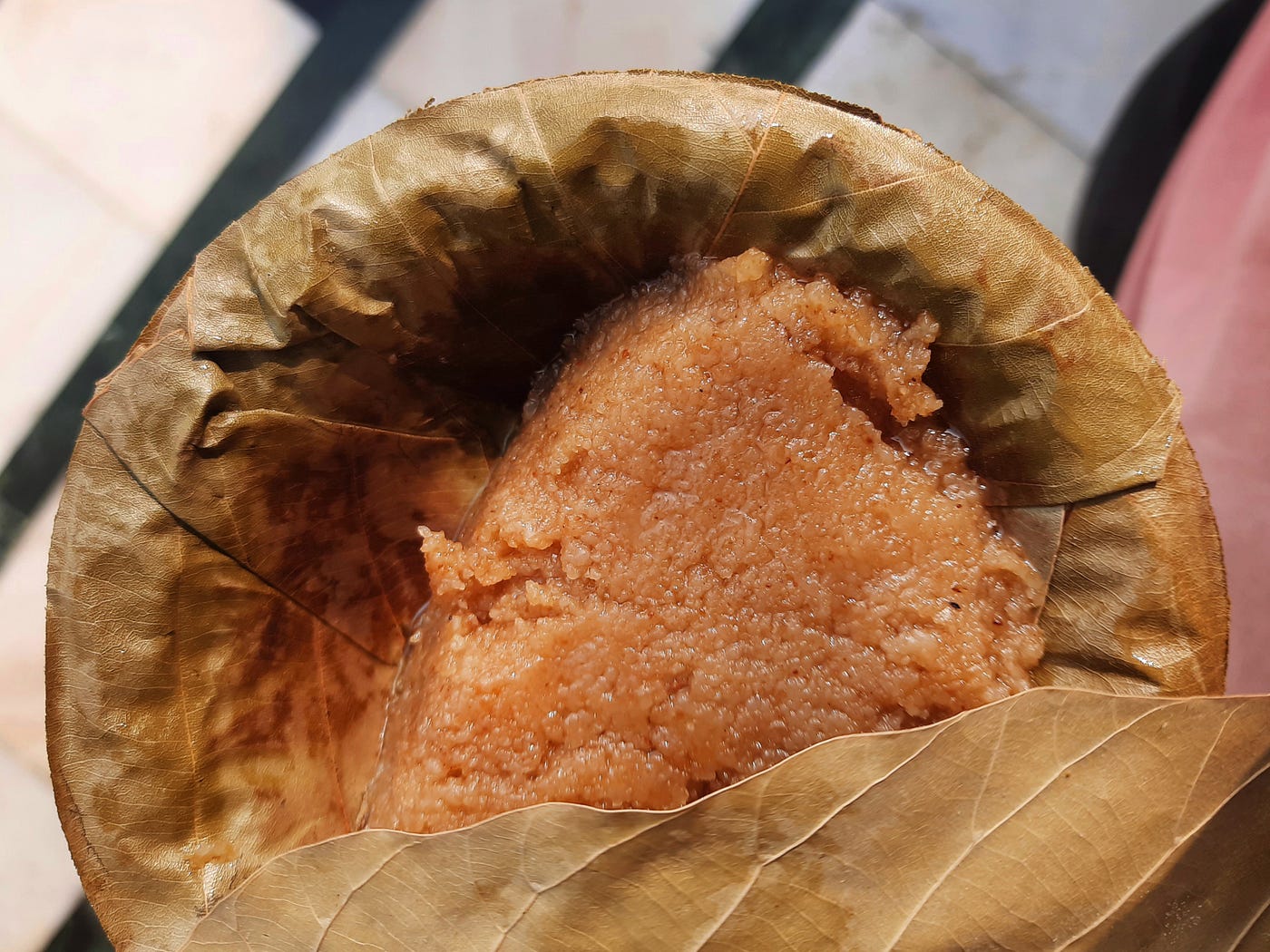
And we treated ourselves with an iconic Rajasthani sweet called Ghewar; the sweetest goodbye to the city!
DAY 8 — The Towering Presence
We boarded an intercity express train and reached Chittorgarh in about two hours. The town of Chittorgarh had towering presence and shadow of a fort that instantly caught us off-guard. Here, we didn’t rely on technology. Rather, we interacted with the locals and got to know about the life in the town.
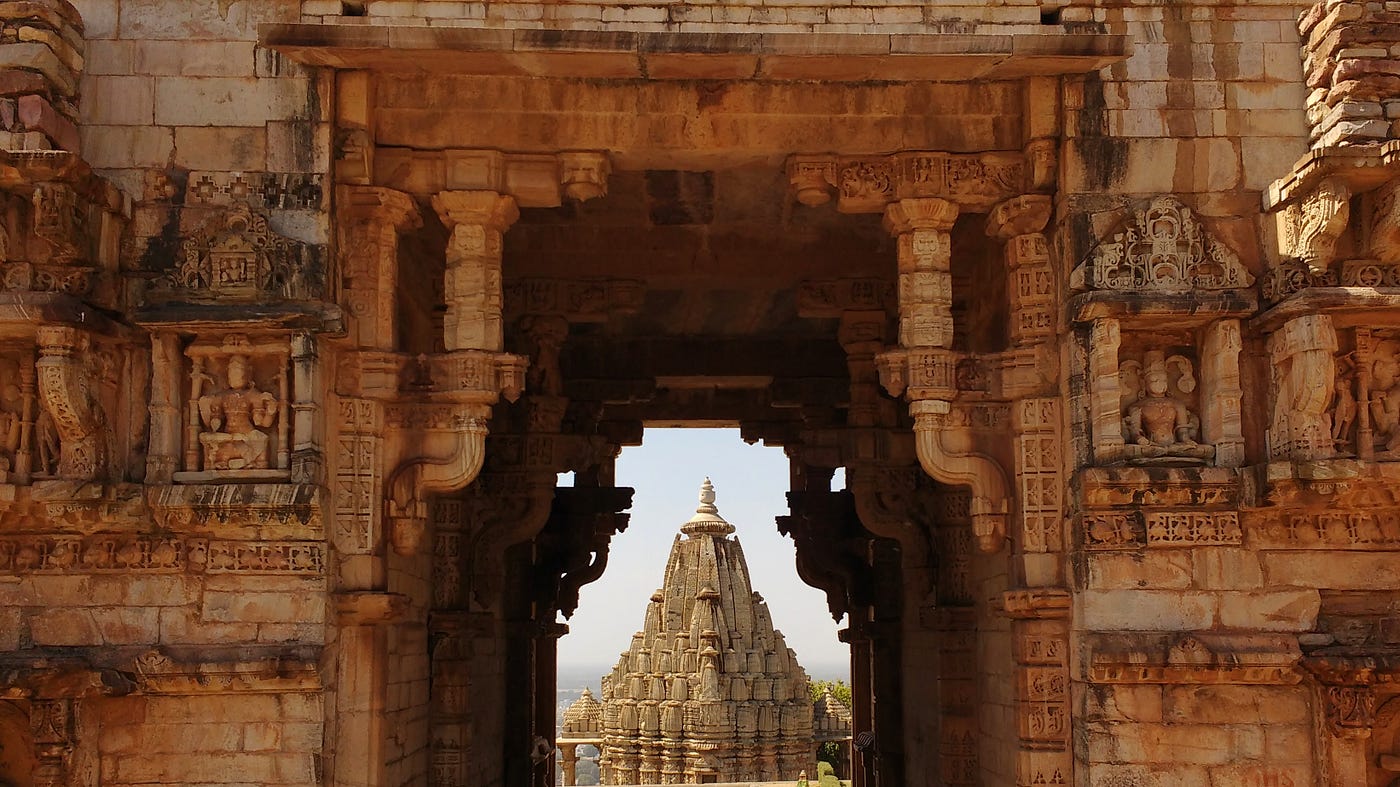
The Temple in Chittorgarh Fort | Photo by Author
Throughout the day, we were transported us into the pages of history .To save time and energy, we hired an auto that would take us around the vast fort. It cost us merely 600 INR (6.32 USD), for roughly four hours.
Every structure, every monument, every carving, every stone whispered the spirit of the Rajput dynasty (who dominated the region from the 7th century to the 20th century). But there was a melancholic feeling about the fort being unable to move on from its glorious past because the tales of valour kept echoing…
That night, we dined at a local restaurant recommended by the auto-driver.
DAY 9 and 10 — The City of Departure
Our homebound train was scheduled to depart from Jaipur. Hence, we returned to where we had begun our trip. Jaipur felt comforting now that we had become somewhat familiar with its rhythm, its streets, and the hostel we had stayed in before.
Before leaving, we quickly made a pit stop at one of the oldest sweet shops in Jaipur. I packed boxes of Ghewar. Meanwhile, I even managed to watch a film at a royal cinema theatre called Golcha.

The Golcha Cinema Theatre | Photo by Author
The not-so-rollercoaster trip, initiated by my childhood friend felt like a cinematic sojourn in itself. If memory serves me right, he had been inspired by a travelogue written by a European backpacker.
And we returned home, not with souvenirs and stories, but with the newfound confidence to set out on another trip.
A Memory I Will Always Cherish
In 2016, the round trip including accommodation, food, travel, and miscellaneous expenses cost us 7500 INR (78.99 USD) per head.
We opted for public transport and walked wherever it was possible. We opted for local restaurants and street-side eateries; except for one time in Jaisalmer.

The View from Indian Railways | Photo by Author
Sometimes, less really is more because I realized luxury or comfort can take a backseat. A hostel can suffice the need which needs little expense, and that can open the door to stories from across the world.
We chose to keep it simple. Yes, we didn’t cover or explore everything. That leaves a chance to visit it again, isn’t it? But, I found immense joy in whatever little we explored (rather, achieved).
I don’t even know if all of it can be defined as “backpacking,” but it’s indeed a good label so why not?

My Friend | Photo by Author
Yes, we were labeled irresponsible by a few people and relatives because we had bunked college. But, it didn’t matter for us. Maybe the reason the trip still feels fresh is that it was my first backpacking experience (simple, right?).
Today, I have immense gratitude for my childhood friend even though we have parted ways. It’s through him, I discovered backpacking.
Indeed, a memory I will always cherish.
© Ninad Kulkarni — June 2026 — This article may not be reproduced in its entirety without permission. A link to this URL, instead, would be appreciated.
[embed]Write for True Travel Tales Submission Guidelinesmedium.com
메타데이터
- post_id
- b3ca37639c8f
- slug
- first-backpacking-trip-to-rajasthan-b3ca37639c8f
- url
- https://medium.com/true-travel-tales/first-backpacking-trip-to-rajasthan-b3ca37639c8f
- canonical_url
- https://medium.com/true-travel-tales/first-backpacking-trip-to-rajasthan-b3ca37639c8f
- author_url
- https://medium.com/@myselfninad
- status
- ok
- fetched_at
- 2026-06-10 18:55:46