AI in Real Estate: How Smart Technology Is Redefining Property Buying, Selling & Investing
Buying, selling, or investing in property has always involved time, uncertainty, and heavy decision-making. Today, that is changing fast…
AI in Real Estate: How Smart Technology Is Redefining Property Buying, Selling & Investing
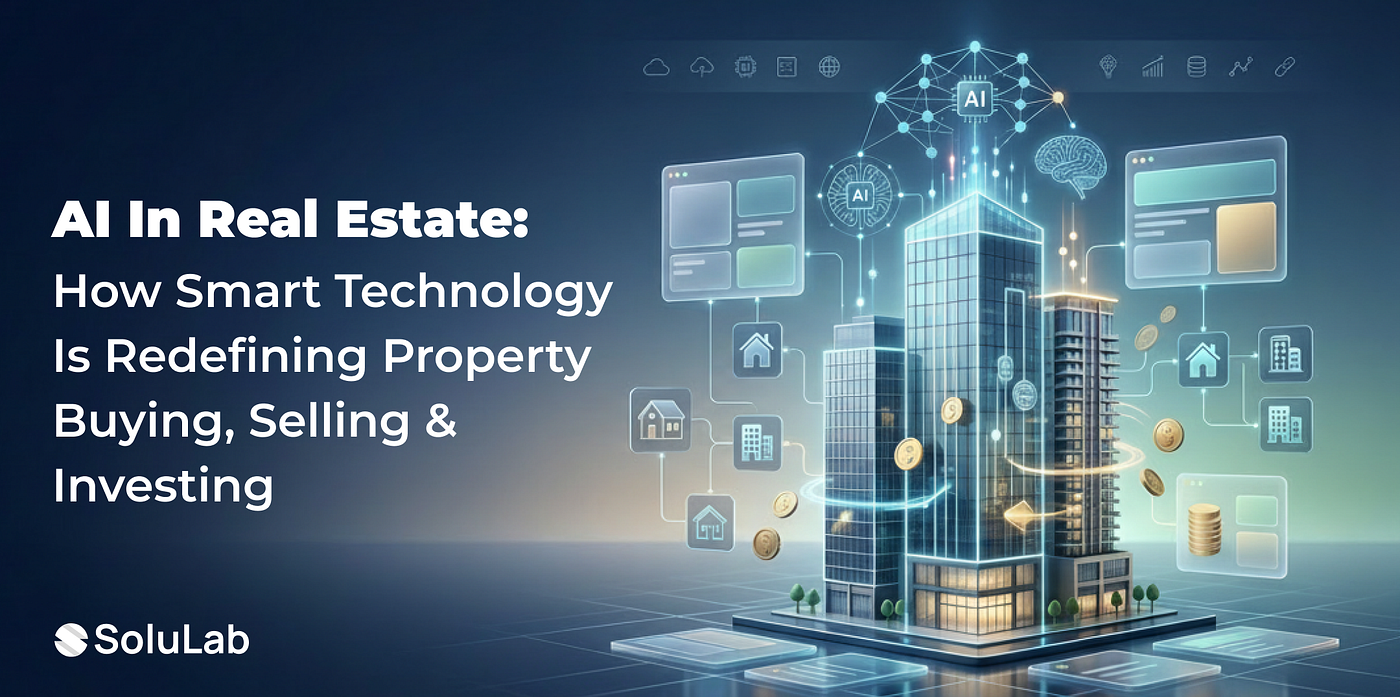
Buying, selling, or investing in property has always involved time, uncertainty, and heavy decision-making. Today, that is changing fast. AI in real estate is bringing data-driven clarity to an industry that once relied heavily on intuition and manual effort.
From instant property valuations and personalized recommendations to automated lead generation and predictive market insights, smart technology is improving how decisions are made.
Buyers can discover relevant properties faster, sellers can price more accurately, and investors can identify high-return opportunities with confidence. At the same time, businesses are streamlining operations, reducing costs, and improving customer experiences.
As competition increases and expectations evolve, AI is no longer an advantage; it is becoming a necessity for staying relevant in modern real estate. Continue reading this blog to learn everything you need to know about AI in real estate.
What Is AI in Real Estate?
AI in real estate refers to the use of intelligent systems and data-driven algorithms to automate, analyze, and improve property-related decisions. According to McKinsey, gen AI could generate $110 billion to $180 billion or more in value for the real estate industry.
It helps businesses streamline operations, enhance customer experiences, and make accurate predictions across buying, selling, and property management processes.
Here are the core technologies used in AI in real estate:
- Machine Learning: Learns patterns from data for predictions
- Predictive Analytics: Forecasts prices, demand, and investment trends
- Computer Vision: Analyzes property images, videos, and layouts
- Generative AI: Creates listings, content, and virtual property tours
Why Real Estate Needed AI in the First Place?
Real estate has long relied on traditional processes that limit speed, accuracy, and scalability, creating inefficiencies that impact decision-making, customer experience, and overall business growth in an increasingly competitive market.
- Slow and Manual Processes: Traditional real estate workflows involved paperwork, manual listings, and human coordination, leading to delays, errors, and inefficiencies in transactions, property management, and customer interactions.
- Inaccurate Property Valuations: Property pricing often depended on subjective assessments and limited data, resulting in inconsistent valuations, missed opportunities, and financial risks for buyers, sellers, and investors.
- Poor Lead Conversion: Real estate businesses struggled to identify high-intent buyers, relying on manual follow-ups and generic marketing, which reduced conversion rates and led to lost sales opportunities.
- Limited Data Utilization: Large volumes of property and market data remained underutilized due to a lack of advanced tools, preventing businesses from extracting insights needed for better decision-making and strategic planning.
AI Integration in Real Estate: Specific Areas Businesses Look for
AI integration in real estate is helping businesses streamline operations, improve decision-making, and deliver better customer experiences by applying data-driven intelligence across key areas of property management, investment, and transactions.
- Predictive Analytics and Market Trends: AI analyzes historical and real-time data to forecast property demand, pricing shifts, and investment hotspots, enabling businesses to make proactive decisions and stay ahead of market changes.
- Real Estate Investment: AI-driven platforms evaluate large datasets, risk factors, and market conditions to identify profitable investment opportunities, helping investors maximize returns while minimizing uncertainty and manual research efforts.
- Property Valuation and Pricing: AI models use location data, comparable sales, and market trends to deliver accurate property valuations, reducing pricing errors and helping buyers and sellers make informed financial decisions.
- Virtual Tours and Augmented Reality: AI-powered virtual tours and AR experiences allow buyers to explore properties remotely, improving engagement, reducing physical visits, and accelerating decision-making in the buying process.
- Automated Contract and Documentation: AI automates document processing, contract verification, and compliance checks, reducing paperwork, minimizing human errors, and speeding up real estate transactions efficiently.
Business Impact of AI in Real Estate
AI technology is transforming real estate by improving speed, accuracy, and efficiency across operations, helping businesses make smarter decisions, reduce costs, and deliver more personalized and seamless customer experiences at scale.
- Faster Decision-Making: AI analyzes real-time market data, user behavior, and historical trends to deliver actionable insights, enabling real estate professionals to make quicker, data-driven decisions with reduced uncertainty and higher confidence.
- Increased Conversion Rates: AI-powered lead scoring and personalized property recommendations help identify high-intent buyers, allowing businesses to focus efforts effectively, improve engagement, and convert prospects into customers more efficiently.
- Reduced Operational Costs: By automating tasks like documentation, customer support, and property management, AI reduces manual workload, minimizes errors, and lowers operational expenses while improving overall process efficiency.
- Better Customer Experience: AI enhances user experience through personalized property suggestions, instant chatbot support, and seamless interactions, helping buyers and sellers navigate the real estate journey with greater ease and satisfaction.
Future Trends of AI in Real Estate
AI is shaping the future of real estate through automation, intelligence, and data-driven innovation, helping businesses improve decision-making, enhance customer experiences, and get scalable growth opportunities across the property ecosystem.
- Generative AI in Property Marketing: AI creates property descriptions, virtual staging, and personalized campaigns, helping real estate businesses attract the right buyers, improve engagement, and reduce manual effort in listing creation and marketing processes.
- AI-Powered Investment Platforms: AI analyzes market trends, economic indicators, and property data to identify high-return opportunities, enabling investors to make faster, data-backed decisions while minimizing risks and improving portfolio performance.
- Smart Buildings and Automation: AI-powered systems manage energy, security, and maintenance through sensors and automation, reducing operational costs, improving efficiency, and enhancing tenant comfort with responsive and intelligent building environments.
- AI + Blockchain in Real Estate: Combining AI with blockchain ensures secure, transparent transactions, automates verification processes, and enables innovations like fractional ownership, improving trust and efficiency in real estate investments.
Final Thoughts
From accurate pricing and smarter investments to personalized customer experiences, AI is bringing clarity and speed to an otherwise complex industry.
With AI in businesses, companies are achieving greater efficiency, better conversions, and more informed decision-making. Additionally, it is important to approach AI strategically, focusing on real use cases rather than hype.
As competition increases, companies that integrate AI into their core operations will stand out, adapt faster, and achieve long-term growth in an increasingly data-driven real estate market.
메타데이터
- post_id
- b3e282273992
- slug
- ai-in-real-estate-how-smart-technology-is-redefining-property-buying-selling-investing-b3e282273992
- url
- https://medium.com/@solulab/ai-in-real-estate-how-smart-technology-is-redefining-property-buying-selling-investing-b3e282273992
- canonical_url
- https://medium.com/@solulab/ai-in-real-estate-how-smart-technology-is-redefining-property-buying-selling-investing-b3e282273992
- author_url
- https://medium.com/@solulab
- status
- ok
- fetched_at
- 2026-06-15 22:55:51