The Internet Made Every Lecture Free. Discipline Got More Expensive.
As an algorithm engineer, I do not think feeds erase knowledge gaps. I think they quietly widen them.
The Internet Made Every Lecture Free. Discipline Got More Expensive.
As an algorithm engineer, I do not think feeds erase knowledge gaps. I think they quietly widen them.
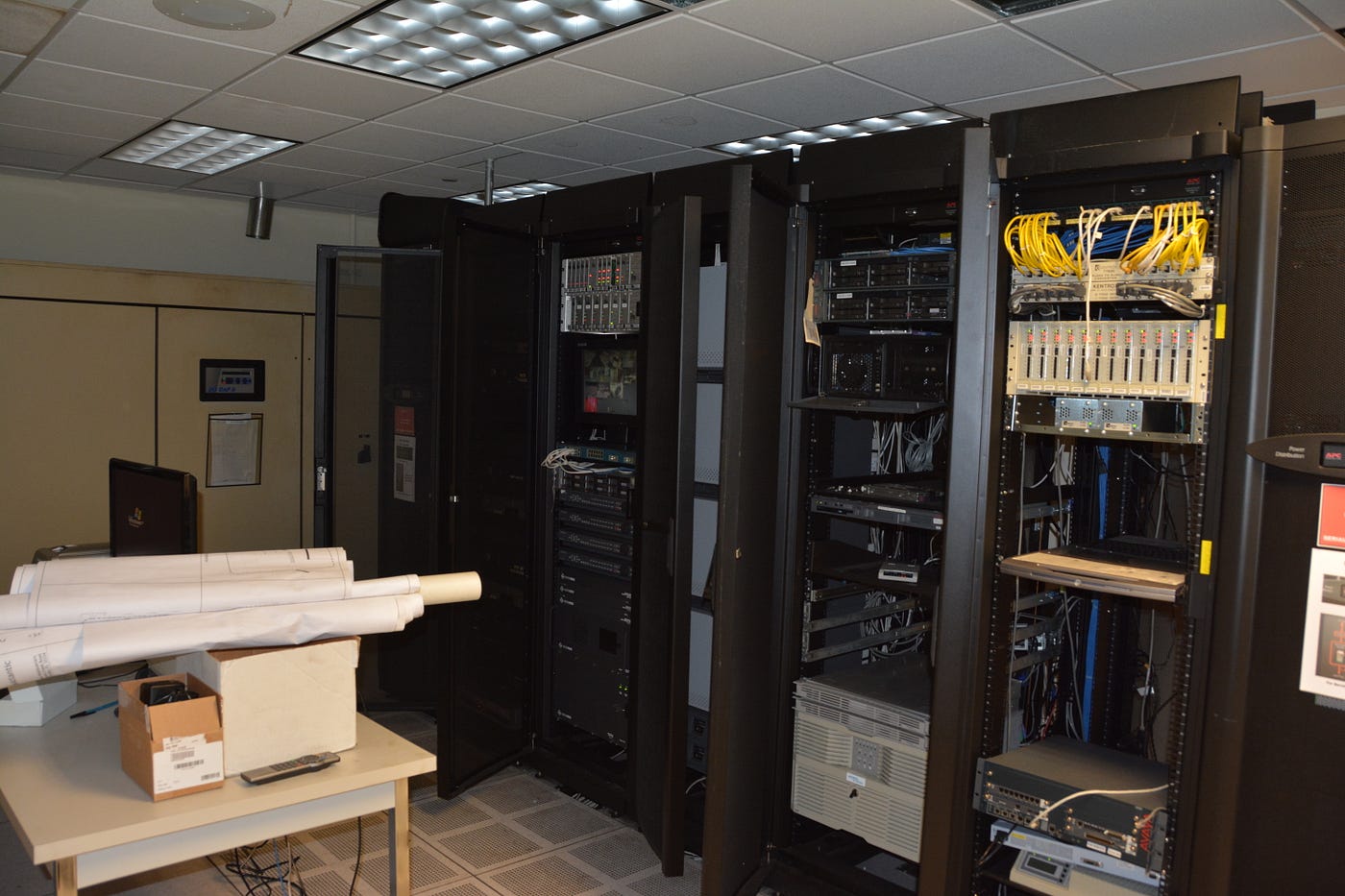
Photo by Swello on Unsplash.
Every lecture is free. Every paper is public. The source code behind most of the software running your life is one search away.
Almost nobody breaks through anyway.
That should feel stranger than it does. We keep repeating the same lazy explanation: most people just do not want to work hard. Sometimes that is true. But it misses the more interesting part. The internet did remove one old barrier to learning. It also built a newer, quieter one.
The old barrier was access. The new barrier is filtering, practice, emotional tolerance, and proximity to people who know things that were never written down.
This matters because many engineers still talk about the internet as if it were a giant equalizer. Put the best lectures, papers, repositories, and postmortems online, and the motivated people will rise. I used to believe a softer version of this. Now I think it is incomplete.
The top material is available. The hard part is wanting the real version of it.
1. Lower Access Cost Raised The Cost Of Filtering
Take the field I know best. A large part of algorithm work is brutally simple to describe: we decide what information gets fed to users.
People outside the field often imagine recommendation systems as discovery engines. The machine learns your interests, wanders the world on your behalf, and brings back something you did not know you needed.
That is the romantic version.
In most commercial systems, the objective function is much less noble. The system optimizes for click-through rate, watch time, retention, conversion, or some blended metric that can be measured quickly. It is not asking what would change how you think five years from now. It is asking what will keep your thumb from leaving the screen in the next five seconds.
Once this is visible, the internet looks less like a universal library and more like a competition among hooks.
Suppose you want to learn distributed systems. Twenty years ago, you might have had to find a serious textbook and fight through it. The access problem was real. It was also a useful forcing function. The path was narrow, but the material density was high.
Now you type “distributed systems” into a search box or a video site. What comes back first?
Maybe a training ad promising you can become a high-paid architect in 30 days. Maybe a creator explaining consensus with a story so simplified that all the failure modes disappear. Maybe a forum fight about which language is better for backend work. Somewhere below all of that, quiet and poorly packaged, sit the original papers on Paxos, the Google File System, MapReduce, Spanner, and the other documents that actually shaped the field.
The needle exists. The ocean got bigger.

Illustration generated by Codex for this article.
As data people, we have a name for this problem: signal-to-noise ratio. The modern internet did not merely increase the amount of signal. It increased the noise so aggressively that the ability to filter became the scarce skill.
My writing pipeline reads roughly two thousand candidate articles and turns a little over 4% of them into anything worth publishing. The other 96% are not all garbage. Many are perfectly reasonable ideas. They just do not survive triage: too thin, too derivative, too far from the piece they wanted to become.
Running that pipeline changed how I think about learning. Raw material is not the bottleneck. A useful filter is.
And a filter is not neutral. It is a set of priorities pretending to be a machine.
Free information did not remove the gate. It moved the gate from access to judgment.
2. Knowledge Is A Compressed File. Experience Is The Password.
The next trap is more subtle: reading an idea and owning the idea look similar from the outside.
They are not similar from the inside.
Engineers are especially vulnerable to this because we collect artifacts. We bookmark papers, star repositories, save conference talks, clip architecture diagrams, and build private graveyards of “things I will read properly later.” The behavior feels productive because it leaves evidence behind.
But saving a file is not the same as acquiring the judgment inside it.
Most high-level ideas are compressed experience. “Design for failure.” “Make the system robust.” “Prefer simple architecture.” “Measure before optimizing.” These are good sentences. They are also useless until they have been decompressed by contact with reality.
You can read a clean paragraph about cache invalidation and nod at every line. Nodding is not skill. The skill starts forming when a stale cache serves the wrong data, a dashboard looks normal, users are already affected, and you have to trace the path backward under pressure.
The paragraph and the incident contain the same principle. Only one of them leaves a mark.
I see the same gap in code review. Someone can write the correct principle in a pull request description and still ship code that violates it. They know the vocabulary. They can cite the pattern. But the diff shows whether the idea has become judgment.
There is a reason old ugly code often survives longer than elegant rewrites. Some of those strange branches, fallback paths, and defensive checks are not stupidity. They are scar tissue from real traffic, dirty data, partial outages, weird customers, and long-tail cases no architecture diagram bothered to mention.
A younger engineer can look at that code and see only mess. A more experienced engineer asks a slower question: what pain made this shape necessary?
This is why top-level thinking travels so badly online. The internet can hand you the conclusion. It cannot hand you the cost that produced the conclusion.
You can watch someone else’s workout and understand the movement. Your muscles still have not done it.
3. Your Brain Wants Cheap Resolution
There is a biological reason people choose the compressed version even when better material is available.
In 1984, psychologists Susan Fiske and Shelley Taylor described human cognition as a “cognitive miser.” Given a choice, the mind tends to reach for the cheapest available shortcut instead of the effortful, accurate path. This is not a moral failure. It is resource allocation.
Deep work is expensive. Reading a hard paper is expensive. Holding a half-understood idea in your head without prematurely simplifying it is expensive.
Feeds are designed to offer the cheap option forever.
Short. Passive. Emotionally legible. Immediately resolving. No unresolved state. No scratchpad. No need to admit confusion for 40 minutes before the idea starts to move.
Many of the concepts that actually improve an engineer are anti-instinctive. Bayesian thinking asks you to update beliefs instead of defending the first story that felt right. Delayed gratification asks you to prefer a future return over a visible reward now. Systems thinking asks you to stop blaming one actor and examine the feedback loop.
None of this feels good in the moment.
When you are tired after work, the path of least resistance is not The Art of Computer Programming. It is the feed. I know this because I have watched myself make that choice before the part of my brain that knows better has even had time to object.
That is the real cruelty of infinite free knowledge. The good material is not merely available. It is sitting beside a machine that is better than you at finding your weakest impulse.
4. Knowing What To Do Is Not The Same As Paying The Emotional Cost
Most people who fail to improve are not missing the recipe.
If you want to get better technically, the path is not secret. Read source code. Build a small version yourself. Write in public. Join a real project. Let strangers criticize your work. Keep going after the first version is bad.
The problem: every step has an emotional bill attached.
Reading source code makes you feel slow. Building from scratch exposes how much the tutorial hid from you. Publishing a small project creates a visible record of your current limits. Asking for review means someone might point directly at the part you hoped nobody would notice.
So people collect instead. They save the paper, star the repository, screenshot the thread, and tell themselves they are preparing.
Preparation feels like progress without asking for humiliation.
Kahneman and Tversky’s work on loss aversion helps explain why this trade feels so lopsided. Losses hurt more than equivalent gains feel good. In learning terms, the embarrassment of being visibly bad today can outweigh the abstract future benefit of becoming competent later.
The internet makes this worse by raising the comparison ceiling. Open any feed and you see people shipping polished products, earning impossible salaries, publishing clean postmortems, and compressing years of ugly work into one confident paragraph.
Then you spend a night reading source code and understand two functions.
The contrast is brutal. It can make a normal learning curve feel like personal failure.
But the boring truth is still the truth: breakthrough usually looks like a long stretch with weak feedback. You keep showing up before the work gives you a reason to feel good about it.
5. The Most Valuable Knowledge Still Moves In Rooms
The internet made explicit knowledge abundant. It did not make tacit knowledge equally available.
The philosopher Michael Polanyi wrote in 1966 that “we know more than we can tell.” That line becomes more obvious the longer you work inside real systems.
Which vendor’s promise fails in production. Which architectural choice looks clean until the data distribution shifts. Which teammate is quiet but right. Which market is becoming real before everyone has the vocabulary for it.
This kind of knowledge rarely arrives as a public article. It lives in a review comment, a private repository, a Slack message, a hallway conversation, a group of people arguing over a real constraint.
Personalized feeds can make this worse. In 2011, Eli Pariser popularized the phrase “filter bubble” to describe how personalization hides not only content you disagree with, but also content you would never think to search for. The system keeps learning from your previous choices. You skipped one hard thing, so it shows you fewer hard things. You clicked one low-density explainer, so it finds ten more.
The bubble is not built by the algorithm alone. It is co-authored by your own repeated choices.
That is why two people can sit in front of the same internet and live in different worlds. One sees papers, code, arguments, bug reports, and messy projects. The other sees summaries, reactions, drama, and motivation. The access layer is identical. The cognitive environment is not.
6. So What Should An Engineer Do?
I do not think the answer is to romanticize the past. The internet is still an extraordinary tool. I would not trade today’s access for the old scarcity.
But using the tool well requires a different posture.
First, learn with an aggressively specific problem in hand. “Improve myself” is too vague. “Reduce the latency of this vector search path” is usable. A concrete problem turns reading into search, and search gives your filter a job.
Second, touch the thing. If it is technical, run the demo, reproduce the bug, read the implementation, write the smallest version you can. A hundred architecture diagrams are weaker than one ugly prototype that fails in your hands.
Third, use search more than feeds. Search begins with your intent. A feed begins with someone else’s optimization function. The difference is not philosophical. It changes who owns your attention.
Fourth, get near people doing real work. Not performance. Work. A serious project, a codebase with users, a maintainer discussion, a team arguing about trade-offs. Even watching the argument can teach you more tacit knowledge than another polished thread.
Fifth, keep your hands warm. Write a little code. Read something slightly above your level. Think through one hard problem without instantly outsourcing the discomfort. Do not wait for a dramatic breakthrough. Most breakthroughs are just accumulated contact with reality finally becoming visible.
The gate is open. The lectures are free. The papers are public.
Mastery was never cheap.
References
- Susan T. Fiske and Shelley E. Taylor, Social Cognition (Addison-Wesley, 1984) — origin of the “cognitive miser” model
- Kahneman & Tversky, “Prospect Theory: An Analysis of Decision under Risk,” Econometrica, 1979 — foundational loss-aversion work
- Eli Pariser, The Filter Bubble: What the Internet Is Hiding from You (Penguin Press, 2011)
- Michael Polanyi, The Tacit Dimension (Doubleday, 1966; University of Chicago Press reprint)
메타데이터
- post_id
- b404644c56af
- slug
- the-internet-made-every-lecture-free-discipline-got-more-expensive-b404644c56af
- url
- https://medium.com/programmers-career/the-internet-made-every-lecture-free-discipline-got-more-expensive-b404644c56af
- canonical_url
- https://medium.com/programmers-career/the-internet-made-every-lecture-free-discipline-got-more-expensive-b404644c56af
- author_url
- https://medium.com/@wesley-wei
- status
- ok
- fetched_at
- 2026-07-14 08:44:00