The Mirror Has Two Faces — One of Them Is Pixels
The Mirror Has Two Faces — One of Them Is Pixels
A virtual identity that feels more real than your reflection is not liberation — it might be the most elegant cage ever built

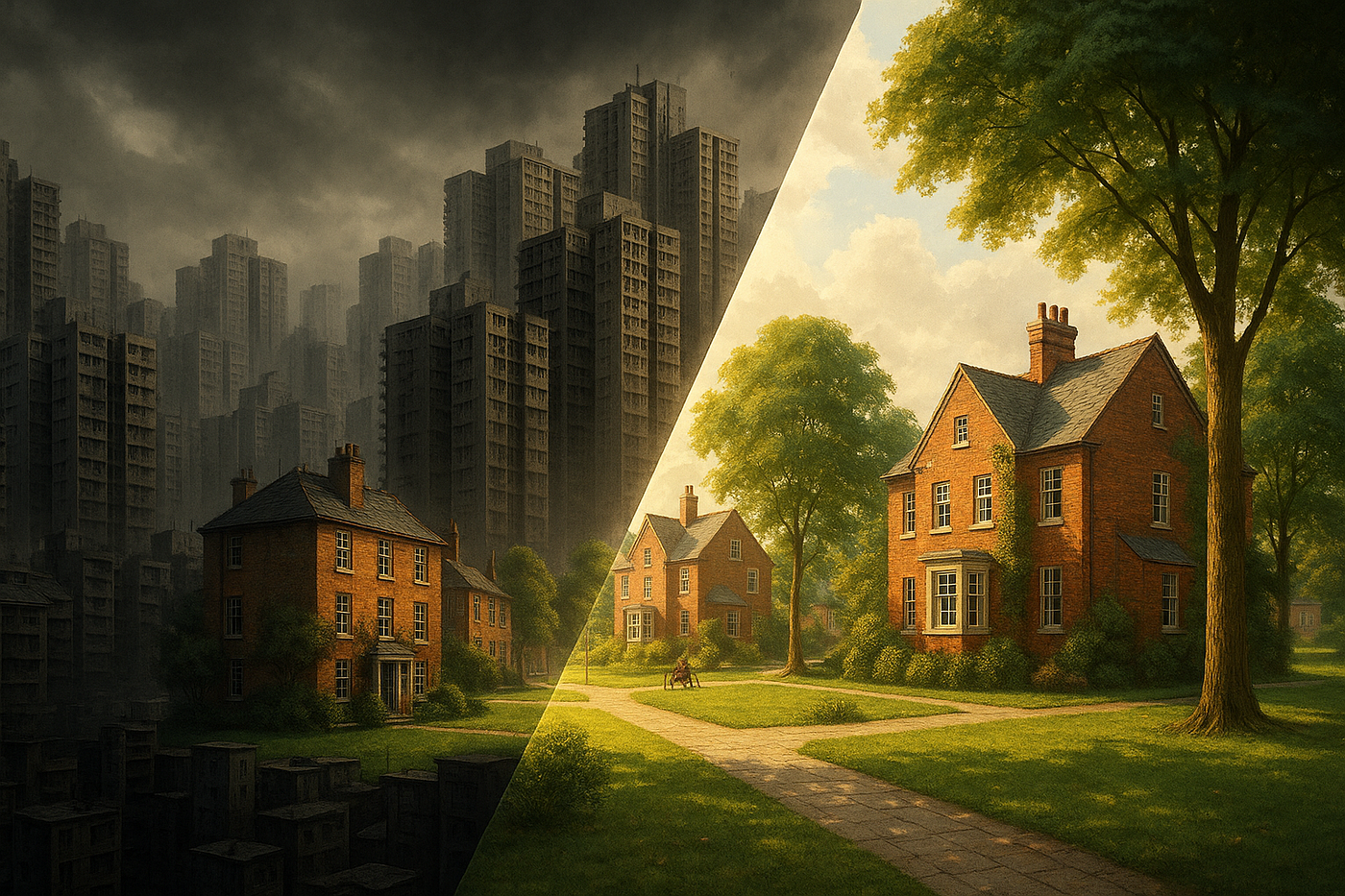
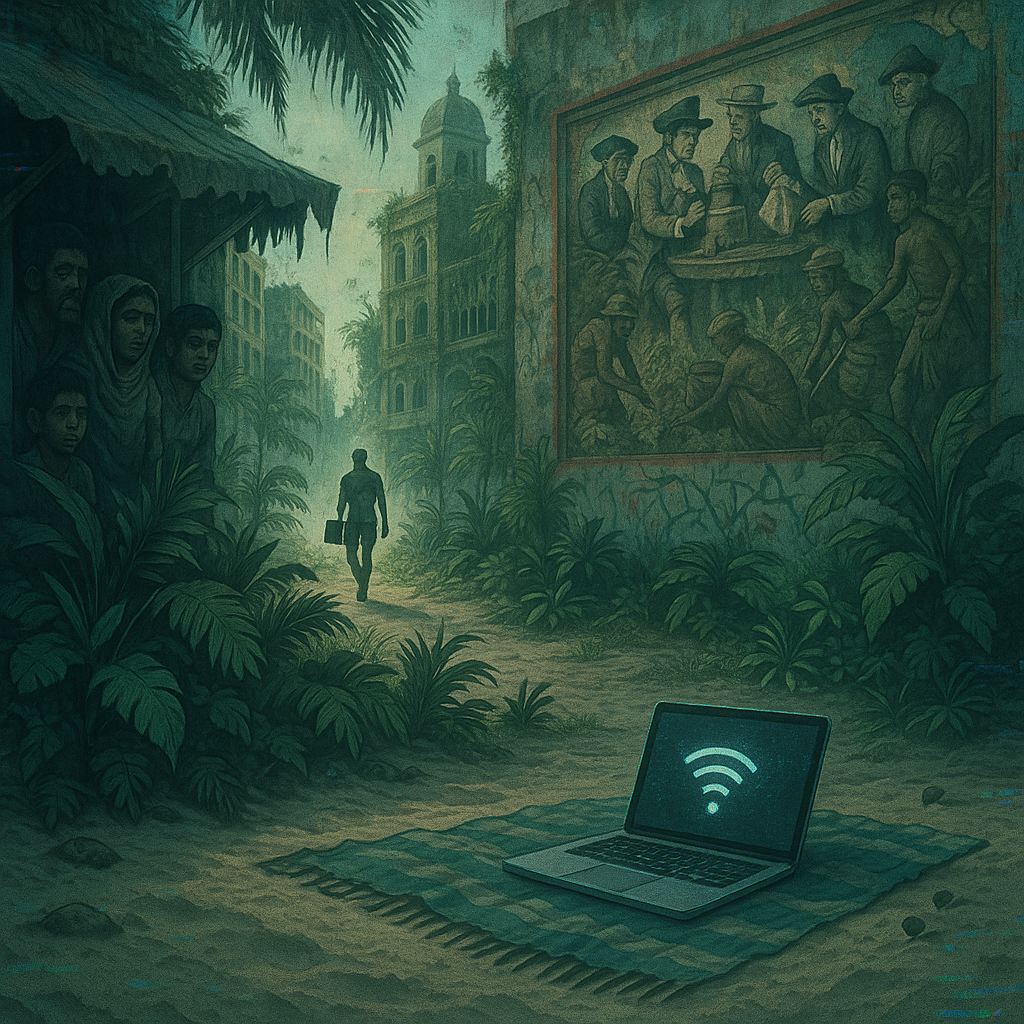
image created by author using image-1
There is a moment, familiar to thousands of VR users, that nobody talks about in the promotional material. The headset comes off. The hand reaches up. And the face that greets them in the bathroom mirror feels, somehow, like the wrong one.
That moment is not a glitch. It is the system working exactly as designed.
The Digital Self Is Already Rewriting Human Behaviour
In 1971, Philip Zimbardo demonstrated how powerfully a costume could reshape behaviour. Decades later, researchers Nick Yee and Jeremy Bailenson formalised what happens when that costume becomes a digital body. Their landmark work on the Proteus Effect revealed that users who inhabit taller, more conventionally attractive avatars display measurably increased confidence and more assertive behaviour — not just inside virtual environments, but carried forward into real-world interactions.
The avatar, in other words, is not a mask. It is a rehearsal.
Reddit communities on r/VRChat document this daily. Users describe overcoming crippling social anxiety while wearing a “cool” or aesthetically refined avatar, only to experience what many call a confidence crash the moment the headset comes off and their physical reflection reasserts itself. The virtual self has become the reference point. The physical self, the deviation.
“The headset comes off. The hand reaches up. And the face that greets them in the bathroom mirror feels, somehow, like the wrong one.”
When Filters Became Three-Dimensional, the Damage Deepened
Snapchat Dysmorphia — the phenomenon where patients arrive at plastic surgeons’ offices clutching filtered selfies as surgical blueprints — was already concerning clinicians before the Metaverse existed. Research published in JAMA Facial Plastic Surgery identified the condition as a distinct psychological pattern. Then platforms like VRChat, Zepeto, and Meta Horizon took the 2D filter and gave it three dimensions, interactivity, and social stakes.
The result is Metaverse Dysmorphia: a state where the avatar’s impossible proportions — luminous skin, improbably large eyes, waists that defy skeletal geometry — become the standard against which real bodies are judged and found irredeemably lacking.
On r/PlasticSurgery, users now arrive with screenshots of their Bitmoji avatars as facial contouring references. The surgery is real. The inspiration is a cartoon.
Key Insight: The Metaverse did not invent beauty anxiety. It industrialised it, made it interactive, and sold it back at scale.
Beauty in the Metaverse Has a Price Tag and a Postcode
Here is where the story takes a turn that should make anyone uncomfortable.
Virtual beauty is not democratised. It is monetised. Gucci and Balenciaga now sell limited-edition digital skins, creating an aesthetic hierarchy that mirrors, with depressing precision, the class structures of the physical world. On Roblox, users in “default” or free skins report social marginalisation and bullying — a dynamic that Vogue Business has tracked as luxury brands increasingly colonise digital spaces.
The aspiration to look a certain way online now requires disposable income. Those without it are visibly marked as outsiders.
Meanwhile, the “skinny-default” architecture embedded in most avatar systems quietly enforces its own orthodoxy. Most platforms are built on a single slender base mesh. Body diversity sliders exist, but as Psychology Today has noted, they tend to add uniform bulk rather than authentic representation. The default body, even in a world of infinite digital possibility, remains thin.
TL;DR — The Metaverse promised freedom of identity. The fine print runs to several pages.
The Uncanny Valley Sits Right Next to the Beauty Standard
As avatar fidelity increases, something strange happens. Hyper-realistic digital faces begin to disturb rather than reassure — the uncanny valley effect, documented extensively in VR research, triggers an instinctive unease when something looks almost-but-not-quite human. The response from many communities has been to retreat toward stylised, anime-inspired aesthetics. Problem solved, except these stylised forms carry their own impossible proportions, and users internalise those too.
Haptic technology is accelerating the confusion. Users wearing haptic vests report phantom sense — feeling sensation on their avatar’s body even without hardware stimulation. Research published in Nature confirms that physical touch experienced on a virtual body can begin to reshape the brain’s own body schema. When the avatar’s proportions become what the nervous system expects, real flesh starts to feel like an imperfect draft.
The Metaverse Is Both Sanctuary and Pressure for Marginalised Communities
None of this is simple, and intellectual honesty demands the full picture.
For trans users, r/trans consistently identifies VRChat as a genuinely transformative tool — a space for gender voice training, for inhabiting an identity that matches internal experience before any physical transition is possible or desired. For neurodivergent users and those with social anxiety, the avatar-mediated distance can make connection possible where it was previously overwhelming.
The liberation is real. It deserves acknowledgement. But it arrives wrapped in fresh constraints: hyper-feminine or hyper-masculine avatar ideals that are, themselves, constructed by platforms, brands, and community pressure.
And for Black users, even that qualified freedom has limits. The consistent absence of Type 4 hair textures and accurate darker skin tones from default avatar creators — documented repeatedly on r/Metaverse — forces users into Eurocentric aesthetic defaults or toward paid custom modifications. The digital frontier, it turns out, has the same “white default” problem as the physical world it was supposed to transcend.
The Headset Comes Off, But Something Stays Behind
Here is the open question that was seeded at the beginning of this piece: if the avatar feels more accurate than the body, which one is the self?
The Metaverse, as currently architected, is less a liberation from beauty standards than a replication of them at higher resolution, with commerce baked in and the exit door harder to find. The technology is neutral. The economic incentives behind it are not.
The real challenge is not which avatar people choose. It is whether anyone is paying attention to who benefits when the mirror has two faces — and only one of them is for sale.
Sources
- Yee, N. & Bailenson, J. (2007). The Proteus Effect: The Effect of Transformed Self-Representation on Behavior. Journal of Computer-Mediated Communication. https://academic.oup.com/jcmc/article/12/3/1024/4583105
- Rajanala, S., Maymone, M.B.C. & Vashi, N.A. (2018). Snapchat Dysmorphia. JAMA Facial Plastic Surgery. https://jamanetwork.com/journals/jamafacialplasticsurgery/fullarticle/2688035
- Vogue Business. The Rise of Digital Fashion. https://www.voguebusiness.com/technology/the-rise-of-digital-fashion-metaverse
- Wired. The Challenge of Diversity in Metaverse Avatars. https://www.wired.com/story/metaverse-avatars-diversity-inclusion/
- Frontiers in ICT. Navigating the Uncanny Valley in VR. https://www.frontiersin.org/articles/10.3389/fict.2015.00025/full
- Psychology Today. Body Image in the Metaverse. https://www.psychologytoday.com/us/blog/the-future-brain/202202/body-image-in-the-metaverse
- Nature Scientific Reports. Haptics and the Sense of Embodiment. https://www.nature.com/articles/s41598-020-72208-y
- Glossy. How Beauty Brands are Shaping the Metaverse Aesthetic. https://www.glossy.co/beauty/how-beauty-brands-are-shaping-the-metaverse-aesthetic/
If this was useful, the biggest favor you can do is share it with someone who’d benefit.
Enjoyed this?
Share it, clap, and follow for more. Your support makes all the difference. Get every new article in your inbox — subscribe here. Get an email whenever I publish.

in collaboration with AI
메타데이터
- post_id
- b413fccb99f1
- slug
- the-mirror-has-two-faces-one-of-them-is-pixels-b413fccb99f1
- url
- https://medium.com/perspective-matters/the-mirror-has-two-faces-one-of-them-is-pixels-b413fccb99f1
- canonical_url
- https://medium.com/perspective-matters/the-mirror-has-two-faces-one-of-them-is-pixels-b413fccb99f1
- author_url
- https://medium.com/@lesliecoelho
- status
- ok
- fetched_at
- 2026-06-14 11:28:49