Why Ecommerce Visitors Leave Without Buying
Every ecommerce business wants more visitors. Store owners invest time and money into search engine optimization, social media marketing…
Why Ecommerce Visitors Leave Without Buying

Every ecommerce business wants more visitors. Store owners invest time and money into search engine optimization, social media marketing, email campaigns, and paid advertising to attract potential customers. While these efforts can bring thousands of visitors to a website, many businesses still struggle to generate consistent sales.
The reason is simple. Traffic and conversions are not the same thing.
Many visitors browse products, compare prices, add items to their carts, and then leave without completing a purchase. Understanding why this happens is one of the most important steps toward improving ecommerce conversion rates and generating more revenue from existing traffic.
The Gap Between Traffic and Sales
One of the biggest misconceptions in ecommerce is that more traffic automatically leads to more sales.
A website may receive thousands of visitors every month, but if those visitors encounter obstacles during their shopping journey, conversions remain low.
Businesses that focus on customer experience often outperform competitors that focus only on traffic generation.
In fact, many brands improve their revenue by optimizing their websites and customer journeys rather than increasing their advertising budgets.
Slow Websites Create a Poor First Impression
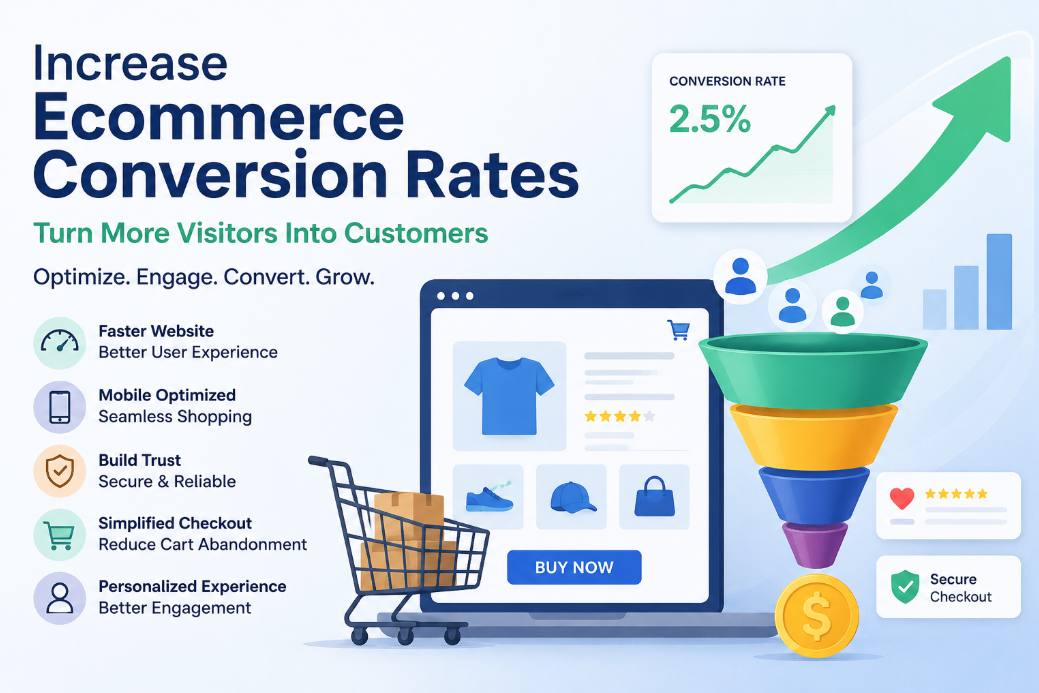
Website speed has a direct impact on customer behavior. Modern shoppers expect websites to load almost instantly. If pages take too long to appear, visitors often lose interest and leave before viewing products.
Slow-loading pages can increase bounce rates, reduce engagement, and negatively affect purchasing decisions.
Fast websites provide a smoother shopping experience and help customers move through the buying process without frustration.
For businesses looking to improve ecommerce conversion rates, website performance should always be a priority.
Lack of Trust Stops Customers from Purchasing
Online shoppers cannot physically see or touch products before making a purchase.
Because of this, trust becomes a critical factor in the decision-making process.
When visitors arrive on an unfamiliar website, they often look for signals that indicate the business is trustworthy.
Some examples include:
- Customer reviews
- Product ratings
- Secure payment badges
- Return and refund policies
- Contact information
When these trust signals are missing, customers may hesitate to complete their purchases.
Building credibility can significantly improve customer confidence and encourage more sales.
Product Pages Often Fail to Answer Customer Questions
Many ecommerce businesses underestimate the importance of product pages. Customers rely on product descriptions, specifications, pricing details, images, and FAQs to make informed purchasing decisions.
When product information is incomplete or unclear, customers may leave the website to look for alternatives.
Detailed and informative product pages help reduce uncertainty and improve the overall shopping experience. Businesses that provide valuable product information often experience stronger engagement and better conversion performance.
Complicated Checkout Processes Lead to Cart Abandonment
The checkout process is one of the most common areas where ecommerce stores lose customers.
Visitors who have already decided to purchase can still abandon their carts if the checkout experience becomes frustrating.
Common problems include:
- Long forms
- Multiple checkout steps
- Forced account creation
- Unexpected shipping costs
- Limited payment options
Every additional obstacle increases the likelihood of cart abandonment.
Simplifying the checkout process can help businesses recover lost sales and improve customer satisfaction.
Mobile Users Expect a Seamless Experience
Mobile commerce continues to grow every year.
Today, a large percentage of online shoppers browse and purchase products using smartphones and tablets.
If a website is difficult to use on mobile devices, customers are likely to leave before completing their purchases.
Mobile-friendly navigation, responsive layouts, and fast-loading pages create a better experience for users and support higher conversion rates.
Businesses that prioritize mobile usability are better positioned to meet customer expectations and capture more sales opportunities.
Customer Experience Is the Real Difference
Successful ecommerce businesses understand that conversions are influenced by the overall customer experience.
Visitors are more likely to purchase when they can easily find products, trust the business, understand the product information, and complete checkout without difficulty.
Small improvements across multiple areas often produce better results than focusing on a single tactic.
This is why many ecommerce brands invest in ongoing optimization and testing.
Final Thoughts
Many ecommerce visitors leave without buying because of issues that can be fixed.
Slow websites, poor mobile experiences, weak trust signals, incomplete product information, and complicated checkout processes all create barriers that prevent customers from completing purchases.
Businesses that focus on removing these barriers often see meaningful improvements in ecommerce conversion rates without needing additional traffic.
Creating a smooth, trustworthy, and customer-focused shopping experience remains one of the most effective ways to turn visitors into customers and drive long-term ecommerce growth.
메타데이터
- post_id
- b4440d888e71
- slug
- why-ecommerce-visitors-leave-without-buying-b4440d888e71
- url
- https://medium.com/@jeeva_87337/why-ecommerce-visitors-leave-without-buying-b4440d888e71
- canonical_url
- https://medium.com/@jeeva_87337/why-ecommerce-visitors-leave-without-buying-b4440d888e71
- author_url
- https://medium.com/@jeeva_87337
- status
- ok
- fetched_at
- 2026-07-30 11:32:22