Mirror Mechanism Systems in Maritime Chokepoints: Understanding Strategic Reversibility
✍️ Apolítik0. Creator of the Palindromic Geopolitical Theory (PGT)
Mirror Mechanism Systems in Maritime Chokepoints: Understanding Strategic Reversibility

Explore real-time maritime activity through MarineTraffic and observe how strategic flows adapt across the world’s most critical chokepoints.
✍️ Apolítik0. Creator of the Palindromic Geopolitical Theory (PGT)
∞ → ← ∞
An Operational Extension of the Palindromic Geopolitical Theory
∞ → ← ∞
Abstract
∞
Strategic maritime chokepoints constitute critical nodes within the global oceanic architecture because of their capacity to concentrate flows of trade, energy, information, and logistical connectivity. However, evidence accumulated during the empirical phase of the Palindromic Geopolitical Theory (PGT) suggests that the effects generated by pressure on these corridors rarely remain confined to the location where they originate. Instead, they tend to propagate across multiple components of the system through processes of adaptation, functional redistribution, and strategic reorganization.
This article develops the concept of Mirror Mechanism Systems (MMS) as an observable dynamic within complex strategic systems. Drawing on a comparative analysis of the world’s principal maritime chokepoints — including the Strait of Hormuz, Bab el-Mandeb, the Suez Canal, the Turkish Straits, the Strait of Gibraltar, the Panama Canal, the Taiwan Strait, the Strait of Malacca, the Cape of Good Hope, the Bering Strait, and the Southern Maritime Complex — it examines how localized disruptions generate distributed responses that emerge across functionally interconnected regions, resources, routes, and networks.
The findings suggest that mirror mechanisms are not simple repetitions of events but systemic processes through which pressure applied to one component generates observable adjustments in other interconnected components of the strategic system. These dynamics are associated with feedback processes, adaptive responses, systemic resilience, network propagation, and structural coupling, collectively contributing to the preservation of functional continuity under evolving conditions of strategic pressure.
The study argues that Mirror Mechanism Systems represent an operational manifestation of the interdependence among the four structural dimensions of the Palindromic Geopolitical Theory — Regions, Resources, Routes, and Networks (ERE). As such, they provide a conceptual foundation for future research on strategic observables, operational variables, and measurement frameworks within the continued methodological development of the theory.
Keywords: Palindromic Geopolitical Theory; Mirror Mechanism Systems; maritime chokepoints; complex strategic systems; strategic adaptation; systemic feedback.
∞ → ← ∞
Introduction
∞
Contemporary strategic systems are characterized by increasingly high levels of interdependence. The expansion of global supply chains, the integration of energy markets, the growth of digital connectivity, and the increasing complexity of logistical networks have progressively reduced the ability of geopolitical phenomena to remain confined within specific geographic spaces. As a result, disruptions originating at a single point in the system frequently generate consequences that extend far beyond their initial location.
Strategic maritime chokepoints provide one of the most suitable environments for observing this behavior. As critical nodes of global circulation, any significant change in their operation has the potential to affect multiple components of the broader strategic architecture. Yet the evidence accumulated during the empirical phase of the Palindromic Geopolitical Theory (PGT) indicates that these effects rarely unfold through simple linear relationships. Instead, they emerge through more complex processes of adaptation, functional redistribution, and strategic reorganization.
Pressure exerted on an energy corridor may reshape financial networks. A logistical disruption can alter trade patterns in regions far removed from the original event. Changes affecting a strategic route may stimulate investment, regulatory adjustments, or operational reconfigurations in locations that are not directly connected to the affected area. These responses suggest the existence of mechanisms through which the system reflects, transforms, or redistributes the effects of an initial disturbance across other functionally interconnected components.
The empirical phase of the PGT, conducted through the comparative study of the Strait of Hormuz, Bab el-Mandeb, the Suez Canal, the Turkish Straits, the Strait of Gibraltar, the Panama Canal, the Taiwan Strait, the Strait of Malacca, the Cape of Good Hope, the Bering Strait, and the Southern Maritime Complex, revealed numerous examples of this behavior. Although each case displayed its own strategic characteristics, comparative analysis identified a common structural pattern: strategic pressure applied to one node consistently generated observable responses in other interconnected nodes, routes, resources, or networks belonging to the same strategic system.
This phenomenon can be interpreted as the manifestation of Mirror Mechanism Systems (MMS) within complex strategic systems. The term is not used here to describe perfect symmetry or the exact replication of events. Rather, it refers to the emergence of functional responses in components other than those initially affected, arising from the structural interdependence that characterizes the system itself.
From the perspective of the Palindromic Geopolitical Theory, these mechanisms are particularly significant because they reveal how the four structural dimensions of Regions, Resources, Routes, and Networks (ERE) interact under conditions of strategic pressure. The system’s response does not necessarily emerge where the disturbance originates. Instead, it frequently appears in other components capable of absorbing pressure, redistributing functions, or preserving operational continuity.
These dynamics exhibit important similarities to phenomena widely studied within complexity science, including feedback processes, structural coupling, network propagation, adaptive resilience, and emergence. The purpose of this article, however, is not to mechanically transfer these concepts into the geopolitical domain. Rather, it seeks to examine how the dynamics observed across strategic maritime chokepoints can be understood as concrete manifestations of Mirror Mechanism Systems operating within real strategic environments.
Accordingly, this study develops a conceptual approach to Mirror Mechanism Systems based on the evidence accumulated throughout the empirical phase of the Palindromic Geopolitical Theory. More specifically, it examines how localized disruptions generate distributed responses, how these responses contribute to preserving the system’s functional continuity, and what implications they hold for understanding strategic power in environments characterized by growing interdependence and continuous adaptation.
Far from representing an exceptional phenomenon, Mirror Mechanism Systems may constitute one of the most common ways through which complex strategic systems respond to sustained pressure. Understanding their operation is therefore essential not only for interpreting the dynamics of maritime chokepoints but also for explaining the evolution of increasingly interconnected strategic architectures whose stability depends on continuous processes of adaptation and systemic reconfiguration.
∞ → ← ∞
1. From Local Disruption to Systemic Response
∞
One of the most widespread assumptions in strategic analysis is that the effects of a disruption remain primarily associated with the location where it originates. Under this perspective, an energy crisis is expected to affect mainly producing regions, a logistical disruption to impact the corridor directly involved, and a territorial dispute to generate consequences largely confined to the actors operating within the contested area.
The growing interdependence that characterizes the contemporary international system, however, suggests a different reality. Developments observed over recent decades indicate that strategic disruptions rarely remain confined to a single geographical or functional space. Instead, they frequently generate responses that propagate across multiple components of the system, producing effects that emerge far from the location where the initial pressure originated.
Evidence accumulated during the empirical phase of the Palindromic Geopolitical Theory (PGT) consistently revealed this pattern. Tensions affecting strategic maritime chokepoints produced not only local consequences but also stimulated adaptive processes along alternative routes, adjustments in logistical networks, reconfigurations of commercial systems, operational realignments, and even shifts in the strategic perceptions of actors geographically distant from the original event.
This capacity to generate distributed responses constitutes one of the defining characteristics of complex strategic systems.
∞
1.1 Pressure as the Initial Trigger
Every Mirror Mechanism System (MMS) begins with a disruption capable of temporarily altering the normal operating conditions of a strategic system.
Such disruptions may take many different forms:
- geopolitical tensions;
- operational restrictions;
- environmental vulnerabilities;
- technological change;
- logistical disruptions;
- strategic uncertainty.
The specific nature of the event is less important than its capacity to introduce pressure into one or more components of the system.
In the Strait of Hormuz, pressure is commonly associated with perceived risks to global energy flows. In Bab el-Mandeb, it often emerges through threats to maritime security. In the Panama Canal, operational constraints resulting from environmental conditions have demonstrated that even non-geopolitical factors can generate significant systemic consequences.
Pressure therefore represents the initiating condition that activates adaptive processes within systems characterized by high levels of interdependence.
∞
1.2 The Propagation of Effects Beyond the Original Node
Once pressure is introduced, the empirical evidence demonstrates that its effects rarely remain confined to the component initially affected.
The principal reason is that maritime chokepoints operate as elements of broader functional architectures in which Regions, Resources, Routes, and Networks (ERE) are closely interconnected.
When one of these components experiences significant disruption, other parts of the system begin to respond.
Restrictions in Bab el-Mandeb affected traffic through the Suez Canal. Operational limitations in the Panama Canal stimulated adjustments across global logistical networks. Tensions surrounding the Taiwan Strait accelerated technological diversification, industrial reorganization, and broader risk mitigation strategies.
These responses should not be interpreted as simple linear consequences of the original event. Rather, they represent adaptive processes developed by different components of the strategic system in order to preserve functional continuity.
The propagation of effects therefore constitutes the fundamental condition that enables the emergence of Mirror Mechanism Systems.
∞
1.3 Distributed Responses as Expressions of Adaptation
Unlike traditional models centered exclusively on linear cause-and-effect relationships, complex systems typically respond through multiple simultaneous adjustments.
These responses may include:
- redistribution of strategic flows;
- reinforcement of alternative routes;
- reconfiguration of supply networks;
- expansion of absorption capacities;
- regulatory adaptation;
- reorganization of operational strategies.
The response does not necessarily occur where the disruption originated. More often, it emerges within functionally connected components capable of absorbing part of the accumulated strategic pressure.
From this perspective, the system does not mirror the original event itself. It mirrors the need to adapt to the new conditions created by that event.
This distinction is fundamental for understanding Mirror Mechanism Systems within the Palindromic Geopolitical Theory.
∞
1.4 From Mechanical Reflection to Functional Reflection
The term mirror could suggest that these dynamics consist of exact reproductions of an initial event. The empirical evidence, however, points to a considerably more complex phenomenon.
The Mirror Mechanism Systems identified across strategic maritime chokepoints do not generate identical responses to the original disruption. Instead, they generate responses that are functionally related to it.
A restriction affecting one maritime route may be reflected through the expansion of another. A logistical vulnerability may be reflected in diversification strategies. Pressure on energy resources may be reflected in financial, commercial, or technological adjustments.
The reflection therefore does not consist of reproducing the event itself but of reproducing its systemic effects across other interconnected components.
For this reason, the concept of Mirror Mechanism Systems should be understood as a dynamic of distributed functional response rather than as a relationship of perfect symmetry.
∞
1.5 Toward a Systemic Understanding of Strategic Reflection
The principal implication of this perspective is that strategic effects should not be analyzed solely from the location where a disruption originates.
It is equally important to examine where adaptive responses emerge.
In many cases, these responses reveal more about the actual functioning of the strategic system than the initial event itself. They expose hidden interdependencies, functional dependencies, adaptive capacities, and continuity mechanisms that often remain invisible during periods of relative stability.
From the perspective of the Palindromic Geopolitical Theory, Mirror Mechanism Systems provide a conceptual framework for identifying these relationships.
Pressure applied to one strategic component neither disappears nor necessarily remains confined to the space where it originated. Instead, it tends to propagate through the relationships connecting Regions, Resources, Routes, and Networks, generating distributed responses that enable the system to adapt while preserving functional continuity.
Understanding this process constitutes the first step toward explaining how Mirror Mechanism Systems operate within complex strategic environments and why they represent an increasingly significant dimension in the study of contemporary maritime chokepoints.

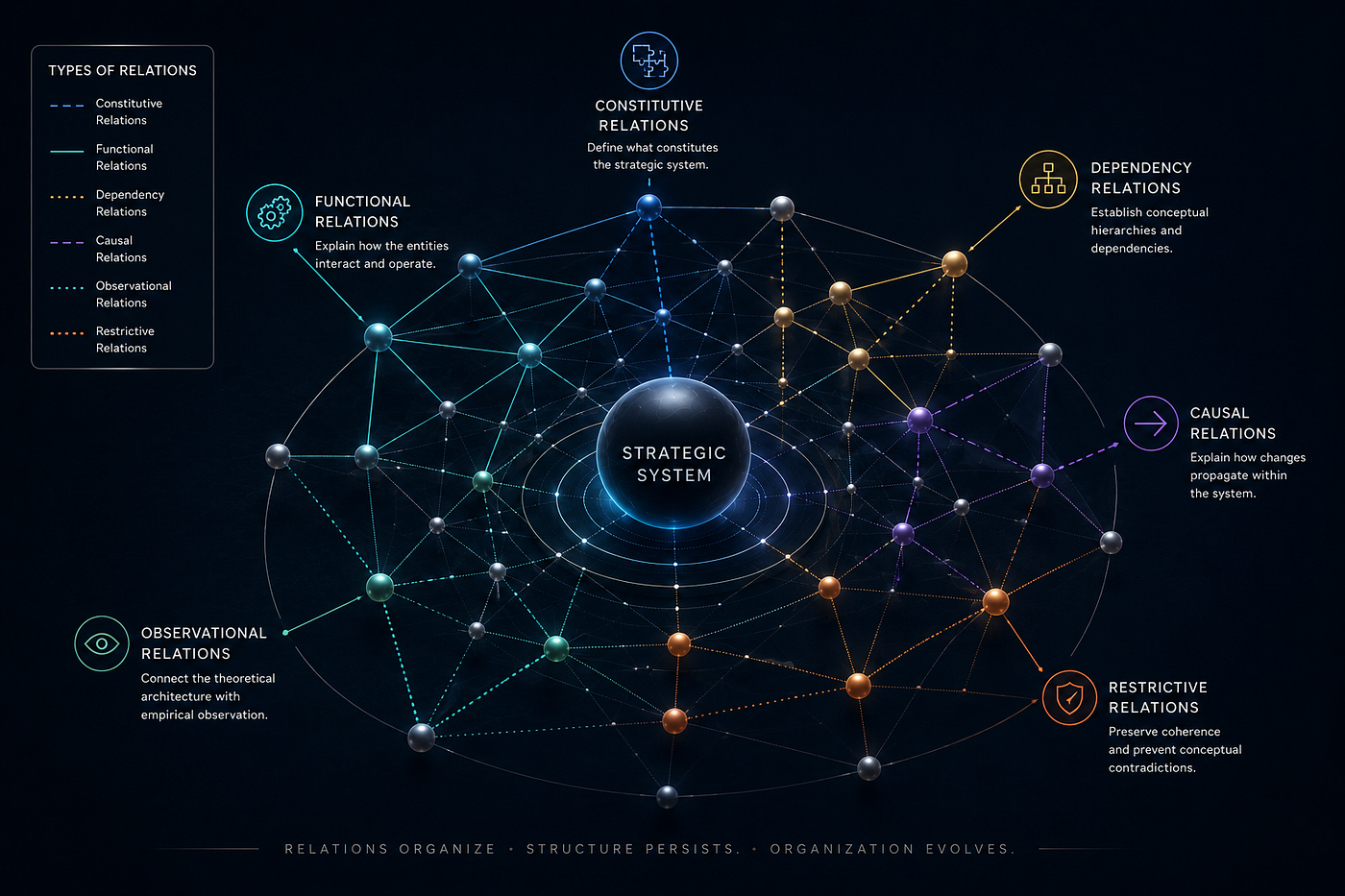
Figure 1. Operational sequence of Mirror Mechanism Systems (MMS) within the Palindromic Geopolitical Theory (PGT), illustrating how localized perturbations propagate through the ERE dimensions (Regions, Resources, Routes, and Networks) to generate distributed responses that promote adaptation, resilience, and functional continuity. Source: Author’s elaboration
∞ → ← ∞
2. Mirror Mechanism Systems Within Complex Strategic Systems
∞
The concept of Mirror Mechanism Systems (MMS) gains additional explanatory depth when examined through the broader behavior of complex strategic systems. Evidence accumulated during the empirical phase of the Palindromic Geopolitical Theory (PGT) demonstrated that maritime chokepoints do not operate as isolated structures, nor do they respond to disruptions through simple linear dynamics. Instead, they function as components of highly interconnected architectures in which the responses triggered by an initial disturbance tend to propagate, adapt, and reorganize across multiple functionally connected elements.
This behavior should not be regarded as an anomaly of the contemporary international system. Rather, it represents a common characteristic of complex systems, where interactions among interconnected components generate patterns that cannot be adequately explained through straightforward cause-and-effect relationships alone.
From this perspective, Mirror Mechanism Systems can be understood as a specific manifestation of broader systemic processes associated with feedback, structural coupling, network propagation, resilience, and emergence.
∞
2.1 Feedback: When the Response Reshapes the System
One of the most evident phenomena identified during the empirical phase was the presence of feedback processes.
In general terms, feedback occurs when the response generated by a system modifies the very conditions that originally triggered that response. This creates adaptive adjustment cycles capable of amplifying, stabilizing, or transforming the behavior of the system as a whole.
Strategic maritime chokepoints provide numerous examples of this dynamic. A disruption affecting one strategic route may trigger logistical diversions. These diversions, in turn, generate new pressures on alternative corridors. Those pressures then stimulate additional operational decisions that once again alter the distribution of strategic flows throughout the system.
The critical point is that the system’s subsequent behavior no longer depends exclusively on the initial event. It also becomes shaped by the adaptive responses generated by the system itself.
Mirror Mechanism Systems frequently emerge within these feedback cycles because distributed responses become active factors influencing the future evolution of the broader strategic architecture.
∞
2.2 Structural Coupling: Connecting Strategic Components
Another recurring phenomenon identified throughout the empirical phase was structural coupling.
Maritime chokepoints do not function independently. They form part of an integrated architecture in which multiple components remain interconnected through flows of resources, information, trade, technology, and security.
This condition implies that a significant disruption affecting one node may generate adaptive responses in other locations that appear, at first glance, unrelated to the original event.
The functional relationship linking Bab el-Mandeb, the Suez Canal, and the Cape of Good Hope provides an illustrative example. Pressure affecting one of these corridors altered the behavior of the others because all three operate within the same interconnected maritime architecture.
Mirror Mechanism Systems emerge precisely through this structural coupling. Without functional connectivity, neither strategic pressure nor adaptive responses could propagate across the system.
From this perspective, strategic reflection is not an isolated property of any single node. It is an emergent consequence of the relationships connecting the system’s components.
∞
2.3 Network Propagation: The Expansion of Strategic Effects
The empirical phase also demonstrated that disruptions tend to spread through interconnected strategic networks.
Networks constitute one of the defining features of contemporary strategic systems because they connect regions, resources, and routes through logistical, financial, technological, and informational infrastructures.
When a disruption affects a strategic component, these networks function as transmission channels capable of distributing its effects across the broader system.
Such propagation is rarely uniform. Some nodes absorb pressure. Others amplify it. Some facilitate adaptation, while others generate new vulnerabilities.
What remains consistent is that strategic effects rarely remain stationary.
Mirror Mechanism Systems represent an observable expression of this propagation because adaptive responses emerge precisely within those interconnected spaces where networks are capable of transmitting pressure while simultaneously reorganizing strategic functions.
∞
2.4 Resilience: Adaptation Under Strategic Pressure
Resilience constitutes another phenomenon closely associated with Mirror Mechanism Systems.
Evidence accumulated during the analysis of maritime chokepoints demonstrated that strategic systems possess a remarkable capacity to preserve functional continuity even under conditions of sustained pressure.
This capacity does not depend solely on the robustness of a particular corridor. Rather, it emerges from the existence of multiple interconnected components capable of absorbing disruptions, redistributing functions, and generating adaptive responses.
Mirror Mechanism Systems actively contribute to this process. Distributed responses transfer part of the accumulated pressure toward alternative spaces, thereby reducing the burden on the component initially affected.
Strategic reflection should therefore be understood not merely as a response to disruption but also as a mechanism that strengthens the overall resilience of the strategic system.
∞
2.5 Emergence: Patterns Arising from Distributed Interaction
Perhaps one of the most significant characteristics of Mirror Mechanism Systems is that they do not require centralized coordination in order to emerge.
The patterns identified during the empirical phase resulted from interactions among multiple actors, infrastructures, networks, and strategic decisions distributed throughout the global maritime system.
No single actor controls the entirety of the global maritime architecture. Nevertheless, the system consistently produces relatively coherent responses to particular disruptions.
This capacity to generate collective behavior through distributed interactions represents one of the defining characteristics of emergent systems.
Mirror Mechanism Systems can therefore be interpreted as manifestations of systemic emergence. They do not arise because of unified planning. They emerge because the relationships connecting the components of the system enable adaptive responses to develop spontaneously under conditions of strategic pressure.
∞
2.6 Mirror Mechanism Systems as an Observable Strategic Phenomenon
The integration of feedback, structural coupling, network propagation, resilience, and emergence provides a more comprehensive understanding of the nature of Mirror Mechanism Systems.
Rather than constituting a metaphor or a purely conceptual construct, Mirror Mechanism Systems can be interpreted as an observable phenomenon associated with the operation of complex strategic systems.
When a disruption affects a strategically significant component, pressure tends to propagate through the relationships connecting the system. This propagation activates distributed responses that emerge across interconnected regions, resources, routes, and networks. These responses, in turn, contribute to preserving functional continuity, reorganizing strategic functions, and facilitating adaptive adjustment.
From the perspective of the Palindromic Geopolitical Theory, Mirror Mechanism Systems represent a specific way in which strategic interdependence becomes operationally visible.
Rather than reproducing events identically, they reveal the capacity of complex strategic systems to transform localized pressure into distributed adaptive responses that preserve functionality under evolving conditions of competition, uncertainty, and systemic change.
∞ → ← ∞
3. Empirical Evidence of Mirror Mechanism Systems Across Strategic Maritime Chokepoints
∞
The analytical value of Mirror Mechanism Systems (MMS) ultimately depends on their capacity to be observed within real strategic environments. Beyond their conceptual formulation, the empirical phase of the Palindromic Geopolitical Theory (PGT) identified multiple situations in which localized disruptions generated distributed responses across functionally interconnected components of the global maritime architecture.
These cases do not represent identical reproductions of the same phenomenon. Each maritime chokepoint possesses its own geographical, economic, and strategic characteristics. Nevertheless, systematic comparison reveals a consistent pattern: pressure applied to a single strategic node tends to generate observable responses beyond the space where the disruption initially occurs.
It is precisely this capacity to generate distributed adaptive responses that constitutes the empirical manifestation of Mirror Mechanism Systems.
∞
3.1 The Strait of Hormuz: Energy Pressure Reflected Across Global Networks
The Strait of Hormuz provides one of the clearest examples of how a localized disruption can generate effects that extend well beyond its point of origin.
Tensions affecting this corridor rarely impact only the actors operating within the region itself. Because of the strategic importance of the energy resources transiting through the Strait, any significant increase in uncertainty rapidly generates responses in financial markets, global supply chains, national energy policies, and industrial strategies developed in distant regions.
Strategic pressure emerges within a specific geographical space, yet its reflection appears across globally interconnected economic and energy networks.
This case illustrates how Mirror Mechanism Systems may operate primarily through Resources and Networks without necessarily disrupting other maritime corridors directly.
∞
3.2 Bab el-Mandeb, the Suez Canal, and the Cape of Good Hope: Reflection Through Strategic Routes
The interaction linking Bab el-Mandeb, the Suez Canal, and the Cape of Good Hope represents perhaps the clearest empirical example of Mirror Mechanism Systems identified during the PGT’s empirical phase.
Pressure affecting Bab el-Mandeb did not remain confined to that corridor. Its effects were rapidly reflected in the Suez Canal through changes in maritime traffic patterns and subsequently in the Cape of Good Hope through the rerouting of international shipping.
The observed phenomenon involved far more than a simple redistribution of maritime traffic. It generated logistical reorganization, longer transit times, operational adjustments, and functional redistribution throughout the global maritime architecture.
The adaptive response emerged in corridors different from the one initially affected but closely connected through their shared strategic function.
∞
3.3 The Panama Canal: Operational Reflections Across Global Connectivity
The Panama Canal introduced a different dimension to the analysis of Mirror Mechanism Systems.
Operational restrictions resulting from environmental conditions demonstrated that disruptions capable of activating distributed responses do not necessarily originate from geopolitical crises.
The limitations experienced by the Canal stimulated modifications in global supply chains, logistical scheduling, commercial routing, and the search for alternative operational solutions by numerous international actors.
Although the initial pressure was concentrated within a single strategic corridor, the responses emerged throughout globally distributed logistical and commercial networks.
This case suggests that Mirror Mechanism Systems respond primarily to the strategic function performed by a node rather than to the specific nature of the disruption itself.
∞
3.4 The Taiwan Strait: Reflection Across Technology, Industry, and Security
The Taiwan Strait offers one of the most complex examples of strategic reflection identified during the empirical phase.
Its significance extends well beyond geography. The Strait is deeply connected to advanced technological resources, industrial production chains, global commercial networks, and regional security dynamics.
Consequently, increases in strategic uncertainty generate responses that extend far beyond the maritime domain itself.
Industrial diversification, investment in alternative manufacturing capabilities, regulatory adjustments, and initiatives aimed at reducing technological dependence all represent adaptive responses emerging outside the original corridor while reflecting the strategic pressure affecting the system.
In this case, Mirror Mechanism Systems simultaneously connect all four structural dimensions of the Palindromic Geopolitical Theory: Regions, Resources, Routes, and Networks (ERE).
∞
3.5 The Straits of Malacca and Gibraltar: Reflection Through Connectivity Corridors
The Strait of Malacca and the Strait of Gibraltar demonstrate how Mirror Mechanism Systems emerge within environments characterized by exceptionally high levels of connectivity.
Both corridors perform essential functions within the global maritime network. Consequently, any significant operational disruption tends to generate adaptive responses across other components of the international logistical and commercial architecture.
The importance of these cases lies in demonstrating that connectivity itself functions as the principal vehicle through which strategic effects propagate.
Strategic reflection therefore emerges through the network of relationships linking multiple regions, actors, and strategic flows within the same interconnected system.
∞
3.6 The Turkish Straits: Reflection Across Interconnected Regional Spaces
The Turkish Straits provide a complementary perspective by illustrating how Mirror Mechanism Systems operate between strategically interconnected regional environments.
Changes affecting security conditions, maritime transit, or commercial activity within this corridor frequently generate responses involving actors and regions extending well beyond the immediately affected area.
This case demonstrates that strategic reflection does not always manifest itself through alternative maritime routes. In many instances, it emerges through political, economic, or regulatory adjustments developed across functionally interconnected regions.
∞
3.7 The Bering Strait and the Southern Maritime Complex: Reflection Through Strategic Anticipation
The Bering Strait and the Southern Maritime Complex introduce a particularly important dimension to the study of Mirror Mechanism Systems.
In both cases, many of the observed responses are driven not only by present disruptions but also by expectations regarding future strategic transformations.
Investments in infrastructure, expansion of logistical capabilities, evaluation of emerging maritime routes, and long-term strategic planning illustrate how expectations alone can generate distributed systemic responses even before structural transformations become fully materialized.
These cases suggest that Mirror Mechanism Systems operate not only in response to current disruptions but also through processes of strategic anticipation.
∞
3.8 A Cross-Cutting Pattern: Localized Pressure, Distributed Response
Although the maritime chokepoints examined throughout this study differ significantly in their geographical, economic, and strategic characteristics, comparative analysis reveals a remarkably consistent pattern.
Strategic pressure rarely remained confined to the location where it originated. Across nearly every case examined, localized disruptions generated adaptive responses elsewhere in the system through processes of absorption, redistribution, functional reorganization, and strategic adaptation.
These responses emerged across:
- alternative maritime routes;
- logistical networks;
- global energy markets;
- industrial production systems;
- regulatory capabilities;
- security strategies;
- functionally interconnected regional spaces.
The diversity of these manifestations reinforces the conclusion that Mirror Mechanism Systems do not represent an isolated phenomenon associated with a single corridor or strategic sector. Rather, they constitute a systemic dynamic arising from the interdependence linking Regions, Resources, Routes, and Networks (ERE).
The empirical evidence accumulated throughout the comparative analysis of the world’s principal strategic maritime chokepoints suggests that strategic pressure consistently propagates through functionally interconnected components, generating distributed adaptive responses that preserve the resilience and functional continuity of the global maritime architecture.
It is precisely this recurring pattern that provides the empirical foundation for a deeper understanding of Mirror Mechanism Systems within the evolving methodological framework of the Palindromic Geopolitical Theory.
∞ → ← ∞
4. Mirror Mechanism Systems and the ERE Dimensions
∞
The evidence presented in the previous sections demonstrates that Mirror Mechanism Systems (MMS) are neither random responses nor isolated phenomena. The distributed adaptive responses observed across the world’s principal maritime chokepoints consistently follow patterns associated with the functional architecture of the strategic system. This regularity suggests that strategic reflections do not propagate arbitrarily; rather, they travel through the relationships connecting Regions, Resources, Routes, and Networks (ERE).
From the perspective of the Palindromic Geopolitical Theory (PGT), this observation carries profound theoretical significance. If Mirror Mechanism Systems systematically emerge through the ERE dimensions, then these dimensions represent more than descriptive categories of strategic power. They also constitute the functional pathways through which pressure, adaptation, and systemic reorganization are transmitted across the strategic system.
The ERE architecture therefore provides a conceptual framework for understanding where strategic reflections emerge, how they propagate, and why certain adaptive responses appear in some components rather than others.
∞
4.1 Reflection Through Regions
Regions constitute one of the primary domains through which Mirror Mechanism Systems become observable.
When a disruption alters the strategic equilibrium of a particular region, other functionally connected regions frequently develop adaptive responses designed either to absorb part of the accumulated pressure or to adjust to new operational conditions.
Evidence observed in the Turkish Straits, the Taiwan Strait, and the Arctic demonstrates how transformations occurring within one region generate adjustments in other regions connected through economic, logistical, or security interests.
This phenomenon reveals that strategic reflection rarely follows a simple linear trajectory. Instead, it frequently emerges through processes of regional reconfiguration aimed at preserving stability or exploiting new strategic opportunities created by the initial disruption.
From this perspective, regions are not merely geographical settings in which strategic events occur. They also function as receivers and transmitters of systemic responses.
∞
4.2 Reflection Through Resources
Resources constitute another fundamental channel through which Mirror Mechanism Systems propagate.
The strategic importance of energy, technological, industrial, and food resources means that any significant disruption tends to generate adaptive responses across multiple spaces dependent upon their continuous circulation.
The Strait of Hormuz clearly illustrates this dynamic. Pressure affecting a strategic energy corridor generates observable responses in international markets, diversification policies, strategic reserves, and risk-management strategies developed far beyond the region where the disruption originates.
In these cases, the resource itself functions as the transmission medium.
Pressure applied to a specific location becomes reflected across all those components whose functionality depends upon the uninterrupted availability of that strategic resource.
∞
4.3 Reflection Through Routes
Routes represent perhaps the most visible mechanism through which strategic reflections become observable.
Whenever a strategic route experiences significant disruption, flows tend to redistribute toward alternative corridors. This adaptive response generates changes that become visible far beyond the node initially affected.
The interaction linking Bab el-Mandeb, the Suez Canal, and the Cape of Good Hope constitutes one of the clearest examples of this behavior. Pressure applied to one corridor generated operational responses in other corridors that assumed part of the compromised strategic function.
Strategic reflection appears here as a process of functional redistribution of connectivity.
The affected route does not necessarily disappear. Instead, the system develops adaptive responses that temporarily — or in some cases permanently — modify the circulation of resources, goods, and information.
∞
4.4 Reflection Through Networks
Networks constitute the broadest and arguably the most influential component within Mirror Mechanism Systems.
Unlike physical routes, networks transmit strategic effects through globally distributed logistical, financial, technological, regulatory, and informational structures.
Disruptions observed in the Panama Canal, the Taiwan Strait, and the Suez Canal generated responses that propagated through global supply chains, international markets, information systems, and corporate coordination processes.
This behavior demonstrates that strategic reflections frequently extend far beyond the immediate geography of a maritime chokepoint.
Networks therefore function as systemic amplifiers capable of transmitting strategic pressure, coordinating distributed responses, and accelerating adaptive processes across highly interconnected strategic systems.
∞
4.5 Interaction Among the ERE Dimensions
Although examining each ERE dimension separately is analytically useful, one of the principal contributions of the Palindromic Geopolitical Theory lies in understanding how these dimensions interact simultaneously.
The empirical evidence demonstrates that Mirror Mechanism Systems rarely remain confined to a single dimension of the strategic system.
A regional disruption may generate resource-related responses. Changes affecting resources may transform strategic routes. Alterations in routes may reorganize networks. In turn, networks may reshape the strategic significance of particular regions.
These interactions create continuous chains of systemic relationships linking all four ERE dimensions.
It is precisely this continuous interaction that gives strategic reflections their systemic character. They do not operate upon isolated components but emerge from the dynamic relationships connecting the strategic architecture as a whole.
∞
4.6 Mirror Mechanism Systems as the Operational Expression of the ERE Architecture
The principal theoretical implication of this analysis is that Mirror Mechanism Systems can be understood as the operational expression of the ERE architecture.
The dimensions of Regions, Resources, Routes, and Networks do more than identify where strategic power is concentrated. They also reveal how strategic power responds under changing conditions of pressure, competition, and uncertainty.
When disruption affects one strategic component, the remaining components begin responding through processes of adaptation, absorption, redistribution, and functional reorganization.
Mirror Mechanism Systems represent precisely this dynamic of distributed adaptive response.
From this perspective, strategic reflection is not an anomaly within the international system. Rather, it is a natural consequence of the structural interdependence linking the four ERE dimensions.
Understanding this relationship helps explain why the effects of localized disruptions frequently emerge far from their point of origin and why complex strategic systems retain remarkable adaptive capacity even under conditions of significant uncertainty and geopolitical competition.
The ERE architecture therefore evolves beyond a framework for structural analysis. It becomes an operational framework for understanding how complex strategic systems respond, adapt, and reorganize under conditions of sustained strategic pressure.

Figure 2. Conceptual representation of Mirror Mechanism Systems across the Regions, Resources, Routes, and Networks (ERE) dimensions. Strategic pressure applied to one component of the system may be reflected across other functionally interconnected components through processes of adaptation, absorption, redistribution, and strategic reorganization. The interaction among the ERE dimensions facilitates the propagation of distributed adaptive responses, contributing to the preservation of functional continuity and the dynamic stability of the strategic system.
∞ → ← ∞
5. Implications for the Palindromic Geopolitical Theory
∞
The incorporation of Mirror Mechanism Systems (MMS) into the analysis of strategic maritime chokepoints carries implications that extend well beyond the interpretation of individual case studies. The evidence accumulated throughout the empirical phase of the Palindromic Geopolitical Theory (PGT) suggests that these dynamics are neither isolated phenomena nor circumstantial responses. Rather, they appear to constitute part of the fundamental way in which complex strategic systems respond to evolving conditions of pressure, uncertainty, and competition.
From the perspective of the Palindromic Geopolitical Theory, Mirror Mechanism Systems introduce an additional analytical dimension for understanding how Regions, Resources, Routes, and Networks (ERE) interact within highly interconnected strategic architectures. More importantly, they establish a conceptual bridge between empirical observation and future processes of methodological operationalization.
∞
5.1 Strengthening the Dynamic Dimension of the PGT
One of the principal contributions of Mirror Mechanism Systems lies in reinforcing the dynamic dimension of the theory.
The earliest formulations of the Palindromic Geopolitical Theory identified the ERE dimensions as the fundamental structural components of strategic power. The empirical evidence accumulated throughout subsequent studies, however, demonstrates that these components are not static. They interact continuously, respond to disruption, and generate processes of functional reorganization that reshape the behavior of the strategic system as a whole.
Mirror Mechanism Systems make this dynamic directly observable.
Pressure affecting one strategic component produces far more than localized effects. It activates distributed adaptive responses that propagate throughout the ERE architecture, generating new functional configurations aimed at preserving systemic continuity.
This observation strengthens the capacity of the PGT to analyze strategic systems in motion rather than merely describing structures under conditions of apparent equilibrium.
∞
5.2 Integration with Multinodal Resilience
The empirical phase identified multinodal resilience as one of the most consistent characteristics of the global maritime architecture.
Mirror Mechanism Systems contribute to explaining how such resilience emerges.
When strategic pressure affects one critical node, distributed adaptive responses enable other interconnected components to absorb part of the compromised strategic function. Functional continuity therefore depends not exclusively on the robustness of the affected corridor but on the capacity of the broader system to redistribute pressure and reorganize its functional relationships.
From this perspective, Mirror Mechanism Systems may be interpreted as one of the principal processes through which resilience is constructed within complex strategic systems.
Resilience thus ceases to be understood merely as an observable outcome and instead becomes recognized as the consequence of adaptive dynamics connecting multiple components throughout the strategic architecture.
∞
5.3 Implications for Strategic Observables
Mirror Mechanism Systems also carry significant methodological implications.
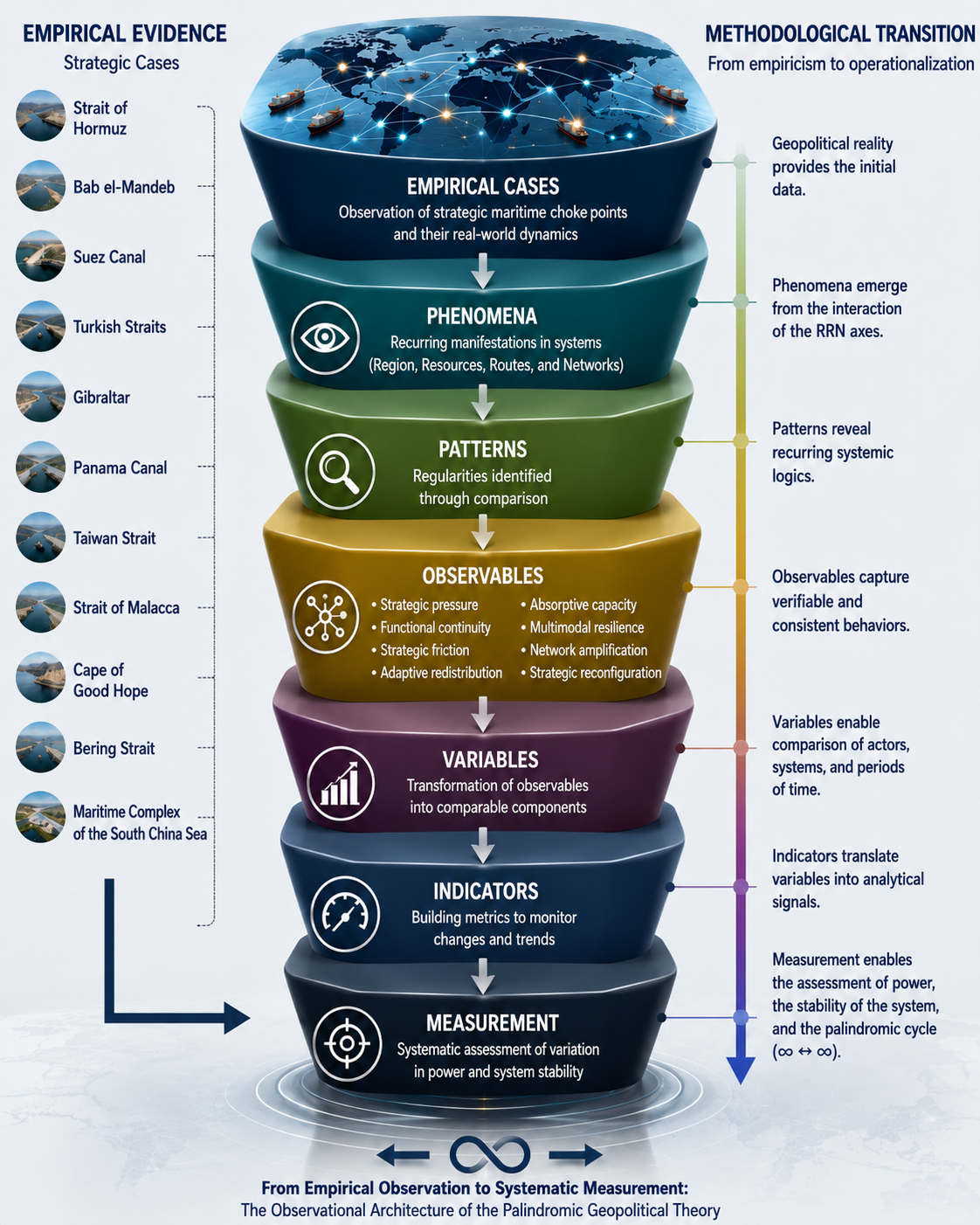
The article From Observation to Measurement: What Maritime Chokepoints Reveal About the Palindromic Dynamics of Power established an initial framework of strategic observables. The understanding of Mirror Mechanism Systems, however, provides an additional dimension for interpreting those observables.
Functional redistribution, pressure absorption, operational continuity, logistical adaptation, and network reorganization can now be understood not simply as independent phenomena but as potential manifestations of distributed reflective responses operating within interconnected strategic systems.
This interpretation expands the analytical value of strategic observables while strengthening the relationship between empirical evidence and systemic behavior.
∞
5.4 Toward Operational Variables and Strategic Measurement
One of the most significant contributions of this approach lies in its potential for future stages of methodological operationalization.
If Mirror Mechanism Systems represent an observable and recurrent strategic dynamic, then it becomes possible to explore methods for identifying their manifestations, comparing their intensity, and evaluating their effects across different components of the strategic system.
This objective does not seek to reduce the complexity of geopolitical processes to simplified indicators. Rather, it aims to develop methodological tools capable of analyzing strategic response patterns with greater analytical consistency.
The identification of operational variables associated with pressure absorption, functional redistribution, network propagation, and adaptive capacity may contribute to future approaches toward strategic measurement within the Palindromic Geopolitical Theory.
In this sense, Mirror Mechanism Systems establish a natural connection between empirical observation and progressive methodological operationalization.
∞
5.5 A Framework Compatible with Complex Systems
The evidence examined throughout this study also demonstrates that Mirror Mechanism Systems exhibit clear affinities with phenomena widely recognized within the study of complex systems.
Feedback, structural coupling, network propagation, emergence, and resilience repeatedly appeared throughout the empirical cases examined. Mirror Mechanism Systems do not replace these concepts, nor do they seek to redefine them.
Their contribution lies in providing a geopolitical framework for observing how these systemic dynamics become manifested within strategic environments characterized by the interaction of Regions, Resources, Routes, and Networks.
This compatibility is particularly significant because it strengthens the capacity of the Palindromic Geopolitical Theory to engage constructively with analytical frameworks developed in other scientific disciplines while preserving its own conceptual identity.
∞
5.6 Toward a Deeper Understanding of Strategic Reversibility
Perhaps one of the most significant implications of Mirror Mechanism Systems lies in their relationship with the concept of strategic reversibility, which occupies a central position within the Palindromic Geopolitical Theory.
The empirical evidence suggests that the distributed adaptive responses generated by the strategic system gradually reshape its existing configuration. Adaptations developed to absorb pressure may redirect strategic flows, strengthen alternative nodes, reorganize networks, and transform previously established patterns of dependence.
This does not imply that every disruption produces a complete reversal of strategic equilibrium. It does demonstrate, however, that strategic systems possess the capacity to generate adaptive responses capable of progressively modifying their original operating conditions.
Mirror Mechanism Systems therefore constitute one of the pathways through which accumulated adaptation may contribute to observable processes of long-term strategic reconfiguration.
From this perspective, strategic reflection represents more than an immediate response to disruption. It may also become a determining factor influencing the future evolution of the strategic system itself.
∞
Taken together, these implications suggest that Mirror Mechanism Systems occupy an important position within the ongoing development of the Palindromic Geopolitical Theory.
Rather than representing an isolated phenomenon, they emerge as an observable manifestation of the manner in which complex strategic systems respond to pressure through processes of distributed adaptation. Their integration into the ERE architecture strengthens the explanatory capacity of the theory, contributes to a deeper understanding of multinodal resilience, and provides a conceptual foundation for future research involving strategic observables, operational variables, and strategic measurement.
For these reasons, Mirror Mechanism Systems may be regarded as one of the clearest expressions of the dynamic interaction between strategic structure and adaptive transformation within contemporary geopolitical systems.
∞ → ← ∞
Conclusions
∞
The analysis developed throughout this study suggests that Mirror Mechanism Systems (MMS) constitute an observable dynamic operating within the complex strategic systems associated with the world’s principal maritime chokepoints. Rather than representing simple linear reactions to localized disruptions, these mechanisms describe the capacity of strategic systems to generate distributed adaptive responses that emerge across functionally interconnected components through processes of adaptation, redistribution, and strategic reorganization.
The empirical evidence accumulated during the PGT’s empirical phase demonstrates that strategic pressure rarely remains confined to the location where it originates. The tensions observed in the Strait of Hormuz, Bab el-Mandeb, the Suez Canal, the Panama Canal, the Taiwan Strait, the Strait of Malacca, the Turkish Straits, the Strait of Gibraltar, the Bering Strait, and the Southern Maritime Complex generated responses that became visible through alternative routes, logistical networks, energy markets, industrial systems, and functionally interconnected regions. Although the specific form of these responses varied across the cases examined, the consistency of the observed pattern strongly suggests the existence of adaptive dynamics compatible with the concept of Mirror Mechanism Systems.
One of the principal contributions of this study is demonstrating that these strategic reflections do not operate randomly. Instead, the evidence indicates that they propagate through the relationships connecting Regions, Resources, Routes, and Networks (ERE). Consequently, the ERE dimensions not only identify where strategic power is concentrated but also explain how pressure, adaptation, and functional reorganization are transmitted throughout interconnected strategic systems.
This observation reinforces the dynamic dimension of the Palindromic Geopolitical Theory. Strategic systems no longer appear as relatively static structures but instead emerge as functional architectures capable of continuously responding to evolving conditions of strategic pressure. The adaptive capacity observed throughout the empirical cases arises not simply from the characteristics of individual nodes but from the interactions among multiple interconnected components distributed across the broader strategic system.
The research also identified a close relationship between Mirror Mechanism Systems and several phenomena previously observed during the empirical phase of the theory. Multinodal resilience, pressure absorption, functional redistribution, operational continuity, and network propagation can all be interpreted as complementary manifestations of the same underlying adaptive capacity. This convergence contributes to integrating multiple empirical findings into a more coherent analytical framework while strengthening the explanatory power of the Palindromic Geopolitical Theory.
From a methodological perspective, Mirror Mechanism Systems possess additional significance. Their identification provides a conceptual foundation for future research aimed at developing strategic observables, operational variables, and measurement frameworks compatible with the complexity of contemporary geopolitical systems. The possibility of observing how localized disruptions generate distributed adaptive responses opens new opportunities for analyzing strategic adaptation, functional continuity, and systemic transformation in a more rigorous and methodologically consistent manner.
The findings presented throughout this study also reinforce the compatibility of the Palindromic Geopolitical Theory with phenomena widely recognized within the study of complex systems, including feedback, structural coupling, resilience, emergence, and network propagation. This compatibility does not imply replacing these concepts or reducing the theory to them. Rather, it suggests that Mirror Mechanism Systems provide a geopolitical framework through which these systemic dynamics become observable within strategic architectures structured around the interaction of Regions, Resources, Routes, and Networks.
More broadly, this study suggests that understanding strategic power requires observing not only where disruptions occur but also where adaptive responses emerge. Within highly interconnected strategic systems, the most significant consequences of strategic pressure frequently appear far from the location where the original disruption occurred. Mirror Mechanism Systems provide a conceptual framework for identifying these relationships and explaining how distributed adaptation contributes to preserving the functional continuity of complex strategic architectures.
The principal contribution of this article is therefore the formalization of a dynamic repeatedly identified throughout the empirical phase of the Palindromic Geopolitical Theory and its integration into the theory’s conceptual architecture. Mirror Mechanism Systems emerge as an observable manifestation of strategic interdependence, providing an additional analytical framework for understanding how strategic systems respond, reorganize, and preserve functionality under evolving conditions of geopolitical pressure.
Consequently, this study represents another step in the evolution of the Palindromic Geopolitical Theory, moving from the identification of recurring patterns and strategic observables toward a deeper understanding of the mechanisms connecting strategic structure, adaptive transformation, and functional continuity within complex strategic systems. In doing so, it establishes a natural bridge toward future research focused on operational variables, methodological frameworks, and strategic measurement, contributing to the progressive development of the theory as a comprehensive analytical framework for the study of global architectures of power.
∞ → ← ∞
∞ → Basado en la Teoría Geopolítica Palindrómica (TGP), Creado por Apolitik0™. Todos los derechos reservados.
✍️ Apolítik0
ORCID: 0009–0003–4721–5789
📖 Descubre la visión completa en el libro: Amazon — Teoría Geopolítica Palindrómica (PGT) ← ∞
∞ → El equilibrio decide ← ∞
∞ → ← ∞
**Sistemas de Mecanismos Espejo en los Chokepoints Marítimos Estratégicos**
∞ ⟷ ∞
Phase I — Empirical Transition
From Maritime Chokepoints to the Progressive Refinement of the Palindromic Geopolitical Theory (PGT)
This article is part of Phase I — Empirical Transition, the first empirical stage of the research program developed under the Palindromic Geopolitical Theory (PGT). During this phase, the world’s principal maritime chokepoints were examined through a comparative analytical framework in order to confront the theoretical model with empirical evidence, identify recurring structural patterns, and transform observation into cumulative theoretical learning.
The phase is organized as a sequence of five complementary studies, each addressing a specific objective within the progressive development of the theory:
**1. Systemic Patterns Across Global Maritime Chokepoints** Integrates the empirical findings from all analyzed maritime chokepoints and identifies the structural patterns shared across the global maritime system.
**2. From Observation to Measurement: What Maritime Chokepoints Reveal About Palindromic Power Dynamics** Develops the transition from empirical observation toward strategic observables and the future operationalization of the PGT.
**3. Empirical Validation as Theoretical Learning: Lessons from Strategic Maritime Chokepoints** Examines how empirical evidence strengthens, refines, and expands the theoretical architecture of the PGT through cumulative learning.
**4. Chokepoints as Adaptive ERE Systems** Reinterprets maritime chokepoints as adaptive systems structured through the interaction of Region, Resources, Routes, and Networks (ERE).
5. Mirror Mechanism Systems in Strategic Maritime Chokepoints: An Operational Extension of the Palindromic Geopolitical Theory Formalizes adaptive mirror mechanisms as an operational extension emerging from the empirical evidence gathered throughout the research phase.
Together, these five studies conclude the first empirical stage of the Palindromic Geopolitical Theory and establish the conceptual bridge toward subsequent phases dedicated to methodological refinement, operationalization, multidomain strategic systems, and the continued empirical development of the theory.
Phase Status: ✓ Completed
∞ ⟷ ∞
Official Prompt PAL-8 | PGT
Apply the PAL-8 Protocol of the Palindromic Geopolitical Theory (PGT) to the following case: -CASE-
Develop the analysis according to the following sequence:
- Identification of the strategic node
- Power axes involved (Region, Resources, Routes, and Networks — ERE)
- Actors and capabilities
- Systemic pressure
- Friction or emerging disequilibrium
- Dynamics of control or dispute
- Risk of rupture or escalation
- Prospective scenario of reversibility or stabilization
Maintain a structural, strategic, and replicable approach.
Avoid descriptive or journalistic analysis.
Prioritize systemic logic, power relations, and patterns of strategic reversibility.
∞⟷∞
Apolitik0™
메타데이터
- post_id
- b4638262fa67
- slug
- mirror-mechanism-systems-in-maritime-chokepoints-understanding-strategic-reversibility-b4638262fa67
- url
- https://medium.com/pgt-methodological-development/mirror-mechanism-systems-in-maritime-chokepoints-understanding-strategic-reversibility-b4638262fa67
- canonical_url
- https://medium.com/pgt-methodological-development/mirror-mechanism-systems-in-maritime-chokepoints-understanding-strategic-reversibility-b4638262fa67
- author_url
- https://medium.com/@apolitik0
- status
- ok
- fetched_at
- 2026-08-17 15:27:11