Bartering and Rationing
Cherish, Chapter 10
Bartering and Rationing
Cherish, Chapter 10
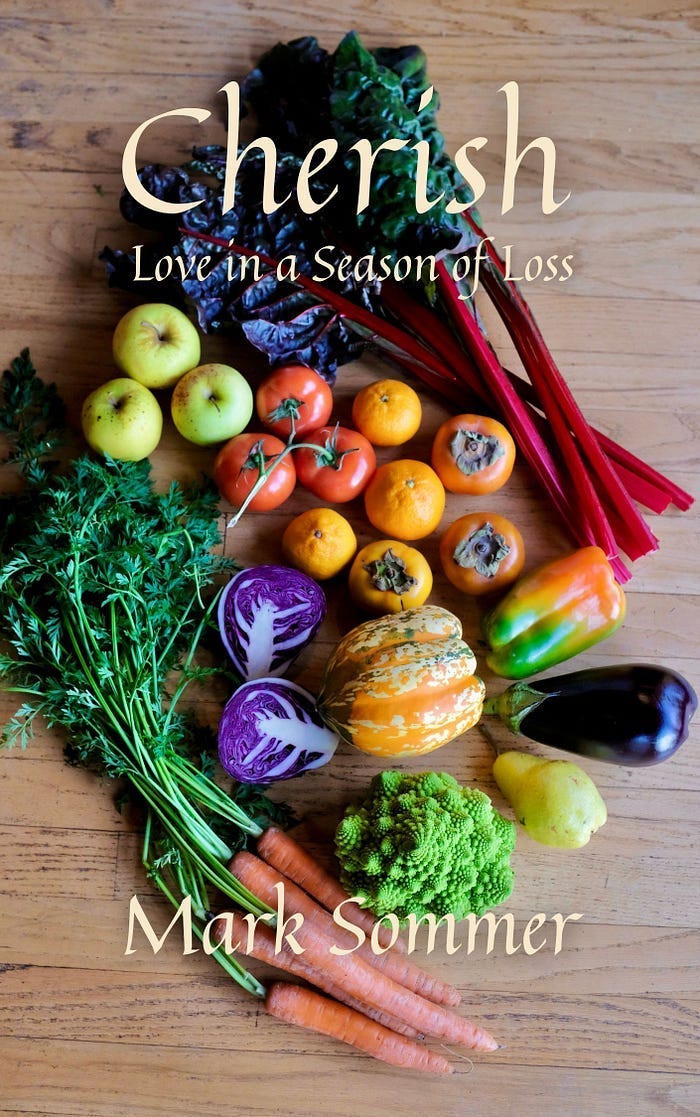
Cherish is a complete novel being released here on Medium in series form every Wednesday and Saturday. You can also purchase it as a paperback or e-book.
Word travels fast in Acton’s frozen streets about the new “commune” at Ben Atkinson’s place. “What’s going on out there?” a middle-aged woman wearing a scarf and muffler asks her friend in the cereal aisle at the Fareway Market. Her voice carries a hint of suspicion. “I hear Ben’s daughter put him up to it.”
“Sounds fishy to me,” her friend confides. “Smells like socialism, maybe even communism. Ben used to be a sensible man. I wonder what’s gotten into him.”
“My cousin says they’re into strange rituals,” adds a man nearby in a conspiratorial voice. “God knows what else.”
“Who do they think they are?” continues the woman in the scarf, pulling her muffler closer around her shoulders.
In the absence of grounded knowledge, rumors abound. Later that morning, as Alicia and Ben make their way to the park across from City Hall, they’re met with furtive, distrustful glances from a few onlookers. Surprised by the sudden chill, they turn to each other and shake their heads. They wonder what’s happened to provoke such mistrust in a town so small that if you don’t already know someone as a friend, you’ve seen their familiar faces here and there for years. Turning towards a couple standing nearby as they pass, they greet them with their usual openness.
“How are you folks today? A chilly one, isn’t it?” says Alicia, conscious of the suspicion that surrounds them. What follows isn’t the usual response, “Fine. And you?” but an unfamiliar standoffishness and narrowed gazes.
“We know what you’re up to,” replies the man, wearing a baseball cap emblazoned with an American flag. “Hoarding and freeloading while the rest of us struggle just to get by.”
Ben and Alicia pause in mid-stride and turn to face their accusers. “You want to know what we’re doing?” asks Ben, suppressing his irritation. “Don’t take it from me. Come see for yourselves. Tomorrow at 8 a.m., we’ll open the gates. Walk the fields, look in the greenhouses. If you find hoarded food or secret rituals, you can haul me over to City Hall yourself.”
Taken aback by the invitation, the couple turns to each other, unsure how to respond. They expected denial and defensiveness.
“We’re planting food, just the same as you,” adds Alicia. “Come see what’s happening for real, not what’s sprouting in your imagination. I’m afraid your suspicions are a lot more vivid than what we’re actually doing.”
At 8 a.m. the following morning, Ben opens the gate as promised, but no one shows up from among those suspicious of their motives. However, a few days later, several locals trudge down the icy road and arrive at the gate to take a look. Jake, a recent volunteer in his mid-twenties, sees them pausing at the gate and invites them in. It’s too early for field crops, but inside the greenhouses they find long rows of seedling trays, starts that will be set out when the weather warms. They’re growing under high-efficiency LED lights powered by a small array of solar panels recently installed on racks beside the greenhouses. In the barn, several volunteer gardeners, young and old, sit on upturned wooden crates sharpening tools by the barn stove. Looking up from their work, they greet their visitors with disarming warmth.
It’s all so ordinary. No strange rituals, no apparent hoarding, just folks doing sensible things to get by in exceptional circumstances.
Sleeves rolled up to her elbows, Joan offers the visitors cups of hot tea. Earl shows them the workbench where he’s teaching several young men and women to sharpen hoes, shovels and pruning shears. Josh describes how rationing logs from City Hall guide what they plant.
The visitors look around, their suspicion turning into something harder to name. Disappointment, perhaps? The rumors had promised drama, scandal, a sense of righteous fury. Instead, they find transparency and mud.
At the end of the tour, the visitors return to the gate and turn back toward the farm. “Well, Ben,” says the man who two days earlier confronted him in the City Hall plaza. “Gotta admit nothing looks out of the ordinary. I’m relieved to see that you haven’t gone to the dark side. I’ve always respected you for carrying on farming when so many of us couldn’t make a go of it anymore. It must be hard to invite strangers in to help out when you’ve done it on your own for so long.”
Ben smiles and nods, musing to himself for a moment. “Well, I must admit it takes some getting used to. But you do what you have to do when circumstances require it. And I must say I kind of enjoy having folks around for a change. It was getting pretty lonely out here since Glenda died. The corporate farms always manage to get bailouts, but we small farmers are left in the dust. Our inputs are getting ever more expensive. We can’t even cover our costs anymore growing commodity crops. And with communications and computers down, the markets are frozen.”
The man in the flag cap nods in sympathy. “No kidding,” he says. “I don’t know what the hell the feds are thinking, driving our most dependable markets away. Once they’re gone, it won’t be easy bringing them back. They’re tying the hands that feed us all.”
“You know,” adds Ben, “I’m thinking it may be time to go back to truck farms like we used to grow before we were all forced into monocropping. Maybe it’s time to go back to supplying local markets, growing food for our own community. The supply chains hereabouts are just a few miles long, not five thousand miles across the sea with a dozen middlemen taking bites out of our income all along the way.”
The man in the flag cap extends his hand to Ben with a firm handshake. “Well, thanks for taking the time to show us around. We’re doing pretty much the same thing at our church. The pastor has opened up the grounds for planting crops and we’re all planning to grow vegetables ourselves in our own yards this summer. It’s a project for the whole family. Kids too.”
Suspicions linger like patches of black ice in the pavement, among some of those in town who haven’t had or taken the time to stop by Common Ground Farm. But their curiosity about what’s actually happening out there has been whetted by reports from those who’ve visited. In the days and weeks that follow, more make the trek to see for themselves. Yes, it’s an experiment, but so are the other gardens being planted all over Acton in places where not since the Victory Gardens of the last war has anyone thought to grow.
Among those who trudge to Common Ground Farm to see for themselves is Marianne Neely, a sturdy woman in her forties with a face lined from years of working as a receptionist keeping the schedule and books for her husband’s two-man auto repair shop. She’s always been a faithful partner in a traditional relationship where her husband leads the way and she follows. She was in City Hall Park on the day the man in the flag cap confronted Ben and Alicia. She watched with a mix of wariness and curiosity, wondering what all the fuss was about. She most of all wants to be with the friends she’s known since childhood and raised her kids with. Whatever doubts she harbors about the rumors passing among them she keeps to herself.
But in a rare departure from her normal routine, Marianne decides to pursue her curiosity on her own. She doesn’t tell Frank where she’s going. It’s a Saturday and he’s home working on his own rig. Marianne tells him she’s going to the market, then meeting Brenda for lunch at the diner downtown. When she shows up midday at the Common Ground gate, she’s greeted by Elena, who invites her for a tour of the greenhouses. Almost despite her first intention, she wonders what it would be like to be one of them. On her walk home, Marianne feels unsettled, unsure what to think. She half expected to find something scandalous to confirm the gossip she’s been hearing from her friends. Instead, she saw kids chasing each other through the crop furrows and young people learning to maintain a pump from an old man wielding a wrench. She sipped Joan’s peppermint tea and, for the first time in months, felt warmth spread through her chest that wasn’t from whiskey or wood smoke.
That night, she couldn’t sleep. The image of Elena patiently planting a row of seed trays replayed itself in her mind. It’s simple, ordinary work, yet done with such focus. Sitting behind a counter by herself all day as Frank’s assistant, she’s never really considered what she might do with her time and life if she were able to choose. Who would she be if she were free to discover her true calling? Witnessing the convivial atmosphere on Common Ground Farm, Marianne feels a subtle pain in her chest at the absence of a vibrant life with others, including people she doesn’t yet know. She’s so familiar with her lifelong friends that they have little new to say to one another. There’s a comfort in that familiarity, but also, if she lets herself admit it, a certain suffocation for lack of fresh air.
The following Saturday, Marianne tells Frank she’s stopping in to see her friend Esther, who’s asked for her help crocheting doilies for a church bazaar in a couple of weeks. Frank looks up from his work and nods. But after she leaves, he starts to wonder why she keeps disappearing on Saturdays when she used to clean house that day. Meanwhile, on her own, Marianne retraces the muddy track back to the farm. There she finds Alicia tightening bolts with a wrench and numb fingers on the posts fastened to the plastic sheeting of the greenhouse walls.
“Chilly work,” Marianne says, standing a bit awkwardly beside Alicia. Alicia looks up, surprised, then smiles. “Back again, eh?” she remarks in a welcoming tone. “Got a minute to help?”
Marianne nods almost eagerly. Alicia fishes around for another wrench and hands it to her. They work in silence for a few minutes. If she lets herself admit it, it feels good to Marianne to feel useful for once. Finally she speaks, haltingly at first.
“I shouldn’t have listened to all that talk. They’re good folks, my friends, but sometimes, I don’t know, we say things to each other without checking whether or not they’re true. But I never disagree openly with what the others are saying. I let them think I agree.”
Alicia smiles, then hands Marianne a pair of gloves. Marianne slips them on, clumsy at first but warming quickly. By noon, she’s laughing with the others as they straighten a bent greenhouse frame. When she leaves in the early afternoon, she turns to Alicia and thanks her.
“That was fun,” she says. “I’ll be back next week.” She’s surprised at herself for promising, and not sure how long she can continue to make up excuses to Frank for her wayward behavior.
Meanwhile, Marianne’s friends start to notice a subtle shift in her manner and behavior. Among themselves, they compare notes and start to suspect something is happening that’s more than happenstance. But it’s Frank who most of all picks up that something in Marianne has changed. She’s always been his helpmeet, a quiet, predictably faithful partner. She still cooks his meals, cleans house, keeps his books, and schedules his appointments. But something has lifted her spirits and given her a new interest in life. Frank observes this apparent independence with a certain wariness, fearful that she’s drifting away. She’s been so there for him through all these years that he asks himself for the first time what he would do without her. He wonders what she’s doing when she disappears from home for hours on Saturday mornings. Is she really going to see Brenda or Esther?
On the following Saturday, Marianne makes Frank’s usual breakfast — two eggs over easy with bacon. She washes dishes while Frank sits at the kitchen table, a cup of black coffee steaming in front of him. But instead of starting the laundry as she usually does, Marianne heads to the hall closet in the entry. Half furtively, she pulls on her coat and muffler.
“Where you off to this early?” Frank asks her gruffly, his voice freighted with concern.
“Just helping out,” Marianne replies with studied casualness as she ties her scarf.
“Helping who?” Frank asks her point blank. “Emery told me the other day that he spotted you heading towards Ben Atkinson’s farm.”
Marianne hesitates inside herself, feeling suddenly trapped, but she continues to wrap the scarf around her head. “Oh, they’ve got a greenhouse frame to raise,” she tells him. “They could use a few extra hands.”
Frank slams his mug down on the Formica table. “So it’s true then!” he barks. “You’re spending time with those… those socialists. What are they filling your head with, Marianne?”
“It isn’t like that, Frank,” Marianne replies as evenly as her nerves will let her. “They’re just folks like us, trying to grow food to make up for what the supermarkets don’t sell anymore. We should be growing more of our own vegetables too. It’s getting hard to find fresh produce, and when I do, it’s so expensive we can’t afford to buy it.”
“I don’t like the look of it,” Franks snaps. “There’s a lot of talk around town about those folks at Ben’s farm. I don’t want my wife to be associated with something like that. This is a conservative town, except for some of those crazies at the college, and we want to keep it that way.”
Marianne steps back into the kitchen and meets Frank’s wary, fearful gaze. It’s a bold move for her, daring to reveal to him as well as herself how she’s really feeling. “It feels like I’m able to breathe again for the first time in years, Frank. I’m not sneaking around. I’m just helping folks feed themselves — and people like us. Everyone who works there earns a share of the crops. We’ll get some ourselves once they’re ripe.”
Frank shakes his head, stunned at Marianne’s sudden boldness. She’s so unlike the wife he’s relied upon to be there for him for all these years. His whole being rebels at the notion of sharing her with others.
“I’ll be back by early afternoon,” Marianne tells him. For once, she’s not waiting for his permission. “In the meantime, be sure to put all your dirty laundry in the hamper, including your overalls. Last week you forgot a pair. I can’t imagine what you spilled on them. I couldn’t get the stain out.” She plants a quick kiss on Frank’s forehead. He recoils at her touch. She turns away and heads out the door. Frank looks after her in consternation and bewilderment.
“What’s gotten into her?” he mutters to himself, shaking his head. “After all I’ve done for her. After all we’ve done together.” For a long moment, he gazes into his half-empty cup. Then he swigs a final gulp and shoves his chair back. He stomps out of the kitchen, as if by his abrupt, decisive moves he’ll banish all the unfamiliar, uncomfortable thoughts that now besiege him. Opening the back door, he gazes into the frozen light of mid-morning and spits on the ground. Then he heads out to fetch his overalls.
On succeeding Saturdays, Marianne ceases making up stories about where she’s headed. She does all her chores as usual, reliable as ever, but now she hums tunes to herself while cooking dinner. She laughs more easily. The creases of tension in her face start to fade. She walks to and fro with a slight spring in her step and stands up straight, no longer bent over in submission. Frank watches his wife with a mix of puzzlement and wonder. It’s like he’s watching her waking up after a years-long hibernation.
One evening after dinner, Marianne presents Frank with a gift. “Here,” she says, smiling. “This is for the stiffness in your hands you’ve been telling me about. There’s a woman at the farm who makes a special salve for just that purpose. She showed me how to make it.”
Frank gazes at the mystery jar as if it might bite him. He’s always been a bit suspicious of herbal remedies. “Hippie shit,” he calls them. But later that evening, he opens it, takes a sniff, and works the cream into the knotted joints of his fingers. It takes a few days, but eventually he starts to notice a slight easing of his arthritis. At dinner a few nights later, he grudgingly admits it seems to be helping. Marianne smiles to herself but simply nods, making little of his admission. She lets the realization sink into his mind the way the salve sinks into his fingers.
Several weeks later, having noticed Frank watching her leave home each Saturday morning for Common Ground Farm, Marianne offers a low-key invitation.
“Come with me, Frank. Just this once. Give yourself a chance to see what it’s like. You’ll come to your own conclusions, but at least you won’t be relying solely on rumors.”
Frank bristles at the thought. “Got work to do at the shop,” he growls dismissively.
“It’s a weekend, Frank,” Marianne reminds him gently. “You don’t need to be back at work till Monday morning.”
Frank grouses to himself, stubborn as the day is long. But as Marianne pulls on her coat and muffler, to her surprise she finds him behind her, reaching for his own coat. They walk together down the road, joined by other volunteers, and through Common Ground’s open gate. Elena greets them with a warm smile and cups Marianne’s hands in her own.
“You’re becoming a real regular, Marianne. This must be your other half.” She nods in the direction of Frank, offering her outstretched hand to shake. “So glad to meet you,” she tells him. He doesn’t quite know what to do with such familiarity between perfect strangers. He’s always kept a small circle of friends, mostly drinking buddies he’s known since childhood. He fumbles a bit awkwardly, then reluctantly meets her hand with his. He’s surprised to find her grip as strong and confident as his own. He’s not used to touching any woman other than his wife.
“Would you like a bit of a tour?” Elena asks. She gestures for them to follow her into the greenhouses. Frank nods stiffly, swept up in her hospitality. Despite his better judgment, he finds himself impressed by the long rows of vegetable starts mounted on wooden platforms.
“It’s too soon to plant these in the ground,” Elena explains. “Another month and they’ll be safe from frosts.” When it’s all over, Frank offers his own hand to shake hers. He can’t believe he’s actually doing it.
“Thanks for showing me around,” he tells her in his gruff voice. “Looks like you folks have it pretty much together.”
“Well, we’re doing our best,” Elena says. “We’re all still learning. But necessity is a good teacher. There’s so much less available and affordable at the supermarkets that we can’t afford to fail.”
As they make their way to the front gate, Frank and Marianne are met by Ben. For decades now, Frank’s been Ben’s go-to guy for most things mechanical.
“Glad to see you here,” says Ben, shaking Frank’s hand. “Marianne’s been a great help to us. I promise I won’t draft you into digging and planting. But I must say that your mechanical skills would sure come in handy with an old tractor that won’t start. We’ve got precious little diesel left but we’ll be needing the rig soon to make a first pass at the fields before we plant. That old Ford tractor could sure use a tune-up.”
Frank briefly considers telling Ben that he’s too busy to look at it. But something in him — that urge to figure out what’s wrong and fix it — overrides his impulse to refuse.
“Sure,” he says haltingly. “Glad to take a look.”
“Next time,” says Ben. “You’ve already spent enough time here today. Maybe next time Marianne comes our way.”
As they walk home from the farm, Frank is silent, apparently lost in thought. Marianne senses that he needs time to process what he’s seen. She knows better than to ask him about it. Instead, she lets him sort through his feelings on his own. But at dinner that evening, he gazes across the table at her, clearly grappling with how to say what’s on his mind. His fork stirs his mashed potatoes as he stares down at his plate. Finally he clears his throat.
“Listen,” he tells Marianne. “I’m sorry I gave you a hard time about spending your Saturdays out at Ben’s farm. I still don’t know what to make of those folks, but at least they don’t seem to be up to anything strange or dangerous. They’re so damn friendly. I can’t figure out what makes them smile when we’re in the middle of a war and most folks are struggling just to get by.”
Marianne gazes silently at her husband, her smile half-concealed so as not to trigger a defensive reaction. She reaches across the table and takes his gnarled hand in hers.
“Thanks for being such a good sport,” she says softly. “I myself was suspicious when I first visited the place. It takes some getting used to. It’s got a different vibe, as they say.”
“I must say you seem happier these days,” Frank tells her, though he finds it hard to admit. “Hard to argue with that. You must be doing something right.”
Then he says something that surprises them both. “I…I just don’t want to lose you, Marianne. You’re my whole world. I couldn’t even get up in the morning without feeling you there beside me.”
Stirred by his uncharacteristic candor, Marianne remains silent for a long moment, then reaches across the table with her hands and embraces his in both.
“I’m not going anywhere,” she reassures him. “I’m here with you for the duration, till death do us part. I just needed something to bring me back to life. I’ve been like a plant that’s gone too long without water and fertilizer. I love my women friends, but I know them so well by now that there’s not much new we can find in each other. That farm has put me in contact with a whole new universe of folks to get to know. I especially love the fact that they’re all ages and backgrounds. I learn from every one of them. Even here in Acton, there’s more to discover than I ever realized.”
Frank listens and nods. His gaze rests on their fingers entwined in one another. He takes a breath and releases a long sigh of relief. They’re still together, he tells himself, maybe more than they’ve been for years.
Chapter 11
It’s a balmy mid-spring afternoon, one of those days when every leaf tip glows light green. The deciduous trees are sprouting buds and the earth itself is pregnant with possibility. Ben is standing between rows of freshly transplanted broccoli and cauliflower seedlings when Alicia approaches. She moves so quietly that he doesn’t sense her presence till she’s right beside him. They exchange smiles as she places a hand on his shoulder. They stand leaning slightly together for a time, watching a few dozen gardeners from town as they lift delicate seedlings grown in greenhouses from their nests in planter boxes, gently spread their roots, and dangle them in holes in the soil where they’ll grow till maturity. Then, with the tips of their fingers, they tamp the soil around them to eliminate air holes and nest them snugly in place.
Alicia laughs and looks up. “Dad, did you imagine last winter that this spring you wouldn’t be plowing the ground alone, just you and John Deere? Did you think you’d be joined by dozens of fledgling townie gardeners planting row crops by hand?”
Ben slowly shakes his head from side to side, not dismissing the thought but turning it over in his mind like a newly discovered stone. “Reckon not,” he says, rubbing his chin. He pauses for a moment, then continues.
“I’ve been thinking. Ten acres isn’t a helluva lot of land for you folks to work with. I never thought this power outage would last this long. And I never imagined it would lead to war. Who knows how or when this will end? The commodity markets are all upside down. There’s no point in growing crops that nobody’s going to eat, especially when there’s so much need for food right here in our own neighborhood. Could you make use of another hundred acres?”
Startled by Ben’s huge unforeseen gift and the commitment it represents, Alicia’s eyes well up in tears. Overwhelmed with gratitude, she turns towards her father and buries her head in his still sturdy chest. Despite her best efforts to restrain her emotions, she weeps as she hasn’t since she was a child. Not this time for him to comfort her but for her to take in how much this gift means to her — and will mean to all the fledgling gardeners who’ve come to love this land and the plants they’re learning to nurture. For his part, Ben reaches an arm around her and draws her closer. Despite his best efforts, his eyes too are tearing up. He blinks a few times to clear his vision and finds himself gazing at the mix of gardeners young and old on their knees with their hands in topsoil, laughing and chatting as they work.
“I don’t know what to say, Dad,” Alicia says quietly as she struggles to regain her composure and wipes the tears from her face. “It sounds crazy but I’m almost grateful that the power went out. We would never have done any of this in ordinary times. We would never have known how good it feels to work side by side with former strangers. Common Grounders will never forget what you’re doing for us. They’ll be thrilled to hear there’s room for more plantings and more gardeners.”
Ben and Alicia turn back to the row crops, watching the hive of vibrant activity Ben’s land has become. Alicia squeezes Ben’s hand and places a light kiss on his cheek.
“Bless you, Dad,” she says. “I’ve never been so honored or delighted to be your daughter.”
“Cherish” is a post-apocalypse drama with a difference. A massive national and global power outage paralyzes supply chains, communications, transportation, food production and other vital components of modern life. Thrust away from our cell phones and computer screens, we’re thrown back on each other to make it through. “Cherish” is a human-scale drama of breakdown, breakthrough and rebirth from our roots.
You can purchase paperback and ebook versions of the full book and visit heartsbrokenopen.com for more info.
메타데이터
- post_id
- b46e1f52e5e1
- slug
- bartering-and-rationing-b46e1f52e5e1
- url
- https://medium.com/@marksommer/bartering-and-rationing-b46e1f52e5e1
- canonical_url
- https://medium.com/@marksommer/bartering-and-rationing-b46e1f52e5e1
- author_url
- https://medium.com/@marksommer
- status
- ok
- fetched_at
- 2026-06-14 13:58:26