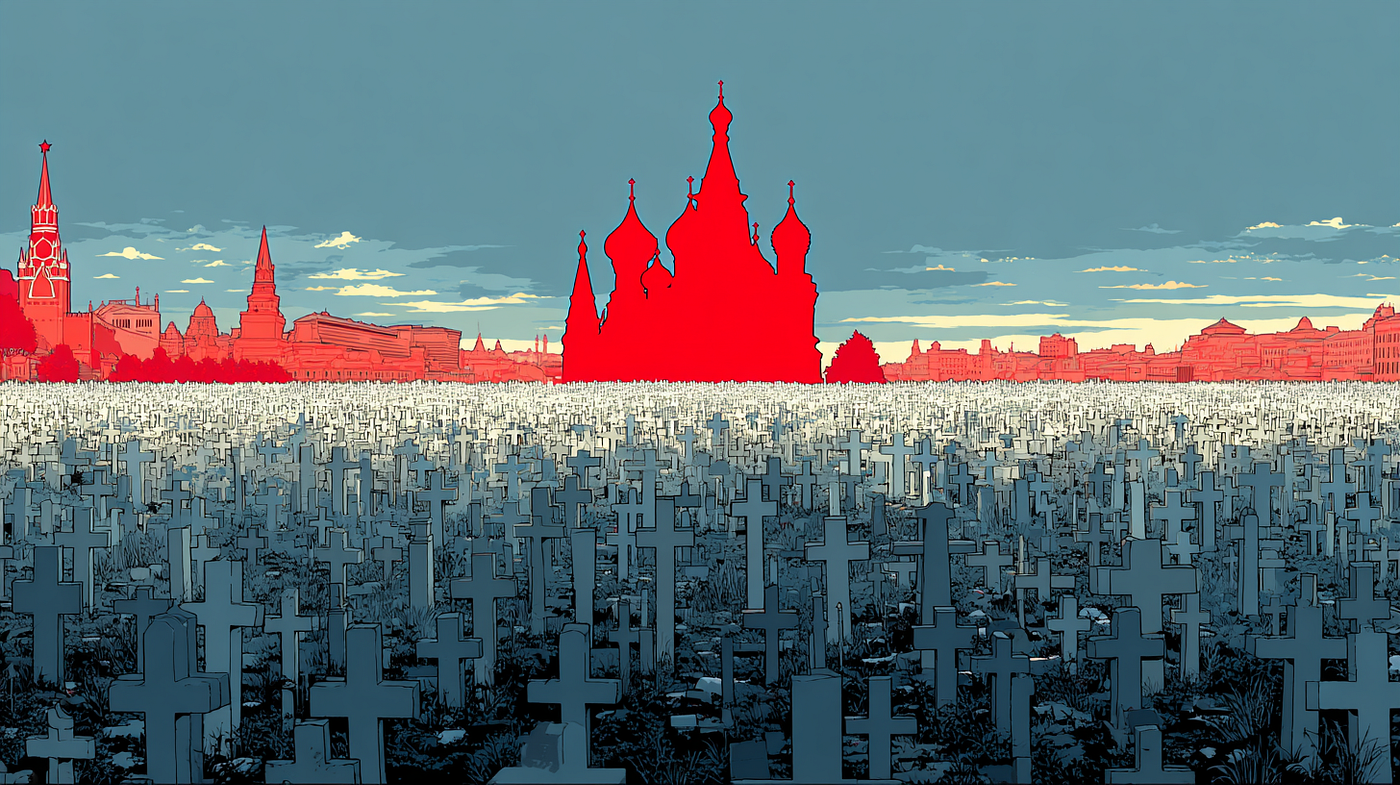
The Calculus Of Complicity: An Unsuccessful Operation Permitted To Be Special
Live from Ukraine 🇺🇦
The Calculus Of Complicity: An Unsuccessful Operation Permitted To Be Special
Live from Ukraine 🇺🇦
Dear Friends, We have bad news: the printed version of “La Ragione” will be discontinued starting June 2nd. This is a hard blow for us, as we won’t be able to rely on the small reimbursement from that cooperation anymore.
Now, we are alone and unsupported.
Kharkiv – Following Ukraine’s 2022 counteroffensives, several prominent figures in the Russian elite started seeking personal security guarantees from Kyiv. The motivation arose from a growing awareness that Putin’s “Special Military Operation” had been not only a strategic disaster but also a serious violation of international law – one whose consequences, they feared, could eventually target them personally.
Oligarchs facing increasing isolation began to reach out covertly to Ukrainian intelligence. Their aim was to find an exit route: a way to escape the situation Putin had created for them. They recognized that the political climate was changing and that being close to Kyiv might, under certain circumstances, offer greater safety than being near Moscow.
[embed]Proud to share with you the latest episode we recorded from the field for The Times of London’s “Frontline” — copyrighted media content The Times of London
Around that time, Andriy Yusov, a spokesman for Ukraine’s Military Intelligence, made a pointed observation about the psychology of the Russian leadership, suggesting that Putin and his inner circle would benefit greatly from watching the satirical film “The Death of Stalin” as a guide to what lies ahead. The film, he argued, provided instructive parallels to Russia’s current situation: a ruling class aware of the edge they’re on, yet constitutionally unable to step back from it.
The Russian population, meanwhile, remains caught in a system that controls its communications, shapes its perceptions, and sets the pace of daily life. This isn’t a recent development. It’s the result of generations – especially noticeable outside the more cosmopolitan areas of Moscow and Saint Petersburg – where disengagement from politics has hardened into a kind of civic identity. While dissatisfaction with state institutions is real, it has been gradually absorbed through indoctrination and censorship, so what’s left looks less like resistance and more like managed acceptance. Many haven’t just been silenced; they have adopted the regime’s narratives as their own – an example of Stockholm Syndrome scaled to an entire society.
The system supporting this condition goes well beyond the state itself. It influences schools, cultural institutions, and religious groups. Patriarch Kirill – who has long been involved in the Soviet and post-Soviet security environment – plays an important role in this ideological structure, linking religious practice to nationalist feelings and imperial loyalty. That’s why Ukraine’s legal actions against groups connected to the Moscow Patriarchate should not be viewed just as a religious conflict. They are a defensive step against an imperial network that has consistently blurred the line between church authority, propaganda, spy activities, and government influence.
[embed]Alla and I recorded this footage in Lutsk, Volyn, Ukraine 🇺🇦 — copyrighted media content Giorgio Provinciali
Russia’s current situation is that of a population conditioned to overlook threats to their freedoms – held not just by force but also by societal habits that have long ceased expecting anything different.
Within that society, however, public opinion has limited influence. What truly matters is the calculus of the elite – individuals embedded in a web of interests aligned with criminal enterprises, with Putin serving as its essential guarantor. At its core, the arrangement was one of mutual indifference: in exchange for complacency, the oligarchs gained access to wealth and Western markets. The war – which should be better described as a Special Unsuccessful Operation – shattered that compact without replacing it with something more stable.
Despite ongoing and well-documented battlefield failures, the elites were compelled to support a cause that clearly harmed their own interests. As Western sanctions grew stronger, more influential figures began to oppose the idea that their previous passivity should now result in outright subjugation. For a brief period, the situation resembled the biblical Philistines confronting Samson – aware of the destructive potential within their midst, unsure whether to act before it was too late.
That moment, however, has gone by.
Over the past two years, the mechanism has become much more visible. Russia did not regain strategic momentum because its army suddenly became efficient, modern, or capable of fixing the structural failures exposed in 2022. It regained operational space because time, Western hesitation, and political fragmentation gradually replaced the shock from Ukraine’s counteroffensives in Kharkiv and Kherson.
The war stopped being mainly about whether Russia could defeat Ukraine militarily, and instead became about whether the democratic world was willing to let Ukraine defeat Russia politically and territorially.
[embed]Mer reporting for Euronews from Kyiv, one week ago — copyrighted media content euronews
The Kursk campaign learly showed this contradiction. Ukraine proved once again that Russian territory was not somehow immune to war, that the Kremlin’s red lines were often just psychological barriers rather than real limits, and that Moscow could be pushed into strategic embarrassment.
However, the lack of a clear Western escalation plan kept this shock from causing a bigger break within the Russian system. Once again, Kyiv proved what was possible; once again, its partners turned possibility into caution.
It was precisely this environment in which the Russian elite adjusted.
In 2022 and 2023, many oligarchs and senior figures feared that Putin’s venture might end in defeat, confiscation, trial, or a violent power shift within Russia. By 2024 and 2025, their perception had shifted. The West was no longer seen as a unified bloc preparing Russia’s defeat, but as a tired and divided coalition trying to manage the war, freeze the battlefield, and keep communication channels open with Moscow. For those whose survival depends on accurately reading power, this distinction matters more than any moral argument.
[embed]Alla and I recorded this footage moments after one of the most terrible russian attacks against Kyiv, Ukraine 🇺🇦 — copyrighted media content Giorgio Provinciali
Donald Trump’s return to the White House shifted this perception from uncertainty to a clear strategic message. Trump didn’t invent Western self-deterrence, but he made it painfully obvious. The temporary halt of military aid and intelligence sharing with Ukraine in March 2025 showed Moscow – and those around Putin who think in terms of assets, leverage, and transactional power – that even the most vital support for Kyiv could be turned into pressure on the victim rather than on the aggressor. The subsequent restart of assistance didn’t erase that lesson. It confirmed it: Ukraine could be squeezed, tested, and forced to bargain under fire; Russia, meanwhile, could keep bombing, occupying, and negotiating from the ruins it created.
The minerals agreement between Washington and Kyiv added another layer to this perception. For Ukraine, it was also a way to anchor American interests to Ukrainian survival. For the Kremlin, especially for those around Putin who think in terms of assets, leverage, and transactional power, it reinforced the idea that the war was being framed as deals rather than justice. This is not a minor psychological detail.
Dictatorships and criminal elites do not ask whether they are right; they ask whether the cost of being wrong will ever become unbearable.
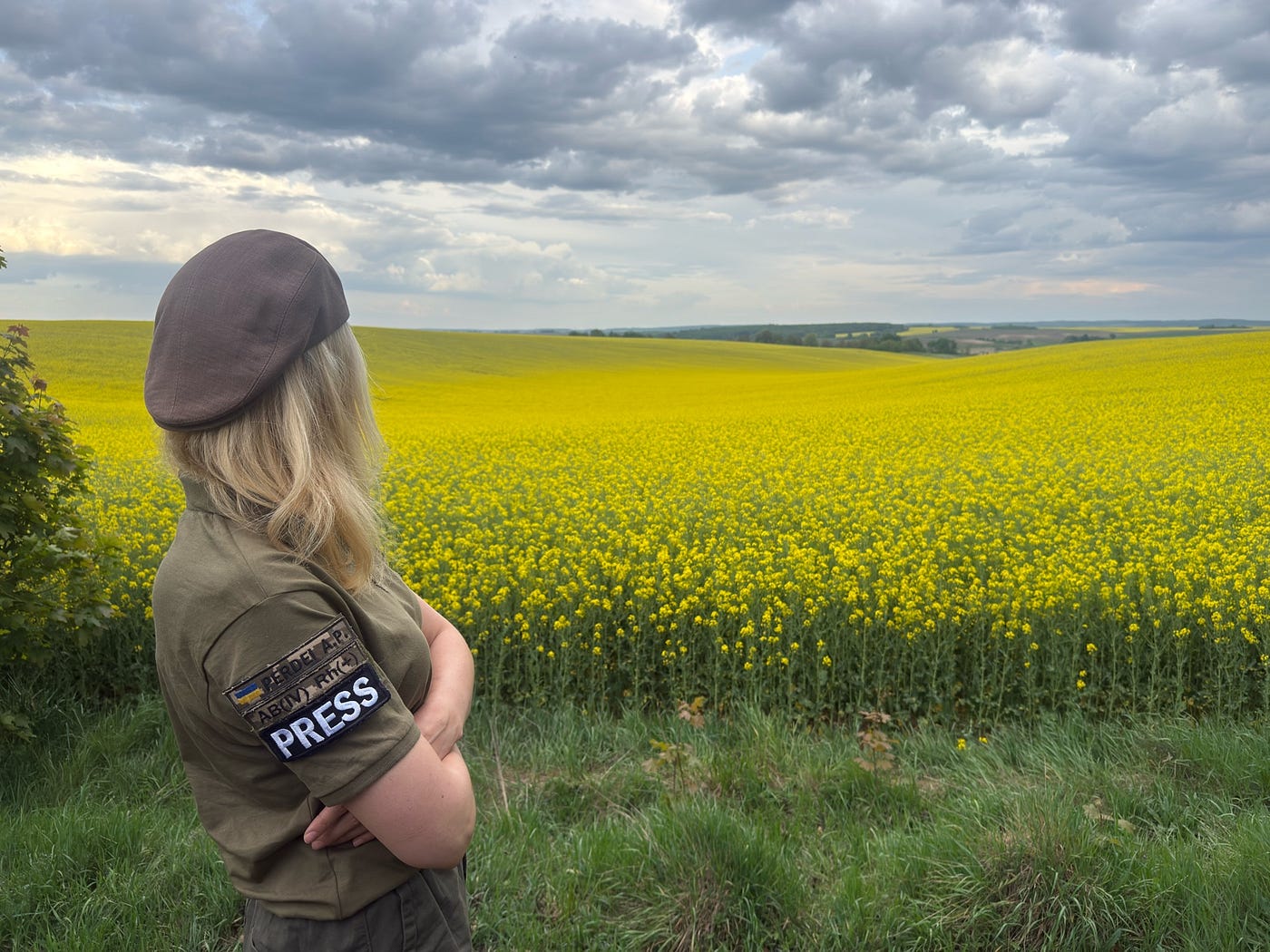
Alla and I could not help but stop in front of such a beautiful natural spectacle, in the Volyn region of Ukraine — copyrighted photo Giorgio Provinciali
The Russian oligarchic class has thus not become more genuinely loyal to Putin in any ideological sense. It is more convincing now that disloyalty might be more dangerous than loyalty. Many of these figures know well that the war was a disastrous mistake. They realize the decline of Russia’s economy, the dependence on China, the loss of Western markets, the militarization of society, and the long-term toxicity of being connected to a regime accused of aggression, deportations, torture, and mass killings. Still, they see that no credible external mechanism has appeared to make a clean break from Putin safer than staying under his protection.
This is why the comparison with “The Death of Stalin” remains so apt. The film isn’t just a satire of tyranny’s absurdity; it’s a study of the paralysis that grips a ruling class when every member is guilty, afraid, and waiting for someone else to act first.
Putin’s Russia operates on the same architecture of fear.
The elites don’t need to love the dictator; they only need to believe that everyone else is too compromised to betray him safely.
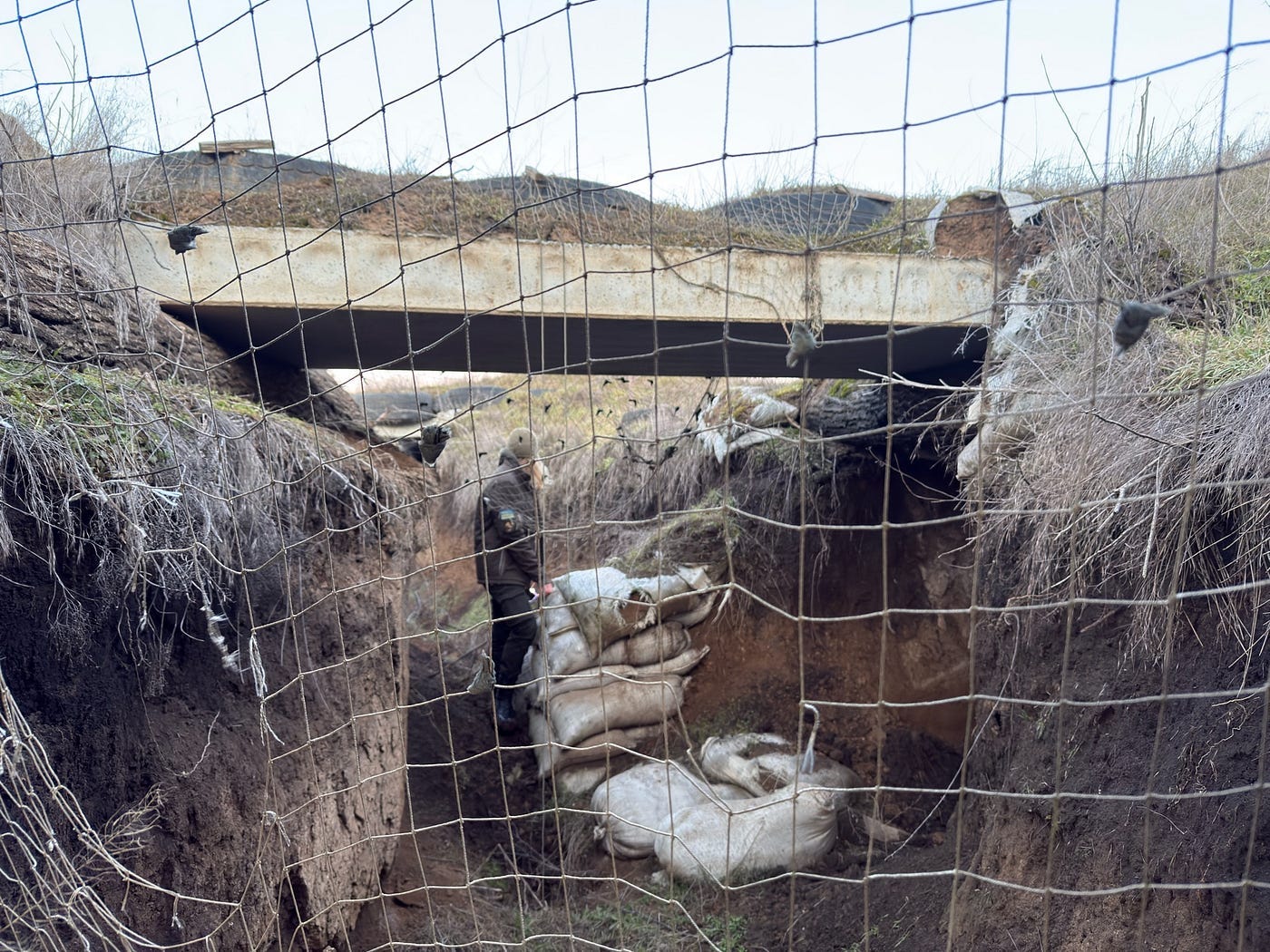
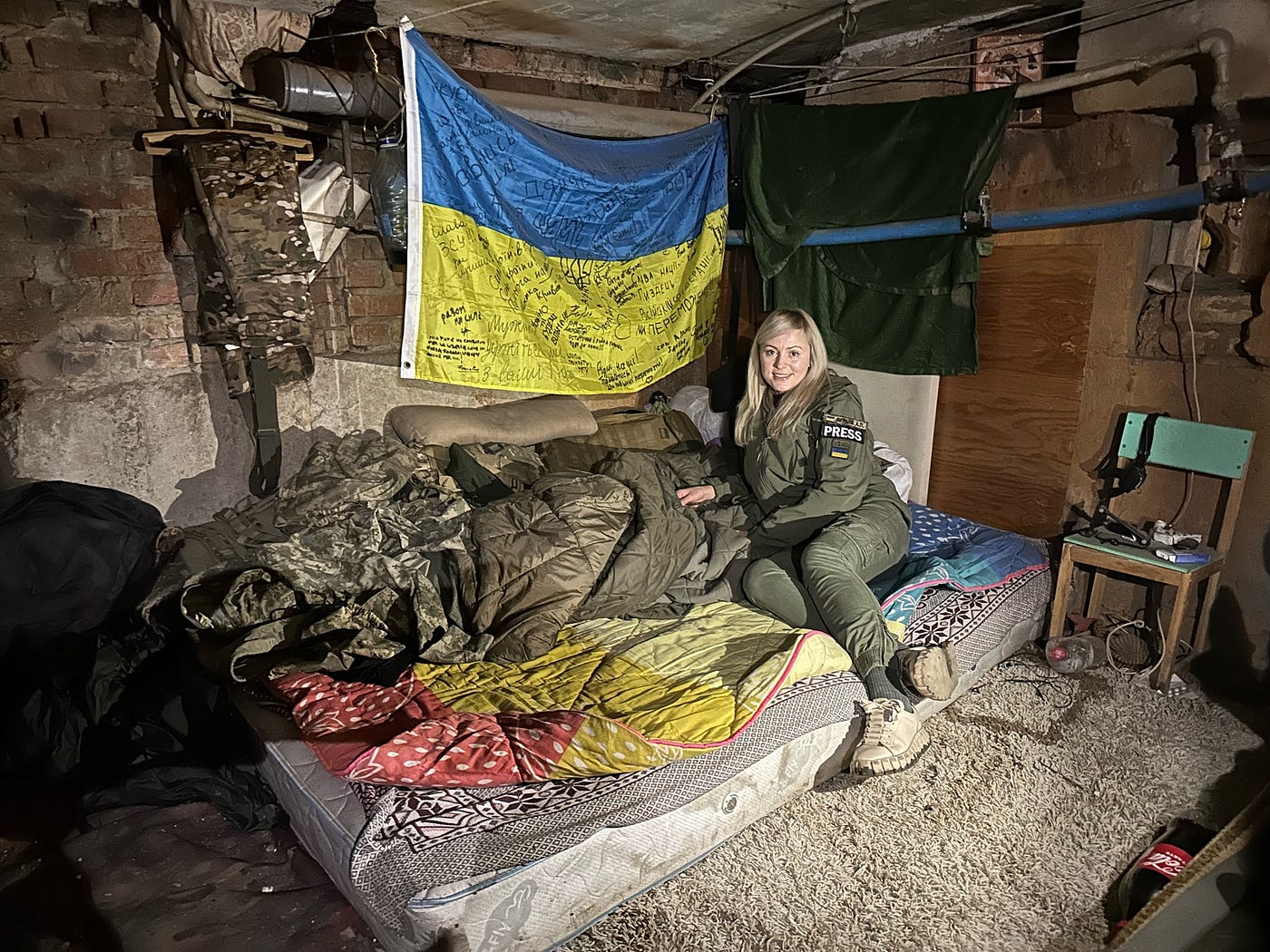
I took this picture of Alla while we were reporting from the trenches of what was once called ‘ground zero.’ Now, that definition is overwhelmed. — copyrighted photo Giorgio Provinciali
In this context, the West has unintentionally turned an initially unsuccessful military effort into a prolonged conflict from which the Kremlin has built a narrative of endurance. By restricting the flow of military aid during Ukraine’s most effective operational periods, and by imposing limits that repeatedly hindered Kyiv’s ability to strike the systems supporting Russia’s aggression, Western governments allowed Moscow to maintain its hold on occupied territories and gradually regain the initiative in several sectors.
The most dangerous consequence of the last two years is not only territorial but psychological. Every delayed weapons package, every artificial restriction on Ukrainian strike capabilities, and every public fantasy of a quick negotiated settlement without Russian defeat has strengthened the conviction among Putin’s entourage that time remains on their side. Russia has paid a huge price for very limited territorial gains, yet the Kremlin can still claim endurance as victory – because the West has too often refused to define victory for Ukraine as the restoration of justice.
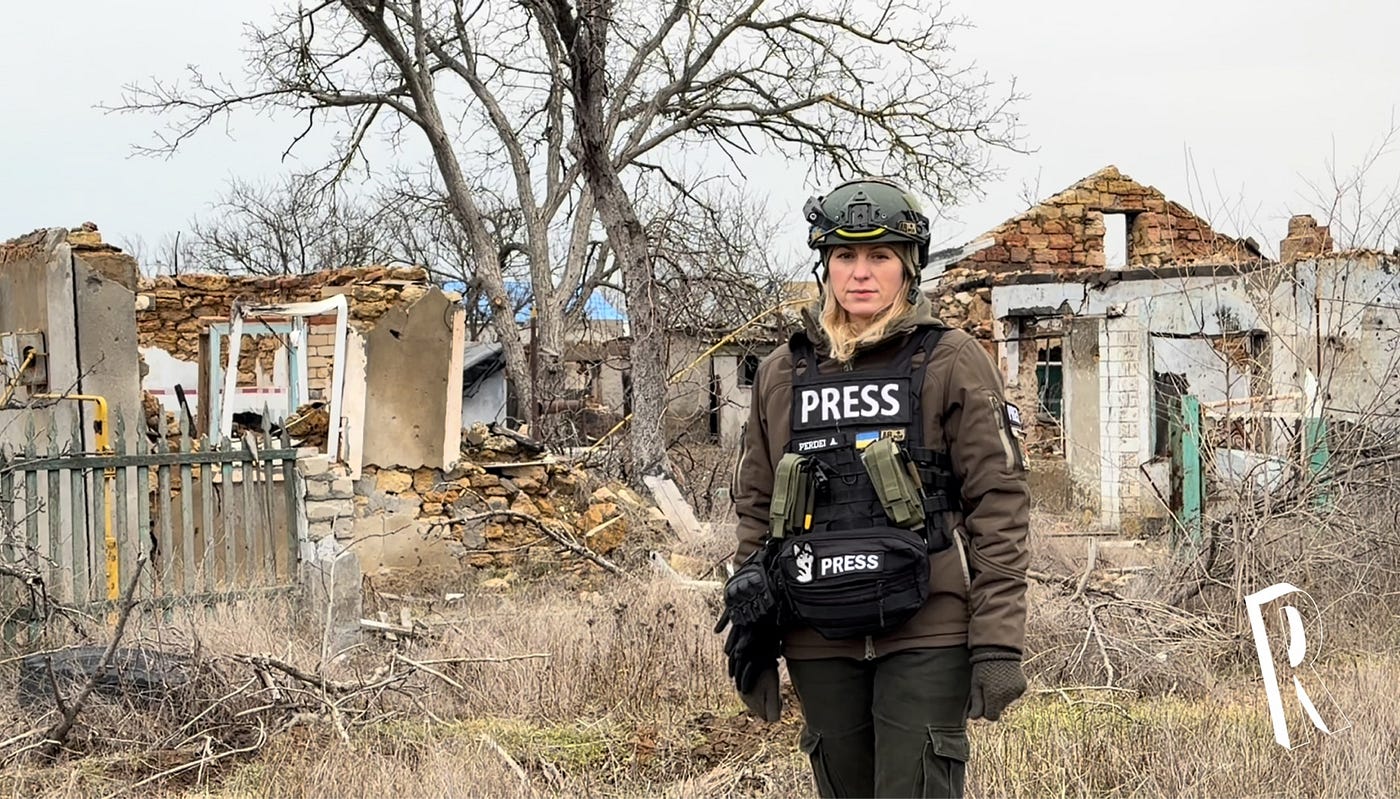
Alla while reporting with me for the Italian newspaper “La Ragione” from the kill zone of Kherson, Ukraine — copyirhgted photo Giorgio Provinciali
The emerging evidence indicates that the West is responsible not for Russia’s aggression, which is solely Moscow’s fault, but for allowing Russia to recover from a setback that, in 2022, was more politically manageable than many Western capitals were willing to accept.
The lessons of history seem to have been ignored once again.
The comparison with Czechoslovakia in 1938 is also political: the disaster was not just due to Hitler’s ambitions; it was also rooted in the illusion that his ambitions could be controlled by making concessions. Ukraine today faces the same issue in a modern form – the false belief that the aggressor’s ambitions can be managed more safely than the victim’s right to succeed.
History does not repeat itself mechanically, but it often repeats the cowardice of those who think that aggression can be controlled by feeding it controlled portions of someone else’s land.
Czechoslovakia in 1938 was not lost only because Hitler wanted it; it was lost because others convinced themselves that giving in to him would stabilize Europe.
[embed]Alla and I recorded this footage in Ukrainka, Ukraine 🇺🇦 — copyrighted media content Giorgio Provinciali
Putin’s regime will not start to break down when the Russian elite realizes that the war is immoral. It already knows this. It will only begin to crack when that elite understands that being complicit has become riskier than betraying.
The goal of the West should have been to create exactly that calculation. Instead, more often than not, it has had the opposite effect.
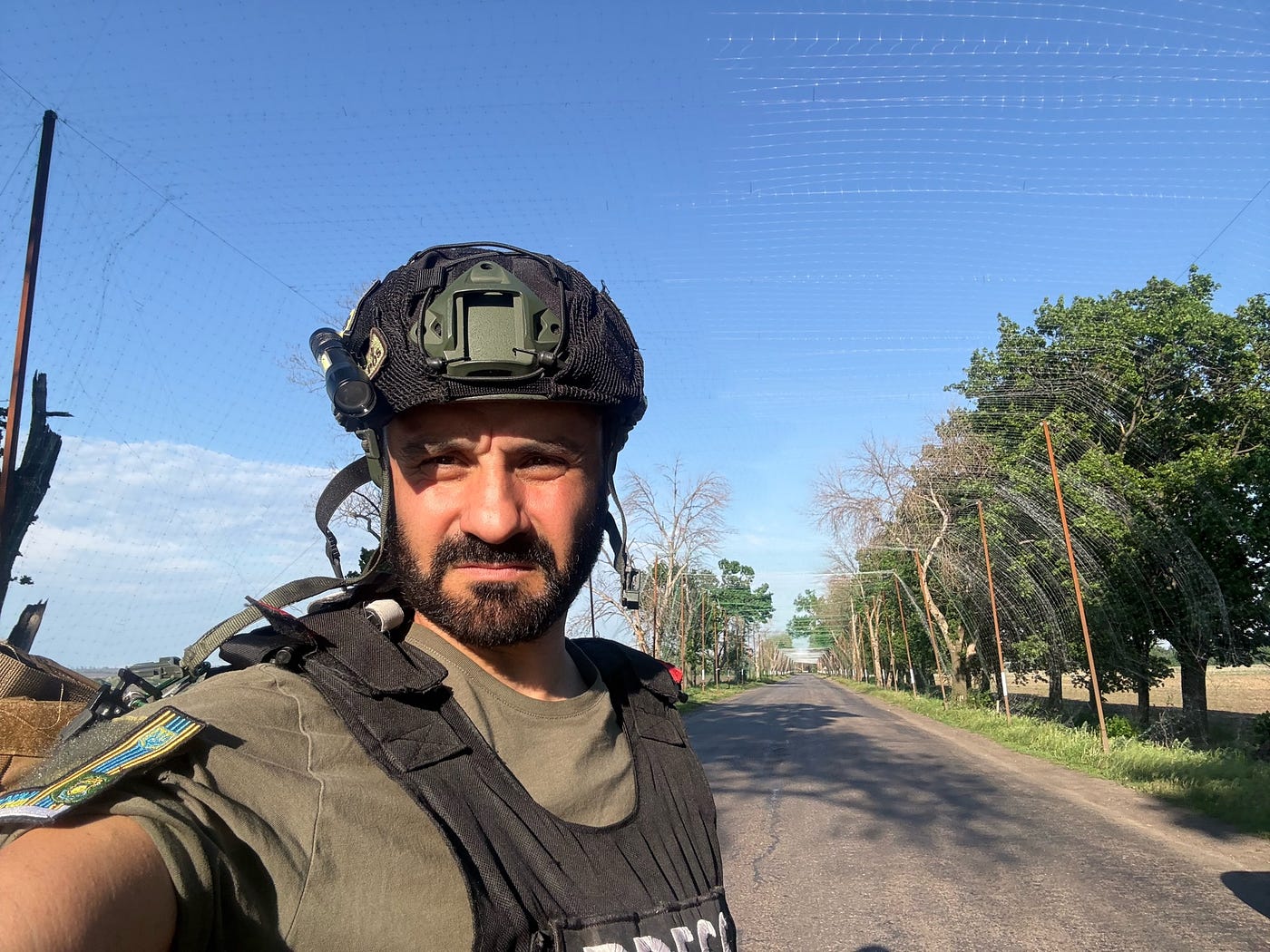
me reporting from the anti-drones corridors in Ukraine’s Donbas a couple of days before writing this article – copyrighted photo Giorgio Provinciali
In 1.558 days of war, we recorded over 300 videos from ground zero and wrote more than 1,600 articles.
We are doing our best to provide genuine, first-hand reports from zones where almost no press dares to go. This means living in a kill zone constantly. We take the risk, but without your invaluable support, our voices would remain unheard and silent. Without brave people sharing our articles from afar, they would remain unread. Our reports would go unseen, and our efforts would be lost. There’s still a lot of work to do here, as the people around us are also in no better situation.
We’re renewing our fundraising campaign and thanking everyone who joins us in helping to restore what Russia is destroying. Moving forward with only a small reimbursement for each article from a brave newspaper that believes in us is extremely challenging. That’s why we are grateful to all the kind people who support us and trust in our mission.
Even a small donation helps.
We’ll keep you updated on developments.
Thank you all, dear friends 💙💛
Some simple hints to make this article more visible:
- Use this ‘friend link’ to share this article: https://medium.com/@giorgioprovinciali/b4887f67d5e2?sk=83394dd4c2a2067921f14a3a0c97445a
- Holding the👏🏽 button allows up to 50 ‘claps’
- Click on the arrows to repost this article
- Leave a comment
Here’s a playlist that includes lots of videos we recorded over 4 years:
https://www.youtube.com/playlist?list=PLmIio7cmINntHr9tMgmz5z4vEAbY7B
메타데이터
- post_id
- b4887f67d5e2
- slug
- the-calculus-of-complicity-an-unsuccessful-operation-permitted-to-be-special-b4887f67d5e2
- url
- https://medium.com/@giorgioprovinciali/the-calculus-of-complicity-an-unsuccessful-operation-permitted-to-be-special-b4887f67d5e2
- canonical_url
- https://medium.com/@giorgioprovinciali/the-calculus-of-complicity-an-unsuccessful-operation-permitted-to-be-special-b4887f67d5e2
- author_url
- https://medium.com/@giorgioprovinciali
- status
- ok
- fetched_at
- 2026-06-09 15:37:30