Nobody Told You: Backlinks Didn’t Die in the AI Search Era — They Got Weirder
Let’s start with the thing nobody wants to admit out loud.
Nobody Told You: Backlinks Didn’t Die in the AI Search Era — They Got Weirder

Let’s start with the thing nobody wants to admit out loud.
In 2023, everyone panicked that AI would kill SEO. In 2024, everyone panicked that AI Overviews would kill organic traffic. In 2025, everyone panicked that ChatGPT and Perplexity would kill Google itself.
And now it’s 2026, and… Google is still here. Backlinks are still here. They just don’t work the way your favorite SEO YouTuber explained them in 2019.
If you’re still building links like it’s five years ago, you’re not wrong exactly — you’re just optimizing for half the internet. Here’s what actually changed, what didn’t, and what to do about it.
The Search Box Isn’t the Only Thing Reading Your Links Anymore

Here’s the shift that matters most: your backlinks are no longer just being crawled by Googlebot. They’re being ingested, weighed, and synthesized by large language models that answer questions directly — without a single blue link in sight.
When someone asks ChatGPT “what’s the best project management tool for small teams,” it isn’t running a traditional PageRank calculation. But it is drawing on training data and live retrieval that’s shaped, in part, by which sites are cited, linked to, and referenced across the web repeatedly and consistently.
Translation: backlinks are still a trust signal. They’re just being read by more than one kind of “search engine” now — and some of those engines don’t send you a click at all. They just synthesize an answer and move on.
This is the uncomfortable truth of 2026: you can win the citation and lose the visit. Welcome to answer-engine optimization.
Three Things Backlinks Do Now That They Didn’t Do in 2020

1. They train the model, not just the crawler. Content that gets linked to repeatedly, by credible sources, is more likely to be treated as a reliable reference point when AI systems are retrieving or reasoning about a topic. A link isn’t just a vote for ranking anymore — it’s a vote for being cited in an AI-generated answer.
2. They anchor your brand across a fragmented search landscape. People aren’t just Googling anymore. They’re asking Claude, ChatGPT, Gemini, and Perplexity the same questions they used to type into a search bar. A backlink profile that’s concentrated on a handful of big domains looks thinner and less trustworthy across all of these systems than one that’s genuinely diversified across real, relevant sites in your niche.
3. They still drive direct discovery — arguably more than before. Ironically, in a world flooded with AI-generated content, links from real humans on real sites carry more weight than they used to, not less. Anyone can generate a thousand words about backlinks in ten seconds now (yes, the irony is not lost on me). A genuine, editorially-earned backlink is now a scarcer, more valuable signal than it was when content itself was the bottleneck.
The Content Flood Changed the Math
Here’s the part most people are sleeping on: AI made it trivially easy to produce content, which means the web is now drowning in more mediocre articles than at any point in its history.
That sounds like bad news. It’s actually good news for backlinks.
When everyone can produce content, content stops being the differentiator. Trust signals become the differentiator. And the two trust signals that AI-generated content can’t easily fake are:
- A real backlink from a real, established site that chose to cite you
- A real reputation built over time across a consistent link footprint
This is why, counterintuitively, backlink strategy in 2026 matters more than it did in 2021 — not less. The bar for “content that exists” collapsed to zero. The bar for “content that’s trusted enough to be linked to” didn’t move at all.
What Actually Works Right Now
Strip away the hype and the 2026 backlink playbook looks like this:
Get cited by humans who have skin in the game. Journalists, niche bloggers, industry newsletter writers. If a real person with a real reputation is willing to put their name next to a link to your site, that link is doing double duty — human trust signal and machine trust signal.
Build things, not just articles. Free tools, calculators, original data sets, and interactive resources still attract organic links at a rate that generic blog posts can’t touch, precisely because they’re harder for AI to generate convincingly and easier for other creators to cite as a primary source.
Track your link profile like you track your ad spend. With more AI-generated spam links circulating than ever, blindly acquiring backlinks without auditing them is riskier now than it’s ever been. This is where a dedicated backlink tracking platform earns its keep — something that lets you see your links organized and categorized rather than as one undifferentiated pile. A tool like Backlinks Master is built around exactly this idea: sorting backlink opportunities and existing links into categories so you can tell at a glance what’s relevant, what’s noise, and where the gaps in your niche coverage actually are.
Diversify across surfaces, not just domains. It’s no longer enough to think “high authority site = good link.” Increasingly, it matters where in the AI ecosystem that site shows up — is it frequently cited by AI answer engines? Does it get referenced across multiple platforms, not just ranked in classic search?
What Doesn’t Work Anymore (If It Ever Did)
- Mass-produced AI guest posts on low-effort sites. These are now trivially detectable — by both search algorithms and, ironically, by other AI systems trained to spot synthetic content patterns.
- Link farms and PBNs. Riskier than ever. Spam detection has scaled right alongside spam generation.
- Exact-match anchor text stuffing. Still a red flag. Still not subtle. Still not worth it.
- Chasing a single metric. Domain Rating, Domain Authority, whatever your tool of choice calls it — treating one number as the whole story was always a mistake, and it’s an even bigger one now that relevance and topical trust matter more than raw authority scores.
The New Anatomy of a “Good” Backlink
If you’re used to judging a backlink by domain authority alone, it’s worth updating that mental model entirely. In 2026, a genuinely valuable backlink tends to check several boxes at once, not just one:
It comes from a site that publishes consistently, not sporadically. Dormant domains that suddenly link out after months of silence look increasingly suspicious to both algorithmic and AI-based trust systems. Active, regularly updated sites signal an actual human editorial process behind the scenes.
It sits inside content that demonstrates real expertise. This is where “helpful content” signals and AI-citation worthiness start to overlap. A link buried in a thin, templated article does less work than one embedded in a piece that clearly reflects firsthand knowledge — data, screenshots, specific examples, an actual point of view.
It’s discoverable across more than one platform. A link that only exists on a page indexed by classic search, with no social signal, no newsletter mention, no secondary citation anywhere else, reads as more isolated — and isolated citations are weaker evidence of genuine authority than links that show up as part of a broader pattern of mentions.
It survives scrutiny. Ask yourself: if someone manually reviewed this link in six months, would it still look legitimate? Rented links, expired-domain link injections, and PBN placements often don’t survive that test. Editorially earned links almost always do.
None of this is really “new” advice, if you squint. It’s the same core principle SEOs have repeated for over a decade — earn links, don’t manufacture them. What’s changed is the cost of ignoring that advice. The tolerance for manipulation has shrunk as detection systems, both traditional and AI-driven, have gotten dramatically better at pattern recognition.
Why AI Made Low-Quality Links Riskier, Not Safer
There’s a popular myth going around that because AI systems answer questions directly, backlinks matter less, and therefore the risk of chasing lower-quality links has gone down too. It’s exactly backwards.
Spam detection systems in 2026 are themselves powered by machine learning models trained on enormous datasets of link patterns. These systems are far better than their 2018 counterparts at recognizing the fingerprints of manipulated link networks: sudden bursts of backlinks, repetitive anchor text distributions, links clustered around freshly registered or recently repurposed domains, and content that reads as synthetically generated filler wrapped around a link.
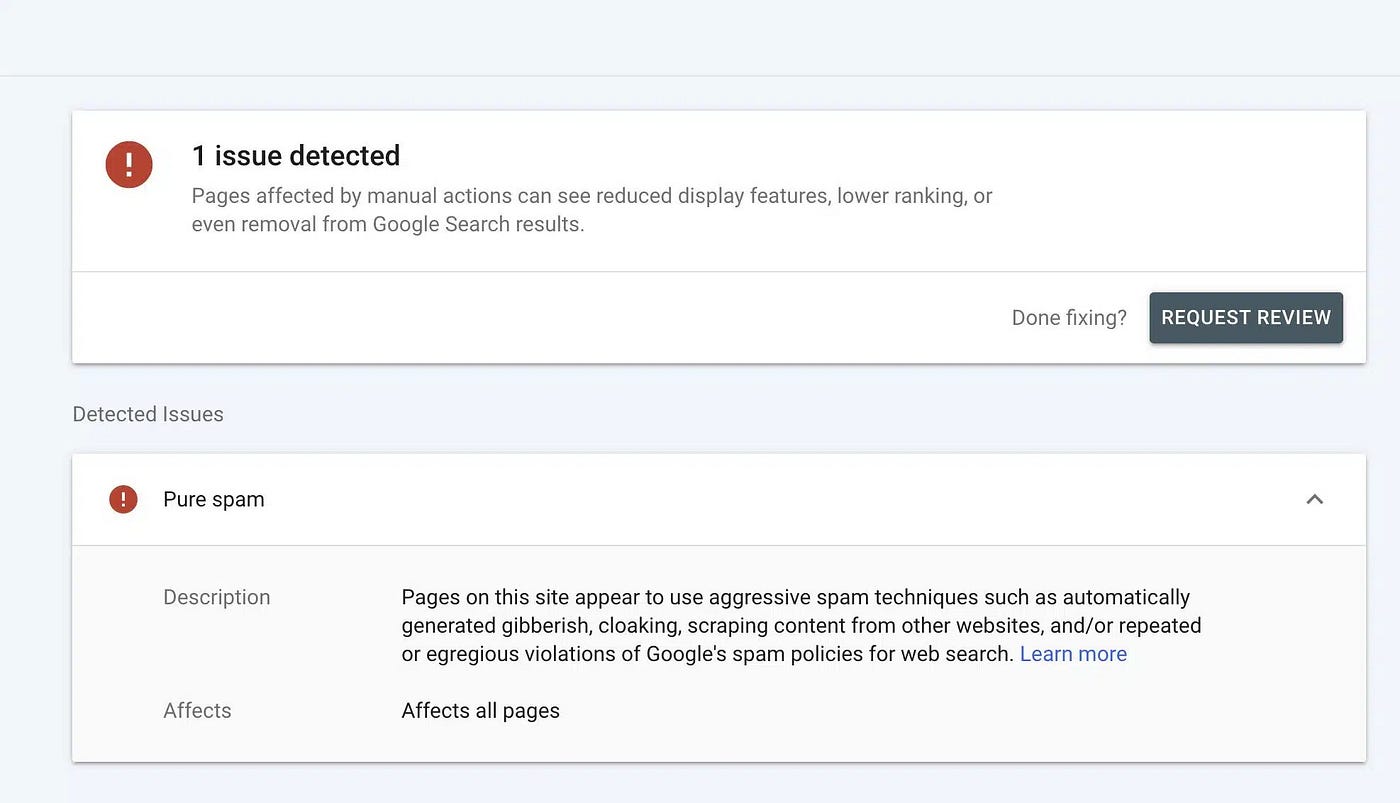
At the same time, the volume of low-effort, AI-generated spam content has exploded, which means search engines and platforms have had every incentive to get aggressive about filtering it out. A backlink strategy built on quantity over quality isn’t just less effective than it used to be — it’s actively more dangerous, because it’s now easier to get flagged, and the downside of a manual action or algorithmic demotion hasn’t gotten any smaller.
The irony is thick: the same AI wave that made spam content cheap to produce also made spam detection cheap to deploy at scale. Both sides of that arms race got faster. Only one side benefits your site long-term.
The Rise of “Citation Surfaces” Beyond Google
Something worth sitting with: your backlink strategy in 2026 has to account for surfaces that didn’t exist, or barely existed, a few years ago.
AI chat assistants now answer millions of queries a day that used to be typed into a search bar. Being referenced — even without a clickable link — inside those answers is a new, semi-measurable form of visibility.
AI Overviews and generated summaries sit directly on top of traditional search results, often answering the query before a user ever scrolls to the organic listings. Being cited as a source within that summary box is arguably more valuable now than ranking #3 the old-fashioned way, because it’s the thing most people actually read.
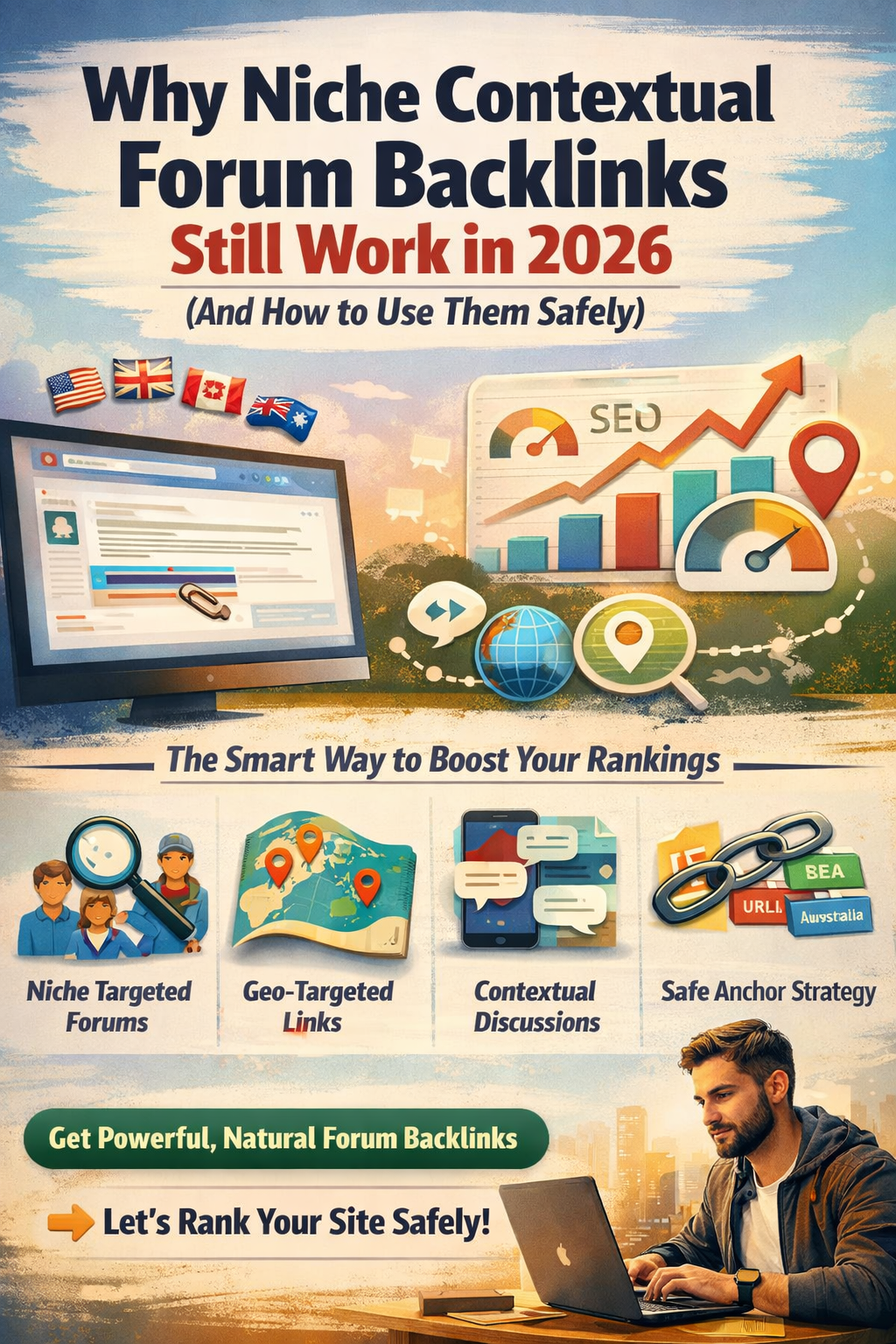
Community and forum platforms have become unlikely SEO heavyweights, in part because AI systems have learned to weight lived, first-person experience highly when synthesizing answers. A genuine, detailed answer on a niche forum, linking back to a resource you built, can carry surprising influence.
Newsletter and creator ecosystems function as a kind of shadow link graph. A mention in a well-read industry newsletter might never show up in a traditional backlink checker at all, yet it still shapes how visible and “known” your brand becomes across the wider information ecosystem AI systems are trained and retrieved from.
The practical implication is that a modern backlink strategy can’t just be “get listed on high-DR websites.” It has to think in terms of surfaces: where are the places, beyond classic search, where a citation or mention meaningfully shapes how visible you are?
A Simple Framework for 2026 Link Building

If all of this feels like a lot to track, here’s a simplified way to think about where to spend your effort.
Tier 1 — High-trust editorial citations. Journalists, established industry publications, respected niche blogs with real audiences. Slow to earn, highest value, hardest to fake. This should be the foundation of any serious strategy.
Tier 2 — Community and expertise-driven mentions. Forums, Q&A platforms, creator newsletters, and niche communities where genuine expertise gets rewarded with organic citation. Faster to earn than Tier 1, still carries real weight, and increasingly influential in how AI systems synthesize answers.
Tier 3 — Structural and directory links. Business directories, resource pages, partner and vendor listings. Lower individual impact, but still useful for establishing baseline legitimacy and discoverability, as long as the directories themselves are reputable and relevant.
Tier 4 — Self-owned and adjacent properties. Your own additional domains, social profiles, and owned media. These aren’t “backlinks” in the classic sense, but they reinforce the same trust signals across the wider ecosystem AI systems and search engines are increasingly evaluating holistically.
Most sites over-invest in Tier 3 because it’s the easiest to execute at scale, and under-invest in Tier 1 because it’s the hardest. That imbalance is exactly why so many backlink profiles look bloated but thin — lots of links, not much actual trust behind them.
Auditing Your Link Profile Without Losing Your Mind
None of this matters if you don’t actually know what your current backlink profile looks like. And here’s where most people get stuck: staring at an unsorted export of a few thousand backlinks with no clear sense of which ones are helping, which are neutral, and which might be quietly working against you.
This is exactly the kind of problem a categorized backlink tool solves better than a raw spreadsheet ever will. Instead of treating every link as an undifferentiated data point, a platform like Backlinks Master groups backlink opportunities and existing links into categories, which makes it far easier to spot where your niche coverage is strong, where it’s thin, and where you might be over-indexed on one type of link (directories, say) while under-indexed on the higher-trust editorial citations that actually move the needle.
A practical audit routine worth adopting:
- Pull your full backlink profile at least once a quarter, not just when something looks wrong.
- Sort by relevance and category, not just raw authority score. A moderately authoritative site in your exact niche often outperforms a high-authority site with no topical connection to you.
- Flag anything that looks synthetic — sudden bursts, repetitive anchor text, low-effort surrounding content — and consider whether it needs to be disavowed.
- Identify your gaps, not just your wins. If a competitor has strong coverage in a category you’re missing entirely, that’s a roadmap, not just a comparison.
- Revisit your top referring domains to make sure they’re still active, still reputable, and still linking — sites do get sold, repurposed, or abandoned, and a once-great backlink can quietly rot.
What This Means If You’re Starting From Zero
If you’re building a link profile from scratch in 2026, resist the urge to do everything at once. Start with one or two Tier 1 opportunities that are realistically within reach — a niche publication you actually have a relationship with, a journalist covering your space who’d genuinely benefit from a data point you can offer. Layer in Tier 2 community engagement consistently, not as a one-off campaign. Use Tier 3 directory and resource links to establish baseline legitimacy early, since these are the fastest to secure. And treat Tier 4 — your own owned properties — as scaffolding that supports everything else, not a substitute for it.
The mistake most newcomers make is trying to shortcut straight to volume, because volume is what’s easy to measure and easy to buy. But a thin pile of low-trust links is worse than no links at all in an ecosystem where detection has gotten this sophisticated. Slow and relevant beats fast and generic, every time this gets tested.
So Where Does That Leave You?
Backlinks in 2026 aren’t a relic of old-school SEO. They’re arguably more valuable, precisely because they’re harder to fake in an internet full of AI-generated noise. The game didn’t end — it just got a second scoreboard. You’re no longer just optimizing to rank on a results page; you’re optimizing to be the source an AI system trusts enough to cite when someone asks it a question instead of typing it into Google.
The fundamentals haven’t disappeared. Earn links from real, relevant, credible sources. Avoid shortcuts that were always going to age badly. Track what you have instead of guessing, using categorized tools rather than raw, undifferentiated exports. And build things worth linking to — because in a world where anyone can generate content instantly, being worth citing is the only moat left.
The sites that will look strongest five years from now aren’t the ones chasing every algorithm update as it drops. They’re the ones that quietly kept doing the unglamorous work — earning real trust, from real sources, one relevant link at a time — while everyone else was busy arguing about whether backlinks still mattered at all.
메타데이터
- post_id
- b49f7faeb655
- slug
- nobody-told-you-backlinks-didnt-die-in-the-ai-search-era-they-got-weirder-b49f7faeb655
- url
- https://medium.com/@ozilkhan.hk/nobody-told-you-backlinks-didnt-die-in-the-ai-search-era-they-got-weirder-b49f7faeb655
- canonical_url
- https://medium.com/@ozilkhan.hk/nobody-told-you-backlinks-didnt-die-in-the-ai-search-era-they-got-weirder-b49f7faeb655
- author_url
- https://medium.com/@ozilkhan.hk
- status
- ok
- fetched_at
- 2026-08-28 03:43:32