A Gentleman’s Glossary of AI Terms (For People Who Are Tired of Pretending They Know What RAG…
You’re in a meeting. Someone says “we should implement RAG to reduce hallucinations in our LLM pipeline using a larger context window.”

A Gentleman’s Glossary of AI Terms (For People Who Are Tired of Pretending They Know What RAG Means)
You’re in a meeting. Someone says “we should implement RAG to reduce hallucinations in our LLM pipeline using a larger context window.”
You nod. You look thoughtful. You take a sip of water.
You have absolutely no idea what just happened.
This is for you.
Token
The AI industry’s polite way of avoiding the word “money.”
Technically, a token is a small chunk of text, roughly three to four characters, or about three quarters of a word. Models don’t read sentences. They read tokens.
Practically, a token is the unit your AI bill is calculated in, and the reason why pasting your entire novel into ChatGPT costs more than you expected.
“We’re running low on tokens” means “we’re running low on budget.”
Context Window
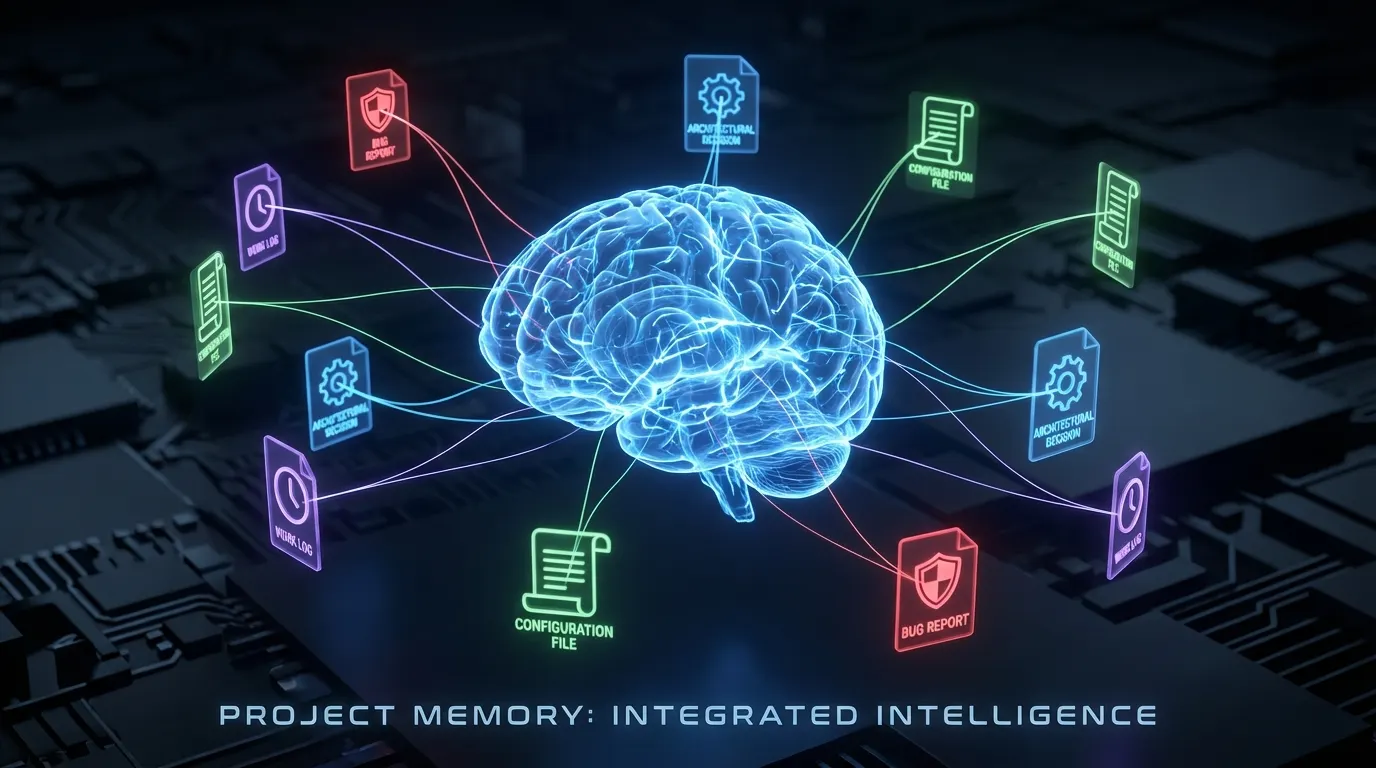
The AI’s short-term memory. Everything it can see, know, and remember during your conversation, measured in tokens.
Once something falls outside the context window, the AI forgets it. Completely. Not “vaguely remembers it.” Gone.
Think of it as talking to someone who has a notepad with a fixed number of lines. Once the notepad is full, they start erasing from the top to write at the bottom. You mention something from two hours ago and they look at you blankly. That’s context window overflow.
The industry has been making these notepads dramatically larger. They used to hold 3,000 words. Now some hold the equivalent of several novels. This did not kill RAG. More on that below.
“The model lost context” means “it forgot what you were talking about and is now confidently making things up.”
RAG, Retrieval Augmented Generation
When an AI admits it doesn’t know something and quietly looks it up before answering, while maintaining total composure.
Instead of relying only on what the model learned during training, RAG lets it search through a specific set of documents you give it, your company handbook, your product docs, last quarter’s reports, and pull in relevant information before generating a response.
Why this matters: AI models stop learning the moment training ends. RAG gives them access to current, specific, or private information without retraining the entire model from scratch.
Think of it as the difference between asking someone what they already know versus giving them a library card first.
“We built a RAG pipeline” means “our AI can now answer questions about our actual business instead of confidently inventing answers.”
Hallucination
When an AI states something completely false with the energy of someone who has never been wrong in their life.
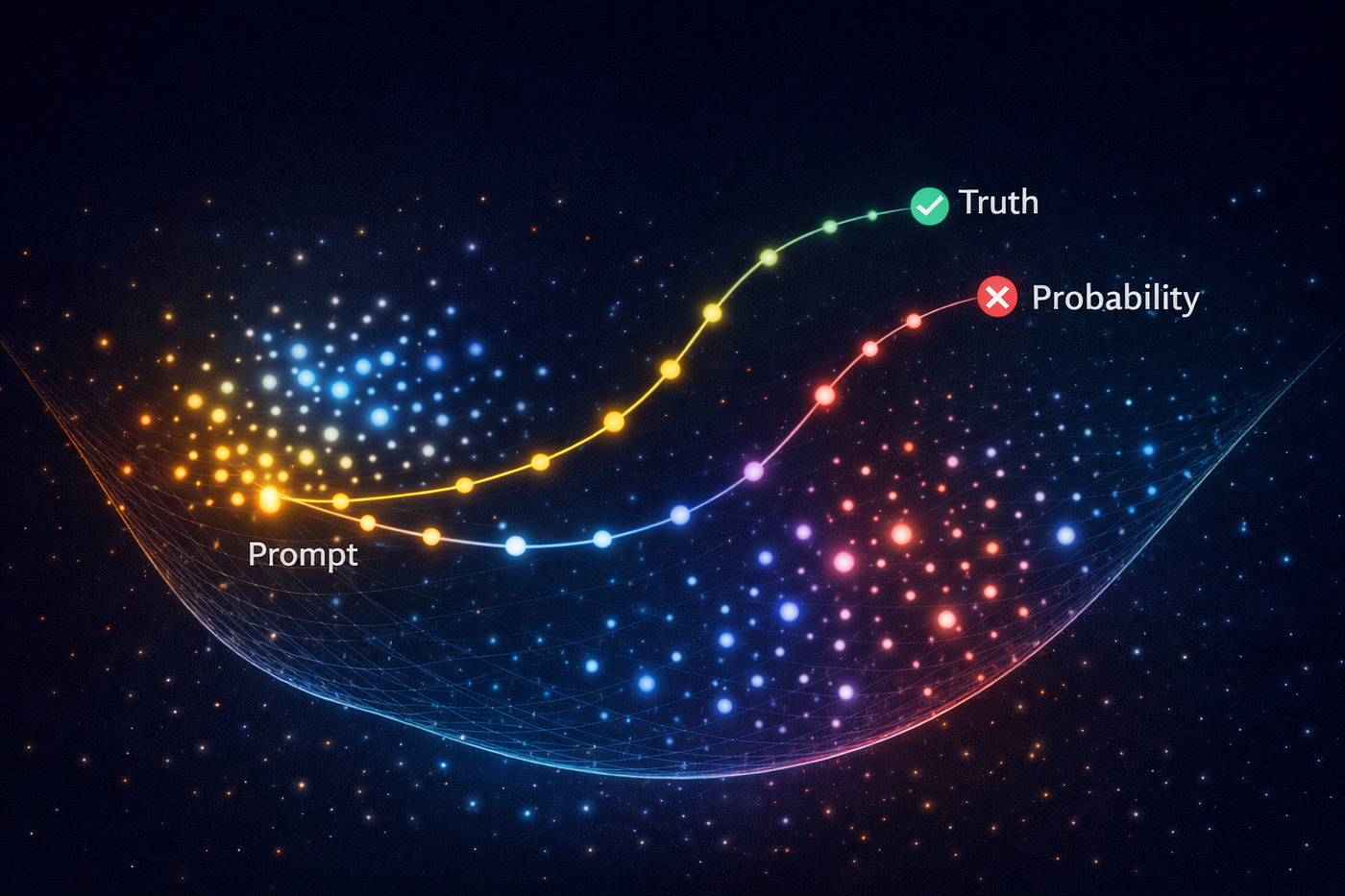
Not a glitch. Not a bug they forgot to fix. A fundamental characteristic of how these models work. They predict what the next word should be. Sometimes the most statistically likely next word is incorrect. The model doesn’t know the difference between confident and correct.
The industry chose the word “hallucination” because it sounds like a fascinating quirk rather than “the AI just lied to you and cited a paper that doesn’t exist.”
“The model hallucinated” means “it fabricated that citation, that statistic, and possibly that entire historical event.”

LLM, Large Language Model
The thing everyone is talking about. The engine under every AI chatbot, writing tool, and coding assistant you’ve used in the last two years.
It learned by reading an incomprehensible amount of text, books, websites, code, conversations, and got very good at predicting what word comes next. Do that billions of times with enough parameters and you get something that appears to understand language.
“Large” refers to the number of parameters, the mathematical values the model adjusts during training. Your brain has approximately 100 trillion synapses, in case you needed perspective.
Used everywhere. Constantly. Often by people who couldn’t explain what it stands for.
Parameters
The numbers that make a model smart. Or not.
During training, a model adjusts billions of tiny mathematical values, parameters, to get better at predicting text. The more parameters, the more the model can learn. GPT-4 has an estimated 1.8 trillion.
When someone says “a larger model” they usually mean more parameters. More parameters means more capability but also more cost, more memory, more compute. This is why running the biggest models on your laptop is not an option.
“A 70 billion parameter model” means “a very capable model that will still confidently tell you the wrong thing occasionally.”
Training Data
The internet. Plus books. Plus code. Plus a lot of things nobody fully disclosed.
Training data is everything the model learned from. The quality and composition of this data determines what the model knows, what biases it has, what languages it speaks well, and what topics it handles poorly.
When an AI has a knowledge cutoff, a date after which it doesn’t know what happened, that’s because training data collection stopped at that point. The model didn’t live through 2025. It read about up to a certain date and then stopped.
“The model wasn’t trained on that” means “it has no idea what you’re talking about and is about to guess.”
Fine-tuning
Sending a model back to school for a very specific subject.
A base LLM knows a little about everything. Fine-tuning takes that model and trains it further on a specialized dataset, medical records, legal documents, your company’s customer service transcripts, so it becomes significantly better at one specific domain.
The difference between a general practitioner and a specialist, except the specialist was a generalist two weeks ago and learned everything over a long weekend.
“We fine-tuned the model on our data” means “we made it stop giving generic answers and start giving answers relevant to us.”
Embeddings
The part of the explanation where most people’s eyes glaze over. Bear with me.
An embedding is a way of turning words into numbers so that a computer can understand meaning, not just spelling. Words with similar meanings end up with similar numbers. “King” and “Queen” are closer together in this numerical space than “King” and “Refrigerator.”
Why you care: embeddings are what make search actually work in AI systems. When you ask a question and the system finds the relevant document, it’s matching your question’s embedding against the embeddings of everything in the database.
“We vectorized our knowledge base” means “we converted all our documents into numbers so the AI can find relevant information instead of guessing.”
Vector Database
Where embeddings live.
A regular database stores text, numbers, dates. A vector database stores those lists of numbers, embeddings, and is specifically built to search through them at speed. Find me everything similar to this query. Return it ranked by relevance.
Always shows up next to RAG because RAG needs somewhere to store and search the documents it retrieves from. They are friends.
“We set up a vector DB” means “we gave our AI a properly organized filing cabinet instead of a pile on the floor.”

Temperature
The dial that controls how surprising the AI is.
Low temperature, the model picks the most statistically likely word every time. Predictable, consistent, slightly boring. Good for factual tasks where you want the same answer every time.
High temperature, the model occasionally picks less likely words. More creative, more varied, occasionally unhinged. Good for creative writing, bad for medical advice.
Most AI tools set this for you silently. When outputs feel too robotic, temperature is often why. When they feel too chaotic, also temperature.
“Turn up the temperature” means “make it less predictable” not “make it angrier.”
Prompt
The thing you type. Yes, it has a technical term.
A prompt is any input you give to a model to get a response. Your question. Your instruction. Your example. Your entire carefully worded paragraph explaining exactly what you need.
The reason it became jargon is that the way you write a prompt dramatically changes what you get back. Same model, different prompt, completely different output. This led to a brief period where people called themselves “prompt engineers” and charged accordingly.
“Prompting” is just talking to an AI with intention. You’ve been doing it.
Prompt Engineering
The art of talking to an AI in a way that produces useful results instead of technically-correct-but-completely-unhelpful results.
It became a job title. Briefly. The industry is now arguing about whether it’s a real skill or just “knowing how to ask questions properly.” Both sides have a point.
The honest truth: giving context, specifying format, providing examples, telling it what NOT to do, these things matter. Whether that constitutes “engineering” is a philosophical question above my pay grade.
“We need better prompt engineering” usually means “our AI keeps giving us the wrong thing and we’re not sure if it’s the model’s fault or ours.”
Multimodal
An AI that can handle more than just text.
Early models were text in, text out. Multimodal means the model can process images, audio, video, documents, not just words. GPT-4V, Claude, Gemini, all multimodal. You can send them a photo and ask what’s in it. You can give them a PDF and ask them to summarize it.
“Multi” means many. “Modal” means type of input. Simple concept, impressive execution.
“Our model is multimodal” means “you can stop describing the image in words and just attach it.”
Agent / AI Agent
An AI that doesn’t just answer, it acts.
A regular AI chatbot responds to your message. An agent takes a goal, breaks it into steps, uses tools, makes decisions, and executes, often without you asking for each step individually. Book the flight. Search the web. Write the code. Run the code. Fix the error. Repeat.
The key difference: an agent operates with some level of autonomy across multiple steps. It doesn’t wait for you to approve each one.
Everyone is building agents right now. Most of them break in interesting ways.
“We deployed an agent” means “we gave the AI a to-do list and some tools and told it to figure it out.”
Guardrails
The rules someone installed so the AI doesn’t say something that ends up on the news.
Guardrails are constraints built into a model or its deployment, topics it won’t discuss, formats it won’t produce, claims it won’t make. Some are baked into the model during training. Some are bolted on afterward.
When an AI refuses to do something reasonable and you get frustrated, guardrails. When an AI does something catastrophically inappropriate and you wonder how that got through, also guardrails, just absent ones.
“We need stronger guardrails” means “it said something we can’t explain to the board.”

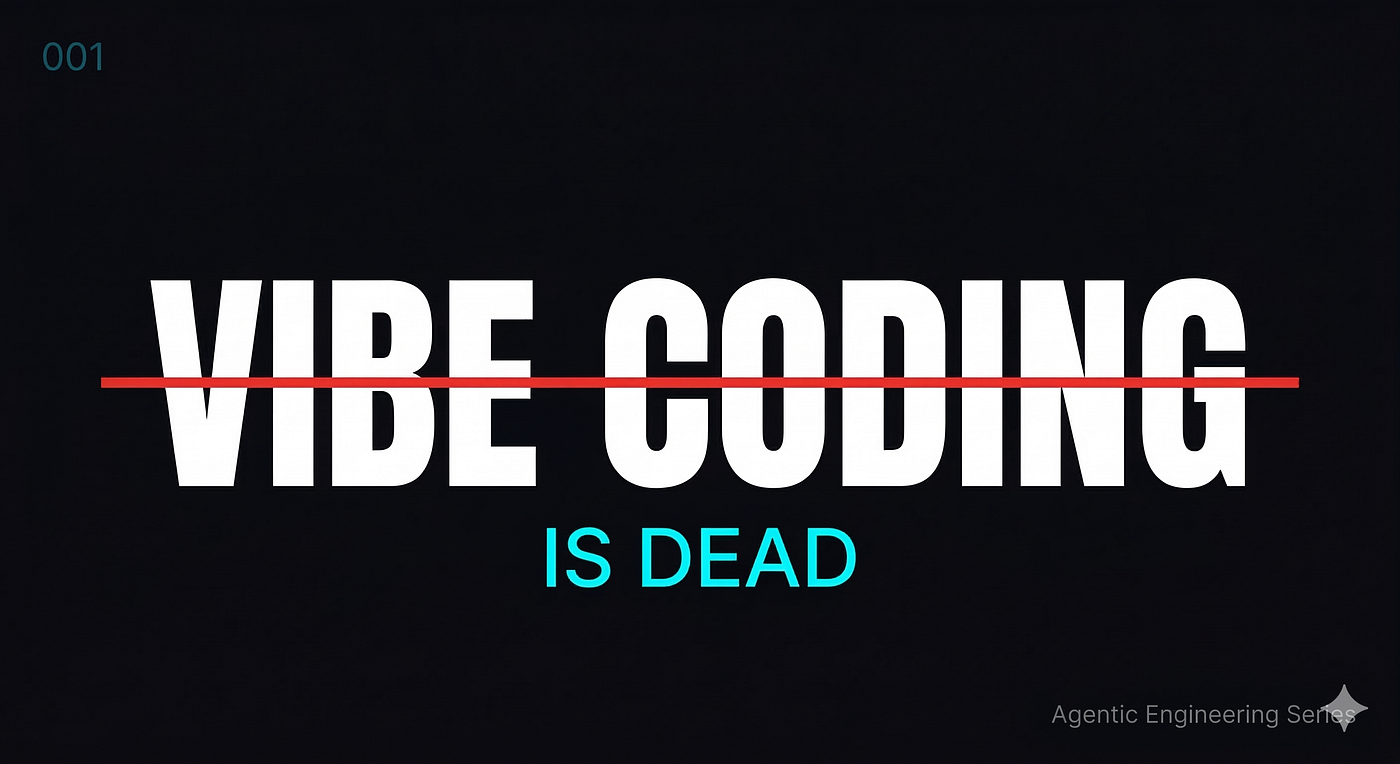
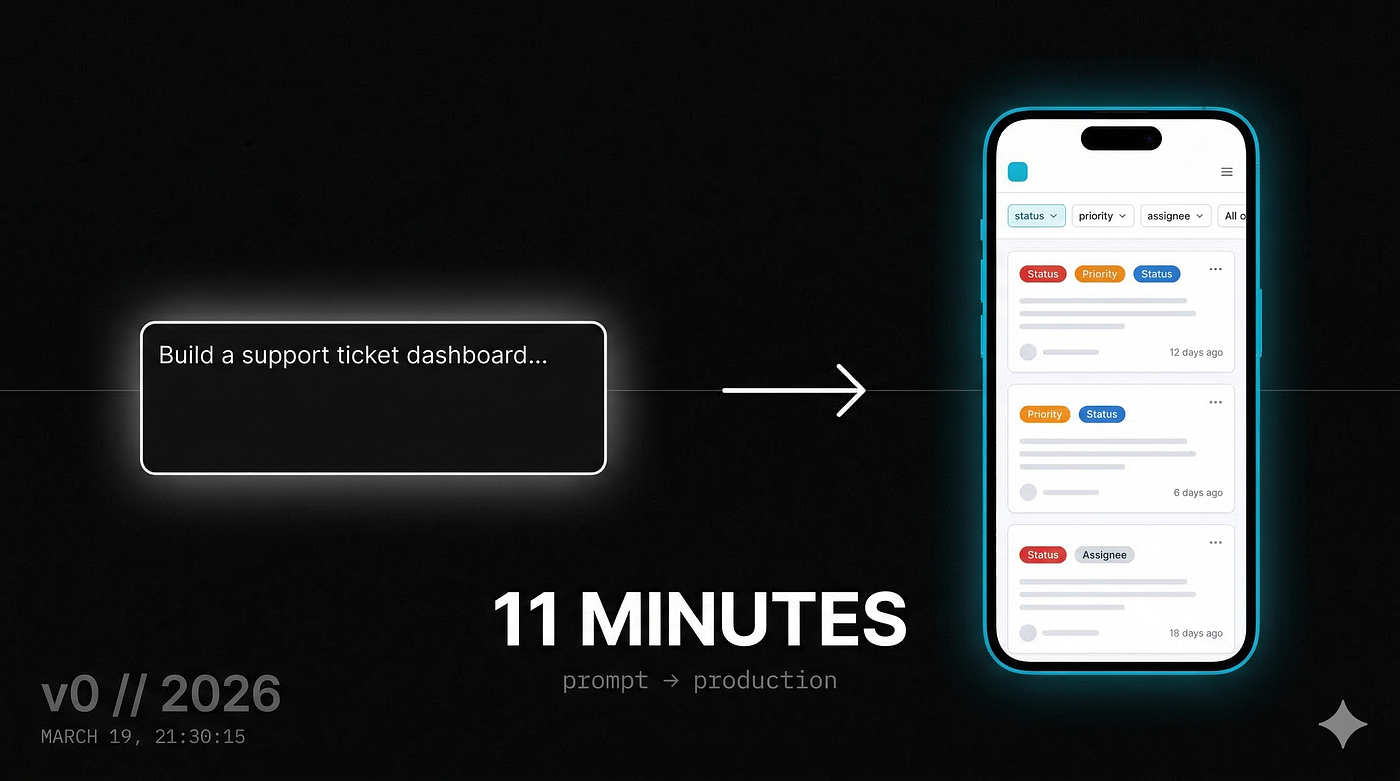
Vibe Coding
Writing software by describing what you want to an AI and accepting whatever it generates, without reviewing the code, without understanding it, without testing it properly.
Coined by Andrej Karpathy in February 2025. Dead by February 2026, when Karpathy himself moved on and called the disciplined version “agentic engineering” instead.
The defining characteristic was always the human not reviewing what the AI built. The AI was never the problem. The YOLO was the problem.
I wrote about this. It got 1.6K claps. Allegedly.
“I vibe coded this” means “it works on my machine and I have no idea why.”
AI Slop
Low-quality AI-generated content produced at volume with no editorial judgment applied.
The images with too many fingers. The articles that say nothing in 1,200 words. The LinkedIn posts that start with “In today’s rapidly evolving landscape.” The customer service responses that answer a different question than the one asked.
Microsoft CEO Satya Nadella begged people in January 2026 to stop using this word and accept AI output as “the new equilibrium.”
People did not stop.
“That’s AI slop” means “an AI made this and nobody checked it and now we all have to look at it.”
AGI, Artificial General Intelligence
The thing that does not exist yet but that everyone claims is either six months away, already here, or going to end civilization.
General intelligence means capable of learning and performing any intellectual task a human can, not just writing, not just coding, all of it, at human level or above, without being specifically trained for each task.
Current AI is narrow. Extremely capable within specific domains. Not general. The debate about when or whether AGI arrives is the most heated argument in the field and nobody actually knows the answer, including the people who sound most certain about it.
When someone says “we’re close to AGI”, take a small sip of whatever you’re drinking and change the subject.
You now know more than most people nodding in those meetings.
You’re welcome.
If this translated something you’ve been pretending to understand, follow for more.
Find me on LinkedIn for the stuff between posts.
메타데이터
- post_id
- b4aab429802c
- slug
- a-gentlemans-glossary-of-ai-terms-for-people-who-are-tired-of-pretending-they-know-what-rag-b4aab429802c
- url
- https://medium.com/@ayeshamughal21/a-gentlemans-glossary-of-ai-terms-for-people-who-are-tired-of-pretending-they-know-what-rag-b4aab429802c
- canonical_url
- https://medium.com/@ayeshamughal21/a-gentlemans-glossary-of-ai-terms-for-people-who-are-tired-of-pretending-they-know-what-rag-b4aab429802c
- author_url
- https://medium.com/@ayeshamughal21
- status
- ok
- fetched_at
- 2026-06-09 15:37:30