Robert Swinhoe: Britain’s First Consul in Taiwan & Naturalist
Robert Swinhoe (1836–1877), Britain’s first consular representative in Taiwan, arrived on the island in July 1861 to find a frontier world…
Robert Swinhoe: Britain’s First Consul in Taiwan & Naturalist

Robert Swinhoe (1836–1877), Britain’s first consular representative in Taiwan, arrived on the island in July 1861 to find a frontier world that would consume his imagination far beyond the boundaries of diplomatic duty. Appointed vice-consul at just twenty-five, Swinhoe was tasked with establishing British commercial interests in a newly opened treaty port territory that few Westerners had ever visited. What followed was one of the most remarkable careers in Victorian-era East Asia, a tenure in which consular business became almost secondary to an extraordinary program of scientific discovery that introduced Taiwan’s wildlife to the Western world.
For visitors exploring Taiwan’s colonial heritage today, Swinhoe’s legacy connects two of the island’s most significant historical sites: the Former British Consulate at Takao (打狗英國領事館) in Kaohsiung, where his story is commemorated in a hilltop museum overlooking the harbour, and the Tamsui Historical Museum at San Domingo Fort, where Britain’s northern consular operations were based.
The Naturalist-Diplomat
Robert Swinhoe was born in colonial Calcutta (now Kolkata) to a Northumberland family. Educated at the University of London, he joined the China Consular Service in 1854 at eighteen. His first posting was to Amoy (modern Xiamen), directly across the Taiwan Strait, where he mastered both Mandarin and the local Hokkien dialect, which is closely related to Taiwanese, while developing an intense passion for the natural history of eastern China.
Swinhoe first visited Taiwan in 1856, collecting bird specimens in the Hsinchu area. Two years later he circumnavigated the island aboard HMS Inflexible, searching for shipwrecked castaways while documenting wildlife along the coast. These expeditions convinced him that Taiwan harboured extraordinary biodiversity waiting to be catalogued.
In 1860, following the unequal treaties that forced the Qing Dynasty to open Taiwan’s ports to foreign commerce, Swinhoe was named the first European consular representative on the island. He arrived in July 1861 at the prefectural capital of Taiwan-fu (modern Tainan) aboard HMS Cockchafer. Local officials, unimpressed by the young consul’s age, initially lodged him in the Fengshen Temple before a wealthy Taiwan merchant helped him secure proper premises.
Swinhoe’s consular establishment proved remarkably itinerant. Finding Taiwan-fu’s harbour badly silted, he relocated to Tamsui by December 1861, where foreign commerce was concentrated. Illness forced him back to London, but upon returning in 1864 he was ordered south to Takao (present-day Kaohsiung) to establish a southern consulate. There, operating first from a ship moored in the harbour and later from rented premises, he was officially appointed British Consul to Taiwan on 4 February 1865.
Scientific Discovery: Taiwan’s Wildlife Revealed
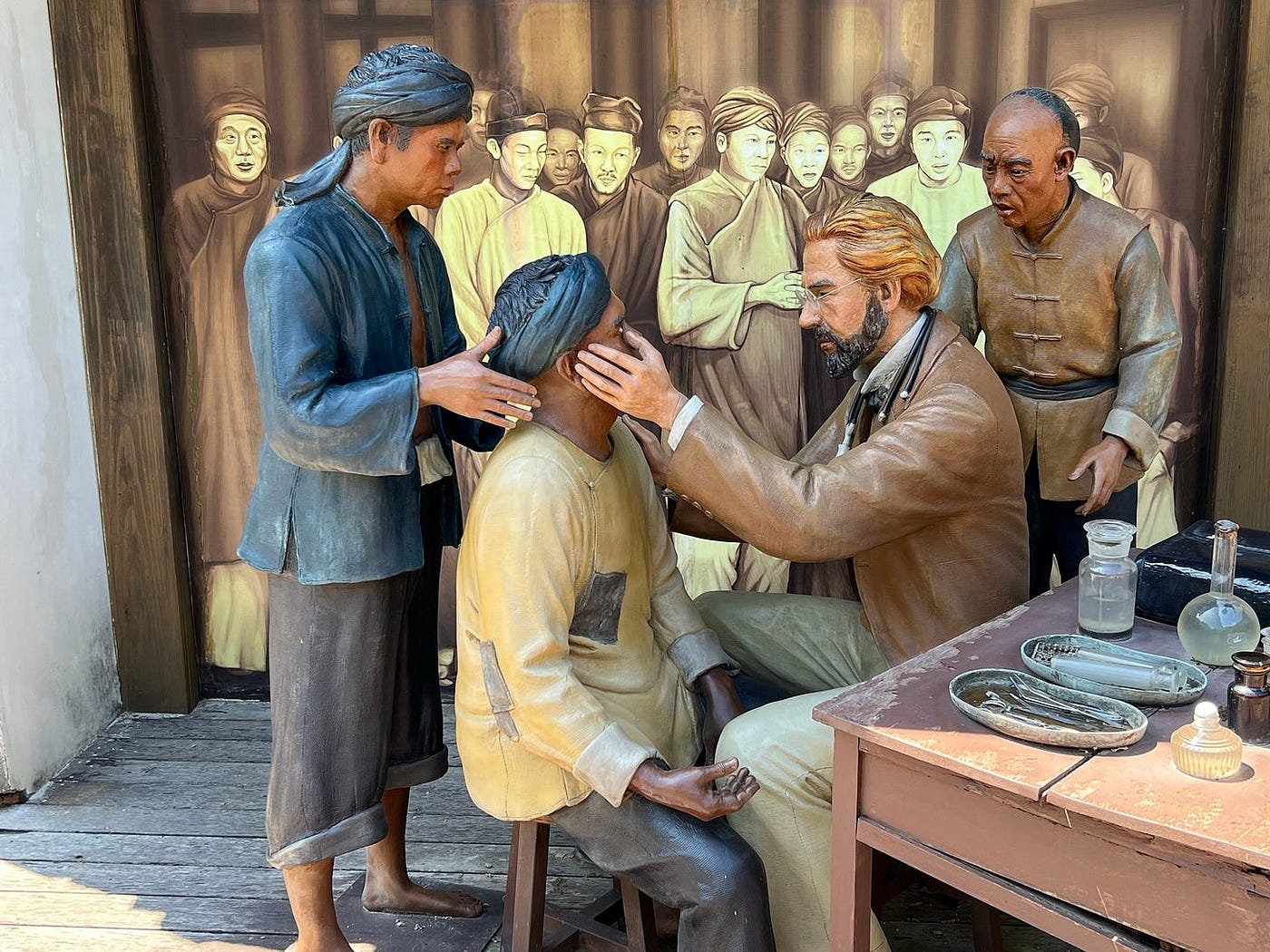
During these years of movement between Tainan, Tamsui, and Takao, Swinhoe conducted the scientific work for which he is best remembered. In just four years on the island, he catalogued approximately 227 species of birds, roughly one-third of all species in Taiwan, along with nearly forty mammals, over two hundred terrestrial snails, and more than four hundred insects. His 1863 article in The Ibis, “The Ornithology of Formosa,” constituted Taiwan’s first comprehensive bird checklist.
Many of his discoveries became iconic symbols of Taiwanese wildlife. The Formosan macaque, the island’s only native primate, was first scientifically described by Swinhoe after he captured a pair on Shoushan (“Apes’ Hill”) in Kaohsiung in 1864. Swinhoe’s pheasant (Lophura swinhoii), a spectacular endemic bird, was named in his honour by the taxonomist John Gould. He also published the first scientific report on Taiwan’s mammals, documenting species including the Formosan black bear and clouded leopard.
His methods combined personal fieldwork with local hunters who brought specimens from Taiwan’s mountains, which were shipped to the British Museum and London Zoo. The zoologist P. L. Sclater described him as one of the most industrious exploring naturalists who ever lived.

Departure and Legacy
Swinhoe’s diplomatic contributions, though overshadowed by his scientific fame, were significant. His 1862 “Report of Trade in Formosa” documented the island’s tea, camphor, sugar, and coal exports, and is credited with attracting the Scottish merchant John Dodd to Taiwan. Dodd developed the oolong tea export trade that brought “Formosa Oolong” to New York in 1869.
In early 1866, Swinhoe departed Taiwan for Amoy, though he retained the consulship until retiring in 1873. His health deteriorated likely from tropical diseases and partial paralysis set in around 1871. He left China in 1875 and died in London on 28 October 1877, aged forty-one. His final article described a new bird from Formosa.
The American diplomat James Wheeler Davidson, writing in 1903, offered what remains the most fitting tribute: no other foreigner had ever succeeded in associating his name so firmly with Formosa. Today, visitors to the Former British Consulate at Takao in Kaohsiung can see Swinhoe’s statue on the grounds and learn about his journeys through the consulate culture park’s “Swinhoe’s Adventure” tour. Though Swinhoe never lived in the handsome hilltop consulate building that stands there now (it was completed in 1879, two years after his death) the site preserves the memory of a man whose official duties were merely a passport to discovery, and whose real office was the wild itself.
메타데이터
- post_id
- b4bc61ae8ec9
- slug
- robert-swinhoe-britains-first-consul-in-taiwan-naturalist-b4bc61ae8ec9
- url
- https://medium.com/@brownbeat/robert-swinhoe-britains-first-consul-in-taiwan-naturalist-b4bc61ae8ec9
- canonical_url
- https://medium.com/@brownbeat/robert-swinhoe-britains-first-consul-in-taiwan-naturalist-b4bc61ae8ec9
- author_url
- https://medium.com/@brownbeat
- status
- ok
- fetched_at
- 2026-08-15 14:23:34


