10 Things You Didn’t Know About the Majungasaurus
In the extreme conditions of Madagascar, a massive predator would gain traction for a very unusual reason
FOSSILS ET AL.
10 Things You Didn’t Know About the Majungasaurus
In the extreme conditions of Madagascar, a massive predator would gain traction for a very unusual reason
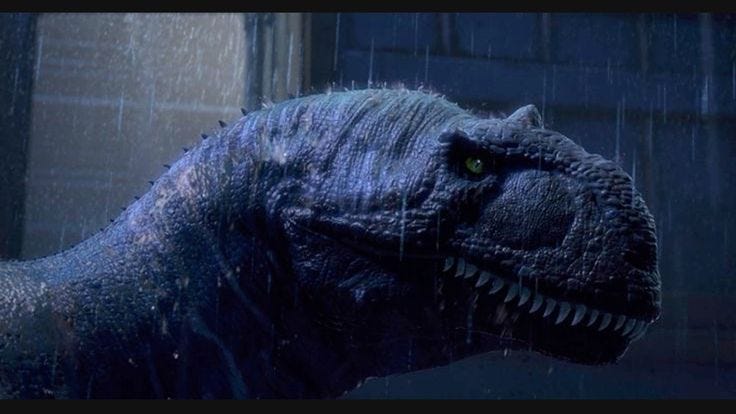
Majungasaurus from Camp Cretaceous: Chaos Theory
The Late Cretaceous period is one of, if not the most talked about, epoch (a specific, fixed point in time or a memorable period that marks the beginning of a new era) of the Mesozoic era, due to a majority of the more popular dinosaurs like Velociraptor, Tyrannosaurus Rex, Triceratops, Spinosaurus, and many, many more living at this time!
However, in the extreme conditions of Madagascar, 70 to 66 million years ago, a massive predator would gain traction for a very unusual reason. Say hello to the Majungasaurus, one of the last-known non-avian dinosaurs that went extinct during the Cretaceous–Paleogene extinction event (caused by the asteroid impact). Measuring around 7 m (23 ft) long and weighing more than 1 t (1.1 short tons), it can be distinguished from other abelisaurids by its wider skull, the very rough texture and thickened bone on the top of its snout, and the single rounded horn on the roof of its skull.
Most popularly known for practicing cannibalism, it has earned a spot in pop culture, with media sources like BBC Planet Dinosaur and Camp Cretaceous: Chaos Theory gaining more traction with this wild but surprisingly true fact! Here are a few more facts about the ‘Mahajanga lizard’:
1. Its skull exposed a 20-year-old mistake
The Majungasaurus had a single thick, rounded horn on the top of its skull. While this doesn’t seem like much, this horn was originally mistaken for a pachycephalosaur dome in 1979 and was thus considered a new species of pachycephalosaur called “Majungatholus atopus”. However, its true origin was eventually discovered in 1998, leading to a reversion to its older name, “Majungasaurus crenatissimus”, which was set in 1955, around 24 years before “Majungatholus”, and thus takes precedence. It is now believed that this rounded horn was likely a display feature (since the horn has a hollow sinus cavity within it, making it not ideal for use in physical headbutting).
Majungasaurus crenatissimus (FMNH PR 2100) skull on display at the Field Museum of Natural History, Chicago, Illinois, USA (2021)
2. Majungasaurus’ eyes weren’t exactly agile
A complete Majungasaurus skull (FMNH PR 2100) was CT scanned (Computed tomography), which allowed a rough reconstruction of its brain and inner ear structure. Overall, the brain was very small relative to body size, but otherwise similar to many other non-coelurosaurian theropods (large-bodied dinosaurs outside the bird lineage like Spinosaurus and Allosaurus), with a very conservative form closer to modern crocodilians than to birds.
One difference between Majungasaurus and other theropods was its smaller flocculus, a region of the cerebellum that helps to coordinate movements of the eye with movements of the head. This suggests that Majungasaurus and other abelisaurids like Indosaurus, which also had a small flocculus, did not rely on quick head movements to sight and capture prey, implying that they did not have agile eyes. This also led to limited depth perception despite gaining a wider field of view.
An image of an Indosaurus from Dinosaur King
3. Jurassic World gave it a behind-the-scenes nod
In the movie Jurassic World, released on the big screen in 2015, we are introduced to the Indominus Rex, a hybrid raised in captivity its whole life. Due to her high intelligence, she escaped captivity and caused a rampage throughout the whole park, which led to its closure. However, what surprised the audience was her genome composition. She was made of several dinosaurs, such as the T. rex, Giganotosaurus, Carnotaurus, Therizinosaurus, Velociraptor, and the list goes on! However, one dinosaur stuck out the most, that being the Majungasaurus. Of all the dinosaurs that could have been added, why this particular dinosaur?
This may not mean anything, but it did have a few effects on her, some good and bad. With the help of the genome, she was able to develop thick armor and have a higher number of teeth, along with increased stamina due to the air sacs present in its bones (which helped it be a more active predator). However, it also may have influenced her to kill and eat her sibling at birth.
Majungasaurus from Camp Cretaceous: Chaos Theory
4. Majungasaurus and its prehistoric neighbors inspired a charity
Yes, you heard it right! Majungasaurus crenatissimus, Simosuchus clarki (A small, 2.5-foot-long ancient crocodile relative), Beelzebufo ampinga (known as the “devil frog,” and is arguably the largest frog ever to live), Masiakasaurus knopfleri (a six-foot-long predatory dinosaur famous for its unique, forward-pointing front teeth), and Rapetosaurus krausei (a titanosaurian sauropod dinosaur that could have been about 50 feet long when fully grown, and was an ideal food source for our cannibalistic dinosaur) all inspired a chartiy fund called “Madagascar Ankizy Fund” (ankizy means ‘children’ in the Malagasy language).
Founded in 1998 by paleontologist Dr. David W. Krause, a professor in the Department of Anatomical Sciences at Stony Brook University, the fund aims to provide education and healthcare for children living in remote areas of the island and to support communities in other ways.
For those interested in donating, click the link below to learn more:
https://www.givecampus.com/campaigns/52985/donations/new?designation=madagascarankizyfund&

5. It was unusually stocky
It was easy to recognise a Majungasaurus due to several adaptations that made it stand out from the rest of the carnivores that lived during that time. One of these was its stockiness. Scientists believe that the dinosaur traded speed for a more powerful build and bite force due to the type of prey it used to hunt, which was Rapetosaurus (a sauropod that could grow 50 feet long when fully grown).
On top of this, its tibia (lower leg bone) was even more stocky than its relative Carnotaurus. Scientists have suggested that Majungasaurus, and perhaps other abelisaurids, had adaptations to strengthen the head and neck for a bite-and-hold type of attack, which might have been very useful against sauropods.

Size of Majungasaurus compared to its relatives
6. The Person Who Named This Dinosaur Was Involved In An Archaeological Scandal
While Majungasaurus was discovered by an unnamed French Army officer in 1896, the fossil fragments were first described by Charles Jean Julien Depéret (25 June 1854–18 May 1929), a French geologist and paleontologist. He was a member of the French Academy of Sciences, the Société géologique de France, and dean of the Science faculty of Lyon.
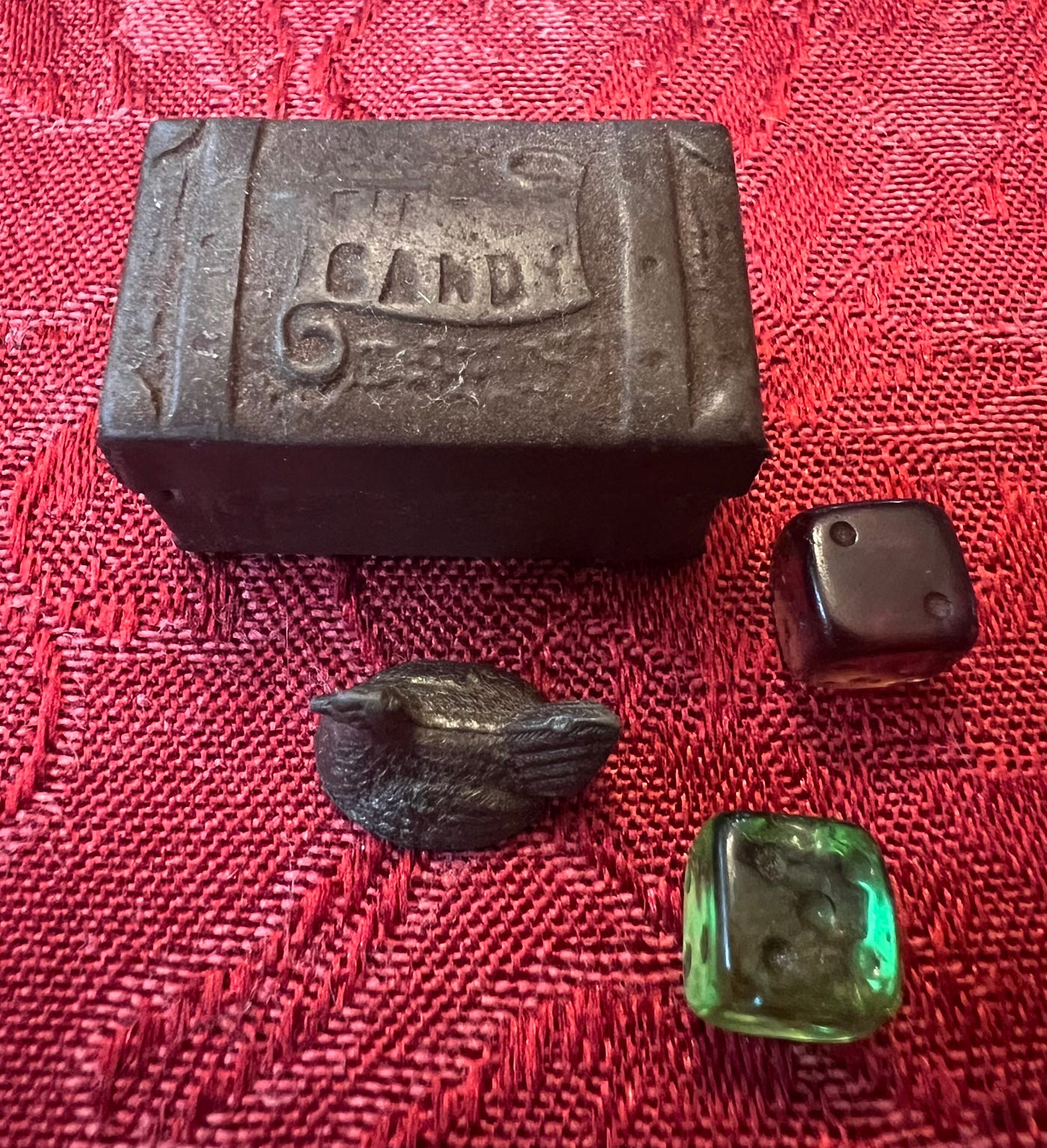
However, he would find himself in a massive scandal in the 1920s, that being the ‘Glozel Affair’. It started when farmers plowing their land at a place called ‘Glozel’ came across what seemed to be a prehistoric tomb. Excavations by Antonin Morlet, an amateur archaeologist from Vichy, the nearest town of any size, yielded all kinds of unexpected objects. Morlet began publishing the finds in late 1925, immediately producing lively debate and controversy.
Glozel embodies a complex relationship between science and the media that persists today. Many people believed that this discovery would rewrite history; if it were real, it would imply that Europe was the birthplace of writing, and not the Middle East. In the 1920s, the scientific consensus was that writing was invented in the Middle East (Mesopotamia and Egypt) and gradually spread westward. This is why there were many who did not believe in the excavation and claimed that these artifacts were forged for fame or monetary purposes.
As a defender of the discovery, Charles believed that the artifacts were real, as he had personally extracted several tablets from the ground himself. On top of this, he assumed that because the soil layer was ancient, the objects inside it must be just as ancient. He, quote-unquote, said that the “virginity of the surrounding land cannot be suspected”.
However, it has been confirmed that this was, in fact, a hoax. While this was declared in 1929, using new technology, modern scientific testing (such as thermoluminescence) showed that many of the artifacts, specifically the engraved tablets and clay objects, were made using recently fired clay, confirming they were modern forgeries rather than ancient relics.
Recovered objects displayed in the Fradins’ museum in 1927
Examples of the kinds of inscriptions found at the Glozel site, as recorded by scholar Salomon Reinach
7. Long before Majungasaurus evolved, its native land separated from India
160 million years ago, a landmass started to split from what was South America and Africa. However, 88 million years ago, this same piece of land split further into what is now India and Madagascar. India was on its own, travelling at around 5 cm/year. For comparison, the average plate today moves at around 1.5 cm/yr. Then, 80 million years ago, the plate began moving at 14 cm/yr, accelerating into a sprint. This was due to it being pulled by two parallel subduction zones, where one plate slides beneath another and sinks into the mantle.
Around 67 million years ago, the plate began to slide over the Réunion hotspot (a volcanic hotspot which currently lies under the island of Réunion in the Indian Ocean), fueled from below by a massive plume of magma, whose force sped up its pace even further. It also triggered a massive volcanic eruption known as the ‘Deccan Traps’, which scientists believe played a huge role in worsening the extinction event that took place 66 million years ago; it spewed out toxic gases like mercury and released aerosols that spread out in the atmosphere, reflecting sunlight and suddenly cooling the planet.
If you want to learn more, you can watch the video below: https://youtu.be/vMehbbPpIL4?si=ZnPmFkRc4ZPFuQiS

Images of Madagascar and India BEFORE and AFTER the split
8. It had big shoulder blades but teeny arms
A graduate student at Stony Brook University (a public research university in Stony Brook, New York, United States) named Sara Burch analyzed a nearly complete forelimb of this ancient animal, the first ever found preserved in January 2012. In doing so, she found that in contrast to the dinosaur’s bulky body, its arms weren’t even a foot (0.3 meters) long. “When you get to the lower arm and the hand, it’s really weird,” Burch told LiveScience. “The lower arm is very short but thick, and the bones are pretty robust. So it’s not necessarily a thin, wimpy arm, it’s just very, very short.”
The fingers of Majungasaurus were so stumpy, in fact, that the researchers aren’t sure they were separated; the hands may have been more like paddles than human hands. “Even if they were separate, they’d be very short,” Burch said. “Imagine if your hand just had the first knuckles sticking out.”

CT reconstruction of the forelimb and shoulder blades of Majungasaurus crenatissimus, showing the extremely shortened yet robust forearm bones, absent wrist bones, and four stubby fingers
9. It breathed like a bird
Scientists have reconstructed the respiratory system of a Majungasaurus based on a superbly preserved series of vertebrae (UA 8678) recovered from the Maevarano Formation (a Late Cretaceous sedimentary rock formation found in the Mahajanga Province of northwestern Madagascar). Most of these vertebrae and some of the ribs contained cavities (pneumatic foramina) that may have resulted from the infiltration of avian-style lungs and air sacs. In birds, the neck vertebrae and ribs are hollowed out by the cervical air sac, the upper back vertebrae by the lung, and the lower back and sacral (hip) vertebrae by the abdominal air sac.
Similar features in Majungasaurus vertebrae imply the presence of these air sacs. These air sacs may have allowed for a basic form of avian-style ‘flow-through ventilation,’ with air flow through the lungs one-way, so that oxygen-rich air inhaled from outside the body is never mixed with exhaled air laden with carbon dioxide. This method of respiration, while complicated, is highly efficient.

Comparison between the air sacs of Majungasaurus and a modern bird
10. An injury or illness seems to have shortened one specimen’s tail
The most serious pathology discovered was in a series of five large tail vertebrae. This was discussed in a research paper published in June 2007 titled ‘PATHOLOGY IN MAJUNGASAURUS CRENATISSIMUS (THEROPODA: ABELISAURIDAE) FROM THE LATE CRETACEOUS OF MADAGASCAR’ by Andrew A. Farke and Patrick M. O’Connor from the Department of Anatomical Sciences, Stony Brook University, who used two specimens: FMNH PR 2294 and FMNH PR 2100. By comparing them, they predicted that at least 10 additional vertebrae would have been present beyond the distalmost vertebra (very last bone at the base of your spine, known as the coccyx in humans) in FMNH PR 2100. However, the absence of a distinct articular surface, i.e., a well-defined area on a bone where it makes direct contact with another bone to form a joint, suggests that the tail of FMNH PR 2294 terminated at this point.
Alternatively (but less likely), the distal portion of the tail remained, but was secured via soft tissue without any osteological contact (the physical junction or interface where two or more bones meet). Two alternative etiological scenarios are possible for the condition seen in FMNH PR 2294. One possibility is that the end of the tail was lost traumatically, followed by the onset of secondary suppurative osteomyelitis (a type of bone and bone marrow infection). Alternatively, preexisting osteomyelitis (whether related to trauma, systemic infection, or some other cause) ultimately resulted in the loss of the distal tip of the tail. This is the first example of tail truncation known in a non-avian theropod dinosaur.

FIGURE 1. Abnormal skeletal elements of Majungasaurus crenatissimus. A, B, distal caudal vertebral series (FMNH PR 2294) in right lateral (A) and dorsal (B) views, with arrows indicating position of exostosis near cranial chevron facet and linear exostosis on lateral surface of centrum in A; C, fused distal caudal unit from same specimen in ventral view, with arrows indicating examples of cloacae; D, micro-computed tomography transverse slice through C (with cranial end to right of figure) illustrating internal cavity (asterisk) and drainage canal (arrow) within terminal mass; E, proximal caudal vertebra from A in left lateral view, with dashed lines indicating prominent neurovascular sulcus; F–G, caudal vertebra (FMNH PR 2442) in left lateral (F) and dorsal (G) views, with arrows indicating abnormal region; H, dorsal vertebral centrum (FMNH PR 2440) in left lateral view, with arrow indicating position of exostosis; I–K, left pedal phalanx III-1 or III-2 (UA 9058) in ventral (I), lateral (J), and dorsal (K) views. Scale bar equals 5 cm.
The Majungasaurus was a dinosaur with a bizarre way of surviving, along with an even more bizarre set of arms that, like the T. rex, had some sort of purpose that we still haven’t found yet. Despite the number of perfectly preserved fossils, its lifestyle is still a mystery. Even though it is not as powerful or agile as some of the other carnivores, it was an efficient hunter due to its avian characteristics and ‘bite-and-hold’ technique, and was the largest carnivore ever to walk the face of Madagascar!
References
- https://en.wikipedia.org/wiki/Majungasaurus
- https://prehistoric-planet.fandom.com/wiki/Majungasaurus
- https://ankizy.org/
- https://prehistoric.fandom.com/wiki/Majungasaurus
- https://repository.si.edu/server/api/core/bitstreams/47319a04-b39c-4c3d-9a03-9a72fa6a7a9f/content
- https://www.livescience.com/17864-carnivorous-dinosaur-weird-arms.html
- https://people.ohio.edu/oconnorp/PDFs/Farke%20&%20OConnor_2007_Majungasaurus.pdf
- https://theconversation.com/the-glozel-affair-a-sensational-archaeological-hoax-made-science-front-page-news-in-1920s-france-260967
Published in Fossils et al. **Follow **to learn more about Paleontology.
메타데이터
- post_id
- b4bf16fcd459
- slug
- 10-things-you-didnt-know-about-the-majungasaurus-b4bf16fcd459
- url
- https://medium.com/fossils-et-al/10-things-you-didnt-know-about-the-majungasaurus-b4bf16fcd459
- canonical_url
- https://medium.com/fossils-et-al/10-things-you-didnt-know-about-the-majungasaurus-b4bf16fcd459
- author_url
- https://medium.com/@adityalakhani210
- status
- ok
- fetched_at
- 2026-07-16 01:26:26