A Cautionary Note on Claims That AI Can Never Make Scientific Discoveries
A recent paper from Google DeepMind has sparked debate by arguing that large language models (LLMs) can never make genuine scientific…
A Cautionary Note on Claims That AI Can Never Make Scientific Discoveries
A recent paper from Google DeepMind has sparked debate by arguing that large language models (LLMs) can never make genuine scientific discoveries. The argument draws heavily on Albert Einstein’s own description of how science works, particularly a famous letter he wrote to his friend Maurice Solovine.
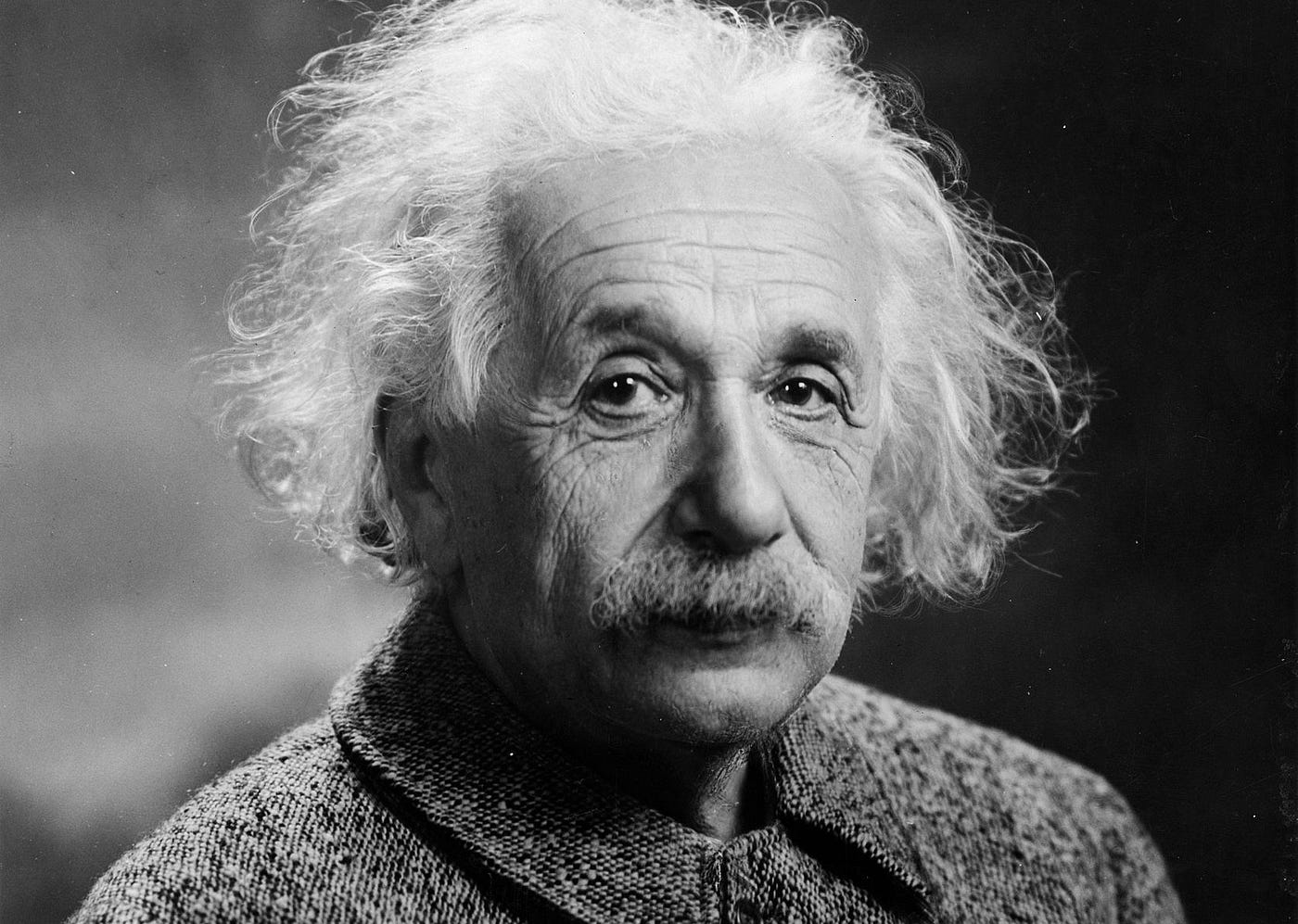
In that letter, Einstein outlined scientific discovery as a cyclical process. Scientists begin with observations and sensory data. From there, through what he described as a non-logical act of intuition, they make a leap to foundational principles or axioms. Finally, they use logic and mathematics to derive consequences and test predictions.
Viewed through this lens, it is easy to see why some researchers believe today’s generative AI systems face a fundamental limitation. Modern AI has become remarkably capable at two parts of the scientific process. It excels at identifying patterns across vast quantities of information and is increasingly proficient at formal reasoning and deduction. Systems such as AlphaProof demonstrate that machines can operate at a very high level when working within established rules and frameworks.
The challenge lies in the middle step: the leap itself.

According to this view, AI lacks true abductive reasoning — the ability to generate genuinely novel hypotheses when existing data is incomplete, ambiguous, or insufficient. Einstein’s development of General Relativity is often cited as a prime example. The available observations did not compel physicists to abandon Newtonian mechanics, which remained highly effective for most practical purposes. What was required instead was a profound conceptual shift: the introduction of entirely new foundational assumptions about space, time and gravity.
From this perspective, an LLM can work brilliantly once the axioms have been established. It can manipulate equations, analyse results and explain theories. What it cannot do is originate the fundamental premises themselves. The conclusion follows that AI may be capable of interpolating within the space of human knowledge, but not transcending it.
It is an intriguing argument. Yet I think we should be careful about treating Einstein’s account as the definitive description of how all scientific progress occurs.

Einstein was undoubtedly one of history’s greatest scientific thinkers, but his reflections were shaped by his own experiences and intellectual style. Science today is a far broader and more diverse enterprise than the solitary image often associated with early twentieth-century physics. Knowledge is generated through experimentation, simulation, collaboration, engineering advances, statistical analysis, serendipitous observations and increasingly through large-scale computational methods. Scientific discovery is rarely as neat or uniform as any single philosophical framework might suggest.
I certainly cannot speak for all scientists, but it seems clear that there are many routes to discovery beyond the process Einstein described. Scientific practice varies significantly across disciplines, and breakthrough insights often emerge from combinations of methods rather than a single moment of inspiration.
This is where generative AI becomes particularly interesting.
Rather than asking whether AI can independently produce an Einstein-level conceptual revolution, perhaps the more practical question is whether it can meaningfully contribute to the processes through which science advances. On that front, the answer already appears to be yes.

Generative AI can help researchers identify gaps in the literature, summarise complex bodies of work, explain unfamiliar concepts, generate alternative interpretations of findings and uncover connections between fields that might otherwise remain hidden. As the volume of scientific knowledge continues to grow at an extraordinary pace, tools that help scientists navigate and synthesise information become increasingly valuable.
Perhaps most importantly, AI can function as a cognitive partner. It may not originate entirely new frameworks of thought, but it can help researchers explore intellectual territory more efficiently and thoroughly than before. Sometimes progress comes not from a single dramatic leap, but from accelerating the thousands of smaller steps that make breakthrough moments possible.
That is not to say AI has solved what David Harriman referred to as the “logical leap” of induction. Nor is there convincing evidence that current LLMs possess the kind of intuitive creativity that Einstein believed lay at the heart of revolutionary science.

However, I find myself closer to the view expressed by my late quantum physics lecturer at the University of Kent, Dr Lewis Ryder. Science progresses through many mechanisms, not solely through the traditional inductive process often associated with Einstein’s account. Discovery today is a multidimensional activity involving theory, experiment, computation and collaboration.
If that is true, then the question is not whether AI can replace the scientist who makes the leap. The more interesting question is why AI should not become an increasingly significant part of the wider scientific ecosystem that enables those leaps to happen.

Perhaps the future of science is not a choice between human intuition and machine intelligence. Perhaps it is the combination of both.
This article was written by AI Engineer Dr Peter Fox (IBM), in response to a LinkedIn post (28/7/26) by Dr Alvaro Cintas (Assistant Professor of AI and Cybersecurity at Marymount University, VA USA)
AI #genAI #scienceandAI #AIandscience #science #induction #Einstein #InductiveMethod #DavidHarriman #TheLogicalLeap #philosophyofscience #UniversityofKent #DeepMind
메타데이터
- post_id
- b4d768f89698
- slug
- a-cautionary-note-on-claims-that-ai-can-never-make-scientific-discoveries-b4d768f89698
- url
- https://medium.com/@peter.fox1/a-cautionary-note-on-claims-that-ai-can-never-make-scientific-discoveries-b4d768f89698
- canonical_url
- https://medium.com/@peter.fox1/a-cautionary-note-on-claims-that-ai-can-never-make-scientific-discoveries-b4d768f89698
- author_url
- https://medium.com/@peter.fox1
- status
- ok
- fetched_at
- 2026-08-20 20:41:11





